


Antique Rug Pair
An antique rug pair brings matching symmetry and deep nomadic or village character into a room, offering coordinated textiles woven for practical use.
Antique Rug Pair
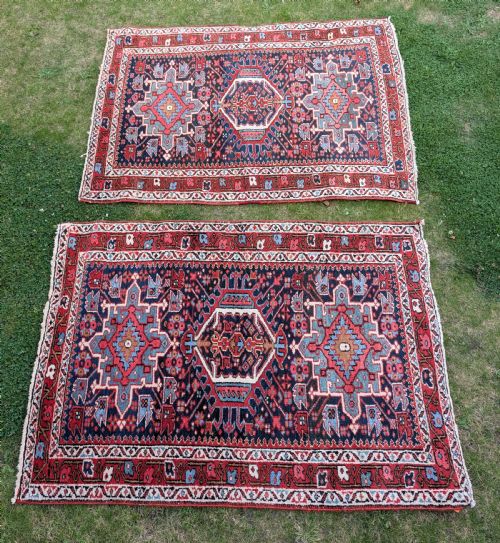
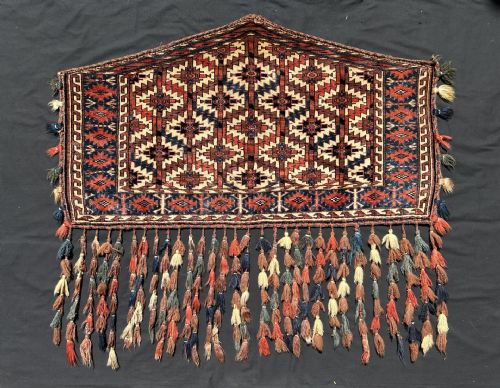
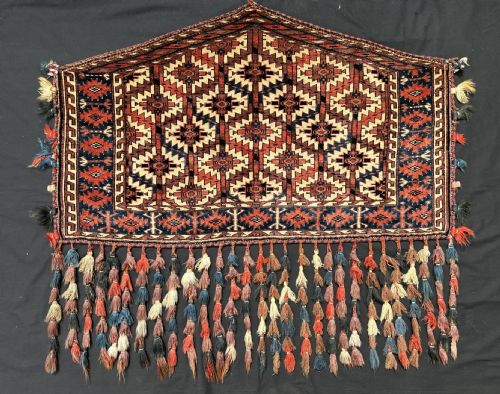
When searching for an antique rug pair, a buyer encounters matching textiles woven across Persian, Turkish, Caucasian, and Turkmen regions during the nineteenth and early twentieth centuries. These matching sets include floor rugs, runners, prayer rugs, saddle bags, asmalyks, and torbas created by tribal groups and village weavers.
The pieces on this page span several decades from the late Victorian era up through the interwar period of the 1930s. Turkmen tribal weavings, Persian village pieces from Karaja, Kashan, and Heriz, alongside Turkish Ushak runners and embroidered panels, dominate the selection.
Buyers select these coordinated pairs to flank beds, line hallways, or anchor parallel seating arrangements with identical motifs and complementary dimensions. Each matching set preserves traditional dye palettes and symbolic patterns handed down through generations of weavers.
How they were made
Makers constructed these textiles predominantly from hand-spun wool and cotton foundations, utilising natural dyes derived from plants and minerals to achieve rich, lasting colour tones. Weavers knotted or embroidered geometric guls, floral vases, and pictorial scenes onto sturdy warps and wefts.
Nomadic and village workshops employed upright looms to produce pile rugs, flatwoven kilims, soumac bags, and cicim panels designed for daily utility or domestic transport. The integration of cotton alongside wool provided structural stability, while natural dye baths created subtleabrash variations across the surface.
Some antique pairs include complete original wool backs, proving that even a camel's wedding finery deserved a well-finished lining.
What varies in quality
Quality in these textiles rests upon the density of the knotting, the precision of the tribal iconography, and the integrity of the natural dyes. Tightly packed wool foundations and crisp, well-proportioned motifs separate superior village output from simpler utilitarian weaving.
The preservation of original wool pile, complete backing materials, and balanced colour saturation dictate the overall standard of a matching set. Coordinated wear and minimal historical intervention maintain the visual symmetry required in matched textile pairs.
The Antique Rug Pair Glossary
- Asmalyk
- A pentagonal trapping used during Turkmen wedding processions to decorate the flanks of a camel. These decorative textile panels display characteristic tribal guls.
- Gul
- A repeating primary medallion or octagonal motif used extensively in Turkmen and Central Asian tribal rug designs. Each pattern often identifies a specific clan or tribe.
- Kilim
- A flatwoven textile produced without a raised pile, utilising interlocking warp and weft threads. These lightweight pieces function as rugs, wall hangings, or storage bags.
- Soumac
- A wrapping technique utilised in flatwoven rugs and bags that produces a durable structure with braided surface details on the face. This method creates crisp geometric lines.
- Abrash
- A natural variation in wool colour caused by differences in dye batches or imported yarns. This characteristic produces gentle tonal shifts across the surface of older rugs.
Antique Rug Pair: Frequently Asked Questions
How were antique rug pairs used originally?
Nomadic and village communities utilised these paired textiles primarily for domestic furnishings, tent decoration, and animal trappings during daily life or ceremonies. Items such as saddle bags and asmalyks served functional transport roles before entering domestic spaces as decorative wall hangings or floor coverings.
Over time, matched sets found placement in tents and village houses where symmetrical arrangements held practical and aesthetic importance. Their robust wool construction withstood heavy foot traffic and regular handling by tribal families.
How do I care for an antique wool rug?
Preserving these textiles requires gentle vacuuming without rotating brush bars to protect delicate wool fibres and old foundations. Keeping the pieces out of direct sunlight prevents natural dyes from fading over decades of exhibition.
Professional cleaning tailored for antique textiles ensures that organic fibres remain stable and uncompromised by modern detergents. Allowing adequate airflow beneath the rugs prevents moisture accumulation in the cotton and wool foundations.
How do I tell tribal rugs apart from village rugs?
Tribal rugs typically feature geometric memory patterns, hooked polygons, and clan guls woven by nomadic groups moving across steppes and mountains. These designs reflect ancient symbolism tied directly to specific tribes rather than urban workshops.
Village rugs often incorporate more structured floral elements, central medallions, and prayer arches produced by settled weavers in established regional hubs. Their compositions balance traditional tribal motifs with influences from larger commercial trading centres.