



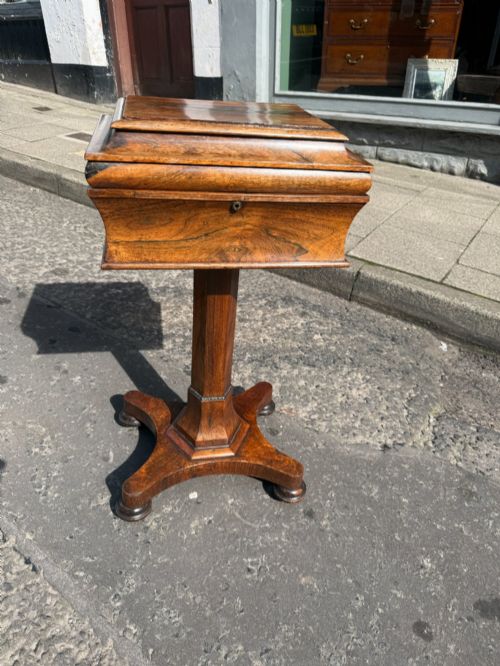
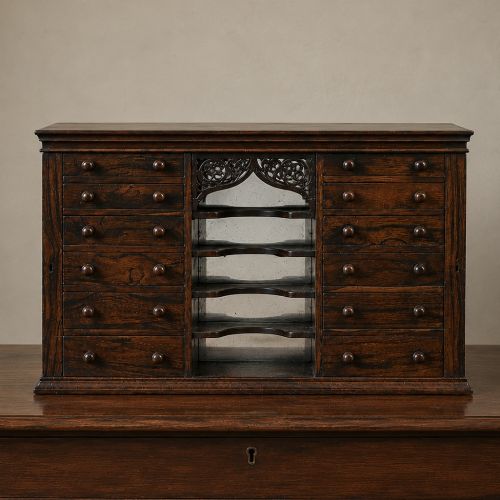
Antique Rosewood Chest
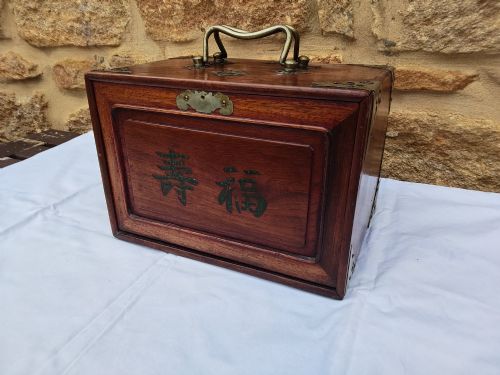
An antique rosewood chest offers deep grain and dense tropical timber, holding linens, papers or tea with a rich, dark presence.
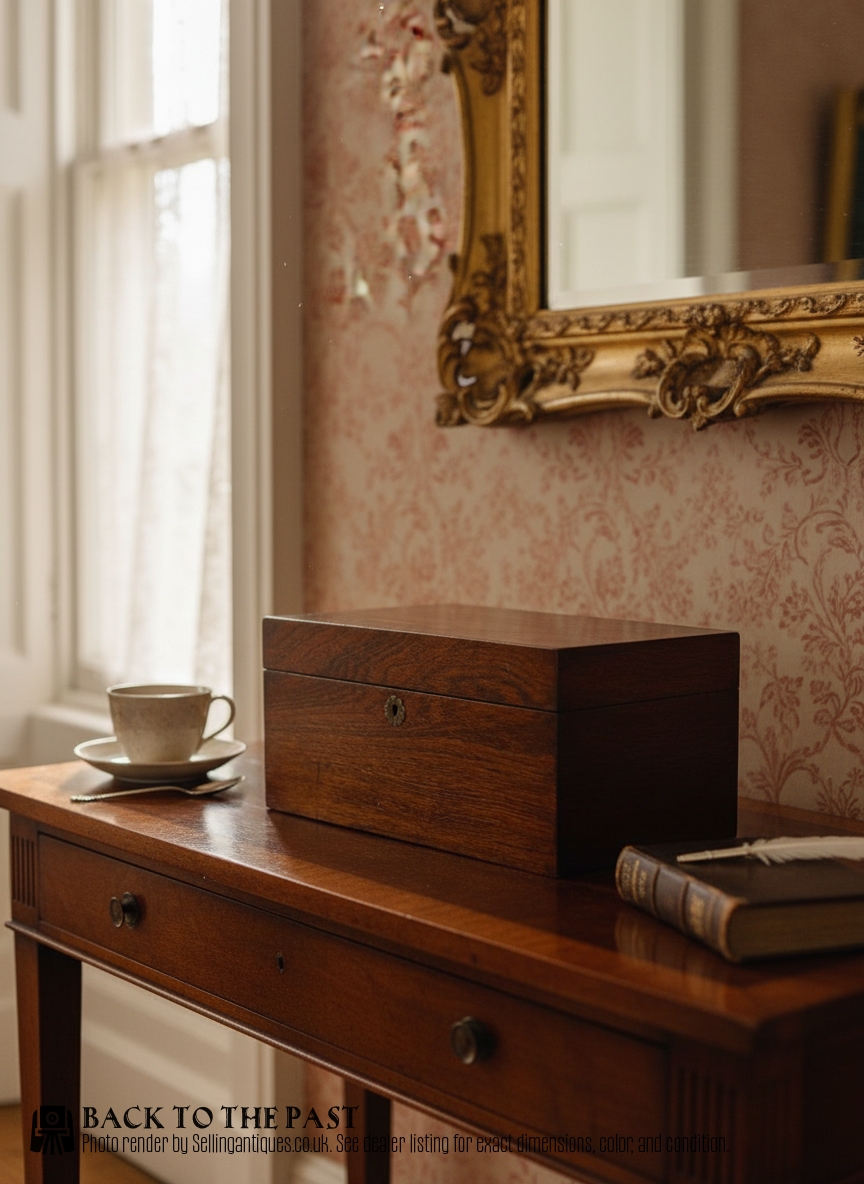
Antique Rosewood Chest
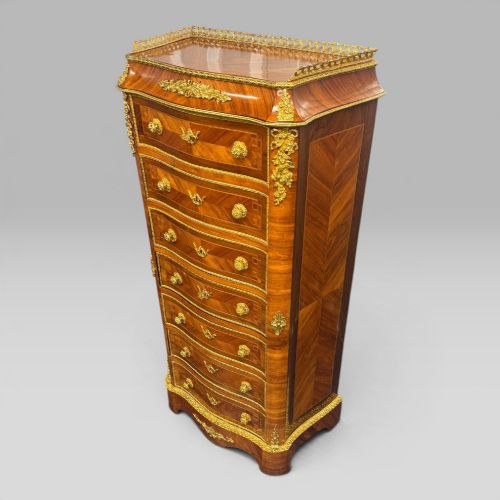
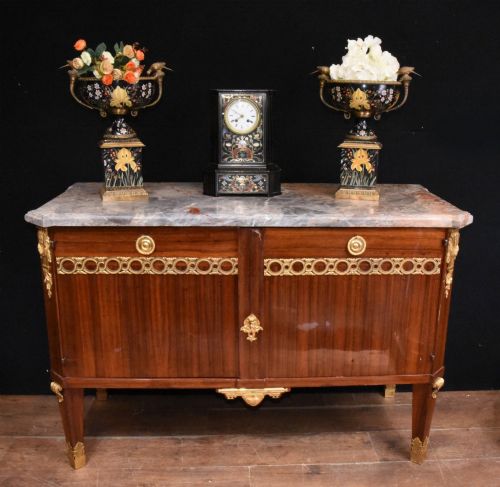
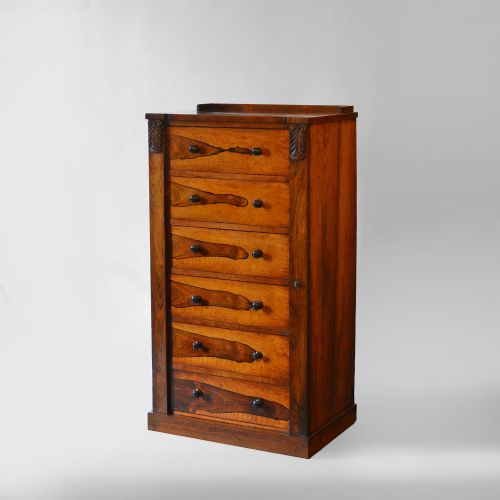
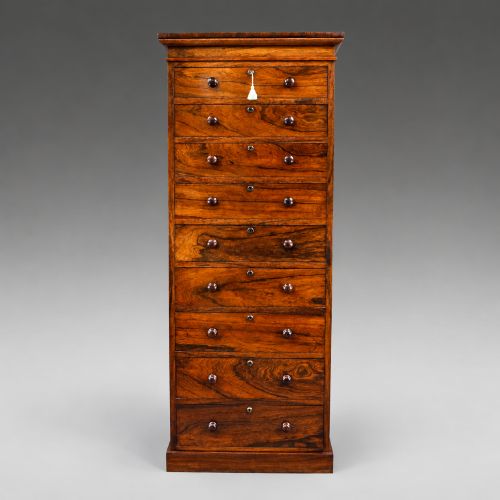
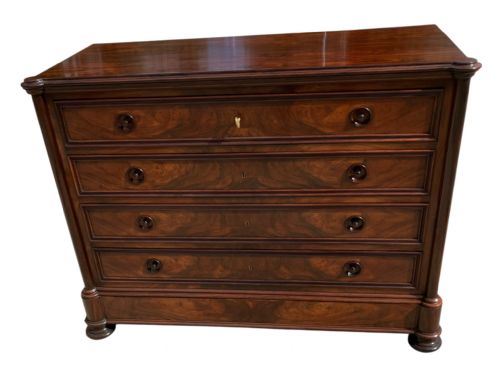
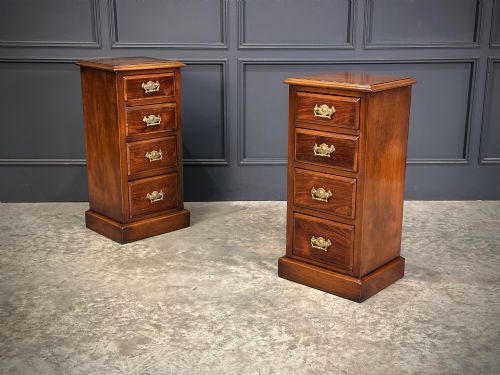
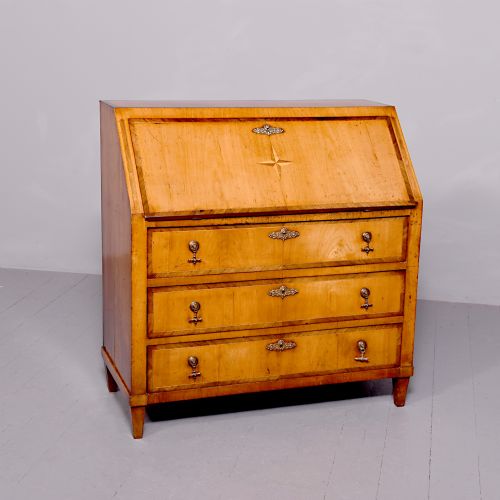
An antique rosewood chest encompasses a varied group of functional furniture, ranging from tall Wellington chests and bedside cabinets to small tabletop caddies and miniature drawers. These pieces emerge primarily from the Regency, Victorian, and Georgian eras, displaying solid construction and fine cabinetmaking.
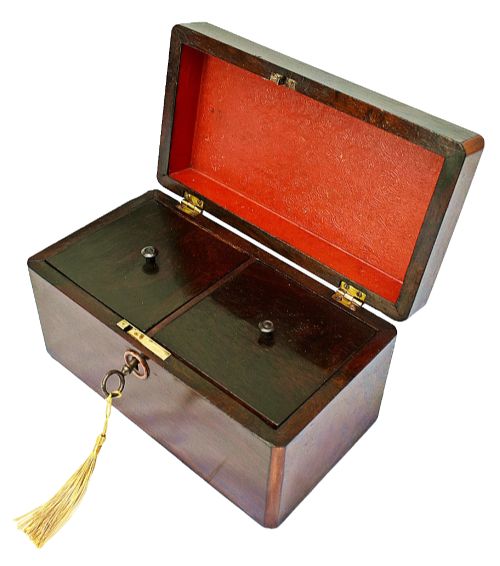
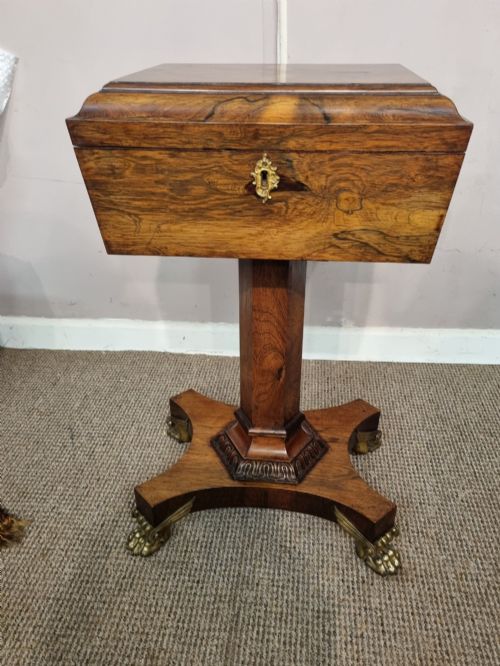
The version most commonly encountered on this page is the drawer chest or the compact Wellington chest, often fitted with locking mechanisms and multiple internal compartments. Alongside these stand smaller lidded containers, including tea caddies and jewellery boxes lined for precious items.
How they were made
Cabinetmakers utilised dense rosewood timber, frequently applied as rich veneers over secondary woods or used in solid form for smaller boxes and tables. Workshops incorporated brass inlay, mother of pearl, boxwood stringing, and marquetry to ornament the surfaces.
Structural elements often included concealed locking bars on Wellington chests, hand-cut dovetail joints on drawer carcases, and fitted interiors lined with velvet or satin for delicate objects.
Antique Rosewood Chest Retail Price Guide 2026
Typical asking prices for rosewood chest among the pieces listed under this phrase on Sellingantiques today, from the lower quarter to the upper quarter. They describe what is for sale here now, not the wider market.
Secret drawers lurk inside several of these chests, waiting for a hidden spring to release a tiny compartment for hidden love letters.
What varies in quality
The standard of an antique rosewood chest depends largely on the crispness of the parquetry or brass inlay and the harmonious grain matching across the drawer fronts. Superior examples retain their original polished finish, functional locks with matching keys, and intact interior trays.
Maison Krieger·Henry Hollamby·Arnold and Lewis Manchester
The Antique Rosewood Chest Glossary
- Wellington chest
- A tall, narrow chest of drawers secured by a hinged locking stile on one side that fastens over the drawer edges. This form became popular during the nineteenth century for organising papers and garments.
- Teapoy
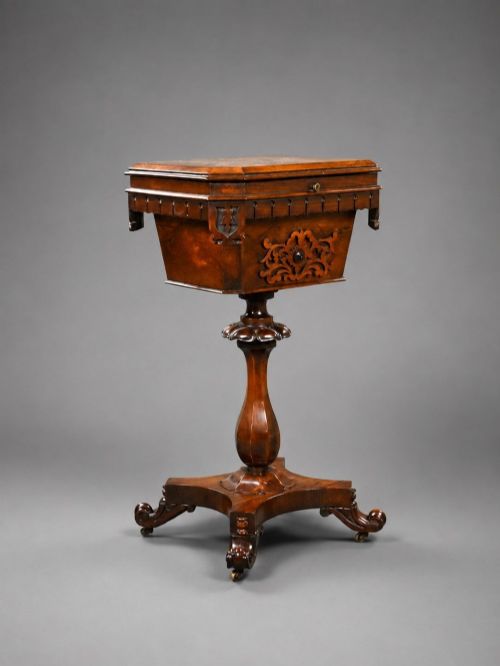
- A small stand or table fitted with compartments for storing tea, often featuring a lidded top and internal caddies. They reflect the high social value placed on tea during the Georgian and Regency periods.
- Tunbridge Ware
- A type of woodworking characterised by microscopic mosaic tiles assembled from various natural coloured woods to form geometric or pictorial scenes. It appears frequently on nineteenth-century tea caddies and small boxes.
- Sarcophagus
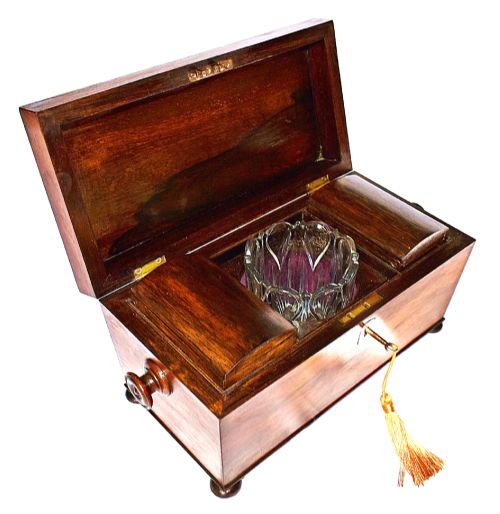
- A box or tea caddy styled with a sloping, domed lid resembling an ancient stone coffin. Makers often rested these forms upon carved paw feet or lion mask handles.
- Marquetry
- The art of forming decorative patterns by fitting together thin veneers of different coloured woods and materials. Craftsmen used this technique to adorn commodes and cabinet fronts.
Antique Rosewood Chest: Frequently Asked Questions
What is a Wellington chest?
A Wellington chest is a tall, narrow set of drawers distinguished by a locking flap down one side. This locking mechanism secures every drawer simultaneously with a single key.
Cabinetmakers designed these pieces for storing documents or fine garments in compact spaces during the nineteenth century.
How do I care for rosewood?
Rosewood requires stable indoor humidity and protection from direct sunlight to prevent the dense timber from drying or fading. Regular dusting with a soft, dry cloth preserves the polished surface without building up wax.
Avoid placing these chests near heat sources or damp areas.
What is a teapoy used for?
A teapoy served as a standalone piece of furniture designed to hold dry tea leaves in separate internal canisters. Wealthy households utilised them in reception rooms before tea became widely accessible.
Most examples include mixing bowls and lockable lids to safeguard expensive leaves.
How do I identify Regency pieces?
Regency furniture often displays classical restraint, symmetry, and architectural motifs influenced by ancient Greece and Rome. Makers frequently incorporated brass inlay, dark rosewood veneers, and carved paw feet.
Proportions remain balanced, focusing on clean lines rather than heavy carving.