




Antique Rosewood Caddy
An antique rosewood caddy is a dense, heavily grained hardwood container made to hold precious loose-leaf tea during the Georgian, Regency and Victorian periods.
Antique Rosewood Caddy
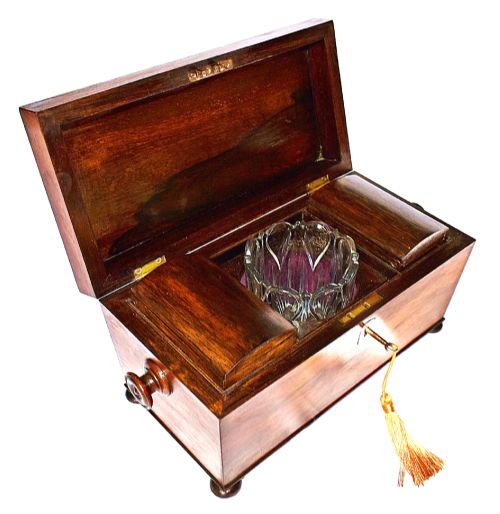
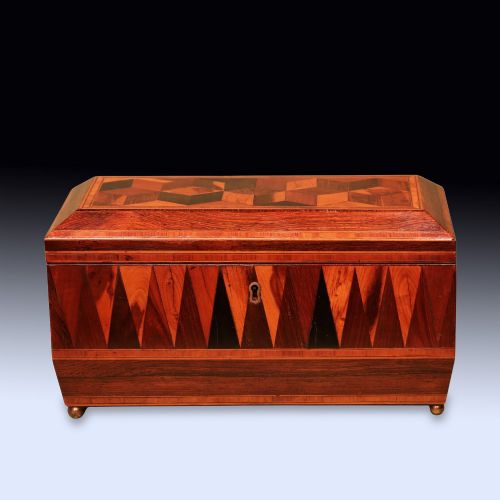
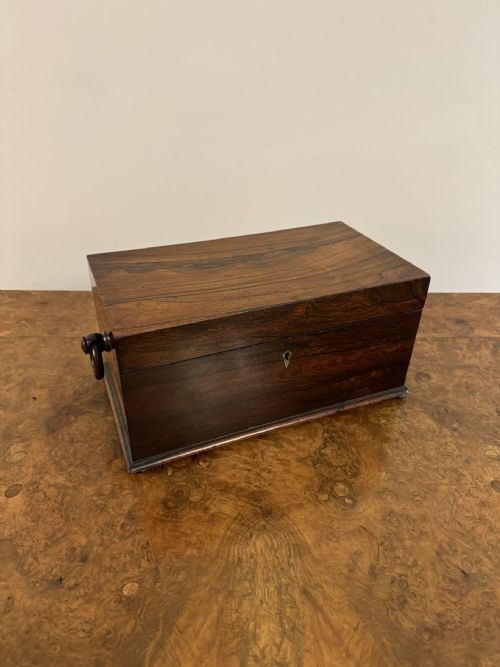
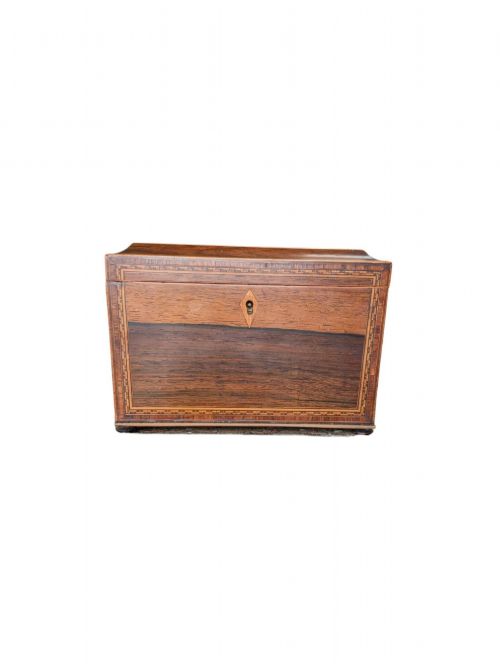
When you search for an antique rosewood caddy, you encounter boxes designed for domestic hospitality when tea was an expensive commodity locked away from servants. The most common form on this page is the sarcophagus shape resting on bun feet, often featuring ring handles and internal lidded compartments.
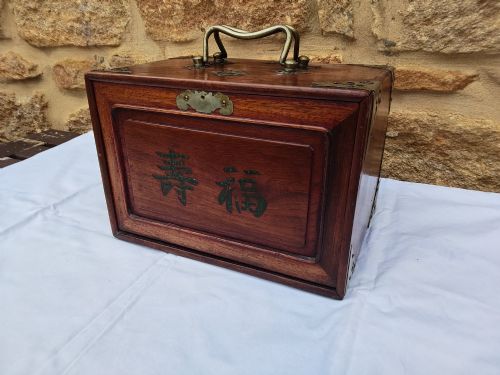
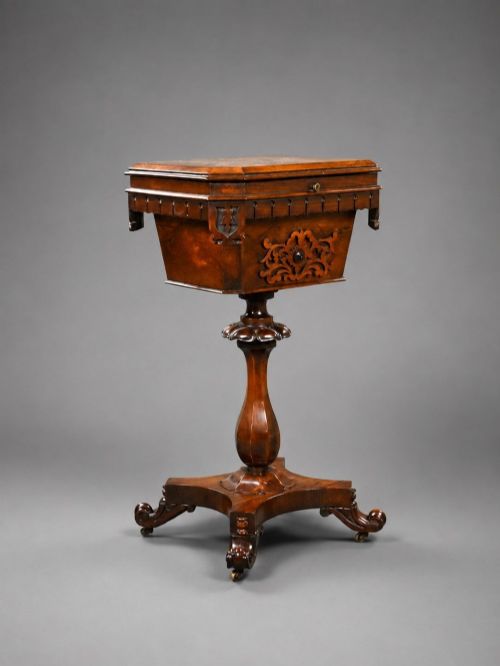
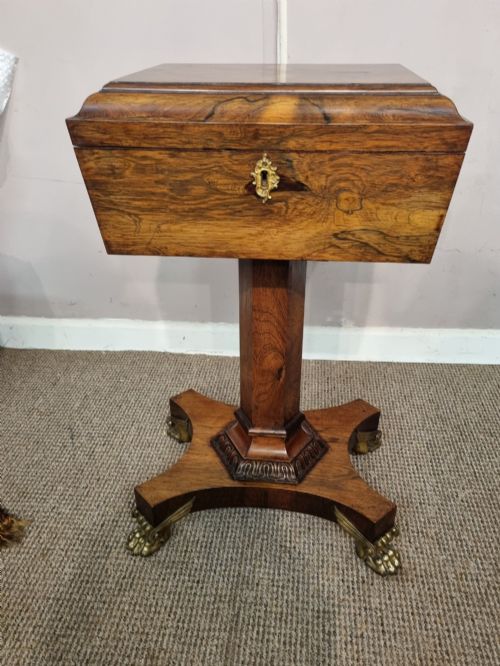
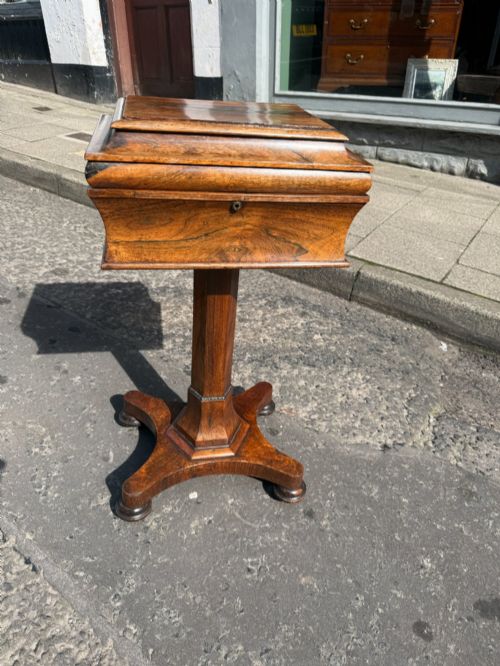
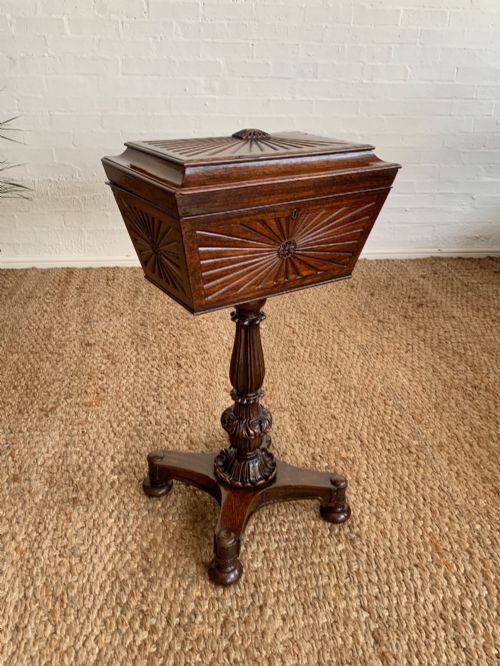
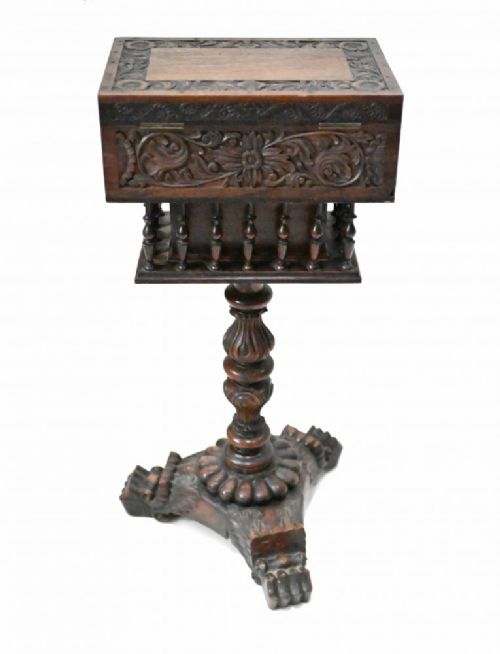
Beyond standard tea containers, the selection includes related forms like teapoys on pedestals, sewing boxes, and writing desks sharing the same dark, rich timber. These pieces span from the late eighteenth century through the nineteenth century, reflecting changing drawing-room fashions under Georgian, Regency, William IV and Victorian reigns.
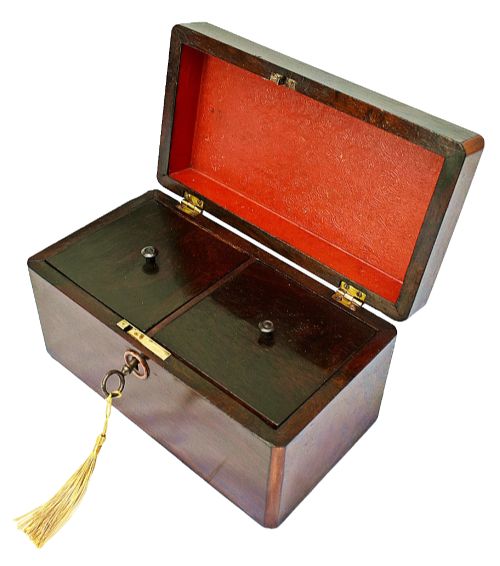
Many examples incorporate fitted interiors with glass mixing bowls, foil-lined compartments, and small ivory or bone knobs. Survivors range from plain timber surfaces to intricate variants incorporating parquetry and pictorial mosaic panels.
Assessing quality
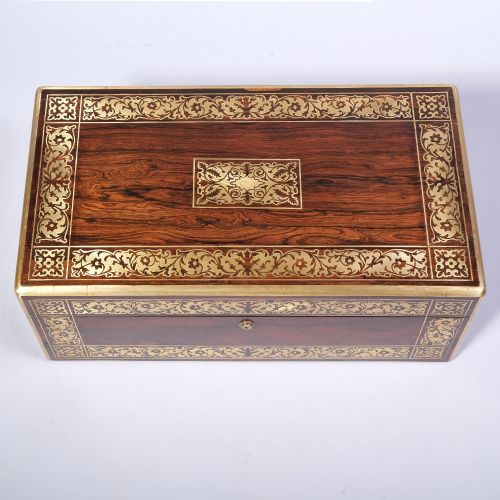
Quality rests in the crispness of the brass inlay, the symmetry of the rosewood grain matching across the lid, and the survival of original internal fittings like mixing bowls and secondary lids. Superior examples display substantial weight, well-cast lion mask handles, and neat parquetry work without missing veneer sections.
The distinction between standard production boxes and premier workshop output lies in the architectural proportion of the sarcophagus curves and the complexity of internal storage arrangements. Maker attribution, such as signed pieces by Henry Hollamby, elevates a piece through documented craftsmanship.
Antique Rosewood Caddy Retail Price Guide 2026
Typical asking prices for rosewood caddy among the pieces listed under this phrase on Sellingantiques today, from the lower quarter to the upper quarter. They describe what is for sale here now, not the wider market.
Listings feature brass-inlaid Regency sarcophagus boxes alongside Victorian Tunbridge Ware pieces decorated by Henry Hollamby.
Henry Hollamby·Thomas of London
The Antique Rosewood Caddy Glossary
- Sarcophagus
- A box shape featuring a domed or peaked lid sloping outwards toward the base, imitating ancient stone coffins. This silhouette proved popular for luxury tea containers during the Regency period.
- Teapoy
- A larger tea caddy mounted upon a central pillar and platform base or legs. These freestanding pieces allowed tea to be mixed in the drawing room without occupying table space.
- Tunbridge Ware
- A type of decorative woodwork featuring intricate mosaic patterns made from tiny blocks of naturally coloured timbers. Skilled artisans assembled these mosaics to depict architectural landmarks and floral motifs.
- Parquetry
- Geometric mosaic woodwork formed by fitting small wooden veneers together in repeating patterns. It appears frequently on Regency lids to create contrasting tonal borders.
- Mixing bowl
- A blown glass vessel fitted inside the centre of a caddy to blend green and black teas before brewing. Many survivors retain their original cut-glass bowls.
Antique Rosewood Caddy: Frequently Asked Questions
What was inside an antique rosewood caddy?
Original interiors typically contained two lidded wooden canisters for different tea varieties, flanking a central glass bowl used for blending leaves.
Finer versions included tiny key-operated locks, velvet linings, and small compartments designed for sugar storage.
How do I date a rosewood tea caddy?
Regency examples from around 1820 often display brass stringing, sarcophagus curves, and heavy cast-metal ring handles. Victorian pieces from later decades tend toward flat lids, elaborate marquetry, and mother-of-pearl inlay.
Construction methods also help, as earlier carcasses use hand-cut dovetails while nineteenth-century pieces transition to machine-sawn elements.
How should I clean a rosewood surface?
Dust the timber gently with a dry, soft cloth and avoid commercial aerosol polishes that leave silicone buildups. Apply microcrystalline wax sparingly once a year to nourish the dry rosewood grain and protect the antique veneer.
Keep wooden boxes away from direct sunlight and radiators to prevent the rosewood veneer from shrinking and splitting.
What is the difference between a caddy and a teapoy?
A tea caddy is a tabletop box designed to be carried or placed on sideboard surfaces during tea service. A teapoy is a much larger freestanding piece of furniture incorporating a caddy top mounted upon a sturdy pillar and pedestal base.