



Regency Rosewood Teapoy
A regency rosewood teapoy brings the refined elegance of early nineteenth-century entertaining directly into a modern drawing room.
Regency Rosewood Teapoy
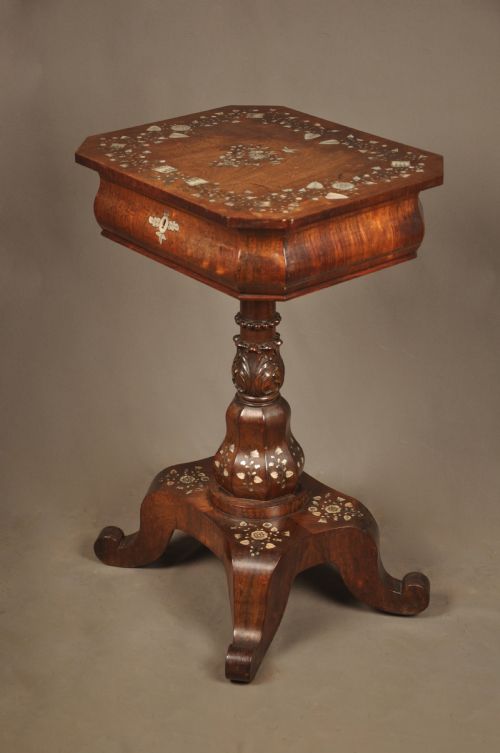
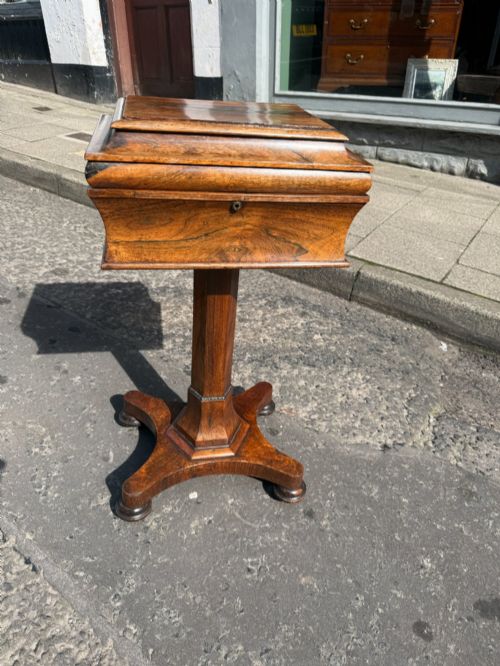
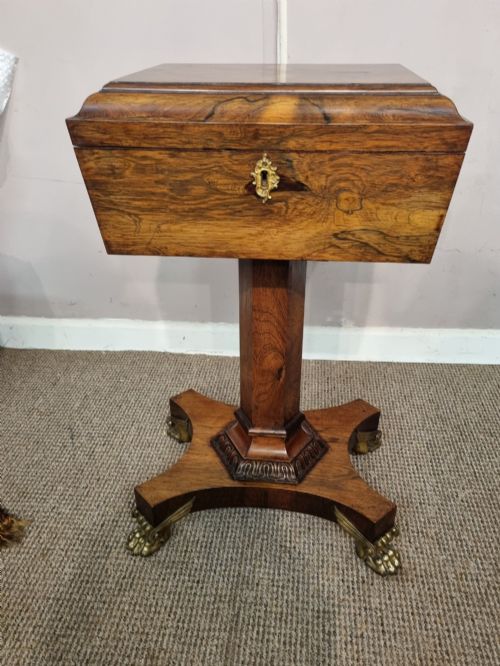
When you search for a regency rosewood teapoy, you look for a specialised container designed to store and serve precious loose leaf tea during the Georgian and Regency periods. These pieces sit on stands or pedestals, often housing internal caddies and glass mixing bowls for preparing infusions.
The versions met most frequently on this page date from the Regency era, the broader nineteenth century, and the William IV period. Makers shaped them primarily from dense rosewood, occasionally incorporating mahogany or mounting them on separate stands.
Surviving examples span standard tea storage boxes to converted pieces and circular lamp tables adapted from earlier forms. Scottish variants also appear, demonstrating regional cabinet-making traditions of the eighteen hundreds.
How they were made
Cabinet-makers utilised dark, richly figured rosewood veneers over solid secondary timbers, applying traditional joinery to construct the robust bodies and lids. Many examples display precise brass inlay set directly into the wooden surface in geometric or linear patterns.
Internal layouts typically comprise multiple fitted caddies for distinct tea varieties alongside central compartments for glass mixing bowls. Stands feature sturdy pedestals and carved or splayed legs, occasionally adapted later in the nineteenth century for alternative domestic uses.
Regency Rosewood Teapoy Retail Price Guide 2026
Typical asking prices for regency rosewood teapoy among the pieces listed under this phrase on Sellingantiques today, from the lower quarter to the upper quarter. They describe what is for sale here now, not the wider market.
Some teapoys contain secret compartments beneath the tea caddies, designed to keep precious blends away from light-fingered household staff.
What varies in quality
The refinement of the brass inlay and the depth of the rosewood grain set the standard for finer examples. Cabinet-makers who selected highly figured timbers and executed precise metalwork produced pieces that command greater attention from collectors.
Original internal fittings, such as intact wooden caddies and matching glass bowls, elevate the integrity of a teapoy. Conversely, later conversions or missing internal components alter the original character of the piece.
William Trotter
The Regency Rosewood Teapoy Glossary
- Teapoy
- A small stand or box designed for storing and mixing tea leaves. These pieces became central to polite drawing-room hospitality during the Georgian and Regency eras.
- Rosewood
- A dense, heavily figured exotic timber valued for its dark colour and distinct grain patterns. Cabinet-makers used it extensively for high-status Regency furniture.
- Caddy
- A small container or compartment housed within a teapoy for keeping different varieties of tea secure. They often feature fitted lids with small knobs.
- Brass inlay
- Ornamental metalwork embedded flush into the surface of the wood. Craftsmen employed this technique to create contrasting geometric borders on Regency cases.
- William IV
- A design period spanning the early nineteenth century that succeeded the Regency style. Furniture from this era often exhibits heavier proportions and robust architectural details.
Regency Rosewood Teapoy: Frequently Asked Questions
What is a teapoy used for?
A teapoy served as a secure container for storing expensive loose leaf tea in the drawing room. Hosts used the internal caddies and glass bowls to measure and blend infusions before serving guests.
Over time, many of these pieces lost their original tea-storage function. Later owners converted them into work boxes or lamp tables as social customs changed.
How do I date a rosewood teapoy?
Dating relies on examining the timber, the style of the brass inlay, and the structural form of the stand or pedestal. Regency examples typically display lighter proportions with delicate brass work, whereas William IV pieces are heavier and more robust.
Internal construction details and the presence of original caddies also help narrow the period. Most pieces date from the early nineteenth century between eighteen hundred and eighteen thirty-five.
Are all teapoys made of rosewood?
Rosewood is the predominant timber seen in these listings, prized for its dark, decorative grain. However, makers occasionally incorporated mahogany or other secondary timbers into the internal structures.
The exterior veneer defines the primary aesthetic, while secondary woods remain hidden within the framing and the interior compartments.
How do I care for antique rosewood?
Protect antique rosewood by keeping it away from direct sunlight and sudden temperature shifts. Environmental stability prevents the timber from drying out and the veneer from lifting.
Apply a gentle, appropriate wax polish sparingly to maintain the natural lustre of the wood. Avoid modern liquid cleaners that can damage the historical finish.
What is a converted teapoy?
A converted teapoy is a piece that has been adapted from its original tea-storage function for a different domestic use. This often involves altering the interior compartments to hold sewing materials or mounting the box onto a lamp table base.
These adaptations frequently occurred during the nineteenth century as tea became more affordable and drinking habits evolved.