

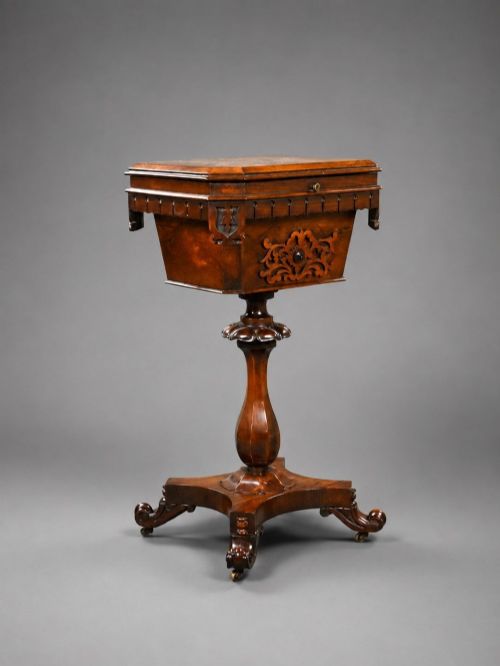
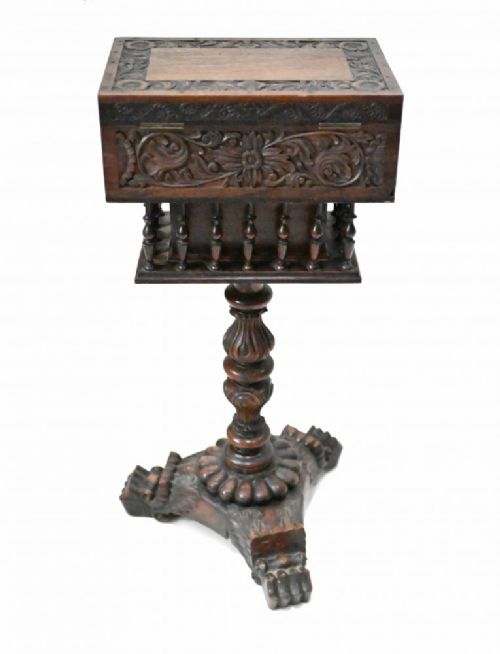


Antique Tea Box Pedestal
An antique tea box pedestal brings refined storage and display to a room, offering a dedicated table for serving tea with distinct historical character.
Antique Tea Box Pedestal
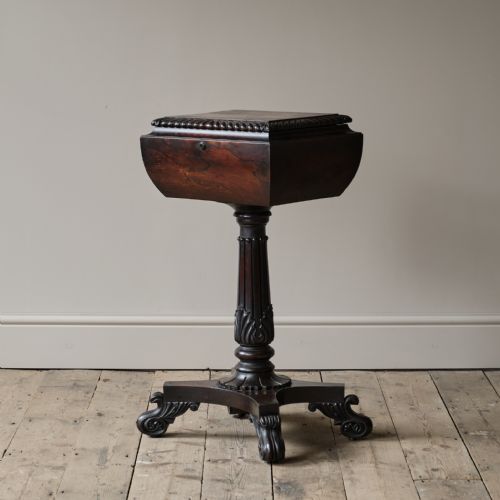
An antique tea box pedestal, frequently known as a teapoy, combines a lidded container for storing precious tea leaves with a supportive stand or table base. These pieces emerged to keep valuable dry tea secure and dry in domestic settings during past centuries.
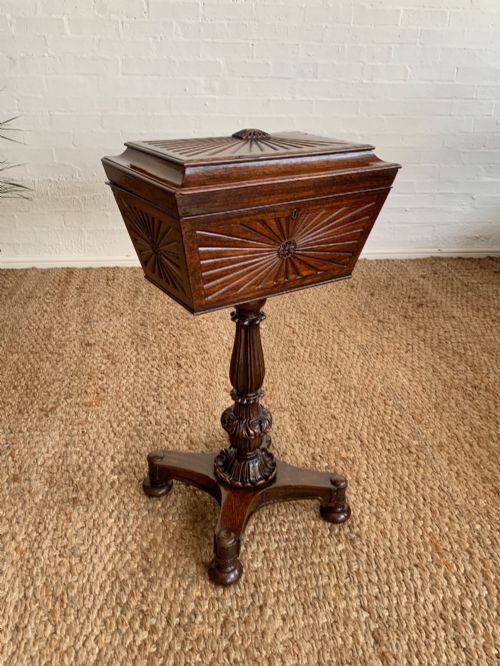
Buyers browsing this selection encounter various forms, with sarcophagus-shaped boxes on stands and freestanding tables featuring internal caddies appearing most frequently. The inventory includes examples from the Georgian, Regency, and Victorian periods alongside later Edwardian iterations.
Constructed primarily as standalone items of furniture, many incorporate fitted interior compartments and mixing bowls alongside the primary storage space. The overarching design allows the container and its pedestal to function as both a decorative focal point and a functional container.
Materials and construction methods
Cabinetmakers utilised dense hardwoods such as mahogany, rosewood, and walnut to build these pedestal structures, often selecting figured veneers like burr elm or burr maple for the exterior surfaces. These timbers provided the structural integrity required to support heavy lidded containers while offering rich natural grain patterns.
Metals including brass formed integral components, appearing as delicate inlay work, decorative escutcheons, handles, and structural mounts on Regency and William IV examples. Artisans also incorporated carved decorative details such as sunburst motifs and ornamental feet directly into the solid wood bases.
Antique Tea Box Pedestal Retail Price Guide 2026
Typical asking prices for tea box pedestal among the pieces listed under this phrase on Sellingantiques today, from the lower quarter to the upper quarter. They describe what is for sale here now, not the wider market.
Some nineteenth-century examples feature secret compartments cleverly hidden beneath the tea canisters for storing private correspondence.
Distinctions in craftsmanship
The standard of a piece rests heavily on the quality of its timber selection, the precision of its brass or wood inlay, and the crispness of any carved ornamentation. Superior examples display seamless veneer matching and retain their original interior fittings, such as small lidded caddies and glass mixing bowls.
Structural stability and the condition of the pedestal base dictate everyday usability, distinguishing robustly jointed furniture from pieces compromised by damp or poor past repairs. Maker attribution, through stamps or known stylistic traits, further separates standard regional items from high-workshop production.
Gillows
The Antique Tea Box Pedestal Glossary
- Teapoy
- A pedestal table designed specifically for holding tea caddies and serving tea in a formal parlour.
- Sarcophagus
- A coffin-like box shape with a domed lid and sloping sides, commonly utilised for Regency tea containers.
- Caddy
- A small box or chest intended for the storage of loose tea leaves within a household.
- Veneer
- A thin layer of decorative timber applied to a secondary wood base to create patterned exterior surfaces.
- Escutcheon
- A protective metal plate surrounding a keyhole on the front of a box or cabinet door.
Antique Tea Box Pedestal: Frequently Asked Questions
What is an antique tea box pedestal?
An antique tea box pedestal is a specialised piece of furniture designed to store loose tea leaves at a convenient height for the host.
These pieces typically feature a lidded compartment mounted atop a central pillar or four-legged stand, originating from eras when tea was an expensive commodity.
How were these pedestals used originally?
In past centuries, the head of the household kept the valuable tea locked inside the container to prevent theft by servants.
During social gatherings, the host would unlock the box, mix the leaves with hot water using internal bowls, and serve the beverage to guests.
How can I date a tea box pedestal?
Dating relies on observing the prevailing style, timber choices, and construction techniques visible in the cabinetwork and base.
Georgian and Regency examples often feature rosewood with brass inlay, whereas Victorian iterations frequently utilise mahogany or burr walnut with heavier carved details.
Can I use one as a side table?
These pieces integrate easily into modern rooms as decorative side tables or occasional stands beside seating.
The enclosed top compartments also provide practical concealed storage for small household items while maintaining a traditional aesthetic.