


Antique Rosewood Bedside Cupboard
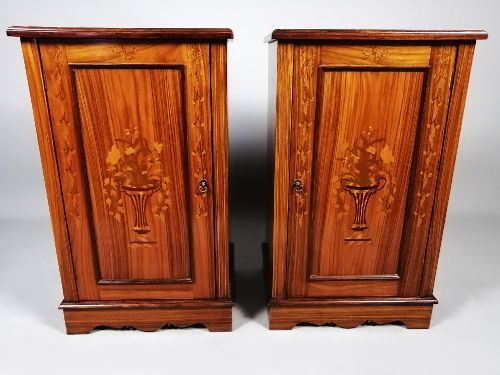
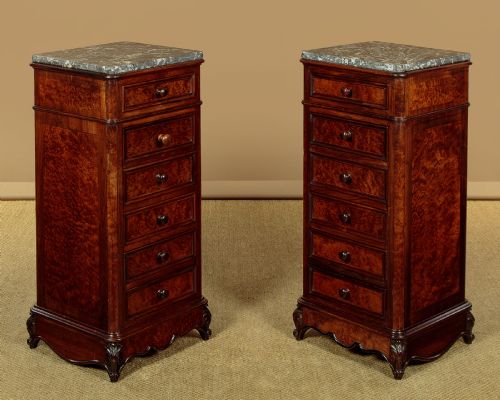
These antique rosewood bedside cupboards combine rich dark timber with practical storage, offering a refined small-scale cabinet for the bedroom.
Antique Rosewood Bedside Cupboard
When you search for an antique rosewood bedside cupboard, you encounter a selection of pedestals, cabinets and small tables designed to stand beside a bed. The pieces appearing here span the nineteenth century, the Victorian and Edwardian eras, and into the nineteen-twenties.
The forms range from single pedestal cupboards and matched pairs to French marble top commodes and floral marquetry bedside tables. Many examples incorporate enclosed storage behind a single door or banks of small drawers.
Origins stretch from English workshops to French cabinet makers, drawing on styles such as Regency Gothic Revival, Louis XV and Late Victorian. Buyers will frequently find pairs listed alongside individual cabinets.
Materials and construction methods
Makers utilised solid rosewood and exotic hardwoods alongside contrasting timbers for decorative effect. Amboyna, satinwood, kingwood and boxwood inlay appear frequently across the surfaces to create intricate floral marquetry and geometric patterns.
Hardware typically includes brass handles, whilst selected French models incorporate inset marble tops above the wooden carcase. Joinery relies on traditional techniques suited to pedestal construction and cabinet assembly.
Some nineteenth-century bedside cupboards secretly moonlight as nightstands that once housed the household porcelain.
Assessing quality in rosewood bedside pieces
The distinction between standard examples and finer pieces lies in the crispness of the wood inlay and the selection of the rosewood grain. Richly figured veneers and detailed floral marquetry indicate superior workshop output.
Structural refinement also dictates value, seen in the proportion of the pedestal, the quality of the brass fittings, and the integration of marble slabs. Matched pairs command particular attention due to the difficulty of sourcing simultaneous survivals.
The Antique Rosewood Bedside Cupboard Glossary
- Rosewood
- A dense, dark timber prized for its distinctive grain and deep colour, frequently utilised in fine nineteenth-century cabinet making. It takes a high polish and provides a stable base for intricate inlay.
- Marquetry
- The art of applying decorative pieces of veneer to a structure to form designs and pictures. On these cabinets, floral and foliage motifs appear frequently in contrasting woods.
- Pedestal cabinet
- A tall, narrow freestanding cupboard standing on a single base, designed to utilise small floor spaces beside furniture. They often house a single internal shelf or set of drawers.
- Commode
- A low French chest of drawers or cabinet with doors, often featuring an inset marble top. These pieces serve a similar functional role to bedside cupboards.
- Inlay
- The technique of inserting pieces of contrasting material into depressions in a base object to form a pattern. Boxwood and satinwood are common choices for this contrasting work.
Antique Rosewood Bedside Cupboard: Frequently Asked Questions
What is an antique rosewood bedside cupboard?
These are small nineteenth and early twentieth-century storage pieces designed to stand next to a bed, constructed primarily from rosewood with enclosed doors or drawers.
They appear in various styles including Victorian, Edwardian and French Louis XV, often featuring marquetry or contrasting wood inlay.
How were these bedside cupboards used historically?
Historically, they served to store personal items and chamber pots out of sight within the bedroom. Their surfaces also held lamps, water jugs or pocket watches.
Today they function primarily as bedside tables providing discreet storage alongside modern beds.
Are pairs common for these bedside cupboards?
Matched pairs appear regularly in nineteenth-century examples, though single cabinets are equally common due to the vagaries of survival over time.
Pairs usually command greater interest from buyers wishing to flank a double bed symmetrically.
How do I identify the period of a bedside cupboard?
Dating relies on stylistic clues such as the silhouette, the presence of Regency Gothic or Louis XV Revival motifs, and the character of the wood inlay. Victorian and Edwardian examples often display distinct construction methods and hardware choices.
Comparing the recorded dates from eighteen-ninety up to nineteen-twenty helps place specific pieces within their manufacturing era.