
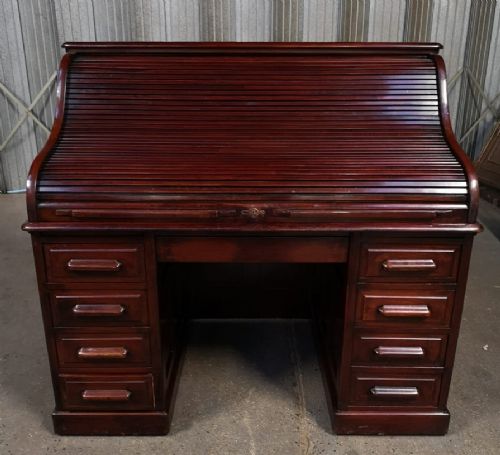
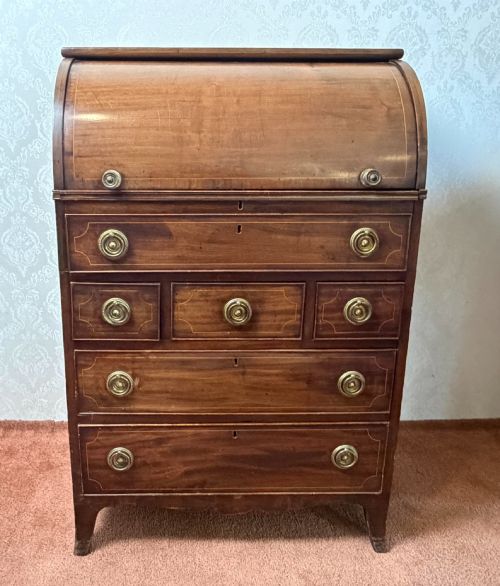
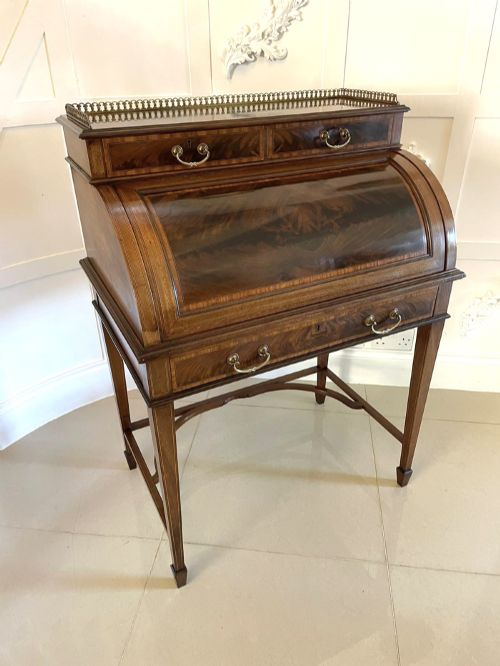
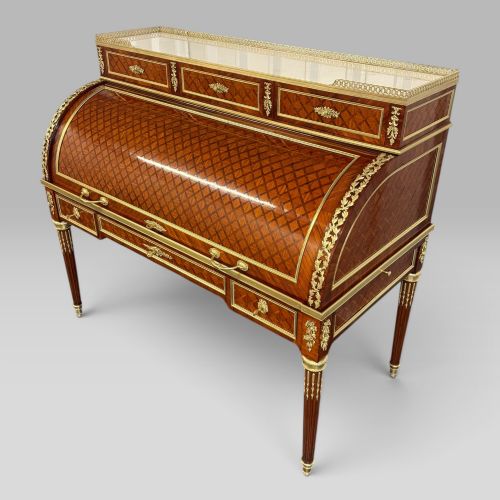

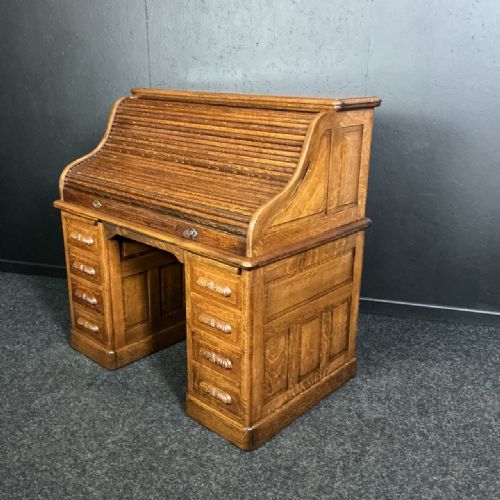

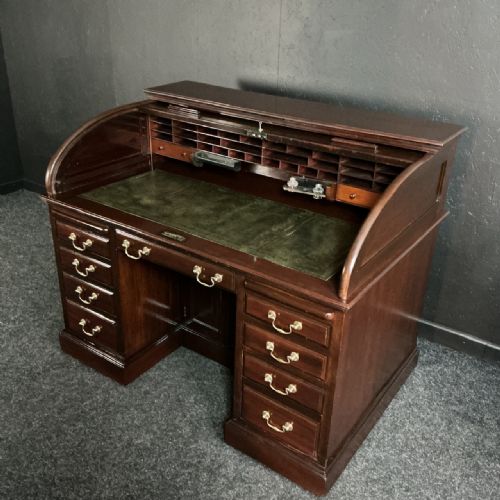


Antique Rolltop Writing Bureau
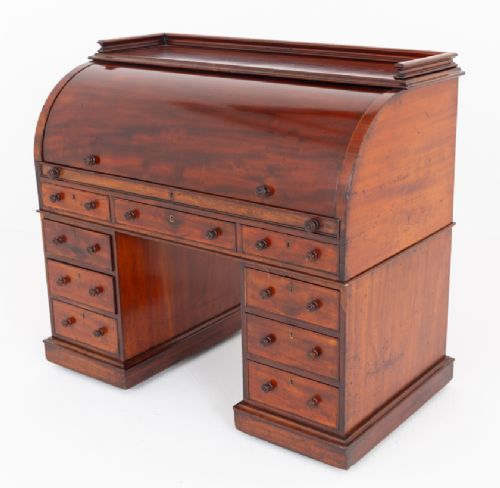
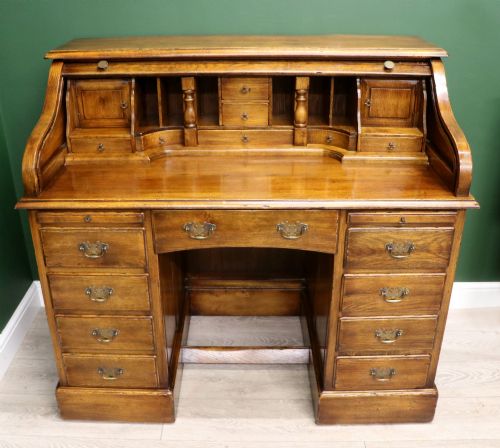
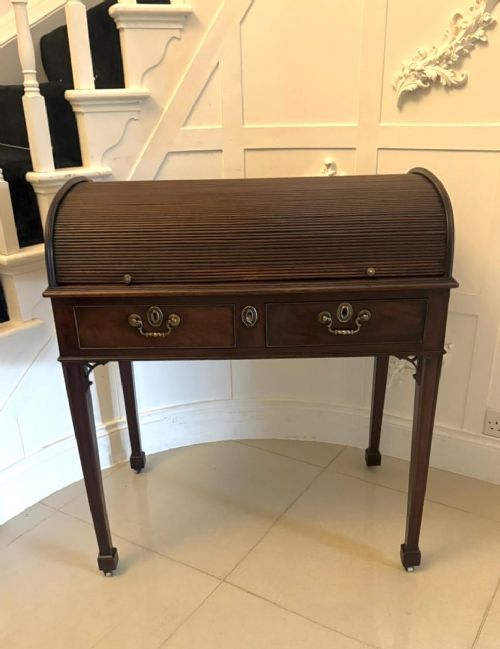
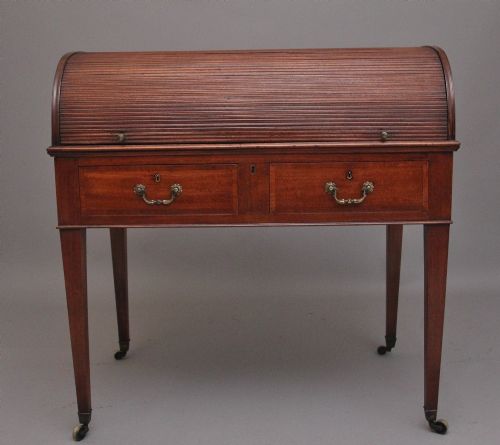
An antique rolltop writing bureau conceals papers beneath a sliding cylinder or tambour lid, offering both workspace and secure storage.
Antique Rolltop Writing Bureau
An antique rolltop writing bureau is a dedicated writing desk featuring a mechanical shutter that pulls down to cover the work surface and interior pigeonholes. The pieces found here span from the Georgian and Regency eras through the Victorian, Edwardian, and interwar periods.
Mahogany and oak dominate the selection, accompanied by walnut, satinwood, and exotic veneered woods. Bureau forms range from pedestal desks to compact freestanding cylinder desks and tall bureau bookcases.
British cabinet makers share space with continental European workshops, particularly French makers working in Louis revival and empire styles alongside Dutch marquetry pieces.
Standard and execution
Quality rests in the precision of the slatted cylinder mechanism and the smoothness of its travel within the curved tracks. Superior examples maintain exact alignment so the tambour or roll glides without binding or catching.
Finer desks display carefully selected timber figure, such as flame mahogany or detailed marquetry patterns, matched across the fall and drawer fronts. Cabinet work inside the stationery compartments, including secret drawers and satinwood pigeonholes, indicates the tier of original manufacture.
Secret compartments hidden behind stationary pigeonholes allowed nineteenth-century writers to conceal private correspondence from prying eyes.
Maple & Co London·Maples of London and Paris·Boston Chair Company·Globe Wernicke
The Antique Rolltop Writing Bureau Glossary
- Cylinder desk
- A desk featuring a quarter-circle rotating solid or veneered wooden cylinder that covers the writing surface.
- Tambour
- A flexible shutter made from narrow strips of wood glued to a fabric backing, allowing it to slide around a curve.
- Marquetry
- Decorative patterns formed by inlaying different coloured wood veneers onto a structural surface.
- Parquetry
- Geometric patterns formed by small pieces of wood fitted together, often used on desk tops and drawer fronts.
- Ormolu
- Gilded bronze mounts applied to furniture, characteristic of French nineteenth century revival pieces.
Antique Rolltop Writing Bureau: Frequently Asked Questions
Where were these desks placed?
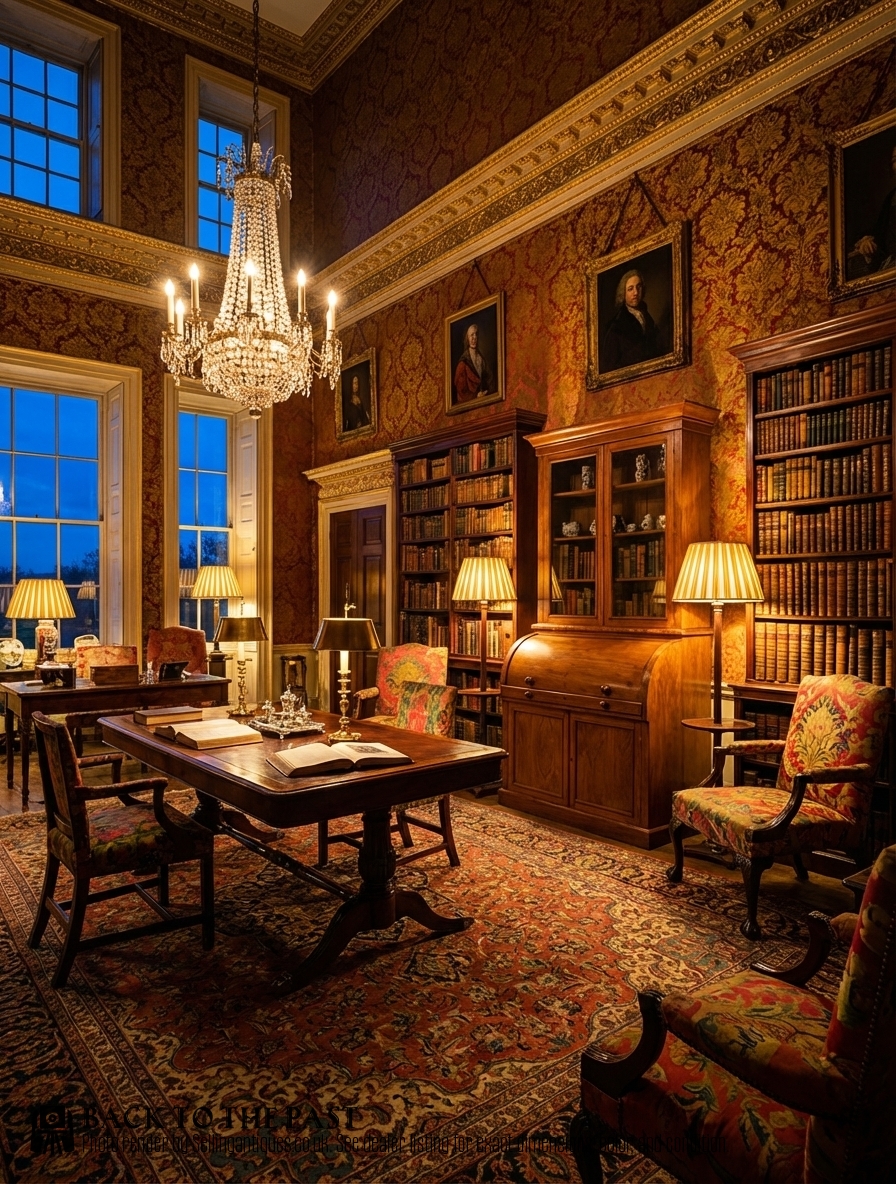
Most nineteenth century cylinder desks sat against a library or study wall, though larger pedestal variants stood freestanding. Edwardian homes utilised them in smaller domestic studies and reception rooms.
Freestanding European cylinder desks often featured finished backs so they could sit in the centre of a room rather than against a wall.
How do I tell Georgian from Edwardian pieces?
Georgian desks rely on solid mahogany or finely figured veneers with subtle stringing and hand-cut dovetails. Edwardian revivals frequently incorporate machine-sawn components alongside lighter satinwood inlays and neoclassical motifs.
Hardware differences also help distinguish periods, as early brasses use distinct casting methods compared to twentieth century stamped fixtures.
What is inside the cylinder?
Opening the roll reveals an arrangement of small drawers, pigeonholes for stationery, and frequently a pull-out leather-lined writing slide. Many desks incorporate hidden compartments behind removable letter drawers.
Some bureau bookcases extend upward with glazed shelving for books above the desk section.