


Antique Revolving Armchair
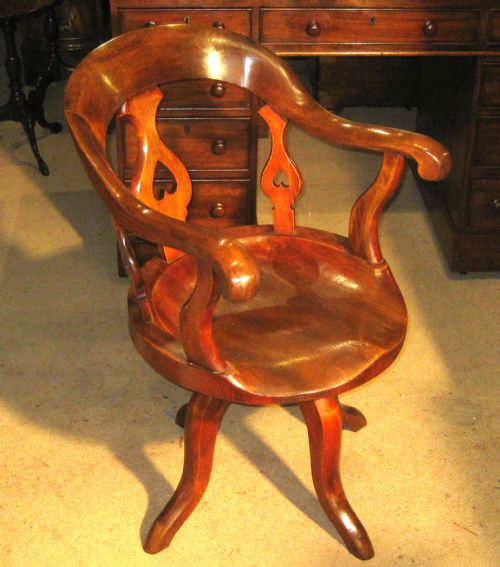
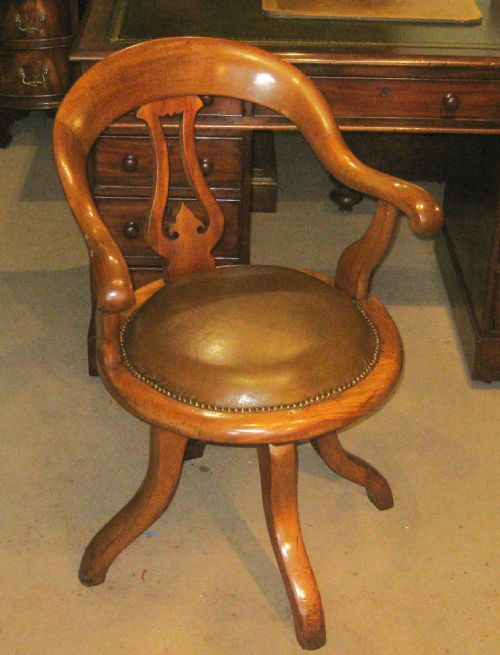
An antique revolving armchair offers sturdy seating designed for the study, library or office, combining movement with solid period timber.
Antique Revolving Armchair
When searching for an antique revolving armchair, buyers encounter robust wooden seats engineered for daily commercial or domestic desk work. These pieces primarily date from the Victorian and Edwardian periods, stretching from the mid-nineteenth century into the early twentieth century.
The most common forms on this page are office and desk chairs constructed to swivel and often tilt on an iron mechanism. They served secretaries, clerks and library readers who required mobility while seated at large partner desks or writing tables.
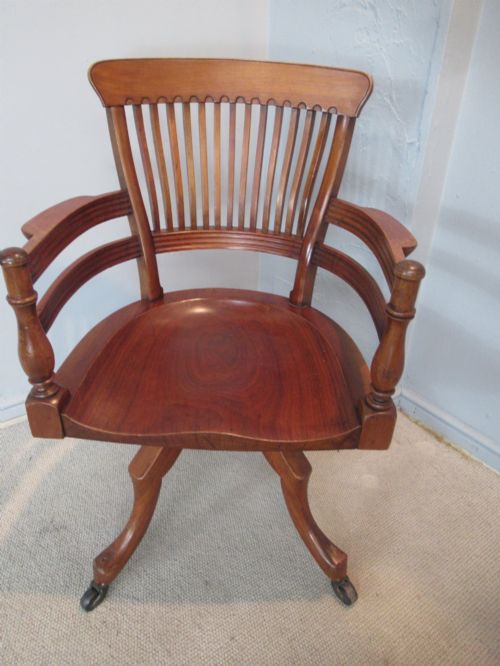
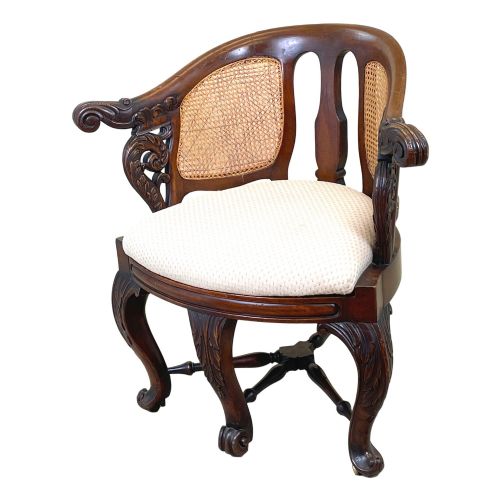
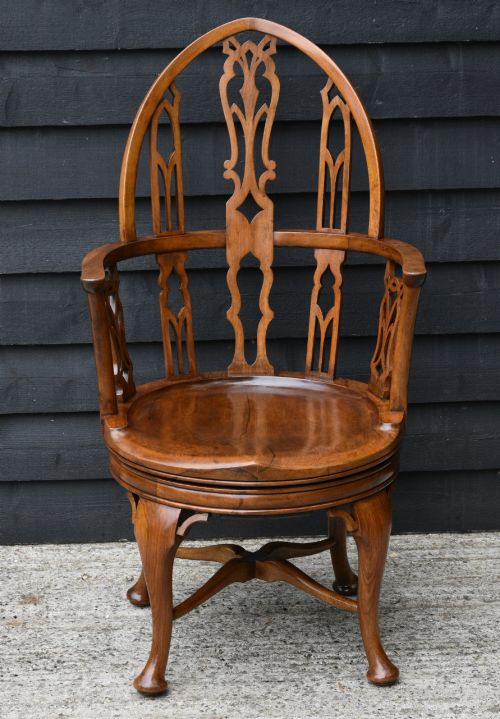
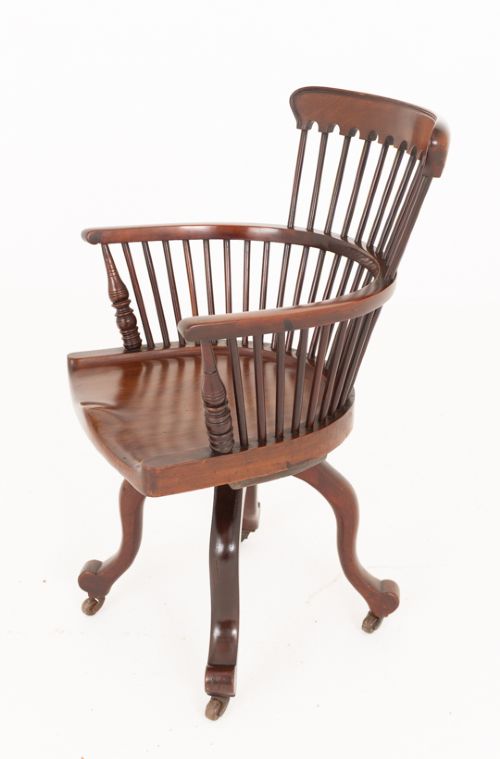
Makers produced these chairs in various regional British styles, incorporating walnut, mahogany and oak frames paired with leather upholstery. Variations extend from simple captain's chairs to heavily carved maritime seating and Gothic Revival models.
Construction and materials
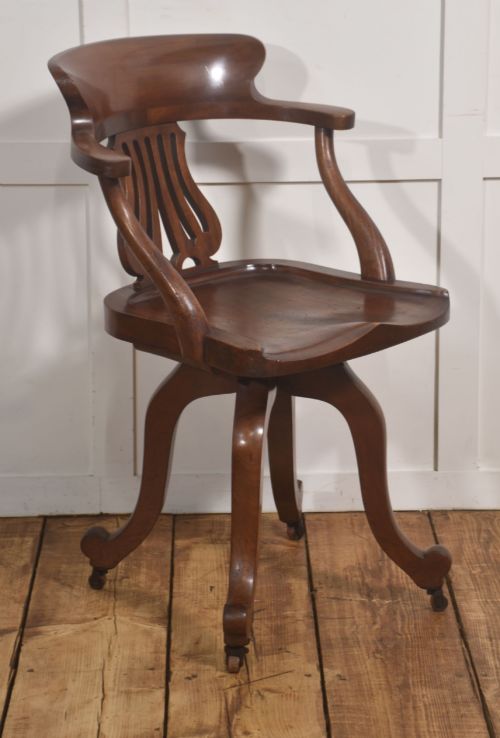
Cabinetmakers utilised dense hardwoods such as mahogany, oak and walnut to build frames capable of withstanding constant rotation and pressure. Timber sections were often steam-bent or shaped to form the curved backs characteristic of these armchairs.
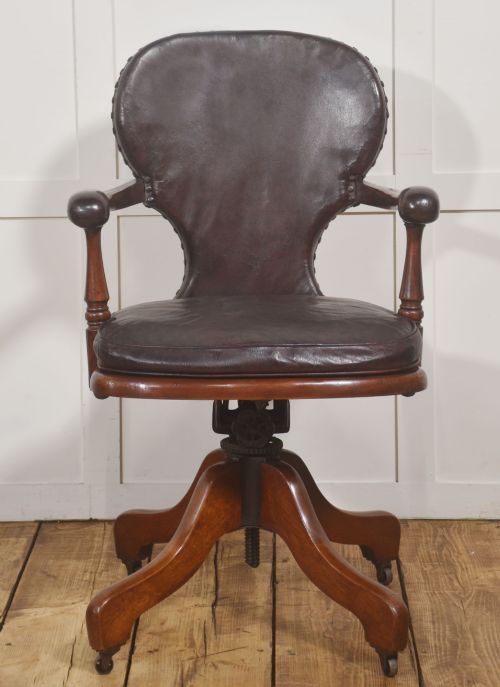
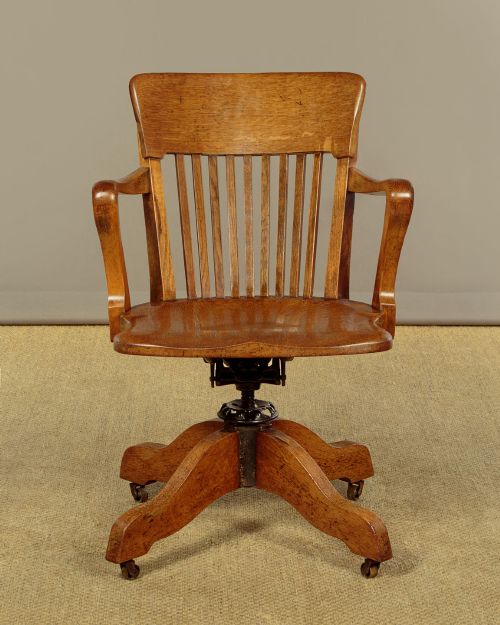
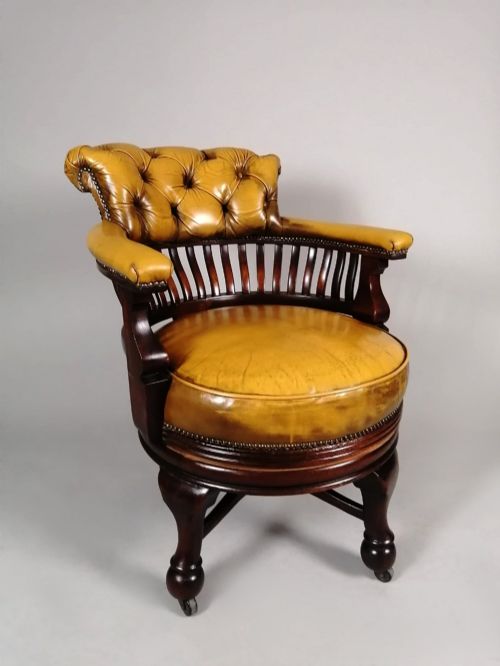
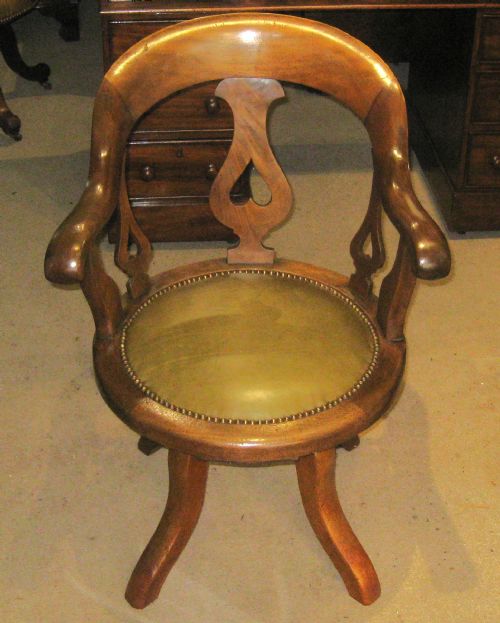
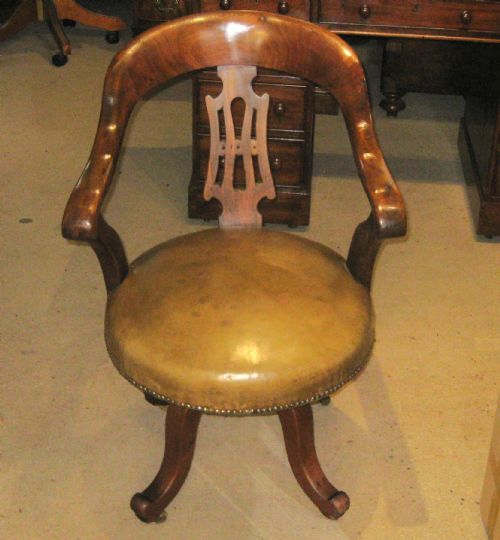
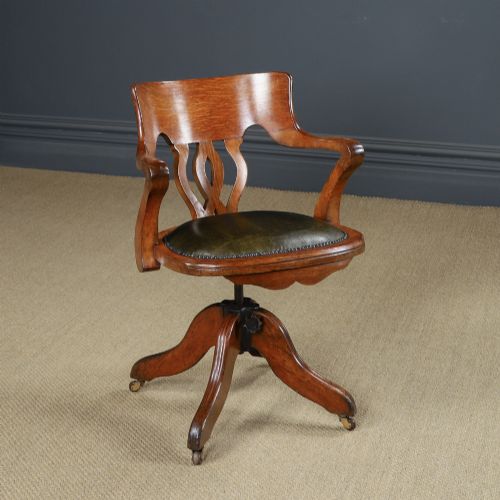
Iron and brass mechanisms, including central spindles and spring-loaded tilt apparatuses, were fitted beneath the wooden seat to permit smooth swivelling. Leather was frequently stretched over padded seats and secured with brass tacks, providing a durable working surface.
Antique Revolving Armchair Retail Price Guide 2026
Typical asking prices for revolving armchair among the pieces listed under this phrase on Sellingantiques today, from the lower quarter to the upper quarter. They describe what is for sale here now, not the wider market.
Listings feature oak, mahogany and walnut frames paired with iron mechanisms and leather upholstery.
Judging quality in swivel seating
The sophistication of the revolving mechanism dictates much of the underlying engineering quality, with complex spring-tilt assemblies representing higher production standards than simple fixed-height pivots. The choice of timber also shifts the tier of the piece, as solid golden mahogany or figured walnut commands greater refinement than utilitarian beech or basic oak.
Carving detail and joinery integrity separate standard office models from bespoke commissions. Pieces displaying thumb-moulded armrests, dovetailed backbows and substantial cast iron spiders beneath the seat reflect superior craftsmanship.
Kendrick & Jefferson·Shoolbred
The Antique Revolving Armchair Glossary
- Swivel
- A mechanical pivot assembly allowing the upper portion of the chair to rotate fully. This device is typically mounted on a four or five-legged wooden base.
- Captain's Chair
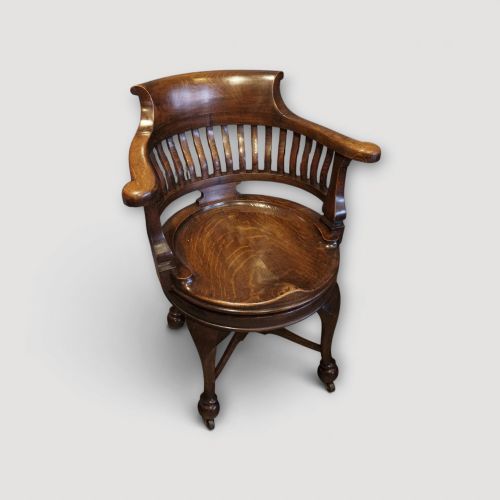
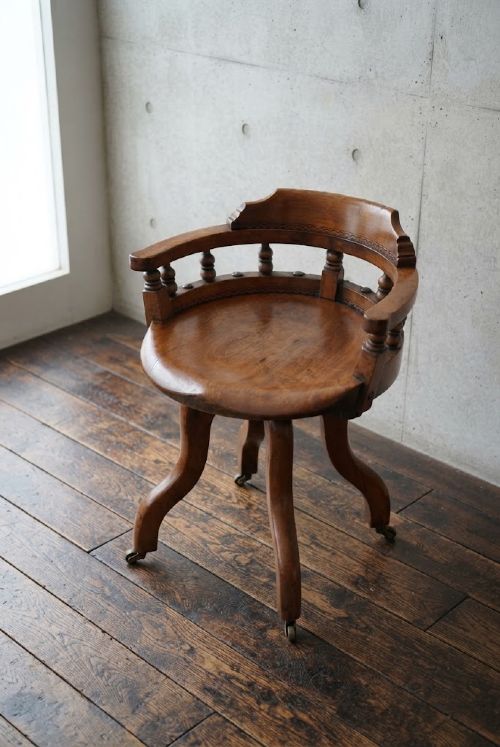
- A low-backed wooden armchair designed for swivel bases or fixed legs, traditionally utilised in offices and ship cabins. The curved top rail usually connects directly to the arm supports.
- Bergere
- An enclosed upholstered armchair with woven cane panels set into the wooden frame. This technique lightens the visual weight of heavy oak or walnut office seating.
- Gothic Revival
- A nineteenth-century design style drawing on medieval architectural motifs. Pieces in this category often feature pointed arches, heavy tracery and dark carved timber.
- Aesthetic Movement
- A late Victorian design phase emphasising visual beauty over narrative function. Furniture from this period frequently utilises ebonised wood and clean structural lines.
Antique Revolving Armchair: Frequently Asked Questions
What is a revolving desk chair?
A revolving desk chair is a pivoting seat designed for office work, featuring a central spindle that allows the user to turn without moving the base. These chairs emerged in large numbers during the Victorian era to serve expanding administrative offices.
Most examples combine a heavy wooden frame with a padded leather seat and backrest. They provide sturdy back support suited for long hours at a partner desk or library table.
How do I date an antique swivel chair?
Dating relies on observing the timber choice, construction methods and ironwork beneath the seat. Victorian models often feature solid mahogany or walnut with hand-turned spindles, while Edwardian versions frequently utilise oak and bentwood.
Mechanism design also aids dating, as early Victorian iterations used simple wooden screw posts before cast iron spiders and modern springs became standard towards 1900.
Were these chairs used on ships?
Certain specialised armchairs were built for maritime use aboard passenger liners and naval vessels. These ships chairs often featured heavy wooden frames and weighted mechanisms designed to keep the occupant stable while at sea.
Passenger lines such as P and O commissioned robust seating that could withstand rolling decks. Today, these survive as sought-after variants of standard office chairs.
How do I maintain leather upholstery?
Leather seat pads on office chairs benefit from periodic conditioning to keep the hide supple and prevent cracking. Cleaning should be done with a damp cloth rather than harsh detergents.
Many antique examples display distressed leather acquired through decades of working use. Preserving this patination requires gentle treatment rather than aggressive restoration.