





Antique Religious Textile
These antique religious textile pieces are sacred and devotional works of art that bring centuries of craftsmanship and spiritual history into a modern interior.
Antique Religious Textile
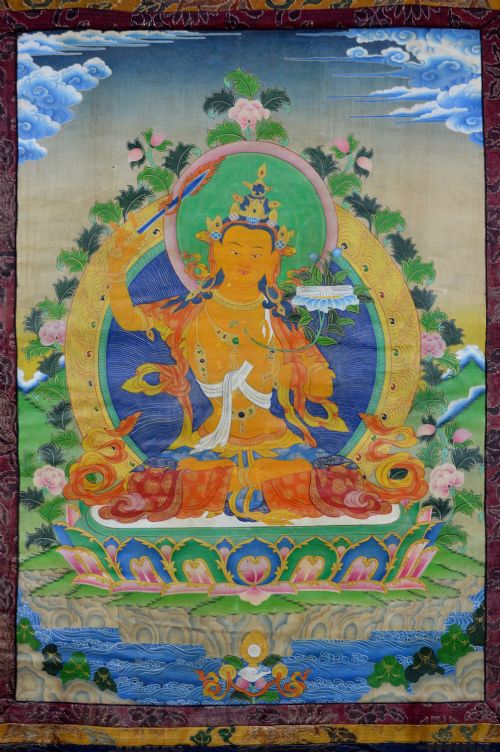
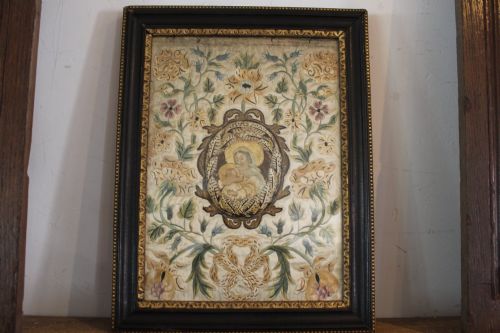
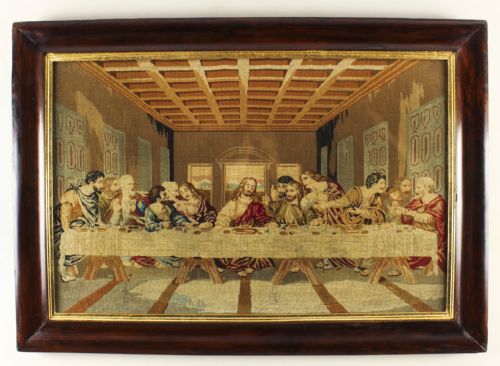
When you search for an antique religious textile, you encounter a diverse array of devotional objects spanning multiple centuries and cultural traditions. The selection includes embroidered silk panels, framed needlework pictures, tapestries, samplers, and painted temple cloths.
The pieces on this page range from seventeenth-century English needlework and Georgian samplers to Spanish velvet vestments and Tibetan Buddhist paintings. Wall art, wall tapestries, and ecclesiastical textiles dominate the selection, offering rich visual narratives of faith and devotion.
You are most likely to meet nineteenth-century works and Georgian needlework pictures on this page, alongside earlier seventeenth-century embroidered panels and regional textiles. Each object reflects the specific liturgical or domestic devotional practices of its origin.
Materials and construction
Makers utilised natural textiles such as silk, wool, cotton, and linen as the primary foundations for their devotional works. These fabrics were frequently embellished with metallic thread and gold leaf to create luminous, light-reflecting details on sacred vestments and wall art.
Needlework pictures and samplers rely on intricate embroidery techniques executed with silk and wool yarns on stretched canvas or linen grounds. Larger wall tapestries and painted temple cloths involve specialised weaving and pigment application on woven fabrics, often framed within wood and glass.
Antique Religious Textile Retail Price Guide 2026
Typical asking prices for religious textile among the pieces listed under this phrase on Sellingantiques today, from the lower quarter to the upper quarter. They describe what is for sale here now, not the wider market.
Sarah Reading and Jane Pattinson immortalised their needlework skills by stitching the Lord's Prayer and Commandments into history.
Assessing quality and execution
Quality in these devotional works rests upon the precision of the needlework, the complexity of the design, and the survival of delicate materials. Finer examples display meticulous stitch control and sophisticated tonal shading that bring devotional figures and narratives to life.
The preservation of organic components such as silk threads, metallic elements, and velvet grounds determines the visual impact of a piece. Superior works maintain their structural integrity and colour vibrancy despite centuries of exposure and handling.
The Antique Religious Textile Glossary
- Sampler
- A piece of needlework produced as a demonstration or test of skill, often featuring alphabets, religious verses, and decorative motifs.
- Cope
- A long ecclesiastical vestment resembling a cape, worn by clergy during processions and liturgical ceremonies.
- Tapestry
- A form of textile art woven on a vertical loom, traditionally depicting figural scenes or narratives for wall hanging.
- Needlepoint
- Embroidery stitched on a stiff open-weave canvas foundation, completely covering the ground to form dense pictorial compositions.
- Ecclesiastical textile
- Fabrics and garments specifically created for use within church interiors and religious services.
Antique Religious Textile: Frequently Asked Questions
What is an antique religious textile?
An antique religious textile is a devotional fabric piece, vestment, sampler, or framed needlework picture created for worship or domestic piety. These works encompass centuries of hand-stitched and woven artistry from various global traditions.
Collectors prize them for their historical depth, iconography, and the immense skill required to execute intricate pictorial scenes using thread and fabric.
How were these textiles used originally?
Many ecclesiastical textiles functioned as liturgical vestments in church ceremonies or as altar hangings and wall tapestries within sacred spaces. Others, such as samplers and needlework pictures, served as educational exercises in domestic settings or framed displays of piety.
Devotional cloths were also utilised in private shrines and temples, serving as focal points for prayer and meditation across different religious traditions.
How do I care for a textile?
Protect antique textiles from direct sunlight to prevent the fading of delicate silk and wool fibres. Maintain stable indoor humidity levels and avoid hanging heavy pieces by their top edges alone.
Professional mounting behind conservation-grade glass helps shield delicate needlework and painted wall cloths from dust and environmental degradation.
How can I tell the period?
Dating relies upon stylistic analysis of the figures, lettering styles on samplers, and the specific construction of the backing fabrics. Seventeenth-century embroidery differs markedly in palette and stitch structure from Georgian samplers or nineteenth-century tapestries.
Examining the materials, such as the type of metallic thread or hand-spun wool, provides further clues regarding the century of manufacture.