

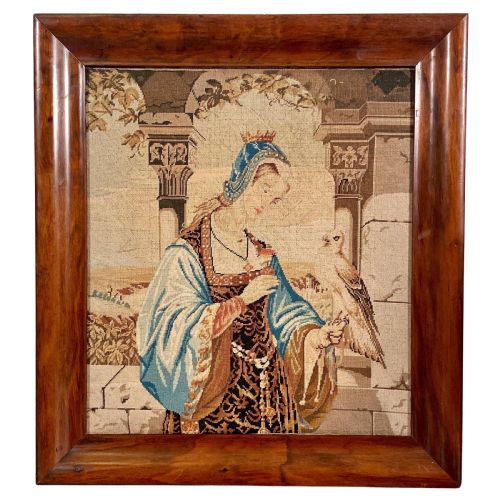

Medieval Textile Art
Medieval textile art brings centuries of needlework, tapestry weaving and gold thread embroidery into a room.
Medieval Textile Art
Medieval textile art encompasses wall tapestries, embroidered panels and woven wall coverings originating from the pre-sixteenth century through to later revival periods. Buyers searching for medieval textile art typically encounter framed or hung works featuring historical figures, heraldic motifs and traditional iconography.
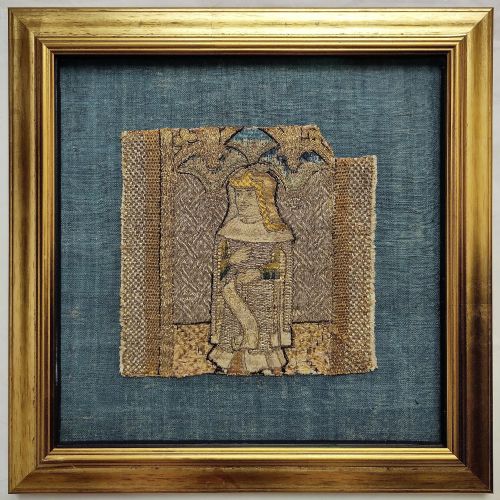
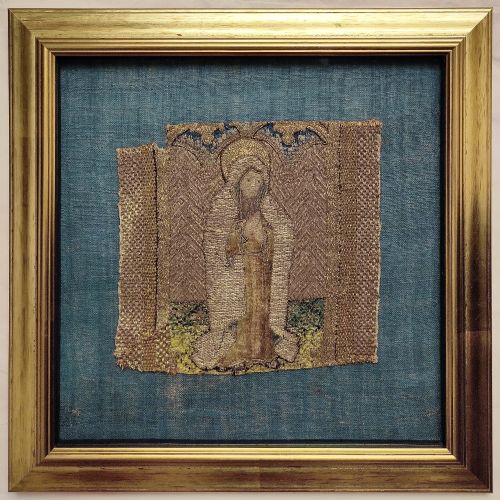
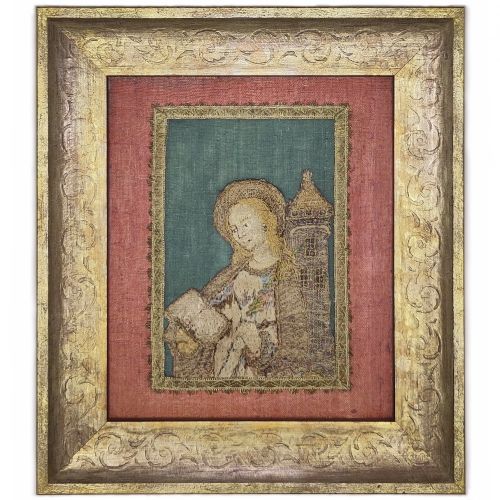
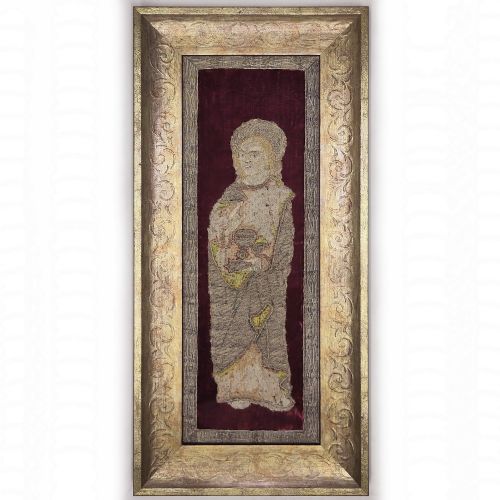
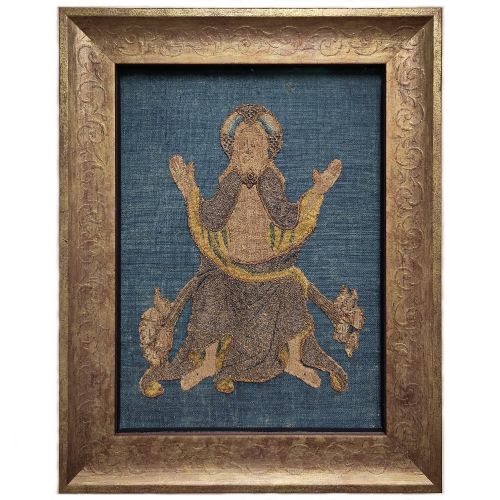
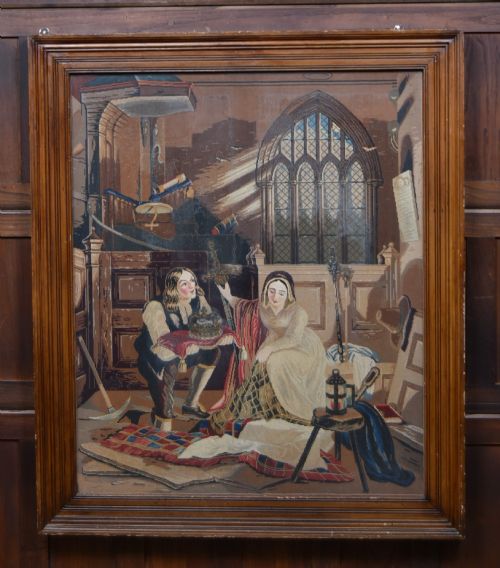
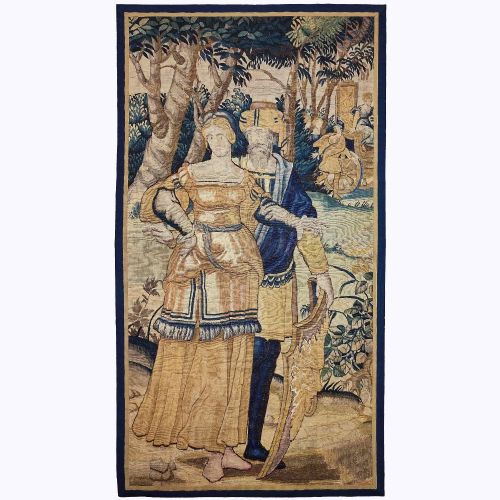
The objects on this page range from early needlework fragments like opus anglicanum and orphrey panels to sixteenth-century Flemish works and later nineteenth-century Gothic Revival interpretations. Each piece functions as wall art, bringing centuries of texture and narrative directly into an interior space.
The selection includes large wall hangings and smaller embroidered textile art pieces executed in wool, silk and metallic threads. These works record centuries of textile history, spanning original pre-reformation craftsmanship and later nineteenth and twentieth-century reinterpretations.
How they were made
These works rely on foundational textiles of wool, linen and silk, worked with gold thread, metallic thread and fine stitching. Embroidery techniques shape detailed figures on orphrey panels, whilst traditional looms produce large wall tapestries.
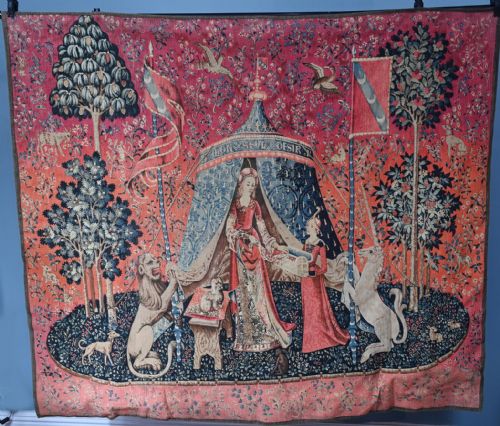
Flemish Renaissance and Gothic workshops utilised complex weaving methods to build intricate scenes featuring figures, animals and mille-fleurs backgrounds. Later nineteenth-century revival pieces recreated these historic methods utilising wool and cotton on framed supports.
Medieval Textile Art Retail Price Guide 2026
Typical asking prices for medieval textile art among the pieces listed under this phrase on Sellingantiques today, from the lower quarter to the upper quarter. They describe what is for sale here now, not the wider market.
Listings span five distinct periods, from pre-sixteenth century fragments to twentieth-century wall hangings.
What varies in quality
The density and fineness of the needlework or weaving dictate the visual depth of each panel. Early opus anglicanum and orphrey fragments demonstrate extraordinary precision in gold thread work, whereas later revival pieces vary according to the scale and fidelity of the design.
The integrity of the surviving textile fibres and the complexity of the original composition separate standard decorative wall hangings from exceptional works. Original sixteenth-century Flemish tapestry panels exhibit sophisticated pictorial depth, achieved through careful handling of wool and silk.
The Medieval Textile Art Glossary
- Opus Anglicanum
- English medieval embroidery renowned for its intricate needlework, often incorporating gold and silver thread on silk or velvet. This luxury craft was celebrated across Europe during the middle ages.
- Orphrey
- An embroidered band or panel attached to ecclesiastical vestments, frequently depicting saints or biblical figures. These surviving sections now form distinct pieces of textile art.
- Mille-fleurs
- A background style of countless small flowers and plants characteristic of late medieval and Renaissance tapestries. This botanical detailing creates a dense carpet effect behind central figures.
- Flemish Renaissance
- The artistic movement centred in Flanders during the sixteenth century, noted for large-scale woven wall tapestries displaying rich narrative scenes. These works combined classical influences with northern European detail.
- Gothic Revival
- The nineteenth-century aesthetic movement that revived medieval architectural and decorative arts. Pieces from this era replicate earlier Gothic forms using contemporary manufacturing techniques.
Medieval Textile Art: Frequently Asked Questions
What is medieval textile art?
Medieval textile art comprises historical wall hangings, tapestries, and embroidered panels created using wool, silk, and metallic threads. These works preserve centuries of stitching and weaving traditions from early workshops and later revival periods.
They encompass everything from small fragments of ecclesiastical embroidery to large Flemish wall tapestries designed for interior display.
How were old tapestries displayed?
Historically, large tapestries and wall hangings were mounted on stone or plaster walls to insulate grand interiors against cold draughts. They also served as movable decoration for civic spaces, great halls, and churches.
Today, smaller panels and framed textiles are hung securely on interior walls to showcase their historical needlework without risking structural damage.
How do I tell early pieces from later revivals?
Early pre-sixteenth century pieces and sixteenth-century works display authentic materials, hand-spun threads, and historical stitching methods characteristic of their period. Opus anglicanum and Flemish panels carry the distinct wear and material composition of their era.
Nineteenth-century Gothic Revival works and later 1890 or 1940 pieces often utilise cleaner framing, standardised backing fabrics, and nineteenth-century interpretations of medieval iconography.
How do I care for textile art?
Textile art requires protection from direct sunlight to prevent silk and wool threads from fading and becoming brittle. Stable indoor humidity and gentle cleaning help preserve fragile historic fibres.
Mounting pieces behind specialist glass or ensuring proper weight distribution on a hanging rod prevents sagging and protects the fragile textile structure.