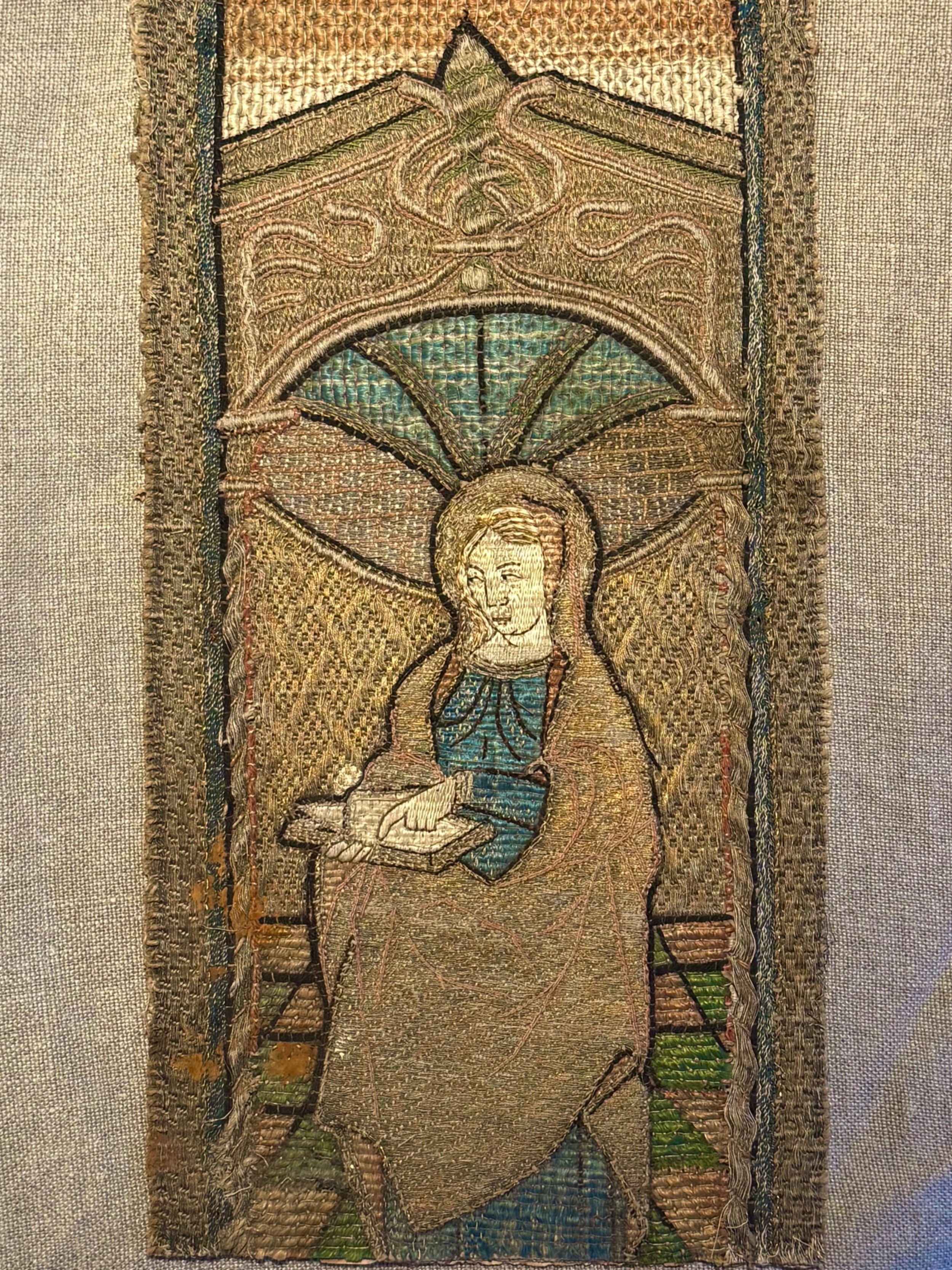
An Important Late Medieval / Early Renaissance Ecclesiastical Orphrey Fragment Depicting the Virgin Mary circa 1480–1520.
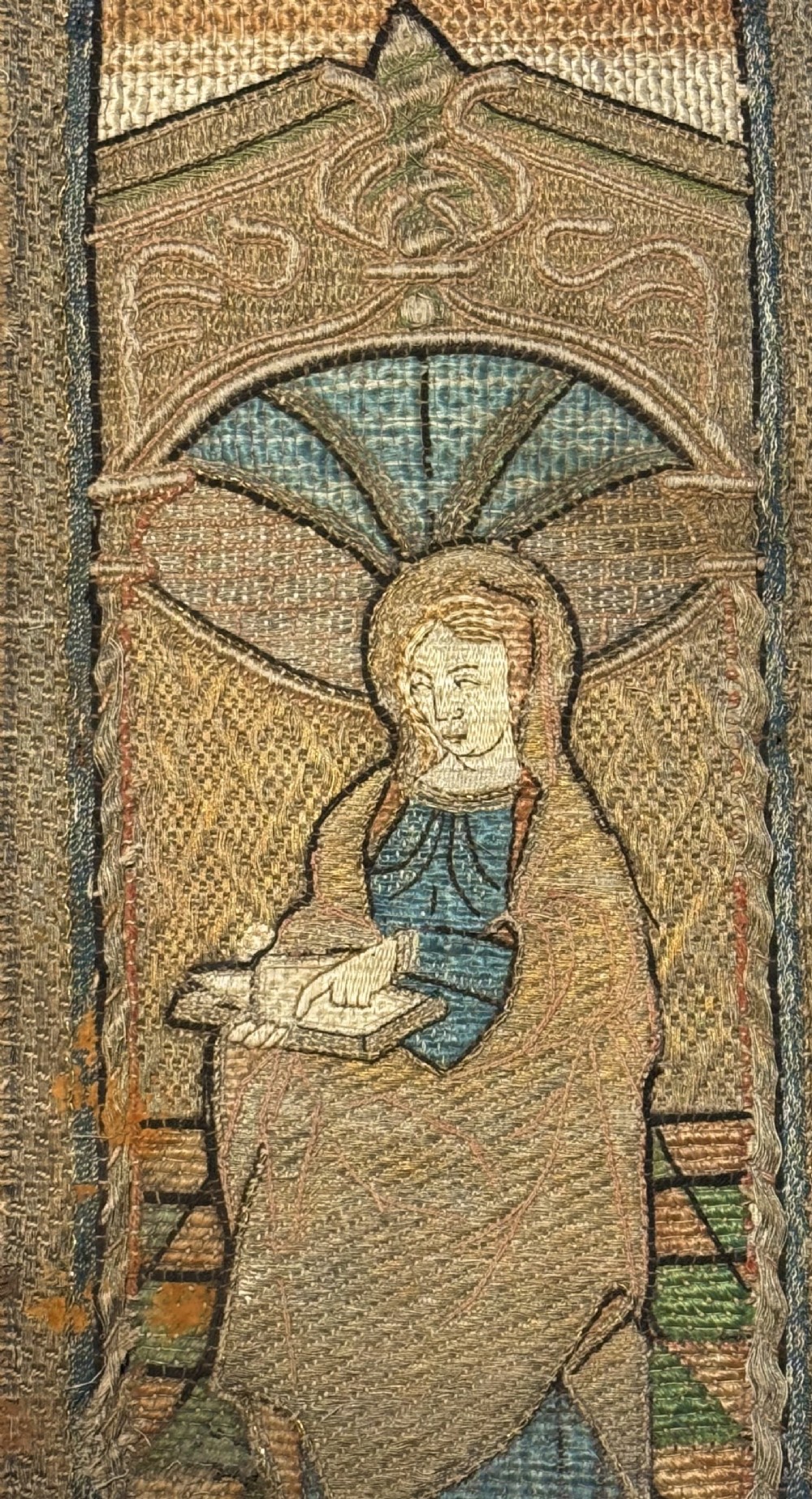
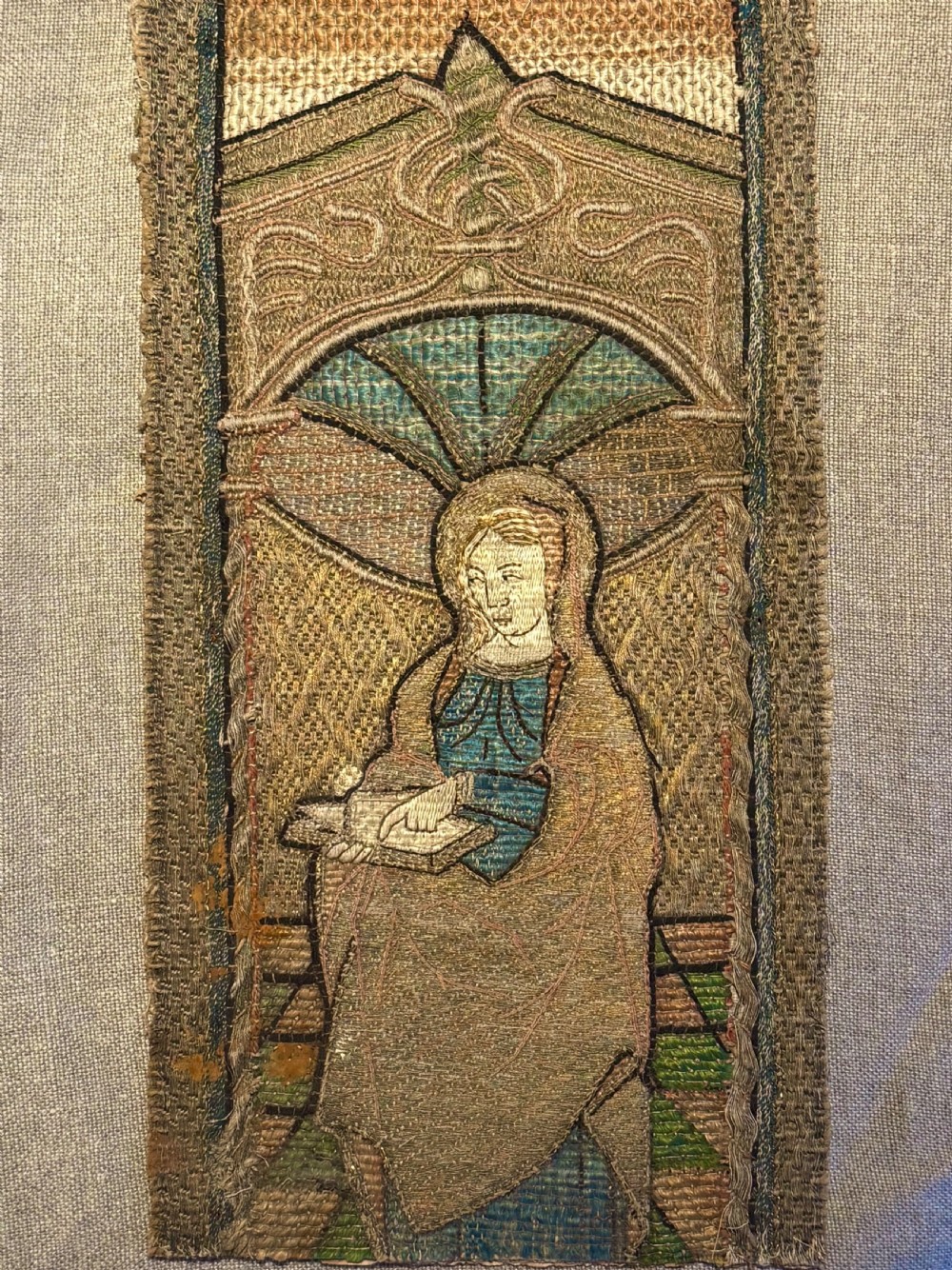
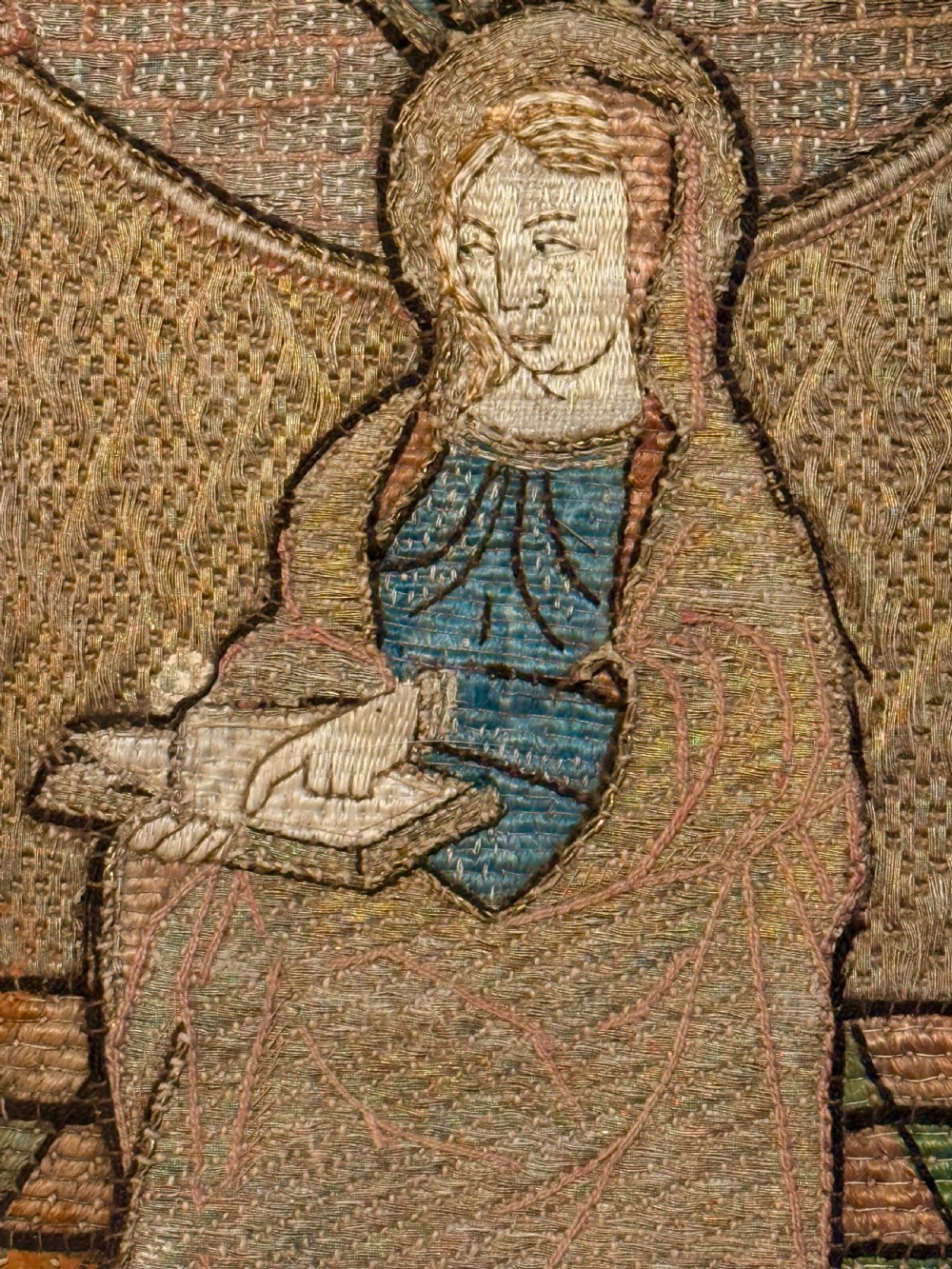
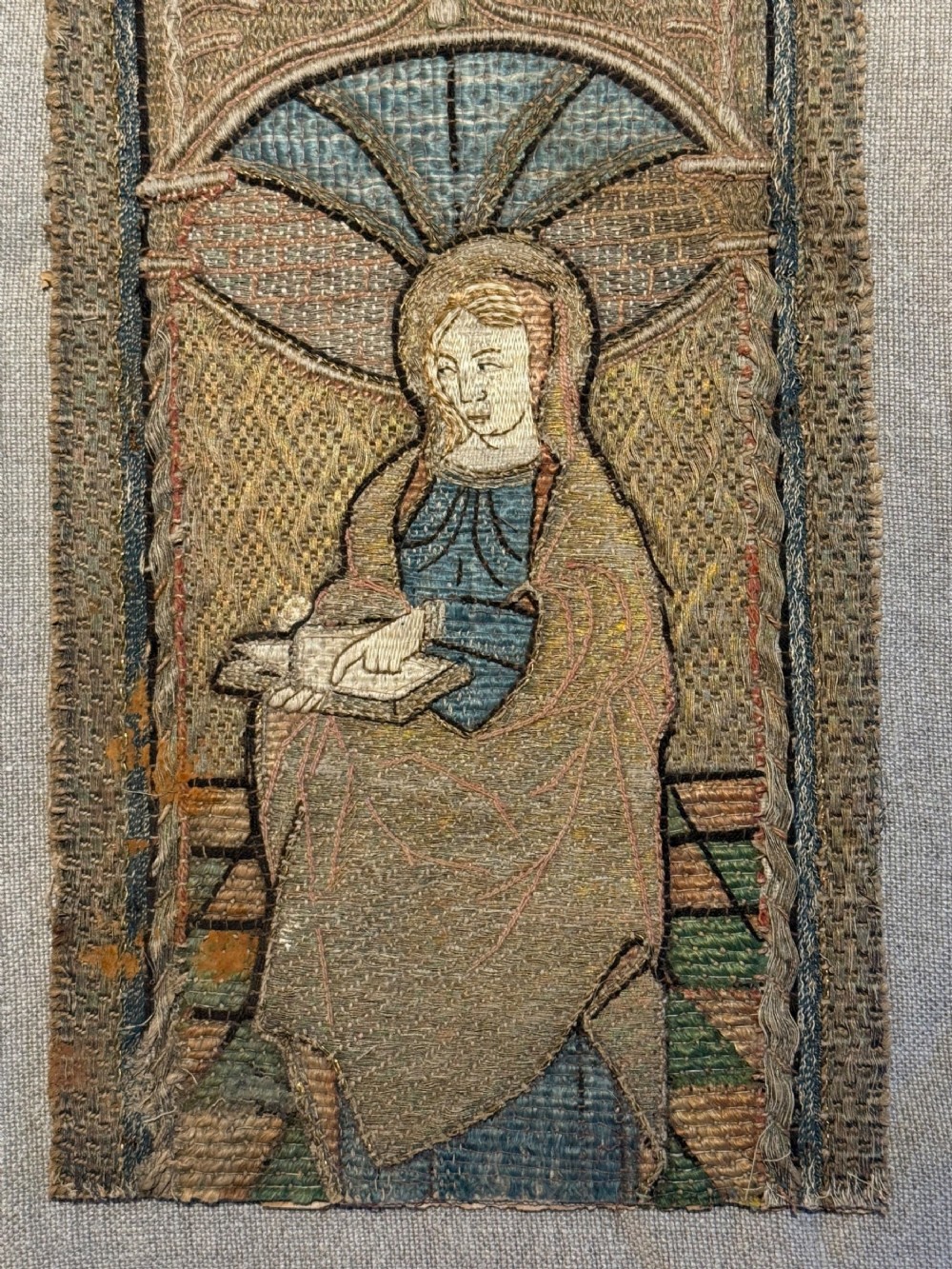
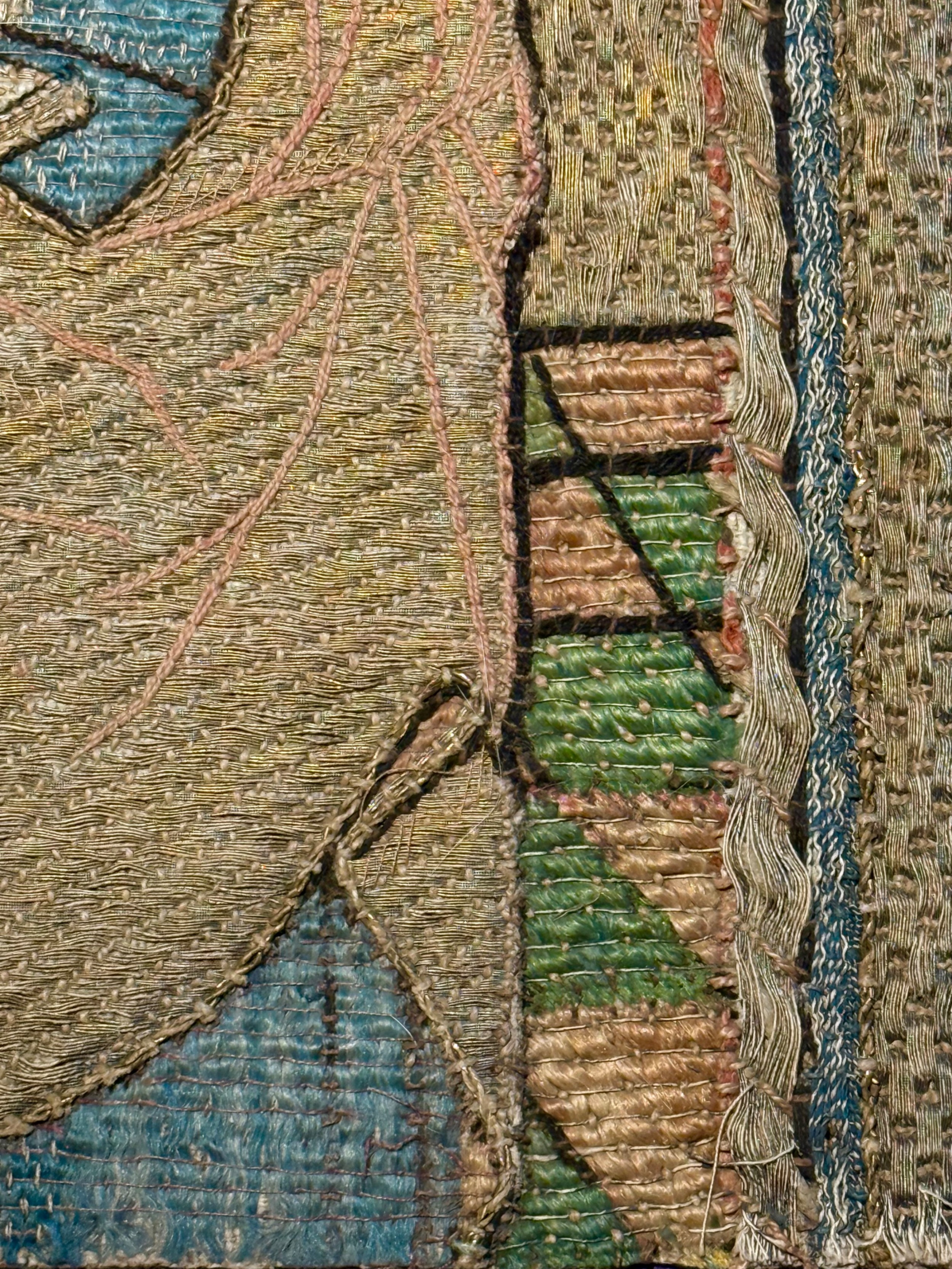
A highly detailed and densely worked vertical orphrey panel fragment, worked in gold and silver-gilt thread couching (aurifrisium) and colored silks over a linen canvas core. The panel depicts a haloed figure of the Virgin Mary, seated in a slightly turned posture under a deep, radiating architectural canopy. The canopy features structural ribbing executed in alternating bands of vibrant azure blue, green, and terracotta silk threads, mimicking a Gothic church vault.
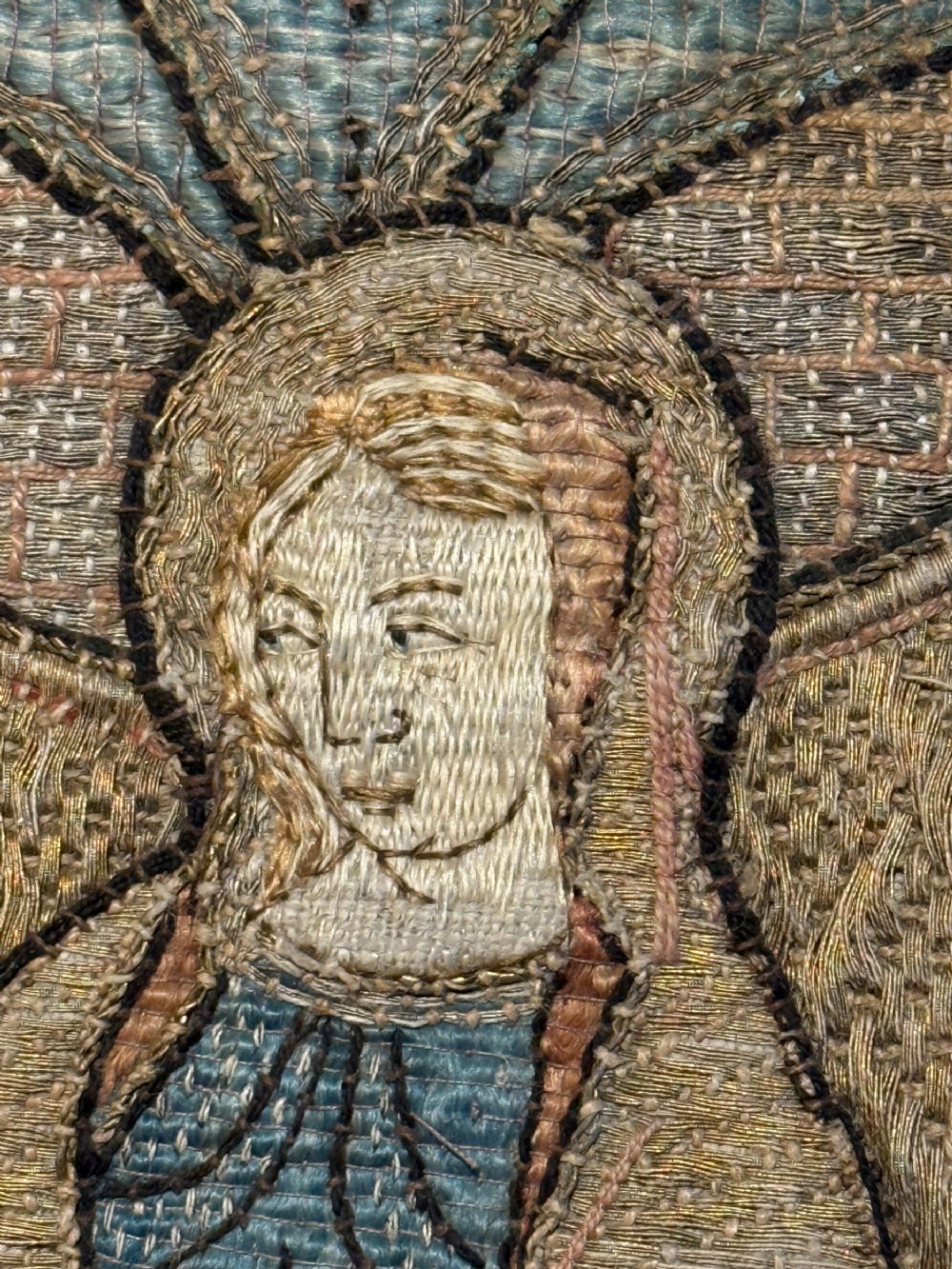
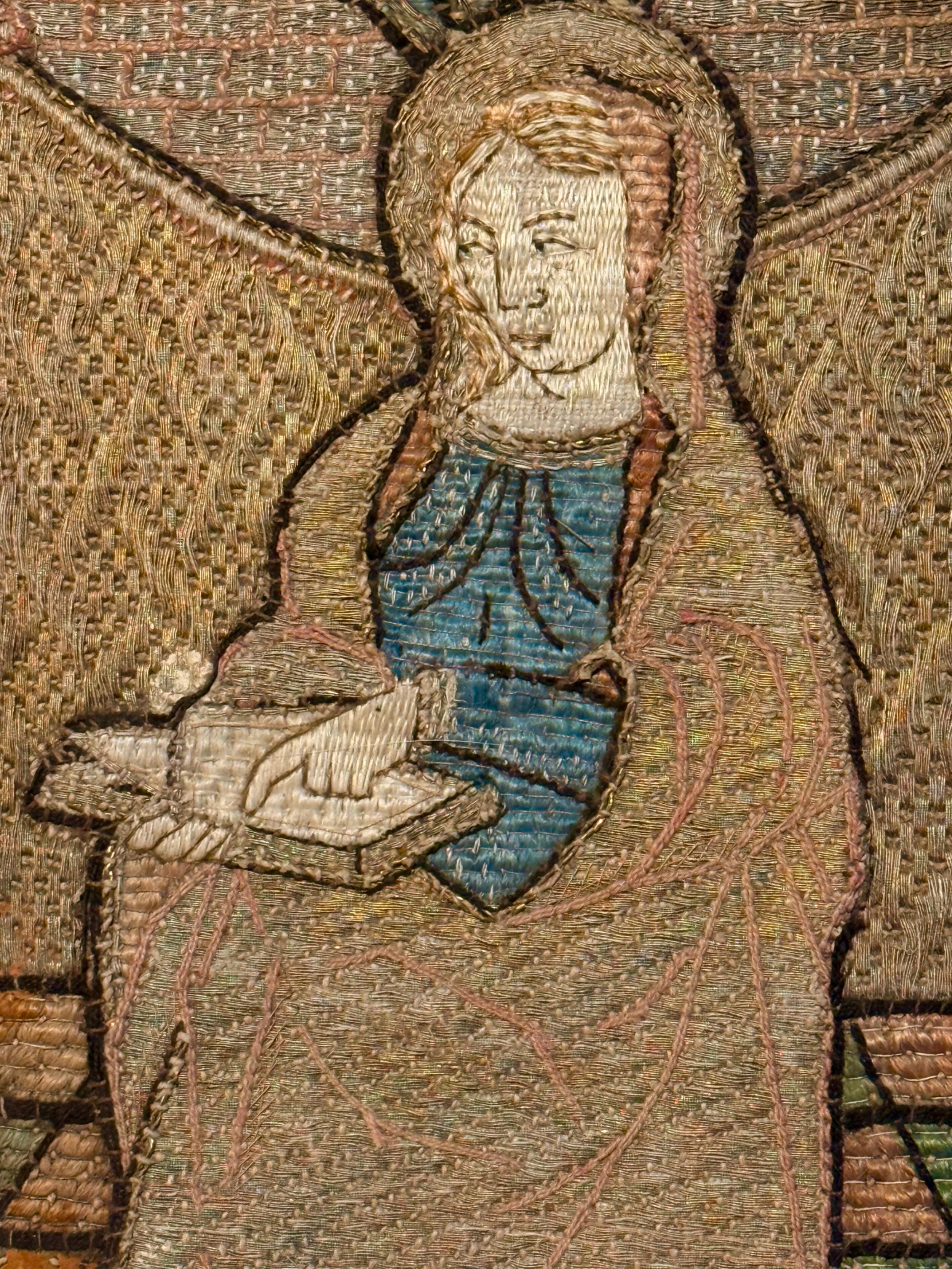
The Virgin is depicted with downcast eyes, elongated facial features, and swept-back blonde hair, turned toward an open liturgical book or devotional object held in her hands—a classic iconographic nod to the Annunciation or the Seat of Wisdom (Sedes Sapientiae). She wears a tightly stitched azure blue bodice beneath a heavy, shimmering gold-gilt outer mantle draped in elegant, geometric folds.
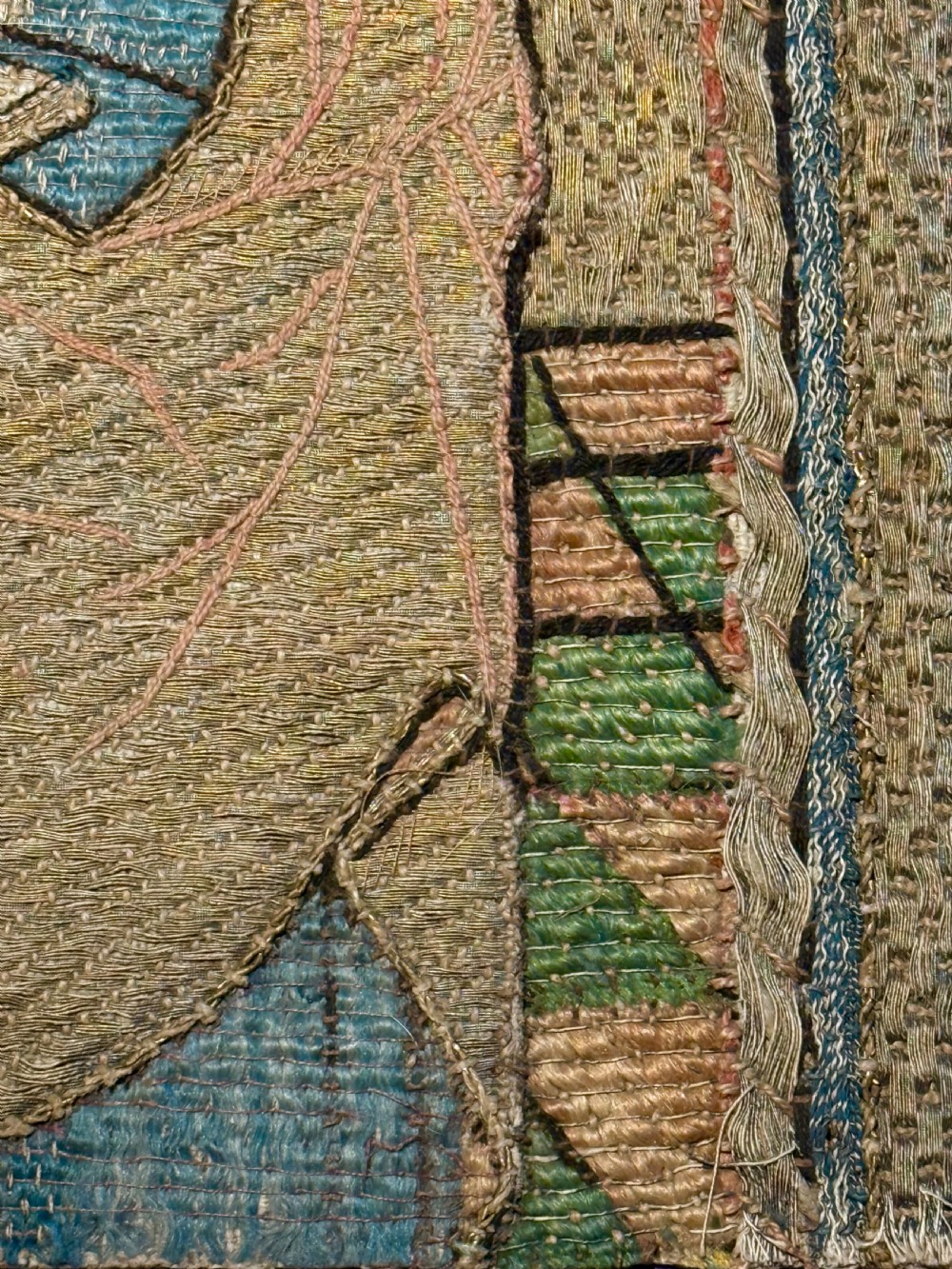
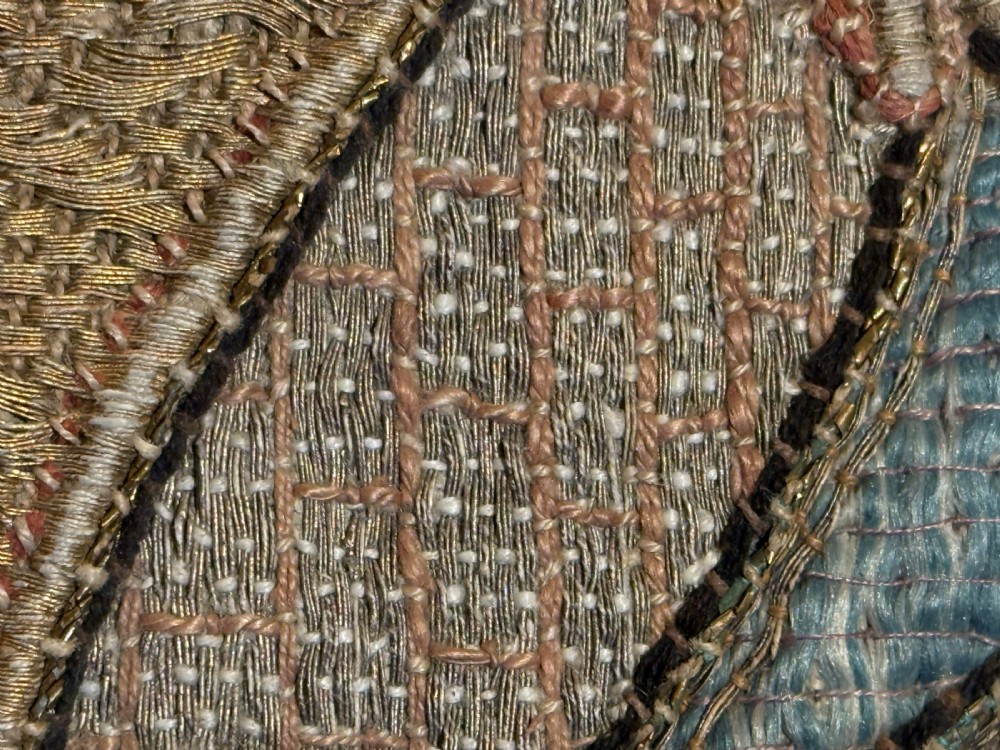
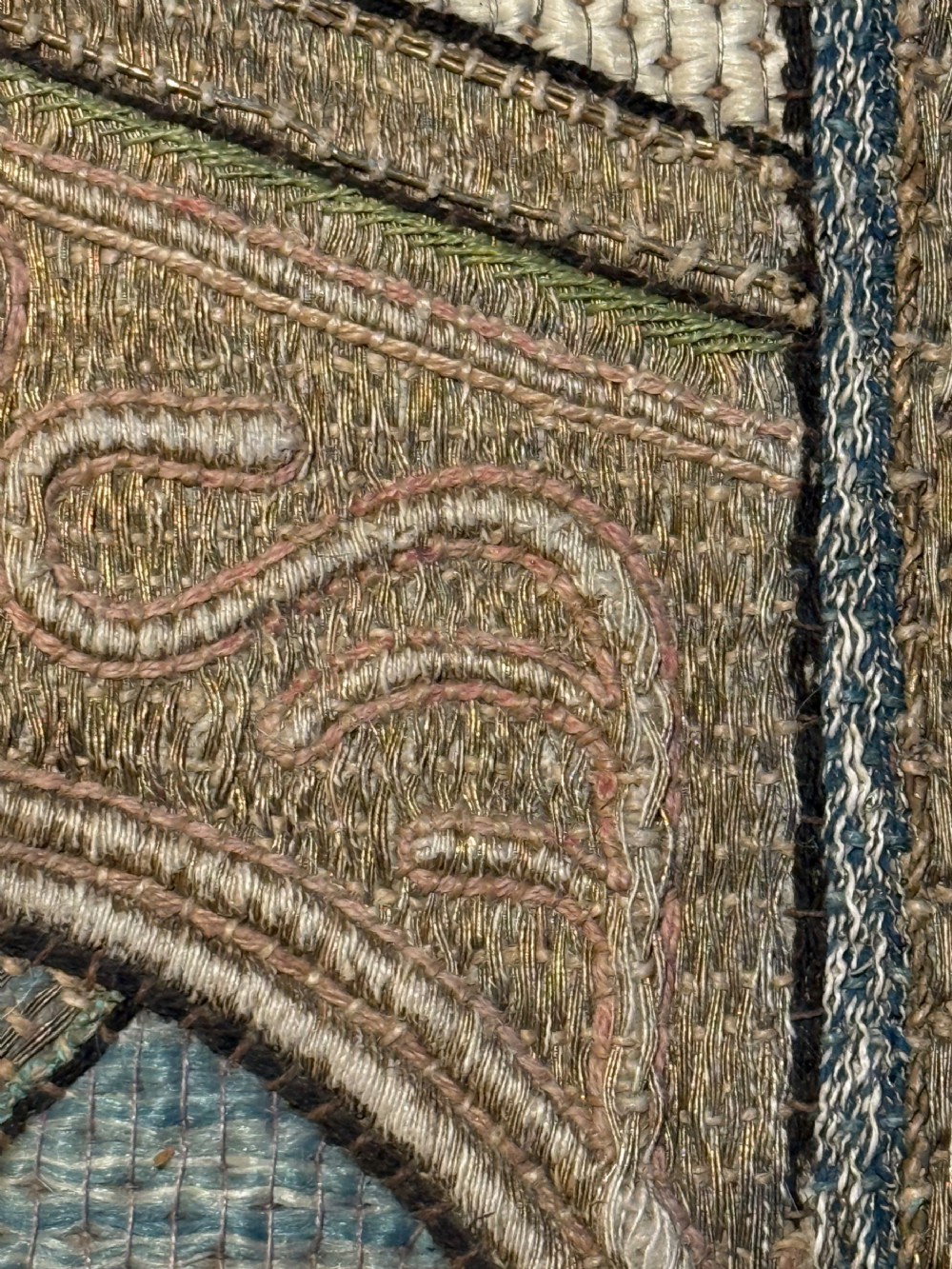
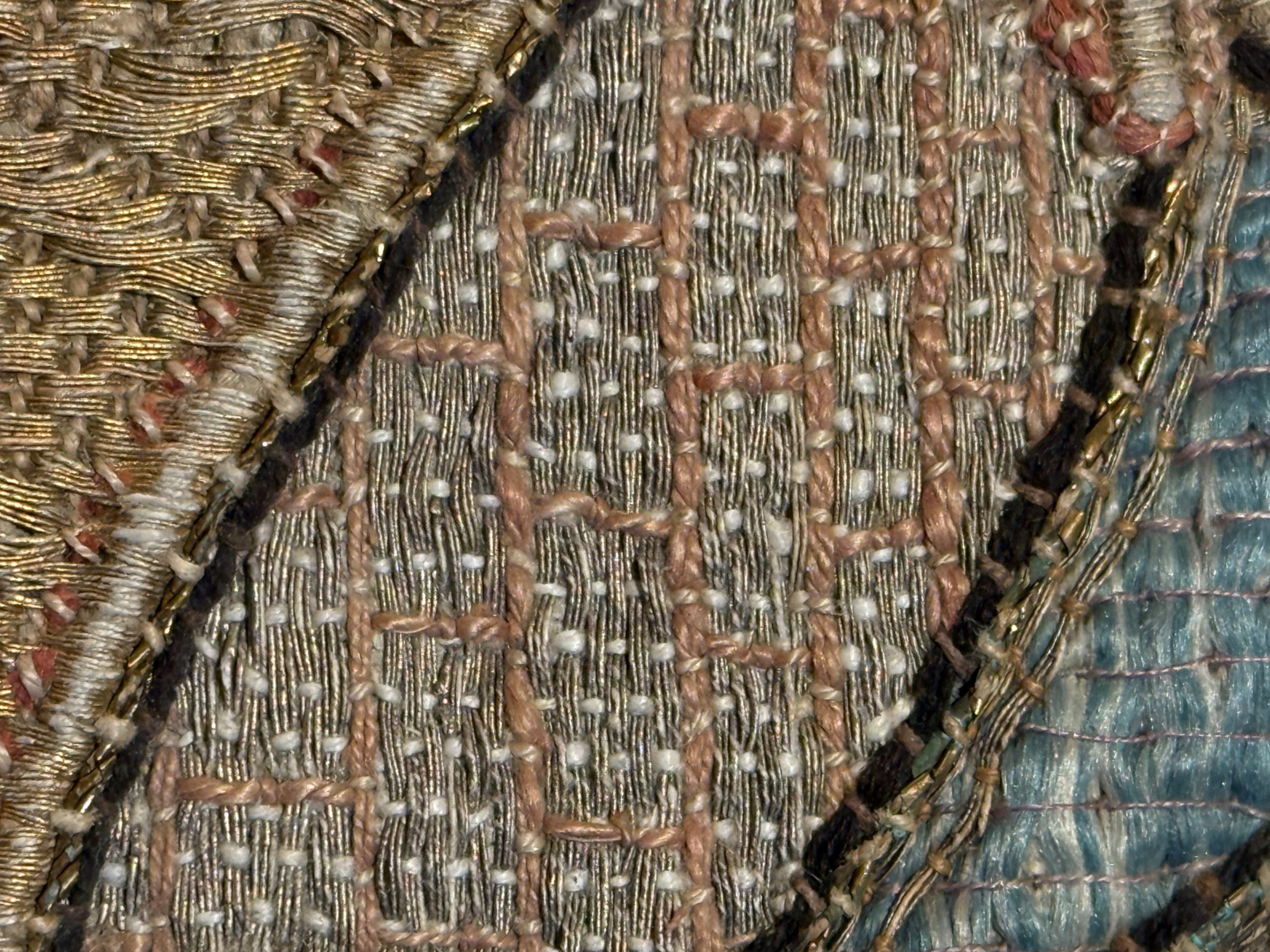
This fragment displays an exceptionally high tier of workshop execution. The background fields feature sophisticated brick-pattern couching, a complex variation where the horizontal gold threads are bound down at alternating intervals by fine silk stitches to create a geometric, multi-dimensional relief pattern that shifts in changing light. The drapery of the garments utilizes or nué and fine split-stitching techniques, using colored silks directly over the precious metal threads to simulate deep shadow and contour. The outlines of the face, hands, and architectural framework are executed in dark, hand-spun corded thread, characteristic of early monastic or specialized guild production.
Condition Report:
In remarkably robust and stable condition for a textile of this antiquity. The metal-thread couching remains densely packed with very minimal loss, unravelling, or exposed canvas core. Unlike many surviving fragments from this period, the silk threads—particularly the azure blues and terracotta tones—retain exceptionally high color saturation and have suffered minimal fading from historical light exposure. Unmounted; raw edges as expected for a detached vestment element.
Dimensions:
[Insert Dimensions Here]