


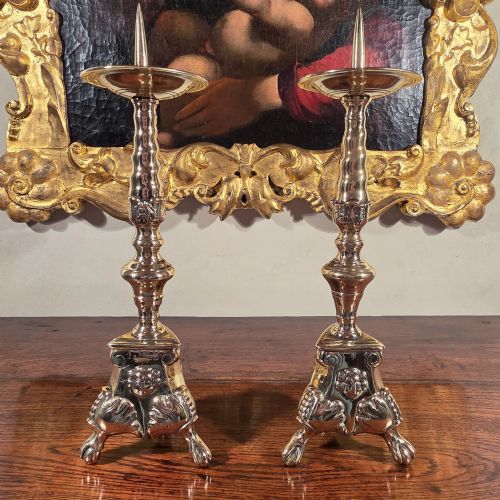
Antique Pricket Candle Holders
Antique pricket candle holders carry a central spiked spike to secure heavy tapers, bringing architectural gravity to any room.
Antique Pricket Candle Holders
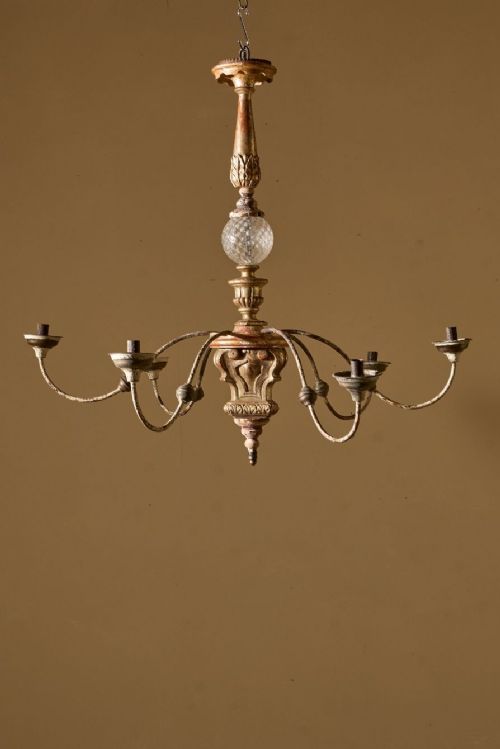
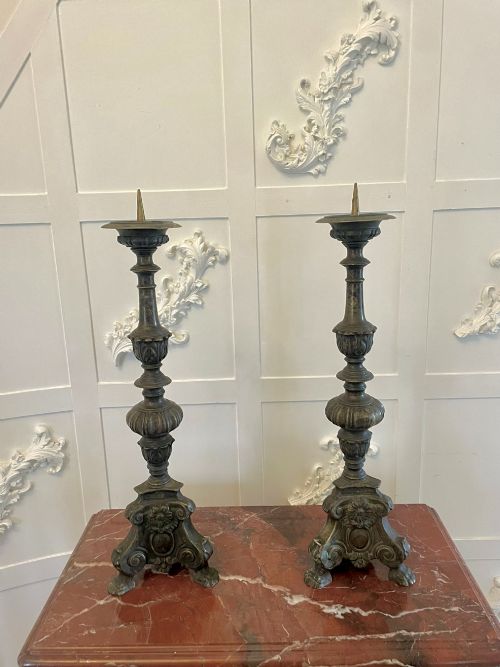
When buyers search for antique pricket candle holders, they encounter altar fittings, church candlesticks, and floor-standing torcheres designed with a sharp upward spike instead of a conventional socket. These pieces emerge from ecclesiastical settings across Italy, France, Flanders, and Britain, spanning the seventeenth, eighteenth, and nineteenth centuries.
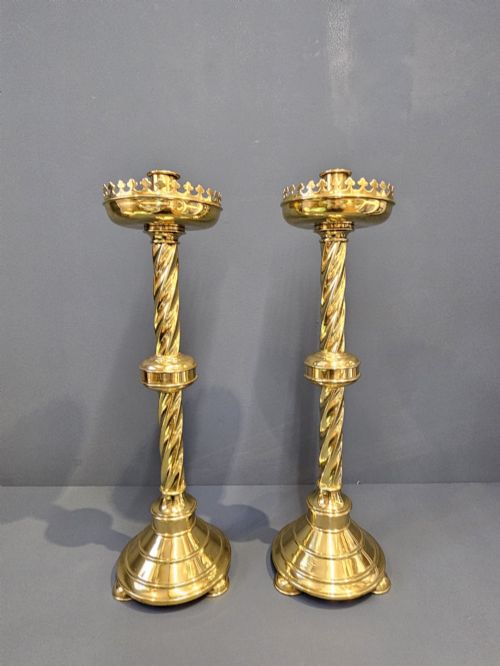
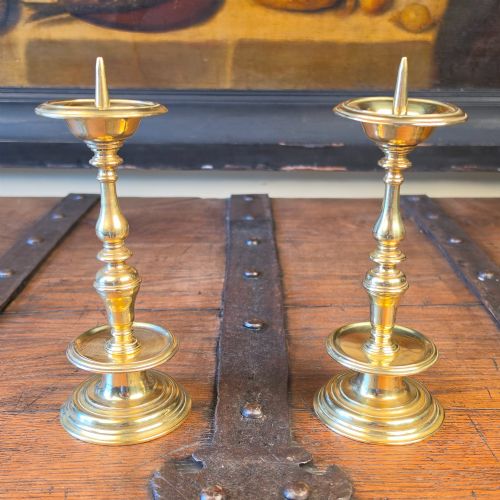
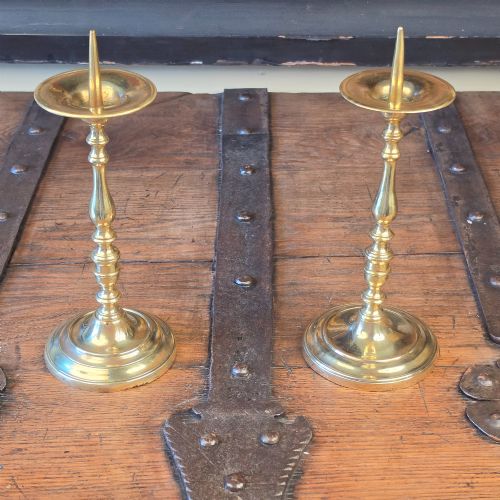
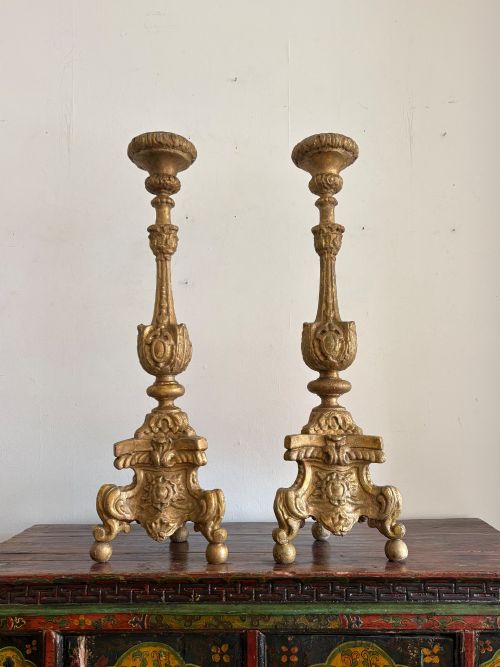
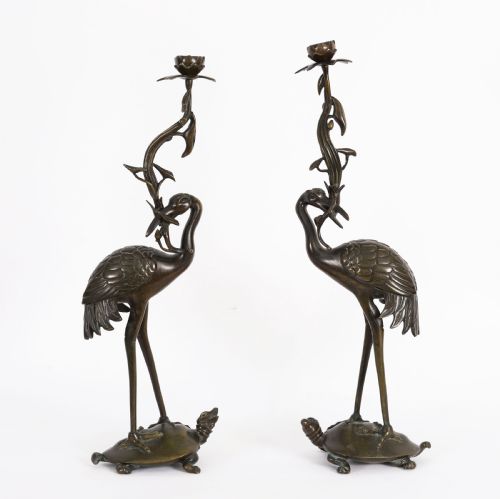
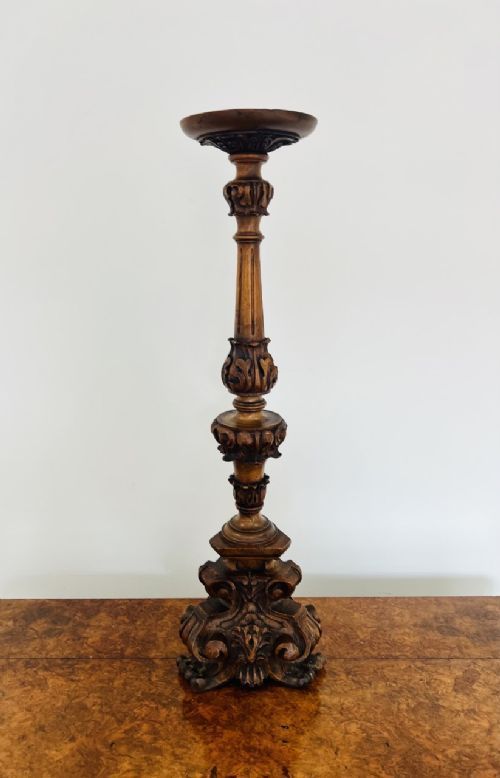
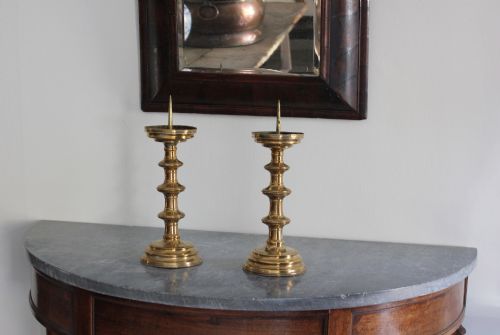
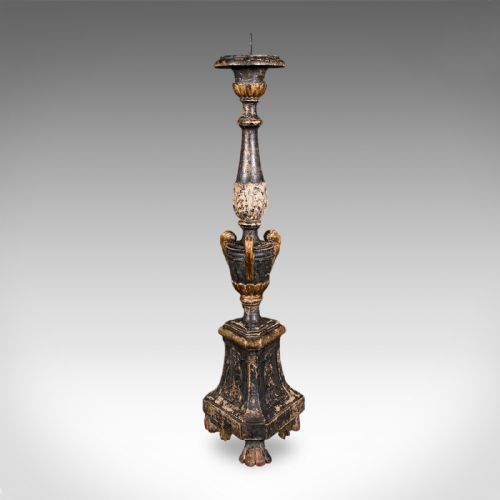
The most common formats met on this page include heavy brass pairs from the Victorian church supply tradition, carved giltwood altar sticks from Italian Baroque and neoclassical workshops, and wrought iron or bronze examples from continental contexts.
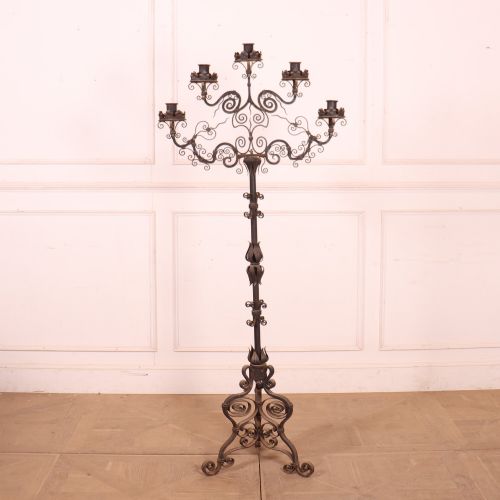
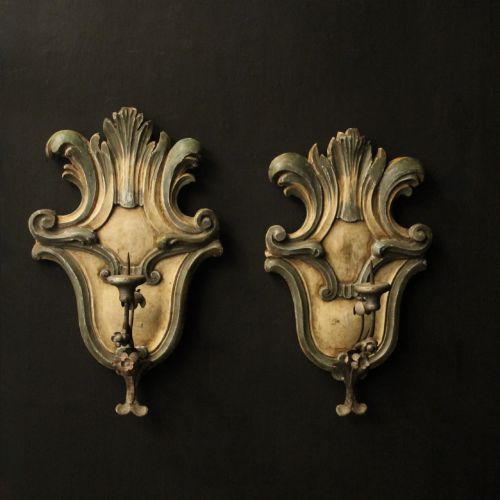
Forms range from modest tabletop altar candlesticks to monumental floor-standing torcheres and wall sconces, utilising periods such as the Gothic Revival, Baroque, and the Amsterdam School.
How they were made
Metalwork pieces rely on casting and forging, utilising brass, bronze, copper, and wrought iron shaped into heavy shafts, drip pans, and sturdy bases.
Wooden examples depend on turning, carving, and gesso application, often finished with silver leaf, polychrome pigments, or gilding over timber cores like walnut, pinewood, and treen.
Many church candlesticks survived centuries of candle drips simply because the wax was scraped off by altar servers every Monday morning.
What varies in quality
The distinction between ordinary utility items and exceptional survivals rests upon the depth of the hand-carving, the structural integrity of the metal casting, and the preservation of original surface treatments such as gilding or patination.
Proportion and scale dictate visual impact, where taller floor-standing church pieces and matched pairs command greater presence than single, adapted domestic candlesticks.
The Antique Pricket Candle Holders Glossary
- Pricket
- A sharp metal spike projecting upwards from the centre of a drip pan to impale and hold a candle firmly in place. This mechanism predates the standard candle socket.
- Torcherere
- A tall stand or large candlestick designed to support a light source at an elevated position. These pieces often feature substantial turned wooden or iron shafts.
- Giltwood
- Timber that has been coated with a thin layer of gold leaf or gold paint over a prepared gesso ground. It appears frequently on Continental altar pieces.
- Gesso
- A plaster-like mixture applied to wooden surfaces to provide a smooth base for gilding and paint. It allows for crisp decorative moulding.
- Drip pan
- A shallow circular tray positioned beneath the candle spike to catch melting wax. It protects the stem and the furniture below.
Antique Pricket Candle Holders: Frequently Asked Questions
How do you use a pricket candle holder?
These holders require candles with a pre-drilled base or soft wax that can be pressed directly onto the central metal spike.
Place a suitable drip tray beneath or rely on the integrated saucer to catch stray wax during burning.
What is the difference between a socket and a pricket?
A socket holds a candle inside a cylindrical cup, whereas a pricket impales the base of the candle onto an exposed vertical spike.
Pricket designs represent an earlier ecclesiastical tradition linked to altar candles.
How do you date antique brass candlesticks?
Dating relies on manufacturing marks, casting seams, base construction, and the specific profile of the stem and drip pan.
Earlier seventeenth and eighteenth-century examples show heavy, hand-finished brass work, while Victorian pieces often display more standardised machine finishing.
Where were church candlesticks originally placed?
Large pairs stood upon or beside church altars for liturgical services, while monumental torcheres flanked sanctuary steps.
Floor-standing versions illuminated chapels and large ecclesiastical interiors before the arrival of electric lighting.