


Arts and Crafts Candleholders
Arts and crafts candleholders combine honest metalwork and utility, bringing tactile warmth and distinct period character to any interior.
Arts and Crafts Candleholders
Arts and crafts candleholders encompass utilitarian lighting pieces shaped by the design philosophies of the late nineteenth and early twentieth centuries. These objects prioritise functional design and material honesty over excessive ornamentation, reflecting the hand of the maker. Collectors encounter these domestic items in various configurations designed for tabletops, desks, and walls.
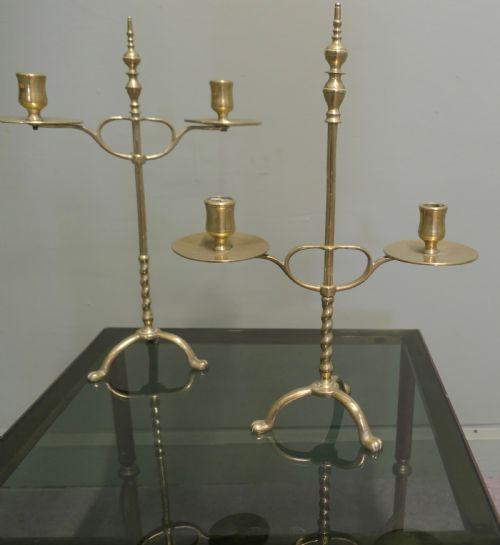
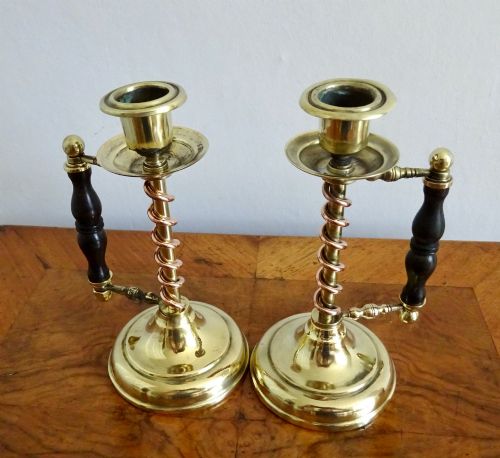
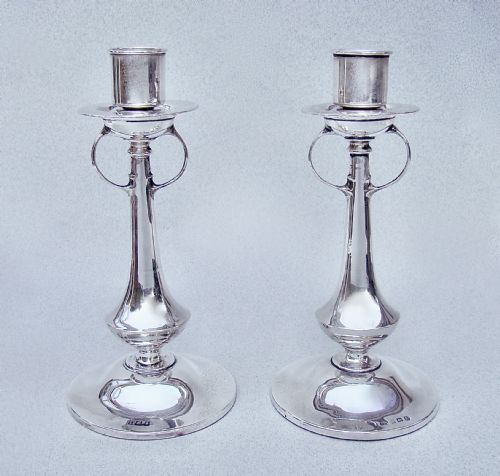
The pieces on this page appear across forms such as standard candlesticks, chambersticks with fitted handle trays, wall sconces, and adjustable students lights. Materials span brass, copper, pewter, wrought iron, sterling silver, ceramic, and wood. Stylistic influences blend strict arts and crafts tenets with art nouveau curves, amsterdam school geometry, and victorian art pottery traditions.
Dating ranges from the late nineteenth century through the 1920s, capturing the transition from late victorian production into the edwardian era and beyond. Buyers frequently discover matched pairs alongside singular chambersticks and larger wall sconce sets. This variety offers multiple ways to integrate period metalwork and ceramics into contemporary spaces.
Evaluating Quality and Execution
Quality rests upon the integrity of the construction and the weight of the metal or ceramic body. Substantial gauge brass and thick-walled pewter indicate superior manufacturing standards that endure through daily use. Lighter, more flimsy assemblies lack the physical presence characteristic of the best workshops.
The definition in surface finishing and hammer work distinguishes standard output from finer examples. Hand-beaten textures and deliberate patination display individual craftsmanship rather than uniform industrial stamping. Maker signatures and registry marks provide further indication of origin and workshop provenance.
Materials recorded in current inventory include brass, pewter, wrought iron, ceramic, copper, wood, sterling silver, and patinated metal.
James Fenton·Royal Doulton·Hugo Berger Goberg·Doulton Lambeth
The Arts and Crafts Candleholders Glossary
- Chamberstick
- A portable candlestick featuring a wide drip pan and a loop handle for carrying through a house. These pieces sat on bedside tables for evening illumination.
- Pricket
- A sharp metal spike set in the centre of a candle pan to impale and hold a candle secure. This form is common on ecclesiastical and continental designs.
- Sconce
- A wall-mounted lighting bracket designed to hold a candle and reflect light into a room. Sconces often incorporate backplates hammered from brass or copper.
- Patinated
- A treated or naturally aged surface colour on metal resulting from oxidation and handling. This finish protects the underlying material while adding depth.
- Quatrefoil
- A decorative four-lobed shape resembling a stylised flower or clover leaf. This geometric motif appears frequently in arts and crafts metalwork.
Arts and Crafts Candleholders: Frequently Asked Questions
How do I clean brass and copper safely?
Maintenance requires gentle washing with warm soapy water and a soft cloth to remove dust without stripping the historic surface. Avoid harsh chemical polishes that remove the desirable aged patination.
Preserving the original oxidation keeps the metal looking correct for its period. Light waxing can protect iron and brass surfaces from further atmospheric wear.
Can I use modern candles in antique holders?
Most antique sockets accommodate standard taper candles, though slight variations in sizing occur across different manufacturing periods. A small snug adapter or softening the candle base ensures a secure fit.
Care prevents wax from dripping directly onto unprotected metal or ceramic surfaces during burning. Extinguishing flames before the wax reaches the socket protects the antique structure.
Where should I place chambersticks at home?
Chambersticks suit display on hallway chests, sideboards, or mantelpieces where their compact form and handle details remain visible. Their original purpose as portable bedroom lighting makes them ideal for low-level accent placement.
Grouping pairs or mixing different metals creates a balanced decorative arrangement on wooden surfaces. Stable placement away from drafts ensures safe burning conditions.
How do I distinguish arts and crafts from art nouveau?
Arts and crafts design emphasises visible construction, honest materials, and functional utility with straightforward geometric or medieval motifs. Art nouveau introduces flowing, organic lines inspired by natural plant forms and asymmetrical curves.
Many pieces bridge both movements, combining sturdy arts and crafts construction with whiplash art nouveau surface decoration. Examining the primary silhouette and decorative details clarifies the dominant style.