
Antique Pottery Lid
These antique pottery lid selections span centuries of ceramic craft, offering collectors fitted covers, matching jars, and complete vessels.
Antique Pottery Lid
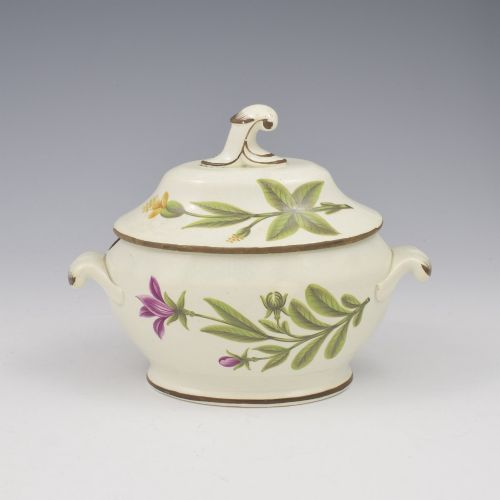
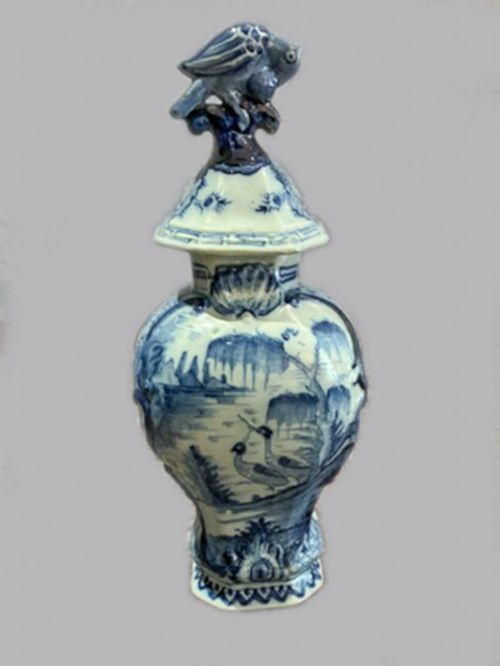
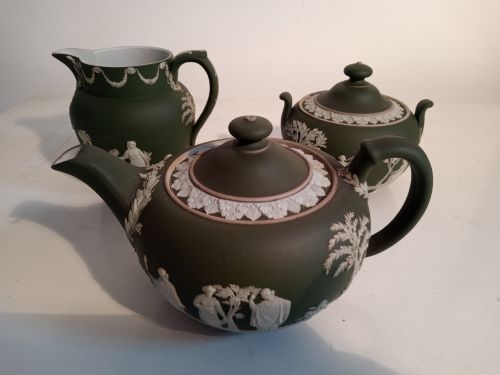
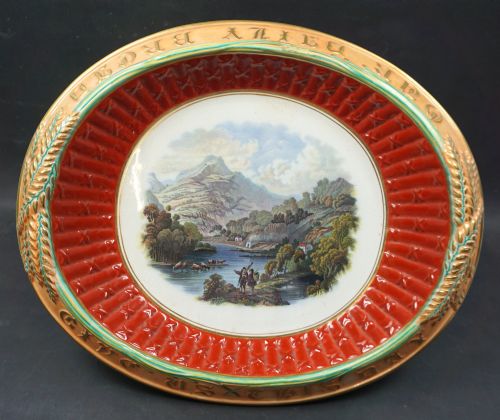
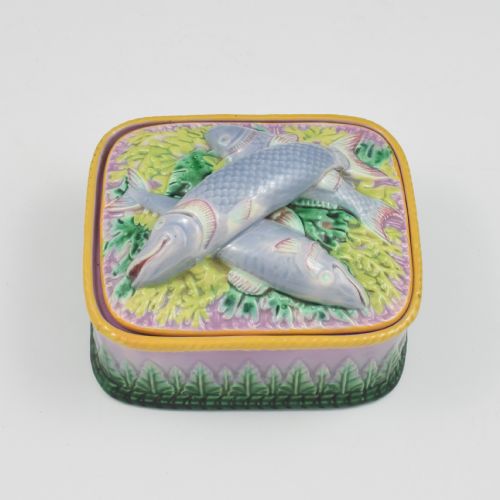
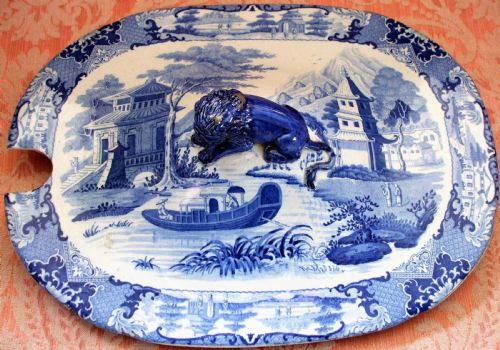
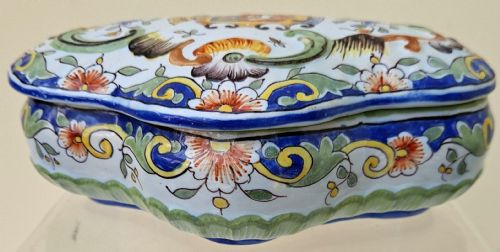
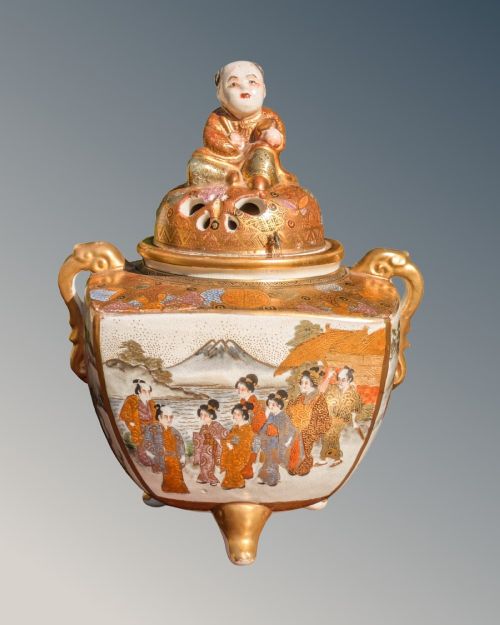
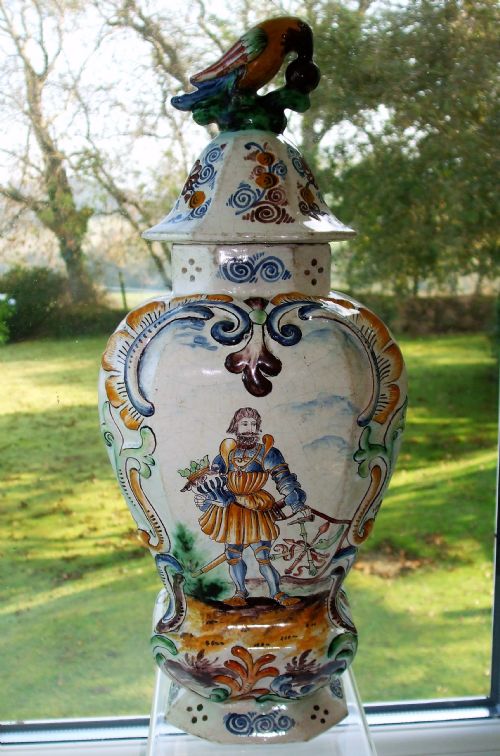
When searching for an antique pottery lid, buyers encounter a diverse range of ceramic covers belonging to vessels such as tureens, teapots, butter dishes, jars, and vases. These pieces originate from various traditions, including English Staffordshire and Delftware, Dutch pottery, French faience, and Japanese Satsuma production. Many entries represent complete lidded vessels or separate covers surviving from earlier centuries.
The objects stem predominantly from the eighteenth and nineteenth centuries, alongside Edwardian and Georgian examples, reflecting shifts in domestic dining and display. Common forms include vegetable tureen covers, butter dish lids, and decorative jar lids featuring hand-painted motifs or transfer-printed scenes. Buyers frequently find earthenware, stoneware, and tin-glazed compositions among these listings.
Materials and construction methods
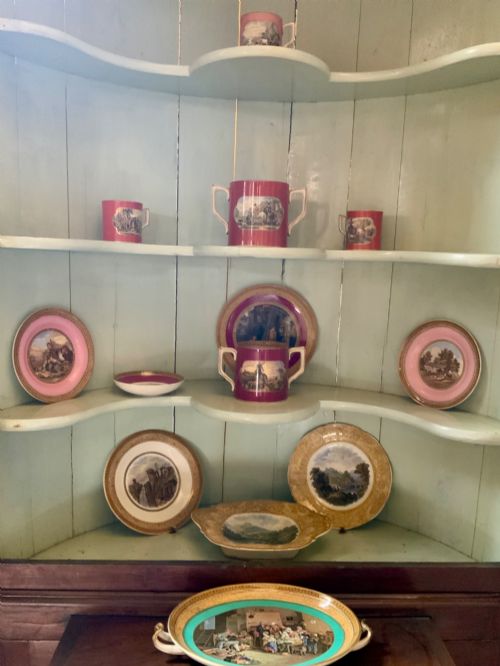
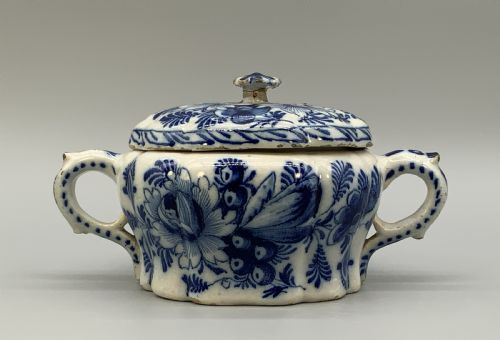
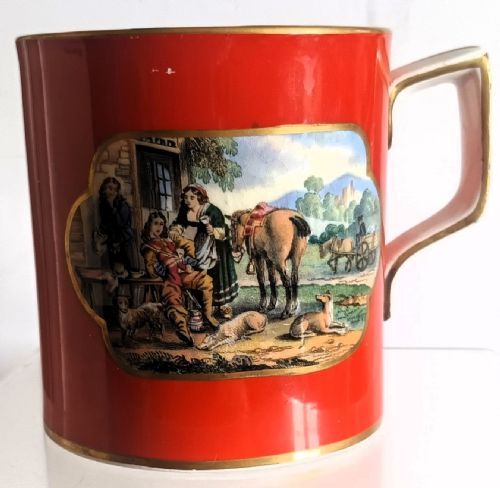
Potters shaped these lids using earthenware, stoneware, and refined ceramic pastes, frequently applying tin-glazes or clear lead glazes over the clay body. Decoration relied heavily on cobalt blue underglaze painting, polychrome enamels, and transfer-printing techniques to depict floral sprays, architectural scenes, and mythological subjects.
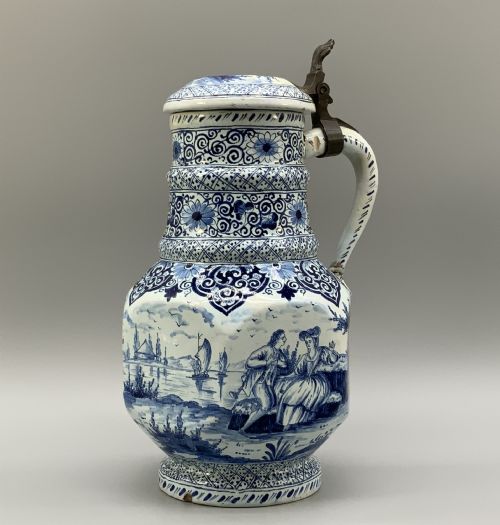
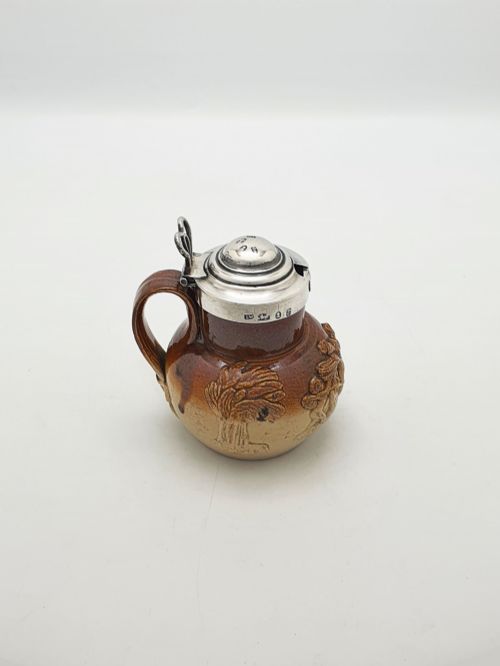
Many historical pieces incorporate metal mounts, such as pewter hinged lids, sterling silver collars, and silver-plated fittings attached directly to the ceramic body. Kiln firing methods varied from traditional wood-burning ovens used for early Delftware to more controlled industrial kilns employed by later English potteries.
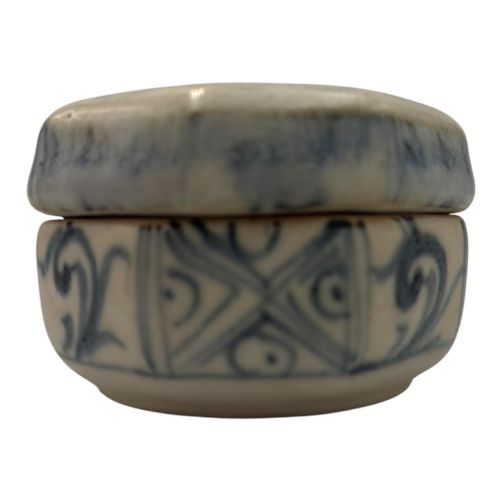
Even a humble egg crock gets a proper ceramic hat.
Evaluating craftsmanship and condition
Quality in these ceramics rests upon the crispness of the moulding, the precision of the hand-painted or transfer-printed decoration, and the harmonious fit between the lid and its vessel. Finer items demonstrate controlled glaze application free of heavy pooling or dry patches, alongside careful hand-finishing on moulded details.
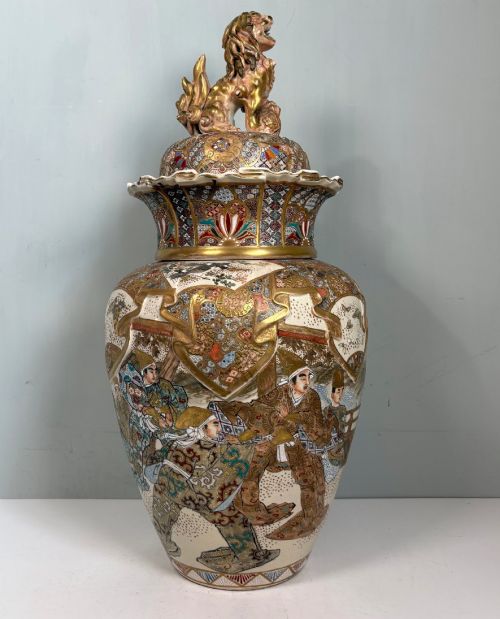
The retention of original matching elements, such as paired vases with their corresponding covers or complementary metal mounts like pewter and silver, elevates the standing of a piece. Artisanal precision in Japanese Satsuma earthenware or English pearlware distinguishes standard utility items from highly decorative studio outputs.
Robert Hamilton·John and Richard Riley·William Moorcroft MacIntyre·Toshozan
The Antique Pottery Lid Glossary
- Pearlware
- A fine-grained earthenware developed by Josiah Wedgwood in the late eighteenth century featuring a subtle bluish-white glaze that pooled in recesses.
- Delftware
- Tin-glazed earthenware produced in the Netherlands and England, typically decorated with blue designs inspired by imported Chinese porcelain.
- Majolica
- Low-fired earthenware coated with an opaque tin-lead glaze and painted with brightly coloured metal oxides before a final firing.
- Transfer-printing
- A decoration technique where an engraved copper plate transfers a printed ink design onto tissue paper, which is then pressed onto the ceramic body.
- Faience
- European tin-glazed earthenware produced primarily in France, Italy, and Spain, known for its opaque white surface and painted ornamentation.
- Satsuma
- Japanese earthenware pottery characterised by a fine crackle-glazed ivory body decorated with elaborate polychrome enamels and gold leaf.
Antique Pottery Lid: Frequently Asked Questions
How do I identify an eighteenth-century lid?
Eighteenth-century lids typically exhibit hand-painted tin-glaze decoration or early blue and white transfer printing on earthenware bodies. They often show slight kiln imperfections and hand-modelled finials.
Matching these covers to their original vessels requires careful inspection of the clay paste, glaze pooling characteristics, and stylistic conventions of the period.
What materials are common in these covers?
The listings feature earthenware, stoneware, and ceramic bodies finished with tin-glaze, enamel, gold leaf, or clear lead glazes. Some examples incorporate pewter, sterling silver, or silver-plated metal collars.
These varied substances reflect both utilitarian storage requirements and decorative display purposes across different European and Asian traditions.
Are these lids sold with their vessels?
Some entries comprise complete lidded vessels such as tureens, jars, vases, and teapots, while others represent individual covers or associated pieces. The descriptions specify whether a listing includes both the base and the matching lid.
Reviewing the individual item details clarifies the exact configuration and relationship between the ceramic components.