
F and R Pratt
These pieces under f and r pratt span centuries of ceramics and painting, offering both historical transferware and twentieth-century oils.
F and R Pratt
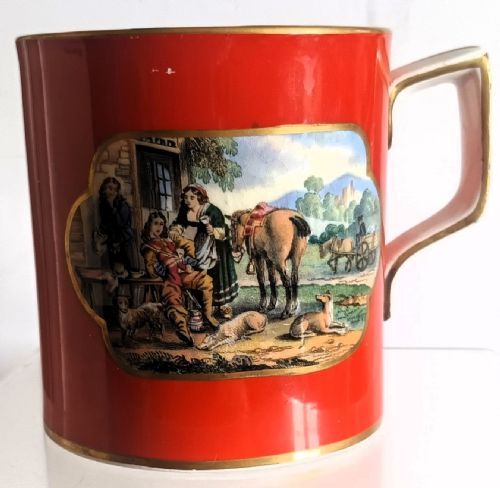
When you search for f and r pratt, you encounter two distinct categories of items: nineteenth-century earthenware pottery associated with the Fenton firm and modern oil paintings by artists sharing the same surname. The ceramic selection ranges from Georgian tea caddies and pearlware mugs to Victorian pot lids, plaques, and transfer-printed cachepots.
You will also find works on canvas and panel spanning from the Regency period through to later than nineteen sixty. The material evidence shows clear divisions between functional nineteenth-century earthenware and twentieth-century artistic works on canvas.
Materials and Techniques
The pottery items rely upon earthenware bodies, pearlware glazes, and blue and white transfer printing techniques developed during the Georgian and Victorian eras. Pot lids and plaques often incorporate multi-coloured underglaze transfer printing to achieve detailed pictorial scenes.
The paintings utilise oil paint applied to canvas, wood panels, or supported by wood frames. Furniture and clocks combine brass, oak, walnut, and leather materials alongside traditional cabinetmaking methods.
The listings combine nineteenth-century earthenware ceramics with twentieth-century oil paintings on canvas.
Assessing Quality and Execution
Quality in the ceramics rests upon the clarity of the transfer printing, the preservation of the underglaze colours, and the crispness of the moulded relief details. Pieces with historical transfer patterns require intact glazes and stable earthenware bodies without extensive restoration.
In the oil paintings, quality emerges through the handling of pigment, the fidelity of the brushwork, and the condition of the canvas or panel. The execution of light and texture dictates the standing of each individual composition.
F and R Pratt of Fenton·Christopher Pratt and Son·Samuel Pratt·Charles Pratt London
The F and R Pratt Glossary
- Pearlware
- A refined type of earthenware featuring a bluish glaze that pools in crevices, developed in the late eighteenth century. It forms the body for many early pieces.
- Transfer printing
- A method of applying detailed designs to ceramic surfaces by transferring ink from a copperplate onto paper and then onto the fired clay. This technique allowed for consistent pictorial decoration.
- Pot lid
- A small ceramic cover originally produced for pomade, paste, or ointment jars during the nineteenth century. Collectors prize these for their multi-coloured topographical and historical prints.
- Cachepot
- An ornamental flowerpot cover designed to hold a plant pot without a drainage hole. These often feature transfer-printed scenic patterns.
F and R Pratt: Frequently Asked Questions
What is F and R Pratt pottery?
F and R Pratt refers to the nineteenth-century Fenton pottery works known for producing earthenware, transfer-printed wares, pot lids, and decorative plaques.
The listings demonstrate that these pieces encompass transfer-printed cachepots, teapots, and moulded mugs from the Georgian and Victorian eras.
How do I date Prattware ceramics?
Dating relies upon stylistic markers, material changes from pearlware to later earthenware bodies, and specific historical subjects depicted on the pieces.
The evidence shows items ranging from the late eighteenth century through to Victorian pot lids dated around eighteen eighty.
Are all these items by the same maker?
No, the search results combine nineteenth-century pottery by makers such as F and R Pratt with twentieth-century oil paintings by artists named Pratt.
You will find works spanning different centuries, ranging from Regency clocks and trunks to contemporary impressionist paintings.
How were nineteenth-century pot lids used?
Nineteenth-century pot lids served as packaging for commercial goods like cold creams, bear's grease, and food pastes sold in small ceramic jars.
Manufacturers decorated these lids with multi-coloured transfer prints to attract buyers, which later became sought-after collectible items framed for display.