


Blue Ceramic Pot Lid
A blue ceramic pot lid brings functional historical earthenware and porcelain into a room with crisp cobalt decoration.
Blue Ceramic Pot Lid
A blue ceramic pot lid represents a small fragment of utility or display, often surviving from larger vessels such as pots, jars, and boxes found across the seventeenth, eighteenth, and nineteenth centuries.
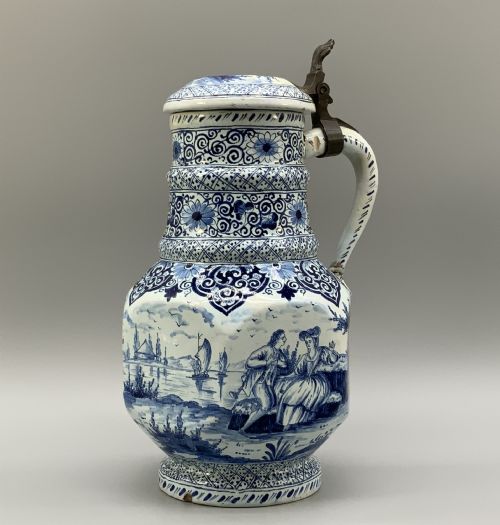
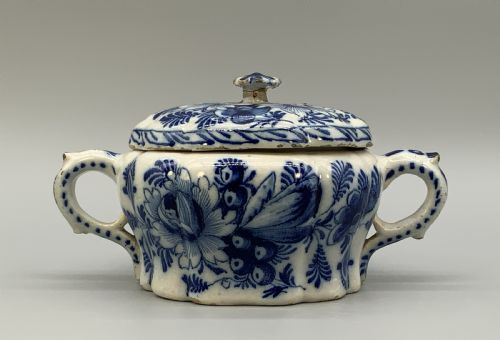
Buyers seeking a blue ceramic pot lid encounter diverse forms, from Dutch delft tobacco jars and English posset pots to French powder boxes and Asian ginger jars.
The materials span standard ceramic and earthenware to fine porcelain, decorated in rich blue tones that reflect eras including the Victorian period, Georgian age, and Art Deco design.
Materials and production methods
Potters shaped these pieces from clay bodies such as earthenware, ironstone, and porcelain, frequently applying tin-glaze or transparent lead glazes to seal the surface before firing.
Decoration relied heavily on hand-painted cobalt blue pigments, sometimes enhanced with enamel colours, gold leaf, or gilt detailing fired onto the ceramic body.
Mounts and fittings in materials like pewter, brass, or silver plate often completed lidded vessels, adding structural framing to the ceramic elements.
Listings feature ceramic and porcelain materials decorated with tin-glaze, enamel, and gold leaf across the seventeenth, eighteenth, and nineteenth centuries.
Evaluating craftsmanship and execution
Quality rests in the precision of the ceramic throwing or moulding, alongside the clarity and control of the hand-painted blue pigment applied beneath or over the glaze.
Fine examples display balanced proportions between the vessel body and its cover, with careful attention paid to decorative motifs such as floral patterns or Imari styling.
The integration of secondary materials, from fine metal mounts to delicate gilt highlights, distinguishes standard utility wares from pieces produced by notable factories.
Masons Ironstone·Spode·Moorcroft Macintyre and Co·Royal Doulton·Wedgwood·Limoges
The Blue Ceramic Pot Lid Glossary
- Tin-Glazed Earthenware
- Pottery covered with a white tin-opacified glaze that provides an opaque background for painted blue decoration. This technique defines traditional delftware and faience production.
- Posset Pot
- A historical vessel featuring a lid and multiple handles, used for serving a traditional hot curdled milk drink spiced with wine or ale. Surviving examples often date to the seventeenth and eighteenth centuries.
- Imari
- A style of Japanese porcelain featuring deep cobalt blue and iron red, widely emulated by European potteries in the nineteenth century. The palette creates high visual contrast.
- Pot Pourri
- A decorative lidded jar or container designed to hold dried scented plant materials for perfuming rooms. These vessels often feature pierced covers to release fragrance.
Blue Ceramic Pot Lid: Frequently Asked Questions
What periods do these blue ceramic items come from?
The pieces span several centuries, including seventeenth-century English delft, eighteenth-century Dutch production, and nineteenth-century Victorian and Georgian wares.
Later examples extend into early twentieth-century Art Deco designs from France and Britain, showing shifts in manufacturing styles over time.
How were lidded ceramic jars originally used?
These vessels served practical storage roles in households, containing items such as tobacco, powder, ginger, and posset drinks.
Many functioned as decorative display objects in the home, combining utility with painted cobalt ornamentation.
What materials accompany the ceramics?
While the primary body consists of earthenware or porcelain with blue glaze, secondary materials appear frequently in the mountings.
Pewter, brass, silver plate, and gold leaf or gilt detailing often accent the ceramic lids and rims.
How do I distinguish between European and Asian pieces?
European examples often follow styles like Dutch delftware, English earthenware, or French Art Deco, while Asian pieces typically include Chinese porcelain and Japanese Imari.
Brushwork techniques, paste composition, and decorative motifs help separate regional manufacturing traditions.