



Antique Pottery Creamer Jug
An antique pottery creamer jug is a small, functional vessel for serving milk or cream at the table, prized for its hand-painted motifs and tactile earthenware bodies.
Antique Pottery Creamer Jug
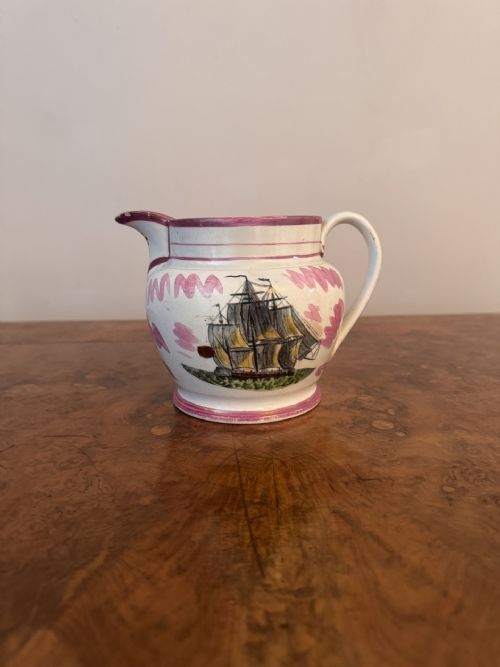
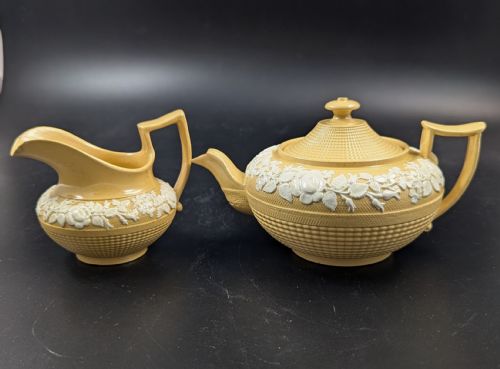
When searching for an antique pottery creamer jug, buyers encounter small pouring vessels shaped as pitchers, milk jugs, and figural animal creamers. These pieces originate primarily from the 18th and 19th centuries, spanning periods such as the Georgian, Regency, and Victorian eras.
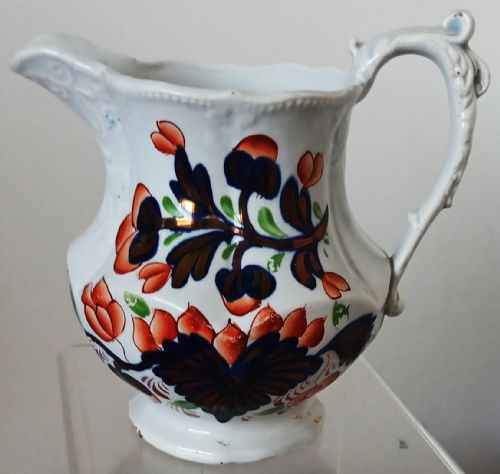
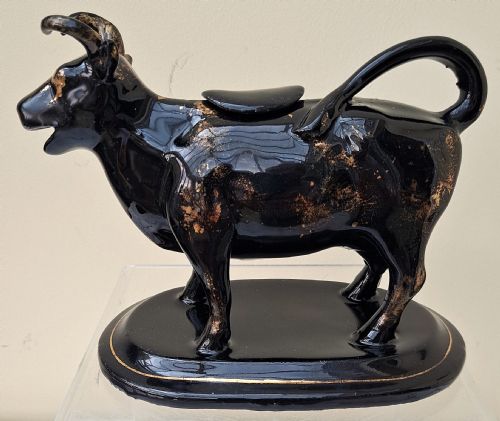
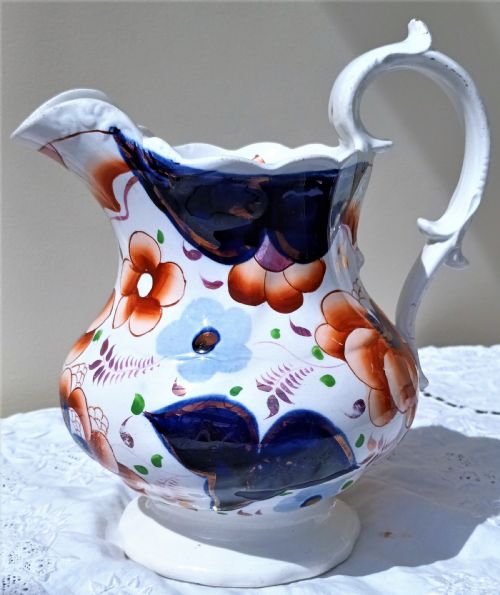
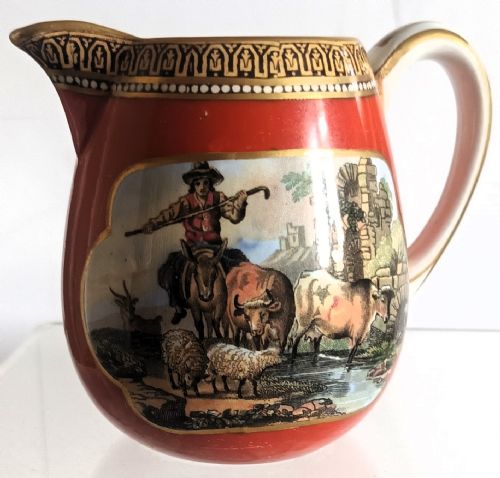
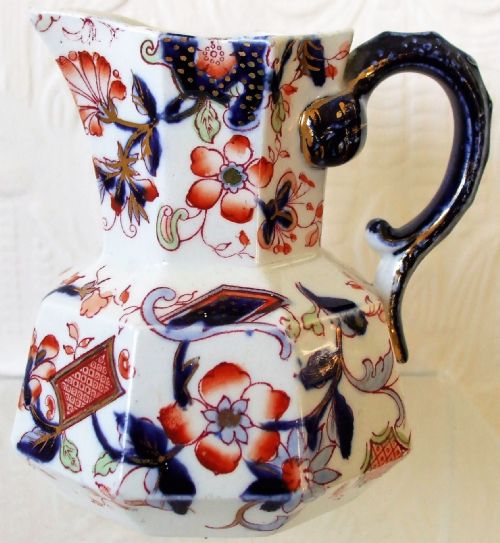
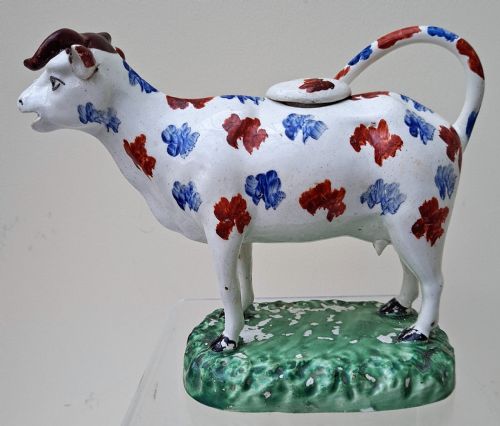
The most common examples on this page are earthenware and pearlware jugs decorated with transfer printing, lustre, or hand-painted patterns like Gaudy Welsh. Figural forms, particularly Staffordshire cow creamers, also appear frequently among these domestic tablewares.
Makers and potteries from English regions such as Staffordshire, Leeds, and Liverpool produced the majority of these domestic vessels. Forms range from utilitarian milk jugs to novelty items modeled as animals with handles formed by their tails.
How they were made
Potters shaped these vessels using earthenware, pearlware, creamware, and stoneware bodies, often formed on a potter's wheel or cast in moulds. Cow creamers and figural jugs required two-part moulds joined together before firing.
Glazing involved dipping the fired clay into tin-glaze, salt-glaze, or transparent lead glazes to seal the porous body. Enamel colours, copper lustre, and cobalt blue underglaze decoration were then applied by hand or via transfer printing before a final kiln firing.
Listings feature 18th and 19th-century earthenware, pearlware, and stoneware vessels spanning Georgian, Regency, and Victorian periods.
What varies in quality
Quality rests upon the crispness of the moulded detail and the precision of the hand-painted or transfer-printed decoration. Finer pieces display clean potting lines and carefully registered patterns without excessive pooling of the glaze.
The sophistication of the palette and the ambition of the form also separate standard utilitarian wares from superior examples. Elaborate copper lustre applications, delicate pearlware bodies, and well-modelled figural cow creamers represent the higher end of the range.
Keeling & Co.·Doulton Lambeth·Leeds Pottery·Wedgwood·Copeland Spode
The Antique Pottery Creamer Jug Glossary
- Pearlware
- A refined earthenware developed in the late 18th century featuring a bluish-white glaze that pooled in recesses.
- Creamware
- A fine-grained, cream-coloured earthenware perfected in Yorkshire during the Georgian period.
- Copper lustre
- A metallic glaze technique producing a coppery, reflective surface sheen popular on 19th-century jugs.
- Gaudy Welsh
- A brightly coloured style of pottery decoration featuring cobalt blue, iron red, and copper lustre accents.
- Jackfield
- A type of black-glazed earthenware associated with Shropshire potteries and glossy dark finishes.
Antique Pottery Creamer Jug: Frequently Asked Questions
How do I use an antique creamer daily?
These vessels suit modern milk service for tea or coffee, adding traditional character to a breakfast table.
Hand washing in warm water protects the old glaze and hand-painted or lustre decoration from harsh dishwasher detergents.
Were cow creamers used for milk?
Cow creamers served as practical table jugs where milk was poured from the animal's mouth into cups.
The removable lid on the cow's back allowed servants to fill the hollow body with cream before it went to the table.
How do I date a lustre jug?
Pottery style, weight, and the tint of the earthenware body help distinguish Georgian pieces from later Victorian ones.
Early pearlware bodies tend to show a distinct bluish pooling in the glaze compared to later white earthenware.
What is transfer printing on jugs?
Transfer printing is a technique where an engraved copper plate applied an ink design onto paper, which was then transferred to the unglazed or fired pottery.
This method allowed potteries to produce detailed pictorial patterns consistently across multiple jugs and tablewares.