
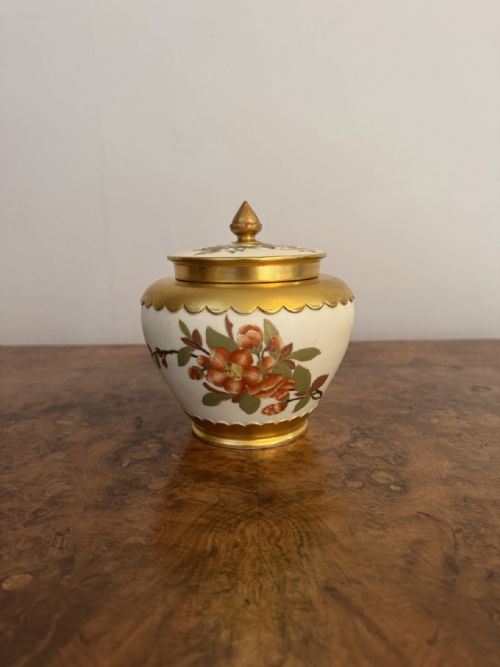


Antique Potpourri Jar
An antique potpourri jar brings historic fragrance and porcelain craftsmanship into a room.
Antique Potpourri Jar
An antique potpourri jar is a lidded vessel designed to hold dried scented plant material and release fragrance through pierced covers. These pieces arrive from the eighteenth, nineteenth, and twentieth centuries in forms such as urns, bowls, ginger jars, and vases.
The version most commonly met on this page is the Victorian porcelain lidded potpourri pot or vase, often finished with pierced crown covers and painted decoration. Makers from English potteries and European porcelain houses shaped these decorative vessels in styles ranging from Rococo Revival to Regency and Edwardian.
Collectors encounter diverse shapes including bow urns, pommanders, and swing-handle baskets made to sit upon drawing-room surfaces. Each piece combines functional ventilation for aromatics with the ornate visual vocabulary of its period.
How they were made
Potters shaped these vessels using ceramic, porcelain, ironstone, and rock crystal glass, applying techniques suited to fine clay bodies. Artisans formed pierced lids and crown covers with intricate openings to let scent escape from the interior chamber.
Decoration relied heavily on hand-painting, enamel work, and gilding with gold leaf or gilt bronze mounts. Factories like Royal Worcester, Mason's, and Dresden works combined these rich surface treatments with cobalt blue grounds and blush ivory glazes.
Victorian drawing rooms relied on these pierced pots to keep heavy drapery smells at bay with crushed rose petals.
What varies in quality
Quality rests in the crispness of the pierced work on the covers and the precision of the hand-painted botanical or figural details. Finer vessels display superior potting with balanced proportions and delicate, well-preserved gilding rather than heavy, flat application.
The reputation of the maker and the complexity of the form distinguish standard production wares from exceptional studio output. Pieces featuring detailed figural painting or elaborate bronze mounts command greater appreciation from collectors.
Royal Worcester·Mason Ironstone·Wolfsohn Dresden·Sitzendorf Porcelain·William Comyns
The Antique Potpourri Jar Glossary
- Potpourri pot
- A lidded vessel specifically pierced to diffuse the scent of dried flower petals and spices. These containers were staples of historic domestic interiors.
- Ironstone
- A heavy, durable type of semi-porcelain ceramic developed in the nineteenth century. It provided a sturdy body for richly decorated tableware and ornamental vases.
- Blush ivory
- A matte cream-coloured porcelain ground popularised by Royal Worcester in the late nineteenth century. It typically served as a soft backdrop for delicate painted florals.
- Gilding
- The application of gold leaf, gold dust, or gold paint to ceramic and metal surfaces. This technique added reflective highlights to handles, rims, and borders.
- Pommander
- A small container holding aromatic substances to freshen air or garments. Early examples often took spherical or pierced forms.
Antique Potpourri Jar: Frequently Asked Questions
What is an antique potpourri jar?
An antique potpourri jar is a decorative lidded vessel created to hold dried scented plant materials and release fragrance into a room.
These pieces feature pierced covers or crown tops that allow air to circulate through the fragrant contents inside.
How were potpourri jars used historically?
Households placed these vessels in parlours and drawing rooms to mask unpleasant odours and fragrance living spaces.
The pierced lids allowed the stored dried flowers, spices, and oils to scent the surrounding air continuously.
How do I date an antique potpourri jar?
Dating relies on maker marks, ceramic bodies, and stylistic indicators such as Victorian Rococo Revival or Edwardian forms.
Porter stamps, painted factory ciphers, and material types like ironstone or blush ivory porcelain help narrow the decade of production.
Can I still use these jars for potpourri?
Many collectors continue to fill these historic vessels with dried scented botanicals just as past owners did.
Care should be taken with delicate painted surfaces and interior glazes when adding fresh potpourri mixtures.