
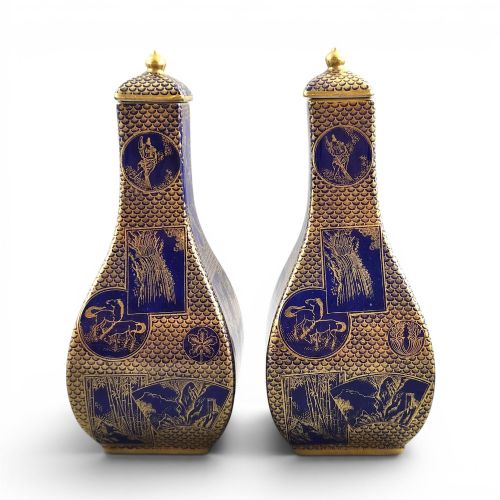


Covered Ironstone Urn
Covered ironstone urn designs combine durable stoneware bodies with rich transfer printing, offering robust elegance for classical or chinoiserie interiors.
Covered Ironstone Urn
When you search for covered ironstone urn pieces, you find lidded vases and potpourri vessels designed for decorative display. The evidence shows these robust ceramic forms primarily originating from the nineteenth century, including Georgian and Regency periods.
Most examples present substantial proportions, categorised across listings as decorative vases, lidded vases, and garniture sets. The aesthetic draws heavily on Victorian Chinoiserie and Regency Chinoiserie styles, featuring transfer prints and hand-painted motifs.
Makers such as Mason and Spode dominate the forms found in this category. Collectors encounter rich mazarine blue grounds, Imari palettes, and the distinctive Bandana pattern across these lidded stoneware vessels.
Materials and production methods
Potters utilised durable ironstone and stoneware bodies to form heavy, resilient vessels capable of supporting complex decorative schemes. These dense ceramic bases provided a stable foundation for intricate surface work.
Decoration relied on blue transfer printing combined with hand-applied enamel colours and gilding, including gold leaf and gold gilt highlights. Potters applied these finishes over white glazes before firing the pieces to secure the pigments.
Potpourri covers were pierced with holes so industrious householders could let dried flower petals freshen the parlour.
Assessing quality in ironstone vessels
Quality rests upon the crispness of the transfer printing and the precision of the hand-applied enamel work and gilding. Finer pieces display sharply rendered Chinoiserie motifs and rich mazarine blue grounds without blurring.
The presence of a matching cover and the overall scale influence the character of the vessel. Pairs, garniture sets, and larger forms demonstrate greater ambition in nineteenth-century ceramic production.
Mason's Patent Ironstone·Spode
The Covered Ironstone Urn Glossary
- Ironstone
- A heavy, durable type of earthenware patented in the nineteenth century. It bridges the gap between refined porcelain and sturdy stoneware.
- Chinoiserie
- European artistic style reflecting Chinese motifs and landscapes. This aesthetic appears frequently in nineteenth-century ceramic decoration.
- Potpourri
- A lidded vessel pierced to release the fragrance of dried flowers and spices held inside. These containers often match larger decorative vase sets.
- Garniture
- A set of matching vases or urns designed to sit together on a mantelpiece or sideboard. They typically comprise a central tall vessel flanked by smaller matching pieces.
Covered Ironstone Urn: Frequently Asked Questions
What are covered ironstone urns?
These pieces are heavy ceramic lidded vases and potpourri containers produced during the nineteenth century. They function primarily as decorative display items for mantelpieces and large rooms.
Potters shaped them from durable ironstone and stoneware bodies, then decorated the surfaces with blue transfer printing and hand-painted enamel designs.
How do I date a covered ironstone urn?
Dating relies on identifying the stylistic markers, maker marks, and decorative patterns recorded in the nineteenth century. Georgian and Regency examples often feature specific Chinoiserie designs and rich mazarine blue grounds.
Examining the weight of the ceramic body and the application technique of the gilding helps confirm the production period.
How were these urns used?
Owners placed these lidded vessels in reception rooms as ornamental focal points. Pierced potpourri versions held aromatic dried plant materials to scent the air.
Larger examples and garniture sets served as symmetrical displays on furniture tops and fireplace surrounds.
How do I care for ironstone ceramics?
Maintain these vessels by dusting them gently with a soft, dry cloth. Avoid harsh cleaning agents that might damage the surface enamel or gold gilt highlights.
Protect the heavy ceramic bodies from sharp impacts to prevent chips along the rims and lids.