
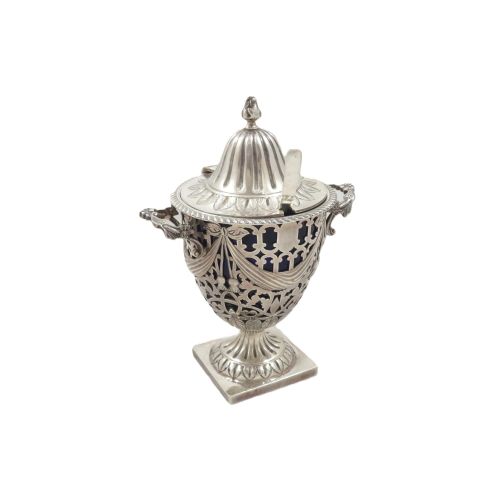


Pierced Lid Urn
A pierced lid urn brings sculptural form and delicate ventilation together, designed to diffuse scent or hold dried botanicals while adding presence to a room.
Pierced Lid Urn
A pierced lid urn appears across several eras, combining vessel bodies with perforated covers that allow fragrance or air to circulate. You will frequently encounter porcelain examples alongside ceramic and ironstone pieces, spanning periods from the eighteenth century through the twentieth century.
The forms range from lidded pot pourri jars and sugar baskets to decorative pedestal vases. Styles lean towards traditional English, Victorian, and Rococo revival aesthetics, often featuring painted surfaces or intricate mouldings.
Origins vary from English factories like Royal Worcester and Mason's to continental potteries such as Sitzendorf and Herend. Each piece demonstrates how makers adapted classic urn proportions for domestic display and utility.
Materials and construction
Ceramic bodies utilise porcelain, ironstone, and earthenware, shaped on the wheel or cast in moulds before receiving glazes and hand-painted decoration. Gold leaf and heavy gilding frequently accent panels of painted fruit or floral motifs.
Metal versions employ sterling silver and Old Sheffield plate, utilising piercing techniques to cut decorative patterns into lids and galleries. These metal pieces often combine hallmarked silver with turned wooden bases or cobalt glass inserts.
Royal Worcester dominates the ceramic selection with painted fruit and blush ivory finishes.
Evaluating craftsmanship and detail
Quality rests in the crispness of the pierced work on the lid and the precision of the hand-painted details across the body. Superior examples display fine brushwork, such as signed botanical or fruit studies, and clean, evenly spaced perforations that maintain structural integrity.
The weight of the material and the fineness of the gilding further distinguish the pieces, with superior mouldings showing sharp relief rather than softened edges from worn production tools.
Royal Worcester·Mason's Ironstone·Sitzendorf Porcelain·Herend·James Dixon and Son
The Pierced Lid Urn Glossary
- Pot pourri
- A mixture of dried plant materials used to scent a room. The jars and urns designed to hold this mixture feature pierced lids to release the fragrance.
- Ironstone
- A heavy, durable type of earthenware patented in the nineteenth century. It provides a robust body often decorated with Imari patterns or rich colours.
- Gilding
- The application of gold leaf or gold powder onto the surface of ceramic or metal objects. It highlights rims, handles, and raised decorative elements.
- Piercing
- The technique of cutting or piercing openwork patterns through metal or un-fired clay. This allows ventilation while creating intricate decorative motifs.
- Blush ivory
- A specific ceramic finish developed by Royal Worcester characterised by a soft, matte cream ground often tinted with peach and gilt highlights.
Pierced Lid Urn: Frequently Asked Questions
What is a pierced lid urn used for?
These vessels historically served to hold scented dried flowers, herbs, or pot pourri, allowing the fragrance to permeate a room through the perforated cover.
They also functioned as decorative mantel ornaments, sugar baskets, or display pieces in formal drawing rooms.
How do I date a porcelain urn?
Dating relies on maker marks stamped or painted on the base, combined with the stylistic clues of the period such as Rococo revival scrolls or Edwardian floral painting.
Material composition and manufacturing techniques also help narrow the decade of production.
Can I use these urns for fresh flowers?
Most antique pot pourri jars and urns are not designed to hold water safely due to their porous ceramic bodies or internal construction.
Using them dry preserves the glaze, body, and any delicate painted decoration from moisture damage.
How should I clean a gilded ceramic urn?
Dust the surface gently with a soft, dry brush to prevent accumulation in the pierced lid and around raised mouldings.
Avoid liquid cleaners, abrasives, or immersion, as these can wear away fragile hand-painting and gold leaf.