


Antique Porch Pendant Lantern
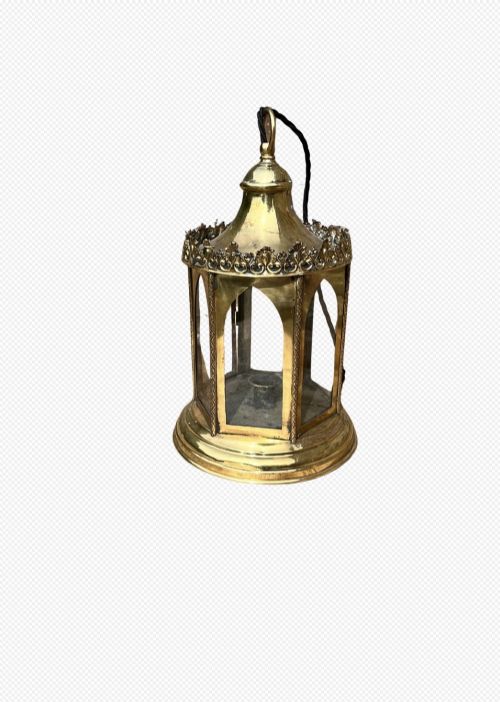
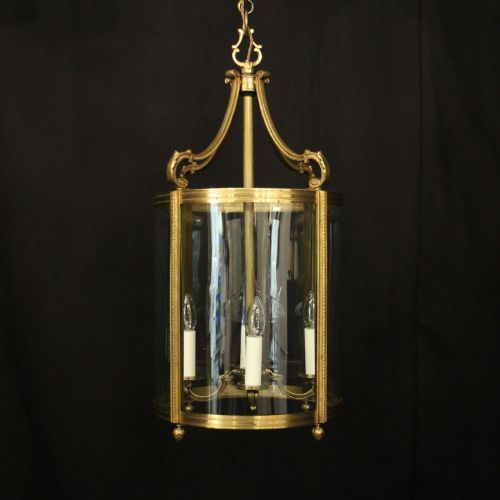
An antique porch pendant lantern brings immediate character to an entryway, casting light through leaded glass and metalwork chosen from Victorian, Edwardian, and Arts and Crafts eras.
Antique Porch Pendant Lantern
An antique porch pendant lantern is a hanging light fixture designed to illuminate entryways, corridors, and exterior thresholds using period metals and glass. Buyers searching this phrase encounter hanging lanterns and hall lanterns spanning the nineteenth and early twentieth centuries, including Victorian, Edwardian, and Art Deco examples.
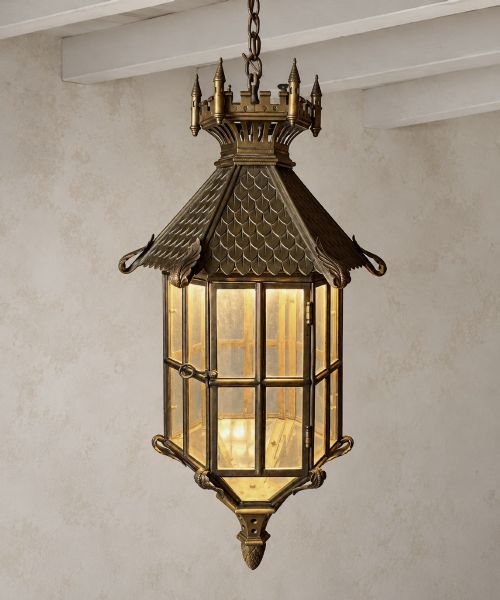
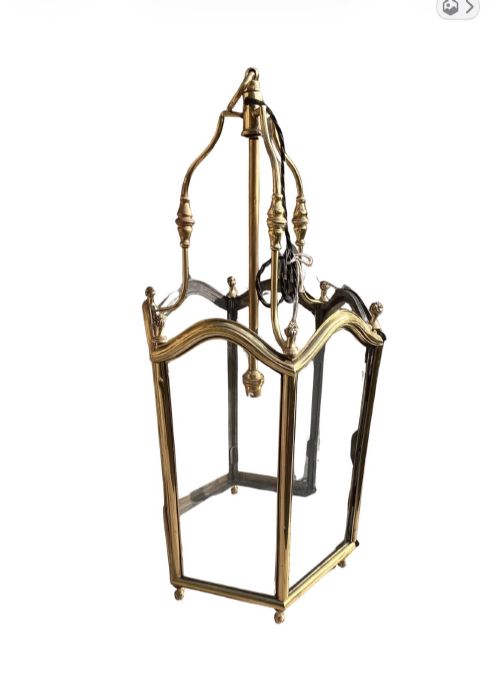
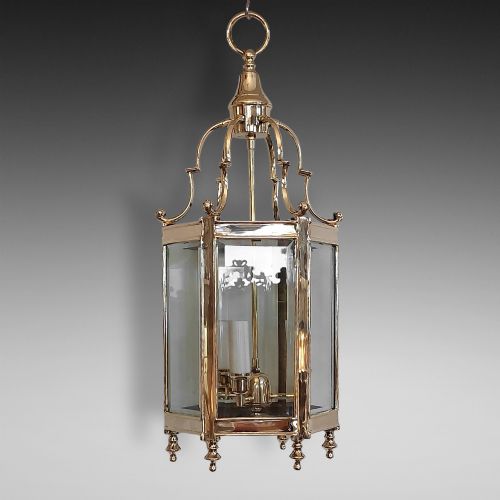
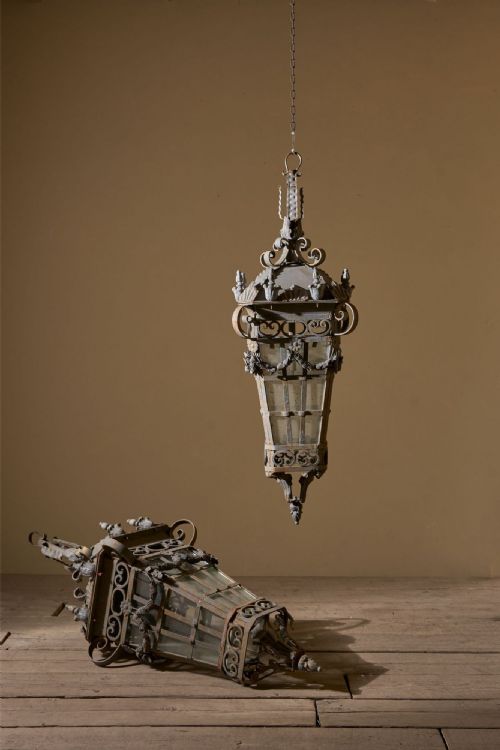
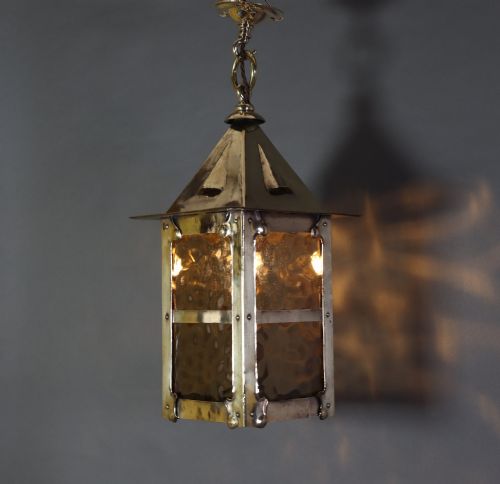
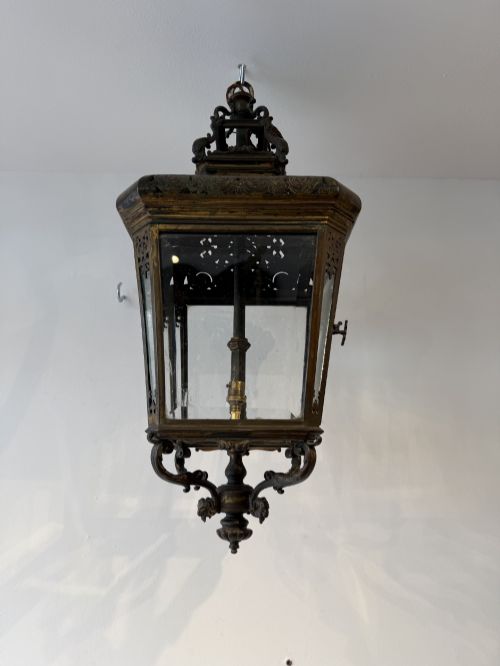
The most common pieces on this page are brass and copper lanterns from the Edwardian period and the year 1900, often featuring hexagonal or rounded frames. Alongside these domestic hall lights, larger Continental and Gothic Revival models appear in bronze, iron, and zinc.
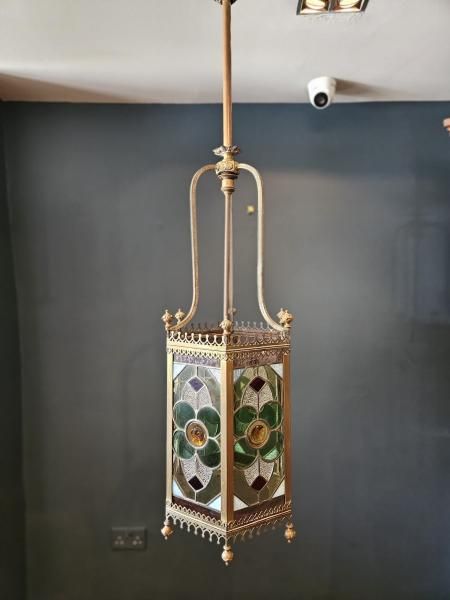
Forms range from simple glazed pendants to elaborate bracketed fixtures adorned with stained glass, cast iron, and decorative crowns. These lights function as both functional illumination and architectural statements for period homes.
Materials and construction methods
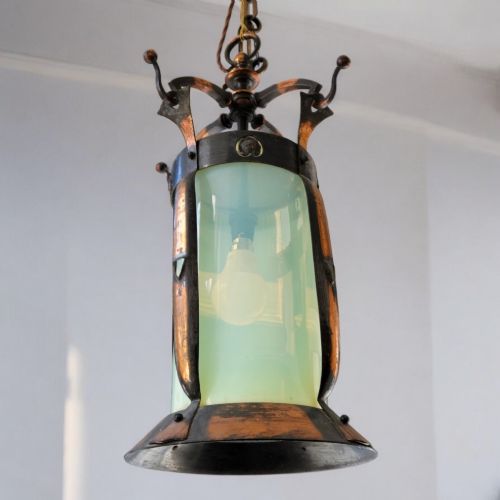
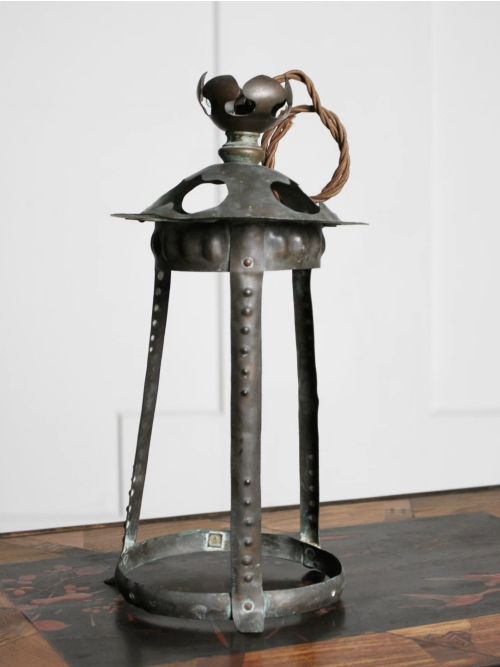
Craftsmen built these lanterns using durable metals suited to domestic and exterior environments, primarily brass, copper, bronze, and iron. Metal frames were cast, forged, or planished by hand, visible in the textured surfaces of Arts and Crafts copper and the sturdy structure of cast iron blacksmith pieces.
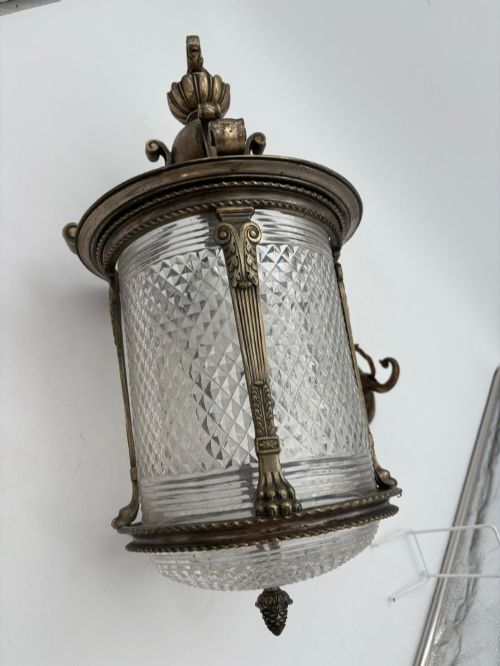
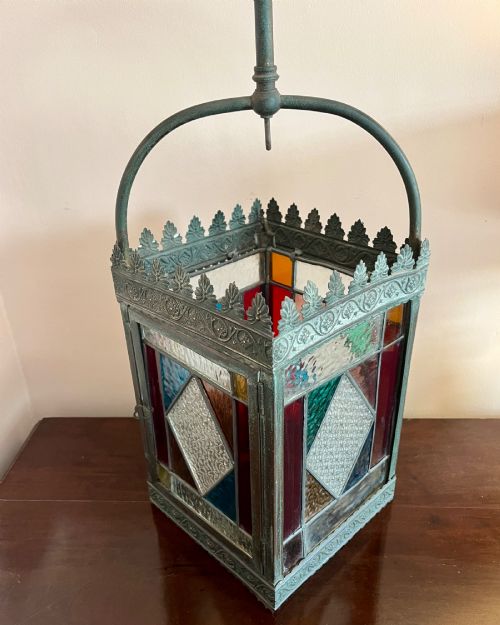
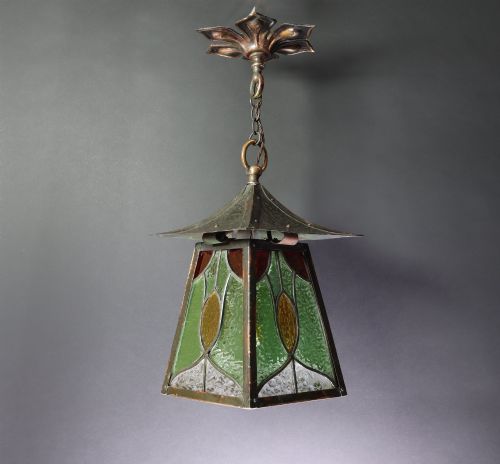
Glazing techniques defined the character of each piece, utilising cut glass, leaded stained glass, and plain panels to diffuse light from early electric or oil fittings. Lead cames held individual glass segments securely within hexagonal and rectangular frames, while decorative elements such as brass filigree and bronze crowns were soldered or riveted into place.
Antique Porch Pendant Lantern Retail Price Guide 2026
Typical asking prices for porch pendant lantern among the pieces listed under this phrase on Sellingantiques today, from the lower quarter to the upper quarter. They describe what is for sale here now, not the wider market.
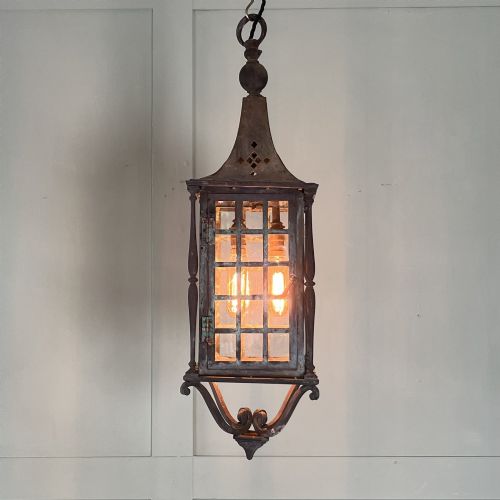
An unusually spirited green man copper lantern glowers quietly from the nineteenth century, keeping a watchful eye on incoming guests.
Judging quality in period lanterns
Quality rests upon the weight of the metalwork and the integrity of the structural assembly, where heavier bronze and thick-gauge brass distinguish finer productions from lighter commercial items. Superior pieces display crisp casting details, hand-beaten planishing marks, and substantial glazing bars that hold heavy leaded glass securely.
The distinction between standard hall lights and exceptional examples lies in artistic ambition, such as custom Gothic Revival tracery, specialised stained glass, or integrated decorative motifs like shamrocks and green men. Original patination and untouched surface ageing further elevate a lantern, reflecting decades of exposure and care.
Voysey·Pugin
The Antique Porch Pendant Lantern Glossary
- Hexagonal lantern
- A hanging light fixture featuring a six-sided frame that allows light to project evenly in multiple directions. This shape is particularly common in Edwardian brass designs.
- Leaded glass
- Individual panes of glass held together by strips of lead called cames. It forms intricate geometric or pictorial patterns in Arts and Crafts and Victorian panels.
- Gothic Revival
- An architectural and decorative style inspired by medieval forms, characterised by pointed arches, tracery, and castellated crowns. Pieces in this style often use heavy bronze or iron.
- Planished copper
- Metalwork beaten with a rounded hammer to create a textured, light-catching surface finish. This technique is a hallmark of the Arts and Crafts movement.
- Hall lantern
- A pendant light specifically scaled for narrow entrance hallways and vestibules. These fixtures typically hang from a chain or rigid rod.
Antique Porch Pendant Lantern: Frequently Asked Questions
Where should I hang a porch pendant lantern?
These lanterns suit covered exterior porches, entrance vestibules, and high-ceilinged hallways where a hanging fixture commands attention. Their drop length makes them ideal for spaces with sufficient vertical clearance to allow unobstructed passage underneath.
Ensure the selected scale matches the proportions of your doorway or hall. Smaller hexagonal models fit standard domestic porches, while large bronze or iron examples require wider architectural expanses.
Are these lanterns wired for modern electricity?
Many period lanterns have been adapted over the years to accept standard electrical wiring for contemporary home use. Some retain older fittings or require professional rewiring by a qualified electrician to meet current safety standards.
When installing, discuss appropriate bulb choices with your electrician to preserve vintage glass shades from excessive heat. Low-wattage LED alternatives often provide suitable illumination without thermal stress.
How do I distinguish Victorian from Edwardian lanterns?
Victorian lanterns tend to feature heavier ornamentation, darker patinas, and robust Gothic or classical influences, frequently utilising cast brass and rich coloured glass. They project a sense of solidity and formal presence.
Edwardian examples often embrace lighter brass frames, simpler geometric lines, and brighter metallic finishes. The influence of the Arts and Crafts movement during the early twentieth century introduced hand-worked copper and cleaner silhouettes.
Can these antique lanterns be used outdoors?
Most of these lanterns were originally intended for interior hallways or sheltered exterior porches rather than exposed weather conditions. Using them outside requires placement beneath a deep roof overhang to protect the vintage metal and glass.
Weatherproofing and electrical sealing should be assessed by a professional restorer if you plan to mount the fixture in an open outdoor location. Regular cleaning helps prevent moisture from affecting historic metal surfaces.