


Brass Hanging Fixture
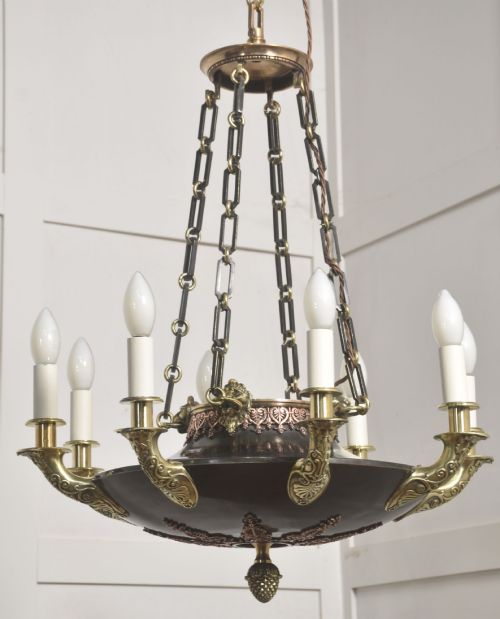
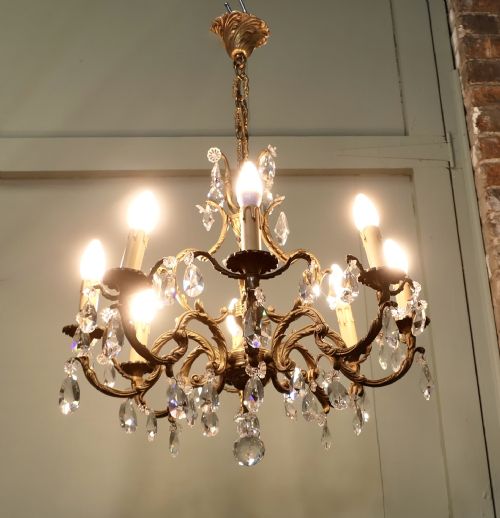
A brass hanging fixture brings ceiling illumination downwards through metal and glass, offering period character from Victorian, Edwardian and early twentieth-century workshops.
Brass Hanging Fixture
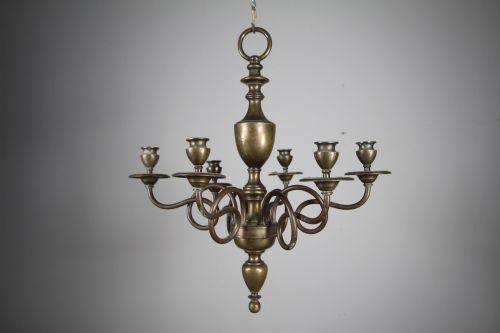
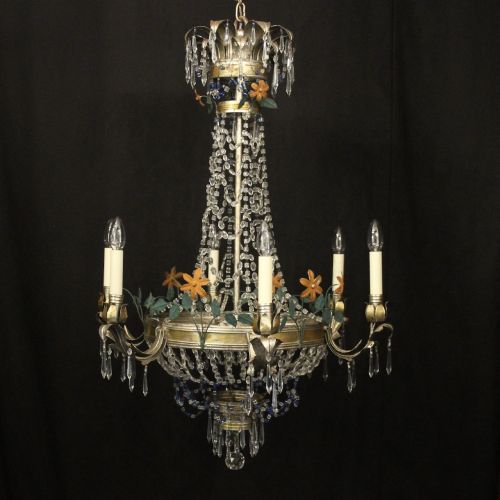
A brass hanging fixture encompasses chandeliers, ceiling lights, hall lanterns and pendant lights spanning the nineteenth century through the nineteen-thirties. These pieces originate from diverse European traditions, including French chateau, Italian neoclassical, Flemish revival and Arts and Crafts designs.
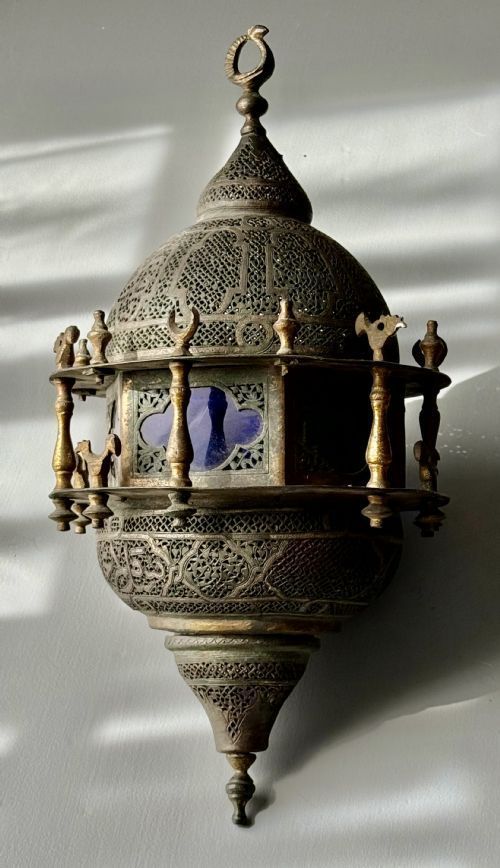
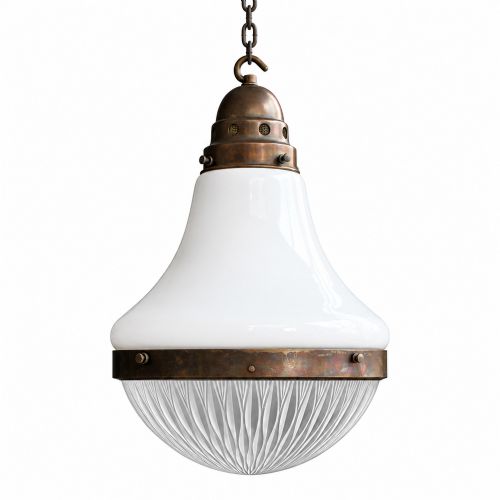
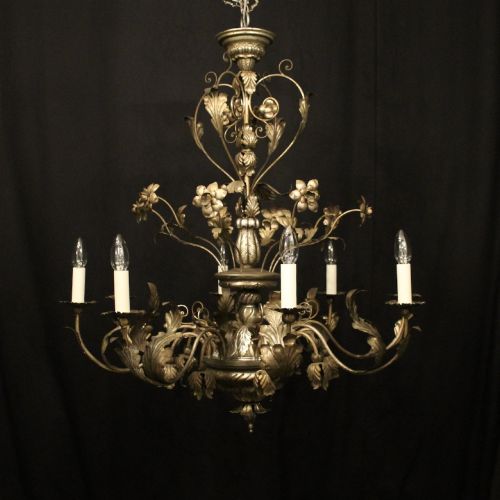
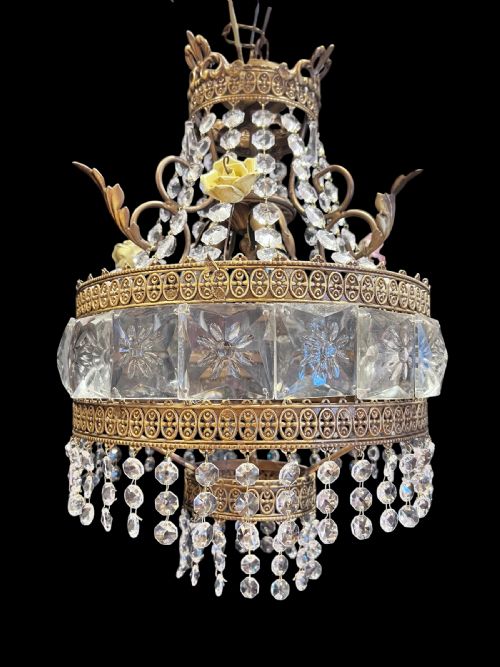
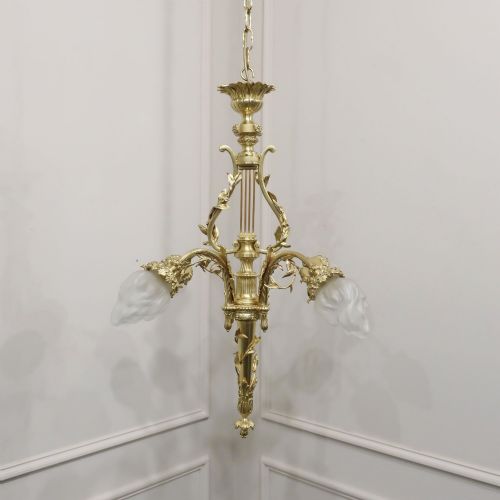
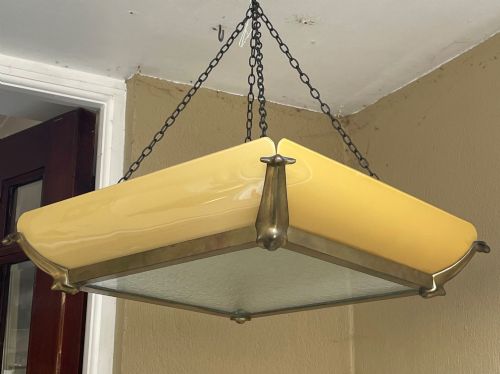
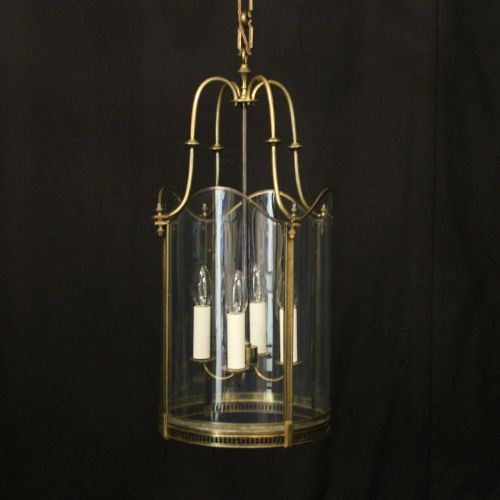
The most common examples on this page are French and Italian chandeliers or hall lanterns produced around nineteen-twenty, often combining cast brass or gilt bronze with glass and crystal elements. Buyers also encounter industrial pendants, moonstone glass fixtures, and pierced brass or leaded glass hanging lanterns.
Victorian and Edwardian versions lean towards heavier bronze or copper construction, whilst later Art Deco and nineteen-thirties items favour streamlined glass globes and simplified metal frames.
Materials and construction
Makers utilised brass, bronze, copper and gilt metal for the structural frames, often casting components or piercing sheet metal by hand for decorative lanterns. Surface treatments include silvering, gilding and patination to achieve specific metallic tones.
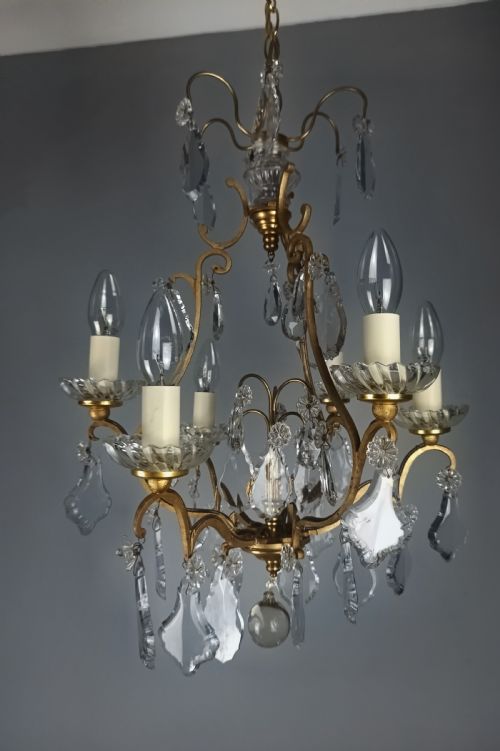
Lighting components incorporate glass, crystal lustres, leaded glass panels and porcelain flowers to diffuse and reflect illumination. Combinations of cut glass, moonstone and bevelled panes define the optical character of the hanging fixtures.
Object forms include multi-arm chandeliers, Moravian star lanterns, birdcage fixtures and Arts and Crafts pendant lights.
Standards of craftsmanship
Quality rests in the precision of the metal casting, the weight of the bronze or brass framework, and the integrity of the glass or crystal components. Finer pieces demonstrate crisp detail in cast ornamentation, such as neoclassical lyres, floral motifs or pierced Moorish patterns.
The assembly method matters significantly, distinguishing robustly constructed multi-light chandeliers from lighter domestic pendants. Superior examples retain matching crystal drops, original gilding and integrated structural hardware without replacement parts.
The Brass Hanging Fixture Glossary
- Chandelier
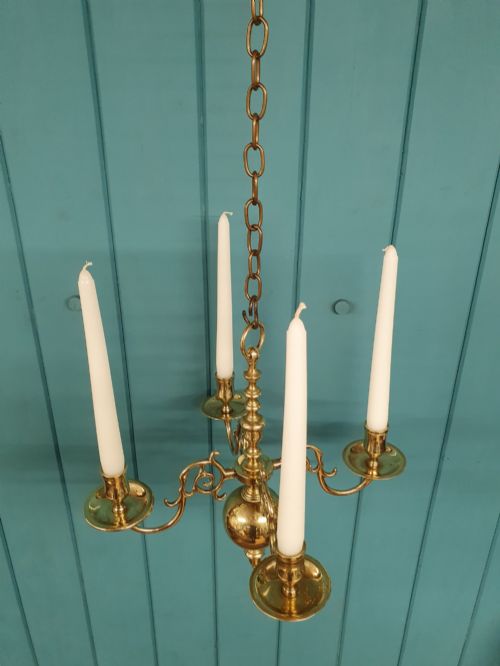
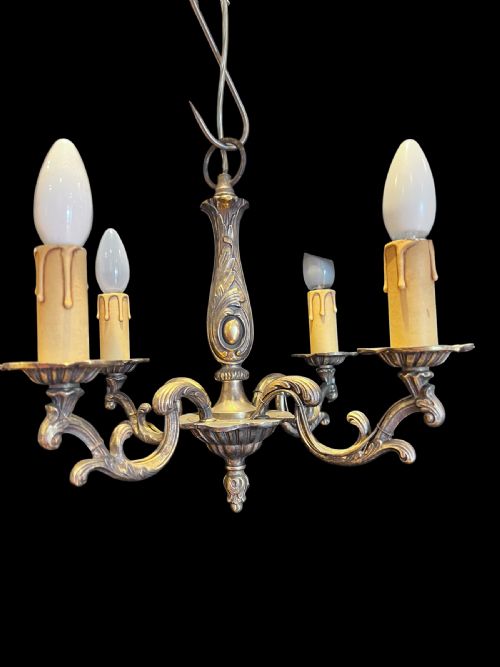
- A branched ceiling-mounted lighting fixture designed to hold multiple candles or bulbs. These fixtures range from small four-arm brass pieces to large twelve-light crystal compositions.
- Hall lantern
- An enclosed hanging light traditionally suspended in entranceways and corridors. They frequently feature convex glass panels or bevelled frames of brass and bronze.
- Gilt bronze
- Bronze metal treated with a thin layer of gold or gold-coloured alloy. This technique provides a durable, decorative metallic finish seen on French chateau and neoclassical fixtures.
- Crystal lustre
- A cut glass pendant or prism hung from a chandelier to refract light. Lustres are characteristic of birdcage and waterfall chandeliers from the early twentieth century.
- Moonstone glass
- An opaque, milky glass type used for domes and globes. It diffuses light softly and appears frequently in English pendant lights from the nineteen-twenties.
Brass Hanging Fixture: Frequently Asked Questions
How do I hang a heavy brass fixture safely?
Suspension requires fixing directly into ceiling joists or using appropriate structural anchors suited to the weight of bronze and crystal designs.
Professional electrical installation ensures the internal wiring meets current standards while supporting the physical load of the metal frame.
What rooms suit a hall lantern?
Hall lanterns work effectively in entrance halls, stairwells and high-ceilinged corridors where enclosed glass panels protect the interior light source.
Their downward directional illumination and compact profiles suit transitional spaces better than sprawling multi-branch chandeliers.
How do I identify an Edwardian chandelier?
Edwardian pieces often display lighter cast brass construction, simple three or four-branch configurations, and restrained decorative motifs compared to heavy Victorian designs.
They frequently date between nineteen-hundred and nineteen-ten, balancing traditional proportions with early twentieth-century domestic utility.
Are crystal elements original to these lights?
Original crystal lustres and glass drops match the cut, clarity and mounting style of the primary metal frame.
Examining the attachment loops and glass wear helps determine whether the pendants belong to the original period of manufacture.