



Louis XVI Bronze Lantern
Louis xvi bronze lantern options bring French neoclassical elegance into an entrance hall with disciplined symmetry and refined metalwork.
Louis XVI Bronze Lantern
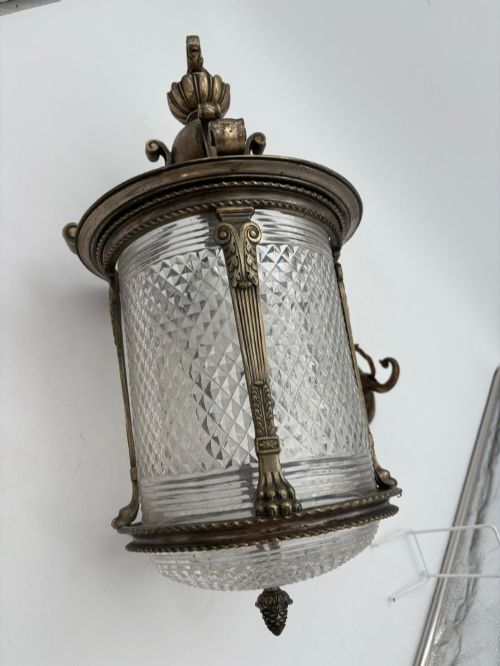
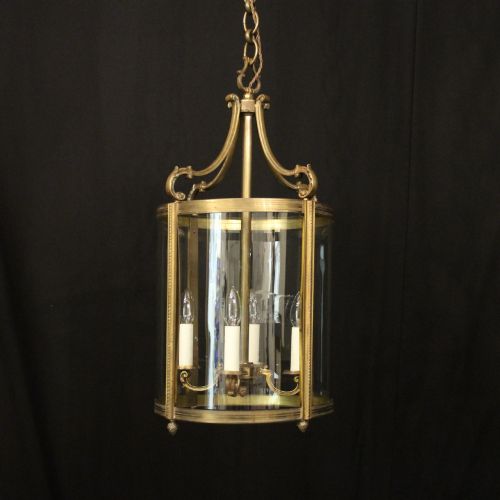
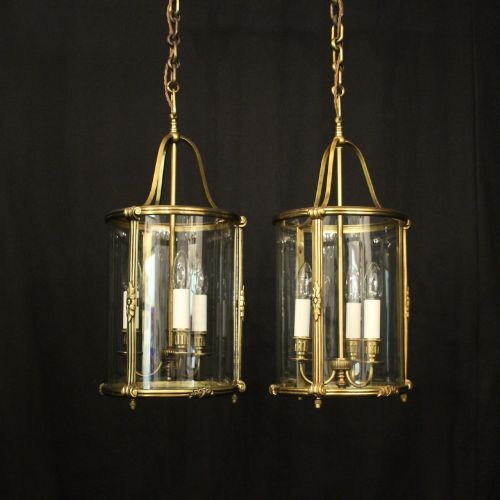
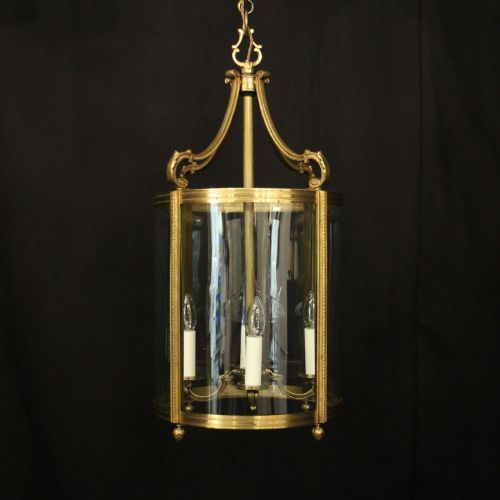
A louis xvi bronze lantern draws directly from the architectural vocabulary of French neoclassical design, appearing in formats ranging from single-light pendants to substantial four-light hall lanterns. Buyers encounter these pieces shaped into hexagonal bodies or convex configurations, referencing the ornamentation found in the Palace of Versailles.
The material evidence spans pieces dated from the late nineteenth century through to the Edwardian era and the 1920s, reflecting a sustained demand for Louis XVI revival and French chateau aesthetics. These fixtures function primarily as ceiling lighting in hallways and reception spaces, utilising cut glass or frosted glass panels set within metal frameworks.
Materials and construction methods
Makers constructed the framework using cast bronze, brass, or ormolu, applying gilding or silvering to the metal surfaces to achieve a bright, reflective finish. The structural housings frequently incorporate cut glass or frosted glass panes held securely within the metal armature.
Workshops assembled these fixtures to accommodate multiple internal light sources, such as four-light configurations, balancing heavy cast metal elements with transparent or faceted glass components that diffuse illumination evenly.
Louis XVI Bronze Lantern Retail Price Guide 2026
Typical asking prices for louis xvi bronze lantern among the pieces listed under this phrase on Sellingantiques today, from the lower quarter to the upper quarter. They describe what is for sale here now, not the wider market.
Some nineteenth-century makers drew inspiration directly from the light fixtures illuminating the royal corridors of Versailles.
Assessing quality in period lighting
Quality reveals itself in the crispness of the metal casting and the depth of the gilding or silvering applied to the bronze and brass surfaces. Superior examples display sharply defined neoclassical motifs and substantial weight in the primary metal frame.
The treatment of the glass panels further separates tiers of production, where heavy cut glass or accurately curved convex panes demonstrate greater ambition than standard flat glass insertions.
The Louis XVI Bronze Lantern Glossary
- Ormolu
- Gilded bronze applied to decorative hardware and lighting fixtures. The technique involves fusing a mercury-gold amalgam to a bronze base.
- Neoclassical
- A style rooted in the revival of classical antiquity, emphasising straight lines, symmetry, and architectural restraint. This aesthetic defines the Louis XVI period.
- Convex lantern
- A lighting fixture featuring curved, outward-projecting glass panes. This form softens the silhouette while dispersing light across a wider angle.
- Hall lantern
- A pendant light specifically designed for corridors and entranceways. These pieces hang closely to ceilings to illuminate transitional spaces.
Louis XVI Bronze Lantern: Frequently Asked Questions
Where should a louis xvi bronze lantern be hung?
These fixtures suit entrance halls, corridors, and high-ceilinged reception rooms where their vertical proportions and reflective metal surfaces can catch the eye.
They function effectively as primary overhead illumination in transitional spaces that demand formal architectural character.
How do I identify a revival piece from an earlier date?
Dating relies on examining the casting techniques, the wear on the gilding, and the specific composition of the glass panels.
Many examples on the market date from the late nineteenth century and the 1920s, capturing the revival spirit of earlier French models.
What glass types appear in these lanterns?
Workshops utilised cut glass, frosted glass, and clear convex glass panes to enclose the internal light fittings.
Faceted and cut varieties refract the internal light, while convex glass provides a rounded profile reminiscent of palace furnishings.
How many lights do these lanterns hold?
Configurations range from single-bulb pendants to substantial four-light arrangements suited for larger spaces.
Multi-light formats distribute illumination evenly through the surrounding glass panes.