
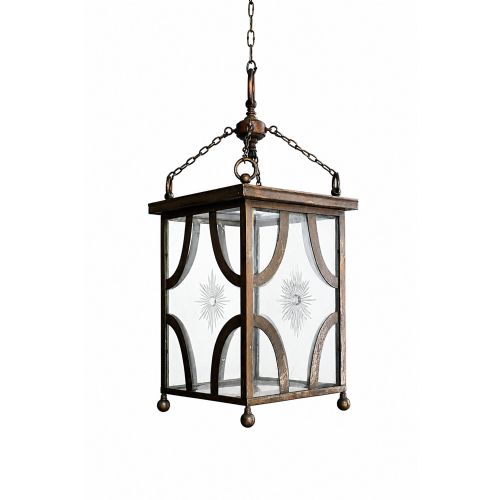
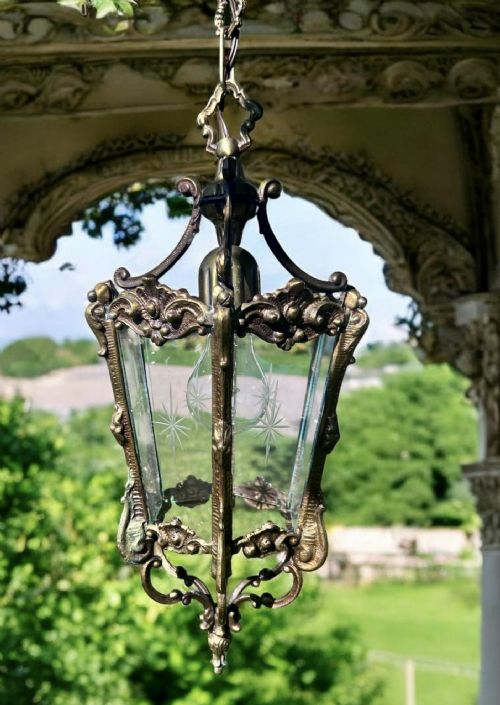
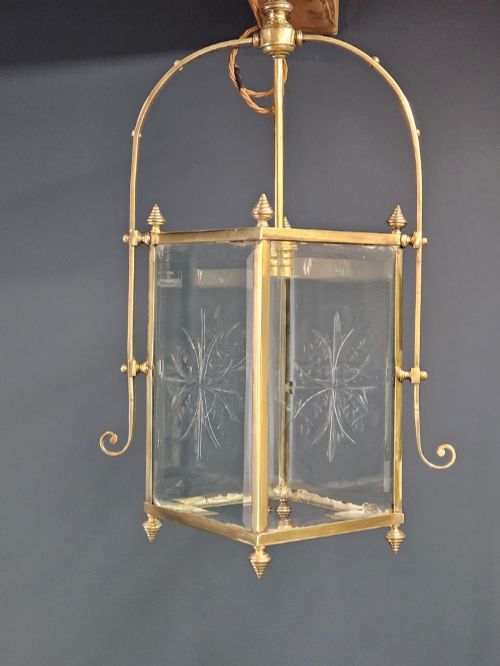


Cut Glass Hall Lantern
These cut glass hall lantern examples bring immediate presence to an entrance, casting patterned light through period glass.
Cut Glass Hall Lantern
A cut glass hall lantern serves as a primary ceiling-hung light source designed specifically for entrance spaces and corridors. These fixtures appear frequently from the Victorian and Edwardian eras, alongside pieces dated across the nineteenth and early twentieth centuries.
The domestic forms range from simple brass-framed glass bell jars to elaborate French neoclassical models in gilt bronze. Buyers encounter both English and French origins, spanning styles from Gothic Revival to Louis XVI and Regency.
Pendant lighting formats dominate the selection, functioning as hanging lanterns or ceiling lights equipped with single or multiple interior bulbs. The overall aesthetic relies on heavy metal frames securing panels of cut, etched, or frosted glass.
How they were made
The structural framework relies on cast and sheet metals, primarily brass, bronze, and gilt bronze, joined to support heavy glass components. Metalwork styles incorporate detailed chasing and structural mounts characteristic of French chateau and Edwardian workshop output.
Glass elements utilise traditional techniques including hand blowing, diamond cutting, acid etching, and frosting to diffuse light effectively. Panels and bell jars are secured directly within metal collars and frames, often retaining original suspension loops.
Some lanterns were built with hinged access doors just large enough for a butler to squeeze a hand inside with a dusting cloth.
What varies in quality
Quality separates simple utility lighting from high-status decorative statements through the depth of metal casting and the precision of glass cutting. Heavy bronze or gilt bronze mounts show sharper detail and superior weight compared to standard brass frames.
The clarity and execution of the glass panels dictate the visual impact when illuminated. Deep hand-cut facets and crisp etched patterns create sharper refraction than moulded or plain frosted alternatives.
The Cut Glass Hall Lantern Glossary
- Cut glass
- Glass decorated by grinding facets into the surface using a wheel. This technique maximises light refraction within a hallway.
- Gilt bronze
- Bronze metal coated with a thin layer of gold. It provides a rich, durable surface finish seen on finer French models.
- Bell jar
- A rounded glass shade resembling a laboratory bell. These enclose the light source completely within a hanging frame.
- Frosted glass
- Glass treated to create a milky, opaque surface. It softens the glare of internal bulbs for ambient illumination.
Cut Glass Hall Lantern: Frequently Asked Questions
How high should I hang a hall lantern?
Suspension height depends on ceiling clearance and the space beneath the fixture. Standard placement leaves sufficient headroom for passage while maintaining visual balance in the entry.
Positioning the base of the lantern above standard door lintels ensures proper illumination without obstructing movement through the hallway.
Are these lanterns wired for modern electricity?
Many examples arrive rewired or adapted for contemporary electrical standards while preserving original sockets and internal components. Safety checks by a qualified electrician ensure secure installation.
Original brass and bronze frames accommodate modern cabling without altering the exterior historic appearance of the hanging light.
How do I clean cut glass panels?
Careful maintenance involves removing glass panels from the metal frame if construction permits. Gentle washing with warm soapy water restores clarity to cut facets.
Harsh abrasives must be avoided to protect both the metal patination on the brass or bronze and the hand-cut glass surfaces.
What periods do these lanterns date from?
The available selection spans the nineteenth century through the 1930s, encompassing Victorian, Edwardian, and early twentieth-century production. French and English workshops dominate these decades.
Stylistic indicators such as Neoclassical mounts or Arts and Crafts frames help identify the specific manufacturing era of each piece.