

Antique Porch Light
These antique porch light fixtures bring character and illumination to entrances, spanning Victorian and Edwardian periods in brass, copper and iron.
Antique Porch Light
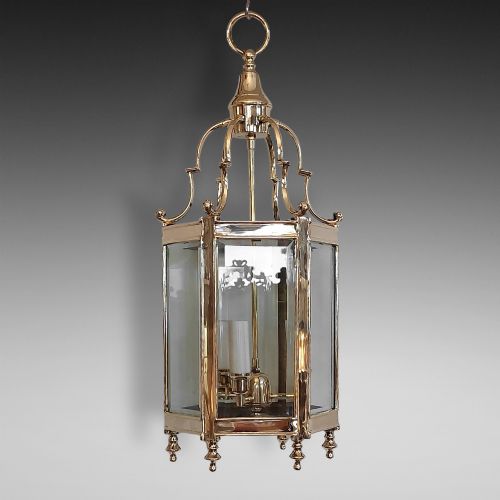
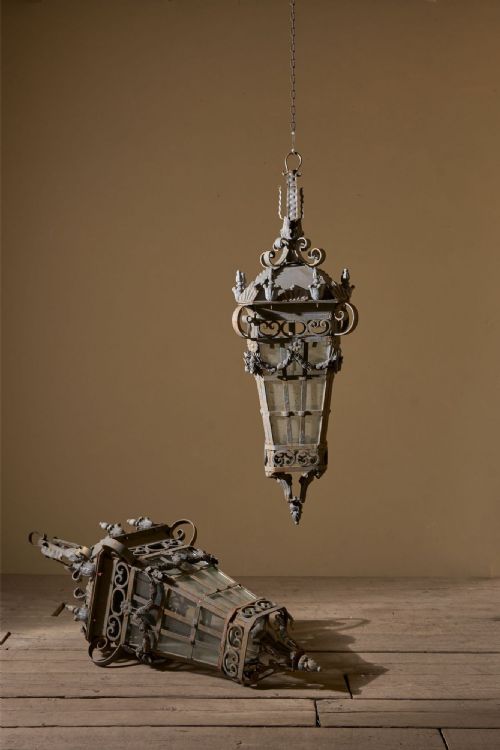
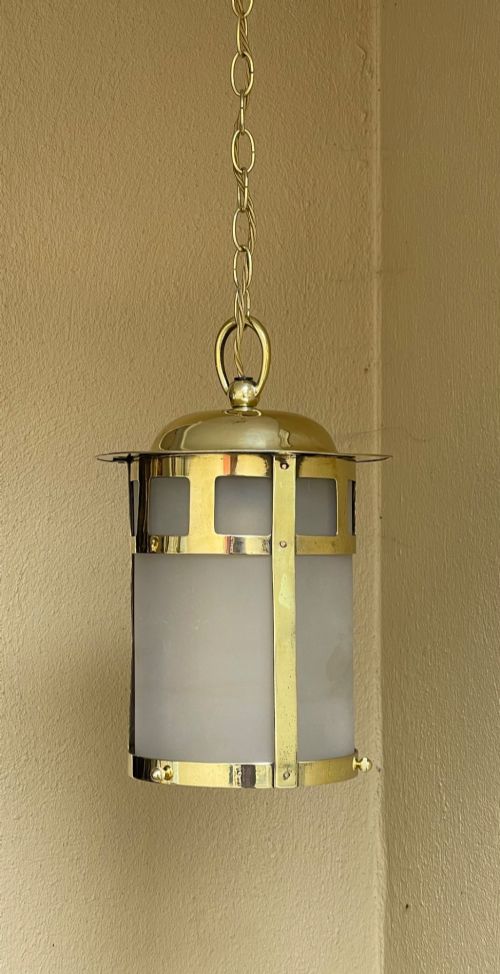
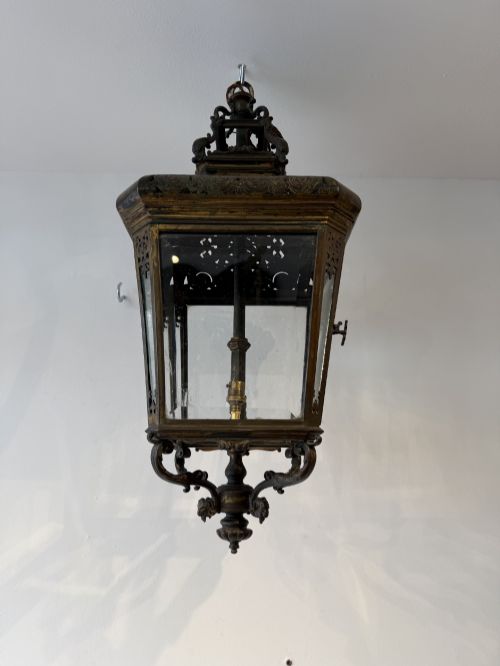
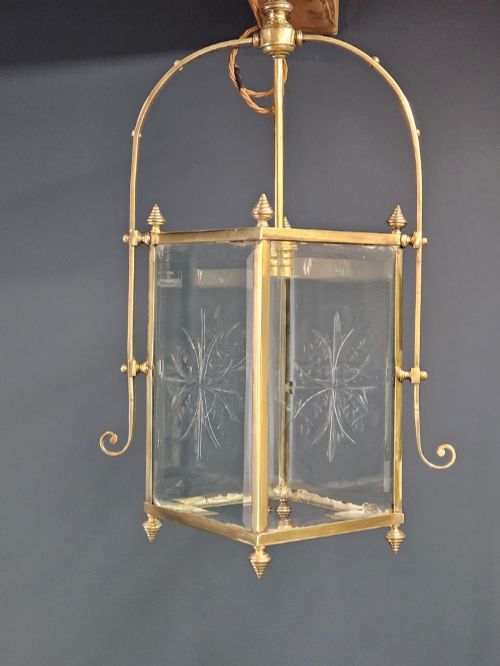
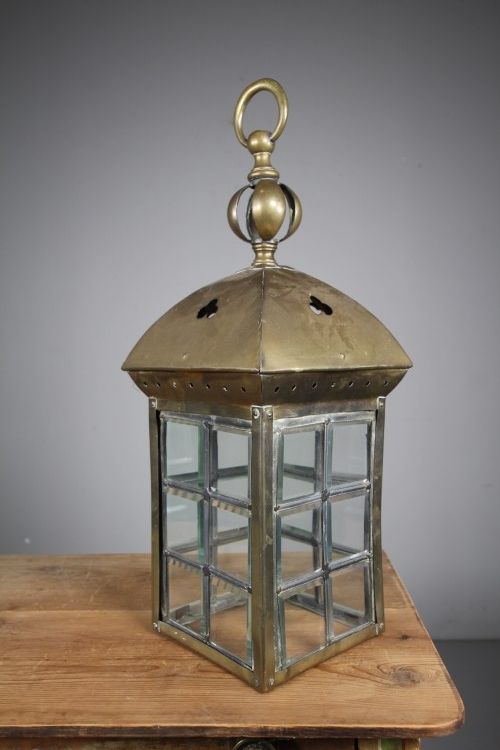
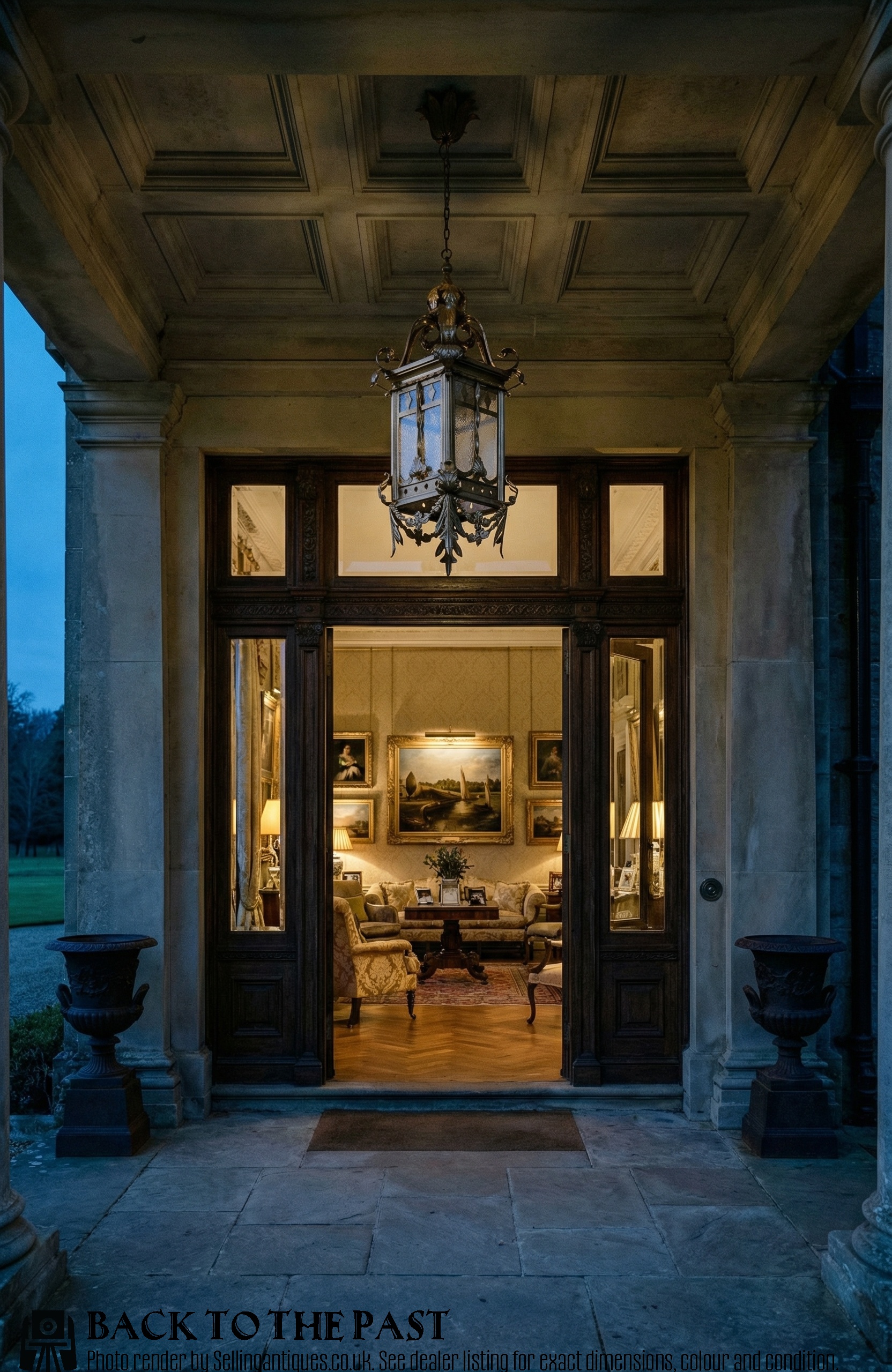
When you search for an antique porch light, you encounter lanterns designed to hang from ceilings or mount directly to exterior and interior walls. The pieces on this page draw from the 19th century, Victorian, Edwardian and early 20th century periods.
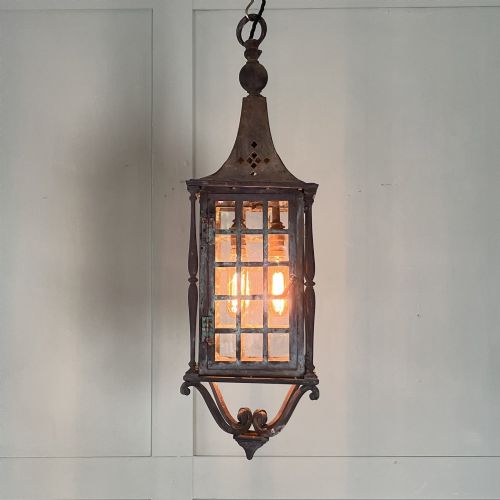
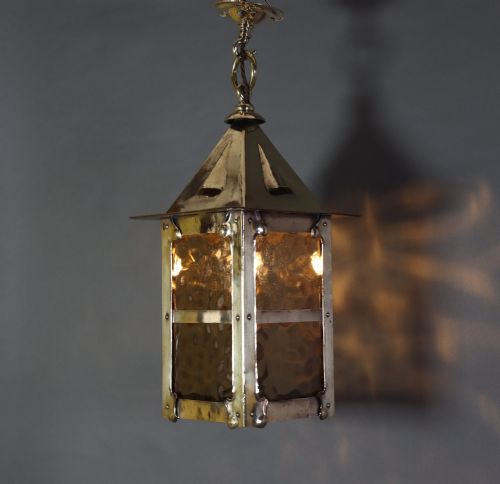
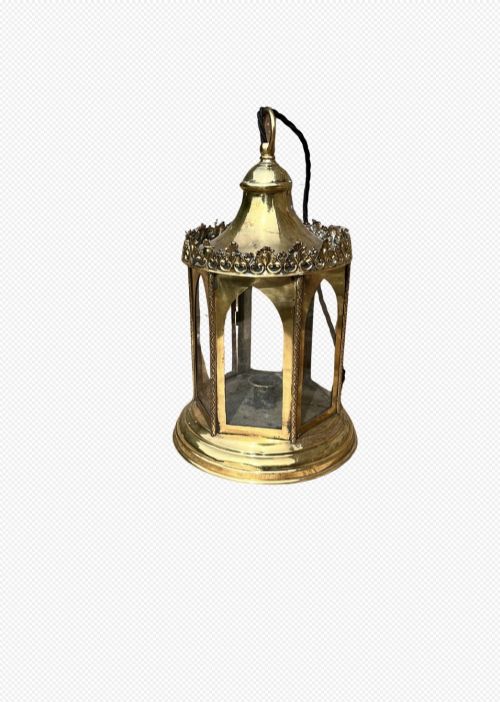
You meet hexagonal, octagonal and square forms executed in styles ranging from Gothic Revival and Arts and Crafts to French Empire. Brass and copper examples dominate the selection, often taking the form of hanging hall lanterns or wall-mounted carriage lights.
Many specimens originate from English and French workshops, showing domestic lighting transitions from early gas conversion to electricity. These fixtures serve practical exterior illumination while retaining substantial decorative presence through period metalwork and glass panels.
How they were made
Makers constructed these lanterns using rigid metal frames of brass, copper, bronze, wrought iron or zinc. Workshops joined structural elements through riveting, soldering and framing.
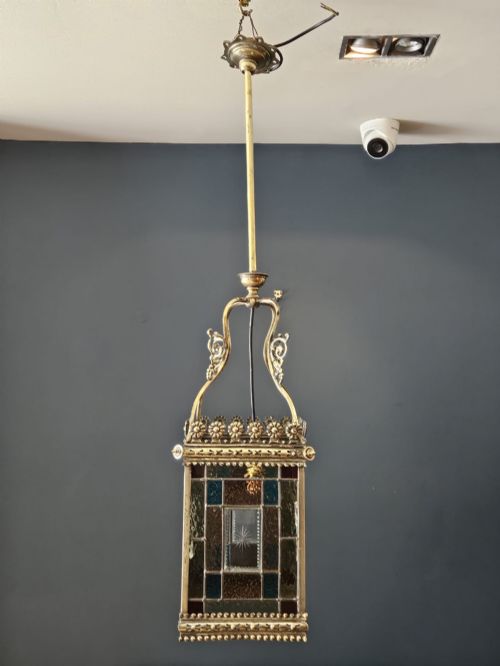
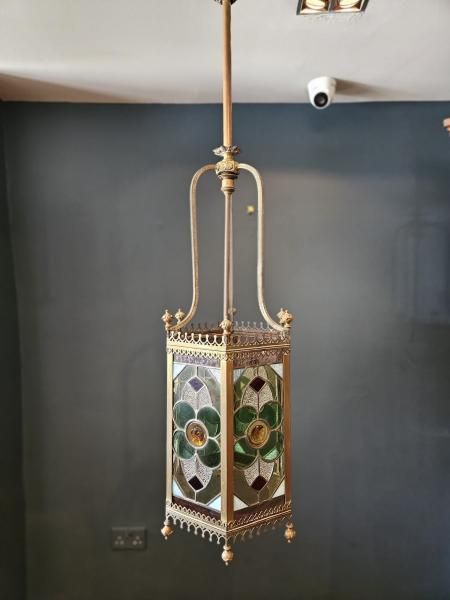
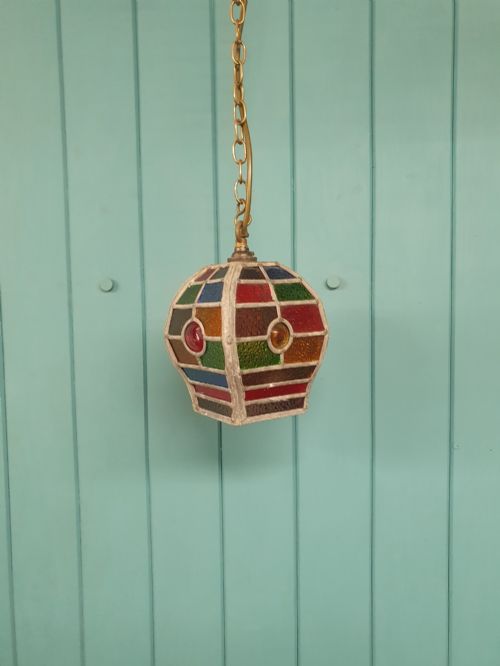
Glaziers fitted leaded glass, stained glass or clear panes into the metal channels to enclose the light source. Early examples frequently show evidence of conversion from gas fittings to electrical wiring.
Surface finishes include gilding, green paint and polished or patinated bare metal surfaces. Artisans incorporated decorative motifs such as hexagonal geometry and Gothic tracery into the structural framework.
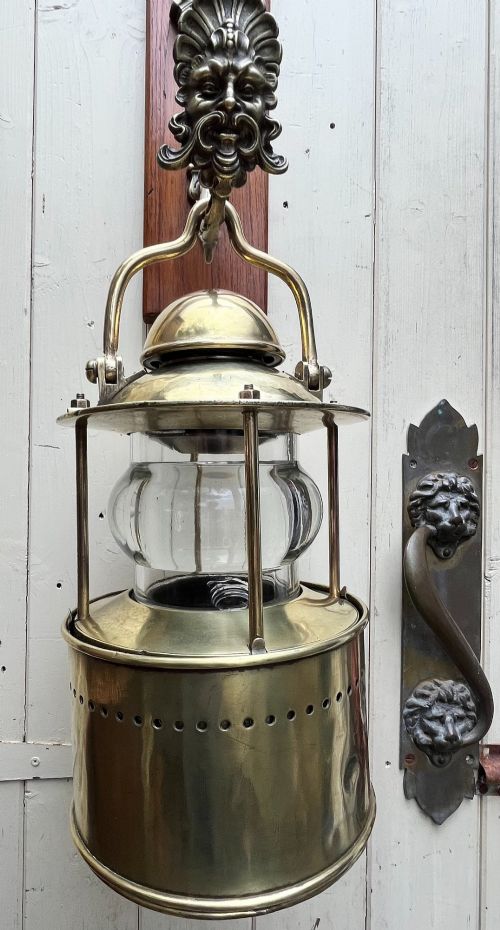
An old decorative green man copper lantern brings a watchful woodland face to your porch.
What varies in quality
The distinction between ordinary and superior pieces rests on the weight of the metal and the complexity of the frame construction. Heavier gauge brass, bronze and copper frames provide structural integrity that lighter stamped metal lacks.
The precision of the glazing work and the intricacy of period details, such as leaded came work or cast decorative mounts, elevate a piece. Original components and surviving period glass panels retain greater integrity than later replacements.
Voysey·Pugin
The Antique Porch Light Glossary
- Hall Lantern
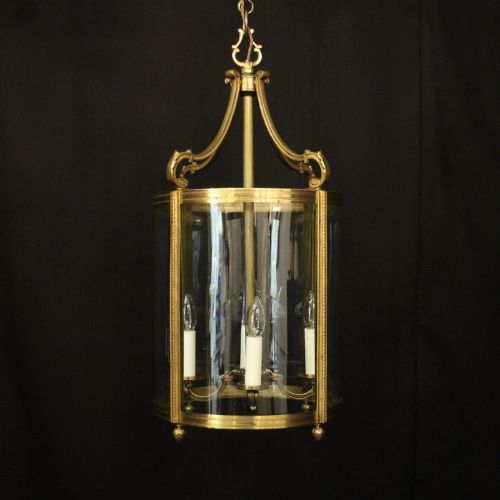
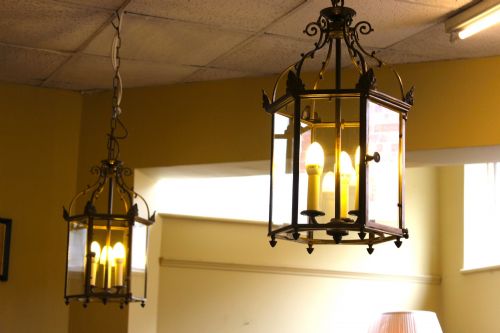
- An enclosed hanging light fixture designed for entrance spaces and corridors. These fixtures usually feature glass panels held within a metal frame.
- Leaded Glass
- Glass panes assembled using flexible lead cames to form geometric or decorative patterns. This technique is common in Victorian and Edwardian lanterns.
- Carriage Light
- A wall-mounted lantern originally designed to illuminate horse-drawn transport or building entrances. These often feature bracket attachments for wall fixing.
- Gothic Revival
- An architectural and decorative style drawing inspiration from medieval forms. Pieces in this style frequently display pointed arches and heavy ironwork.
- Arts and Crafts
- A design movement emphasising handcraftsmanship and simple materials. Lanterns from this tradition highlight honest metal construction and utility.
Antique Porch Light: Frequently Asked Questions
Where should I hang an antique porch light?
These lanterns suit covered exterior porches, entrance halls and vestibules where they receive protection from severe weather. Wall-mounted variants fit beside doorways, while hanging lanterns work best centered in hallway spaces.
Ensure the scale of the fixture matches the dimensions of your entryway. Large hexagonal and octagonal forms require adequate clearance to hang properly.
Are these lights wired for modern electricity?
Many period fixtures arrive with modern electrical fittings installed or ready for an electrician to adapt. Some pieces retain older internal components that require rewiring to meet current safety standards.
Check the internal holder and wiring capacity before installation. Professional electricians can easily update internal lamp holders while preserving the exterior metalwork.
How do I identify a Victorian lantern?
Victorian pieces often display heavier brass or copper framing, sometimes with gas conversion evidence. Look for distinctive proportions and period manufacturing techniques like hand-cut leaded glass.
Stylistic cues include Gothic Revival influences or robust hexagonal forms. Hallmarks of this era lie in substantial metal thickness and traditional fastening methods.
How do I clean antique brass and copper?
Maintain metal surfaces with a dry or slightly damp cloth to remove dust. Avoid harsh chemical polishes that strip away historical patination.
Preserving the natural surface age maintains the character of the metal. Glass panels remove easily on many designs for separate cleaning.