
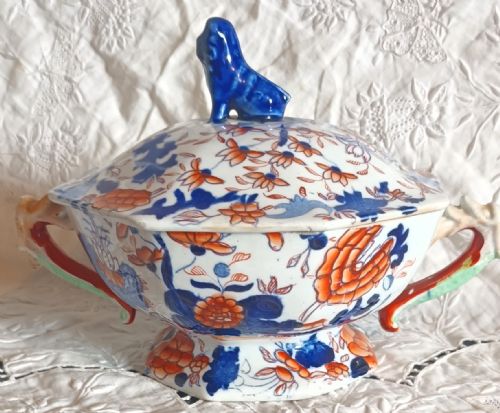

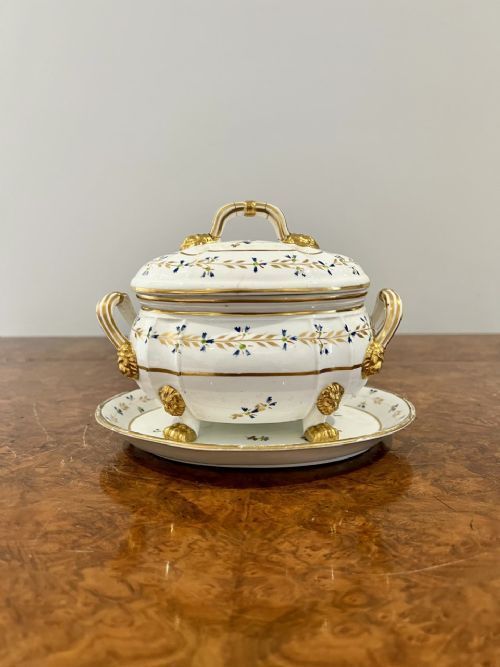


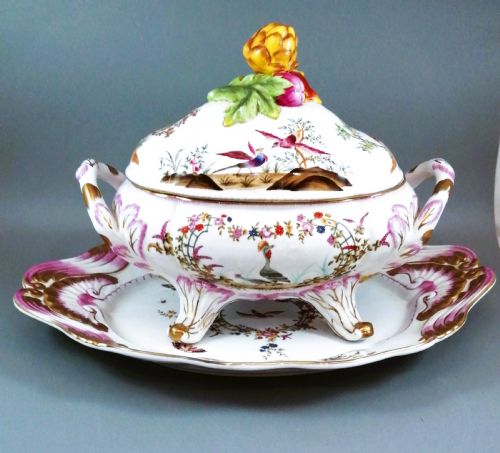


Antique Porcelain Soup Tureen
An antique porcelain soup tureen brings eighteenth and nineteenth-century dining ceremony directly to the table.
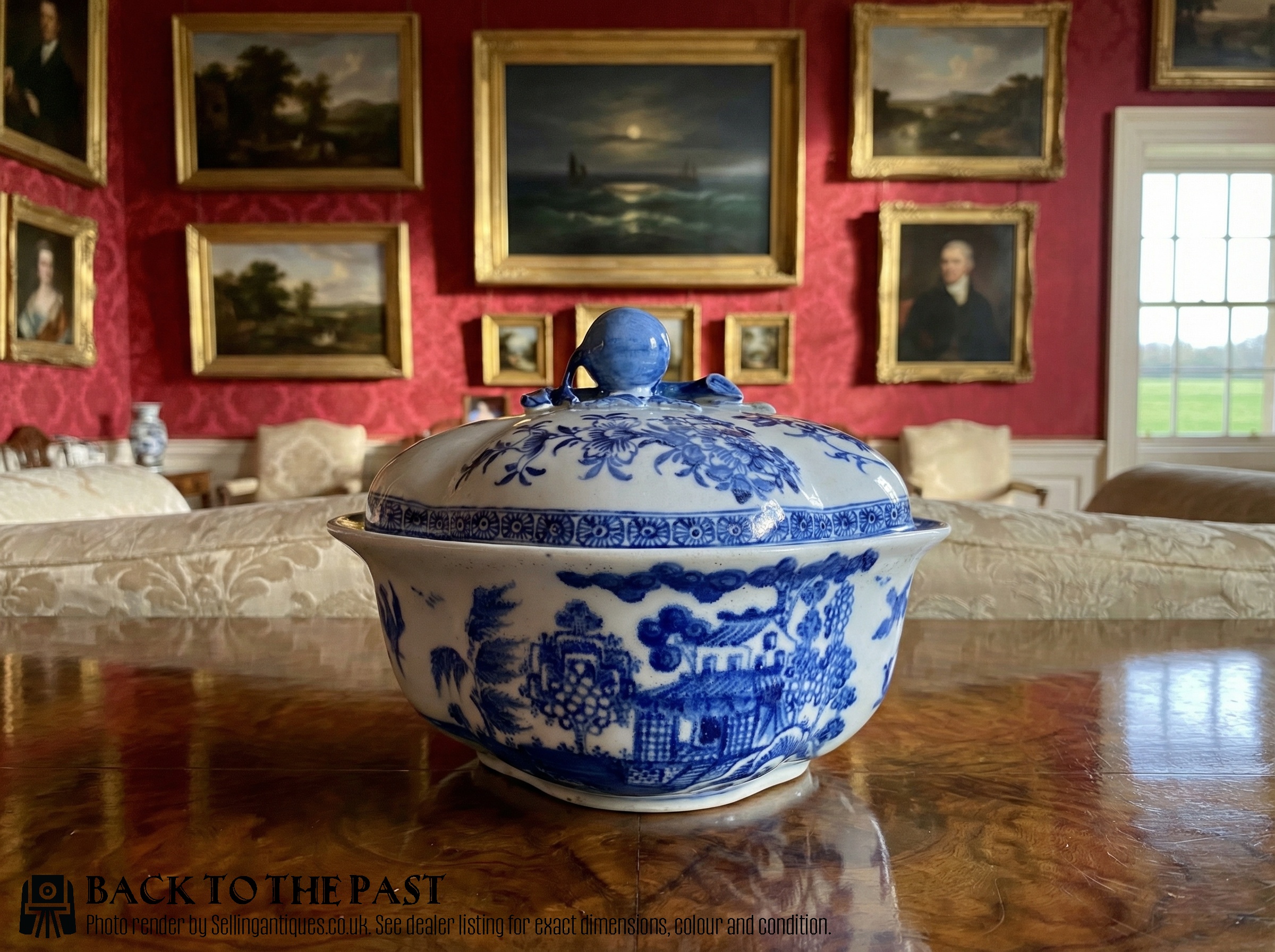
Identifying antique porcelain soup tureen examples
The antique porcelain soup tureen category encompasses large serving vessels designed for broth and soup alongside smaller lidded broth cups. These objects originate from Georgian, Regency, and nineteenth-century European makers, spanning soft-paste and standard porcelain bodies.
Most pieces encountered on this page belong to the eighteenth and nineteenth centuries, including English factories and Italian manufacturers. The forms range from substantial covered tureens to intimate lidded vessels intended for individual servings.
Materials and construction
Potters utilised both standard porcelain and soft-paste porcelain bodies, shaping them into handled vessels complete with matching lids. Enamel decoration and applied gold leaf frequently enhance the glazed surfaces.
Manufacturers such as Derby and Worcester incorporated functional elements like gilt handles directly into the moulded or thrown ceramic bodies during the Georgian and Regency periods.
Every soup tureen needs a sturdy handle, though some makers could not resist adding generous splashes of gold leaf just for the look of it.
Judging quality
Superior examples demonstrate refined modelling in the handles and finials, alongside precise application of enamel colours and gold leaf. The crispness of the porcelain body and the fidelity of historic factory painting separate standard tableware from finer productions.
Derby·Flight, Barr & Barr Worcester·Richard Ginori
The Antique Porcelain Soup Tureen Glossary
- Soft-Paste Porcelain
- An artificial porcelain composition fired at lower temperatures than true hard-paste porcelain, common in eighteenth-century English factories. It presents a distinctive warm texture beneath the glaze.
- Imari
- A decorative style inspired by Japanese export wares, utilising iron red, cobalt blue, and gold leaf. English factories adopted this palette extensively during the Regency period.
- Broth Cup
- A small lidded vessel with side handles used for serving individual portions of soup or broth at the table. These pieces mirror the form of larger tureens on a reduced scale.
- Gilt
- A surface decoration applied using gold leaf or gold paint to highlight handles, rims, and painted motifs. Its preservation offers an indication of the handling an object received.
Frequently Asked Questions
What is an antique porcelain soup tureen?
An antique porcelain soup tureen is a covered ceramic serving vessel created during the eighteenth or nineteenth century for formal dining.
These pieces utilise porcelain or soft-paste porcelain, often embellished with enamel painting and gold leaf.
How were soup tureens used?
Soup tureens served as the central vessel for holding and presenting broth or soup at the dining table before individual distribution.
Smaller lidded variants functioned as individual broth cups for diners during the eighteenth and nineteenth centuries.
How do I date a porcelain tureen?
Dating relies upon identifying factory marks, stylistic traits from periods such as the Georgian or Regency eras, and the ceramic composition.
Soft-paste porcelain points towards earlier eighteenth-century manufacture, whereas later nineteenth-century pieces show different material characteristics.
Can I use these tureens today?
These historical vessels are primarily collected as display or decorative tableware due to their age and delicate material construction.
Careful handling is required to preserve the enamel decoration and gold leaf applied by historic makers.