


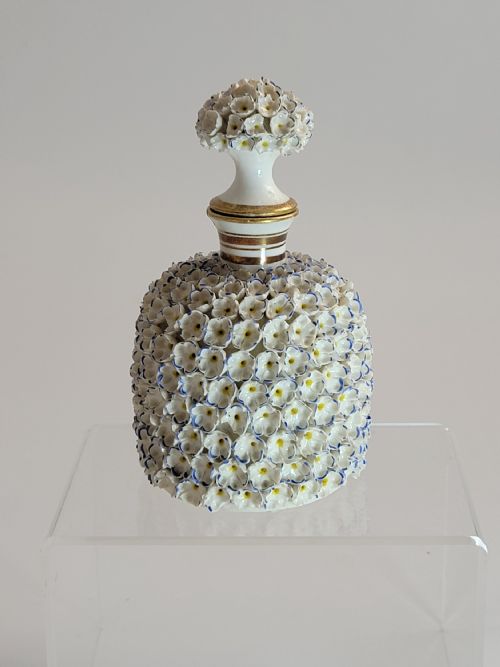


Antique Porcelain Scent Bottle
An antique porcelain scent bottle is a small, portable vessel made for fragrance, prized for miniature painting and delicate ceramic work.
What these pieces are
An antique porcelain scent bottle encompasses small vessels designed to hold perfume, liquid fragrance, or aromatic salts. They appear across Regency, William IV, and Victorian periods, alongside Chinese Qing Dynasty exports and continental European manufacture.
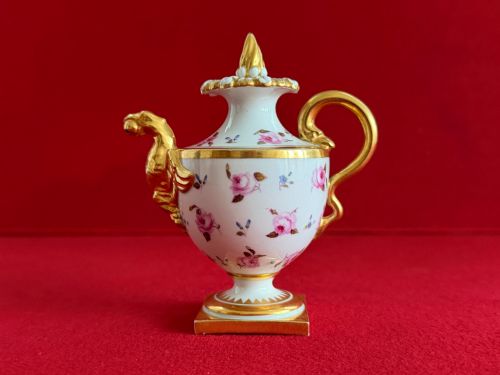
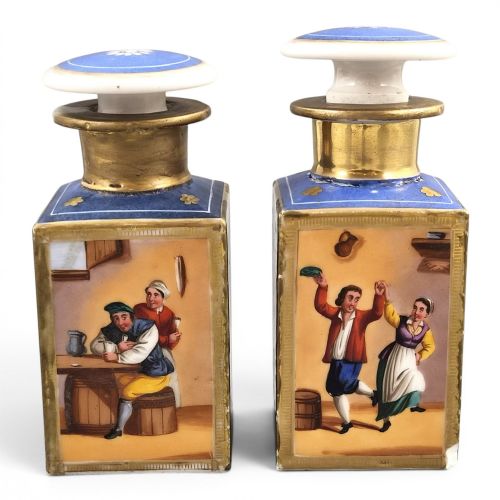
The forms on this page range from perfume bottles and snuff bottles to rose water sprinklers and figural vases. English factories such as Worcester and Derby sit alongside French works by Jacob Petit and German makers.
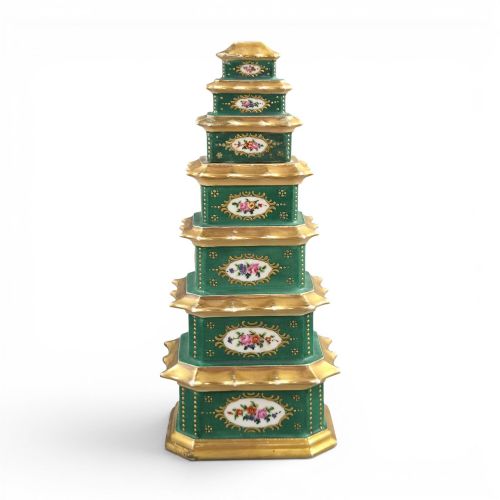
Buyers meet both European hard-paste porcelain painted with floral scenes or classical blue and gilt, and Chinese export pieces featuring enamel work, solid silver tops, or pagoda silhouettes.
How they were made
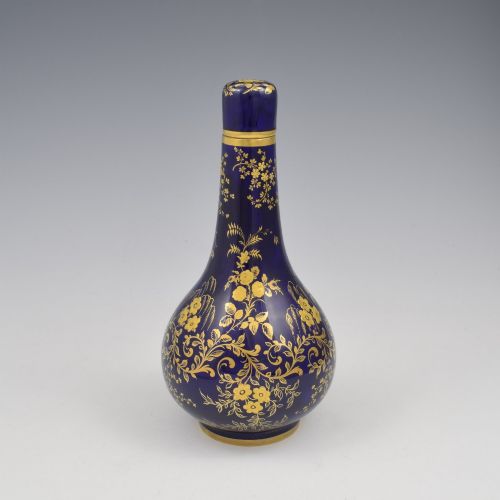
Potters shaped these vessels from hard-paste porcelain or parian ware, applying a smooth glaze before secondary firing. Many pieces utilise cobalt oxide underglaze blue and hand-applied gold leaf or gilt detailing.
Decoration often involved intricate hand-painting with enamel colours depicting Dutch scenes, flowers, or Chinoiserie motifs. Some examples incorporate fitted solid silver tops or original ceramic stoppers.
Retail Price Guide 2026
Typical UK retail prices for porcelain scent bottle, calculated from the Sellingantiques database of over a million retail prices indexed since 2003. This retail price guide relies exclusively on Sellingantiques data; no external sources or auction records are used, so the figures do not describe the wider market.
Some nineteenth-century scent bottles hid their true purpose as cheeky snuff containers behind respectable porcelain pagoda roofs.
What varies in quality
The standard of execution in miniature hand-painting separates ordinary production from exceptional output. Crispness in the gilding and the fineness of the porcelain body define the upper tier of maker attribution.
Survival of original stoppers and matching hardware, such as solid silver tops or gilt mounts, alters the integrity of the piece. The precision of the firing process and control over cobalt oxide and enamel pigments also determine overall visual balance.
Derby Porcelain·Jacob Petit·Flight Barr And Barr
The Antique Porcelain Scent Bottle Glossary
- Hard-paste porcelain
- A durable ceramic composition fired at high temperatures using kaolin and petuntse. It yields a dense, white body that resists scratching.
- Parian ware
- A fine-grained unglazed porcelain developed in the nineteenth century to imitate white marble. It is typically moulded rather than thrown.
- Cobalt oxide
- A metallic pigment used to produce deep blue underglaze decoration on ceramics. It withstands high firing temperatures without burning away.
- Rose water sprinkler
- A vessel with a narrow neck and perforated bulb designed for scattering scented water. These pieces often date to the Regency period.
- Gilt
- A thin layer of gold applied to the surface of porcelain for decorative emphasis. It is usually fired onto the glaze and may show wear from handling.
Frequently Asked Questions
Are original stoppers important?
Original stoppers maintain the complete form and original design intent of the maker. Finding a piece with its matching stopper is relatively uncommon in portable smalls.
Replacements do not necessarily ruin the decorative appeal, but matching period components add to the historical consistency of the object.
How can I tell English porcelain from continental pieces?
English factories like Worcester and Derby often used distinct paste compositions and characteristic floral or gilt border styles. Continental makers such as Jacob Petit favoured bolder sculptural forms and vibrant enamel palettes.
Examining base marks, where present, alongside the handling of the glaze helps distinguish between Staffordshire, Paris, and German workshops.
What is parian ware?
Parian ware is a biscuit porcelain introduced in the nineteenth century to resemble carved white marble. It has a smooth, matte texture that highlights neoclassical relief modelling.
Objects made from this material, including scent bottles, rely entirely on form and texture rather than painted enamel colour for their effect.