

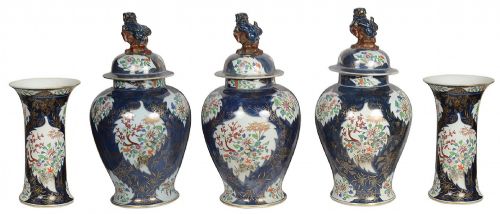


Antique Porcelain Mantelpiece Garniture
An antique porcelain mantelpiece garniture brings symmetry and striking colour to a room, anchoring a fireplace with matching sets of vases, urns, or clocks.
Antique Porcelain Mantelpiece Garniture
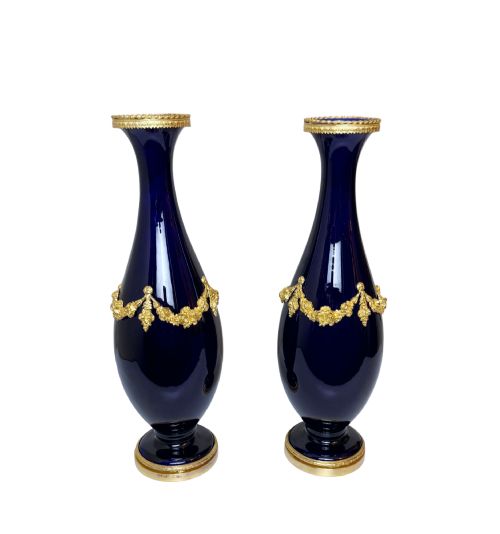
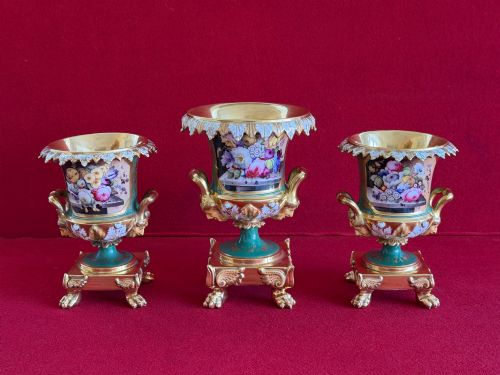
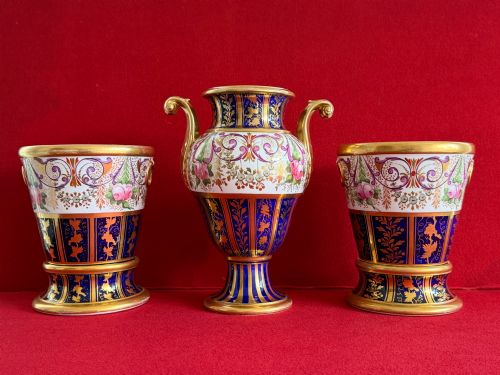
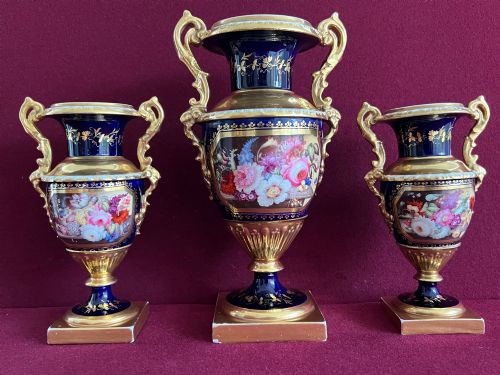
An antique porcelain mantelpiece garniture comprises coordinated sets of decorative objects designed to sit together on a shelf or fireplace mantel. The pieces most frequently encountered on this page include clock garniture sets, vase garnitures, and paired cassolettes dating from the nineteenth century.
Makers fashioned these matching suites in various configurations, ranging from pairs of lidded urns to larger sets of four pieces. Styles draw heavily on French Rococo Revival, Regency, and Louis XVI aesthetics, often incorporating contrasting side vases or candelabra to flank a central timepiece.
Continental origins dominate the selections here, with specific pieces reflecting French chateau tastes or Sevres style decoration. Buyers select these arrangements to restore symmetry to period interiors or to introduce decorative focal points into reception rooms.
Assessing quality and craftsmanship
Quality reveals itself in the precision of the porcelain painting and the crispness of the surrounding metal mounts. Finer examples display hand-painted botanical or figurative scenes executed with notable artistic control rather than generic transfer printing.
The weight and detail of the ormolu or gilt bronze mounts distinguish superior garnitures from simpler productions. Heavily chased metalwork and thick, unblemished gilding indicate workshops employing skilled artisans for the framing elements.
Antique Porcelain Mantelpiece Garniture Retail Price Guide 2026
Typical asking prices for porcelain mantelpiece garniture among the pieces listed under this phrase on Sellingantiques today, from the lower quarter to the upper quarter. They describe what is for sale here now, not the wider market.
Materials recorded across these decorative sets combine glazed ceramic bodies with gilt metal, enamel, and brass fittings in various revival styles.
Flight Barr and Barr·Royal Vienna·Minton·Meissen·Finnigan Manchester
The Antique Porcelain Mantelpiece Garniture Glossary
- Garniture
- A matched set of ornamental vases, urns, or figures designed to be displayed together on a mantelpiece or sideboard. These suites typically comprise three or five matching pieces.
- Cassolette
- A dual-purpose decorative vessel featuring a reversible lid that functions as a small urn or a candle holder. They frequently appear as paired elements within nineteenth-century sets.
- Ormolu
- Finely ground high-carat gold applied to a bronze base using a mercury amalgamation technique, common on French clock sets. This process creates a rich, lasting metallic lustre.
- Sevres style
- A descriptor for porcelain decorated in imitation of the royal French factory, known for deep blue grounds and gilt highlights. Pieces often feature hand-painted panels depicting romantic or pastoral subjects.
- Bleu celeste
- A bright turquoise or sky-blue ceramic ground colour developed at eighteenth-century factories and revived during the Victorian era. It provides a vibrant backdrop for gilt ornamentation.
Antique Porcelain Mantelpiece Garniture: Frequently Asked Questions
How do I style a garniture on a mantel?
Place the tallest element, typically a clock or central urn, in the exact middle of the mantel shelf. Flank this central piece symmetrically with the matching side vases or candelabra to create a balanced display.
Ensure adequate clearance around each object so the painted details and gilt mounts remain fully visible from across the room.
What is the difference between a clock garniture and a vase garniture?
A clock garniture centres around a working timepiece accompanied by two matching side pieces, such as urns or candelabra. A vase garniture consists entirely of ceramic vessels, usually numbering three or four matching pieces.
Both types serve the same decorative function of unifying a mantel display, but clock sets introduce a functional timekeeping element to the arrangement.
How should I clean antique porcelain and ormolu?
Dust porcelain surfaces gently using a soft, dry brush to remove settled particles without disturbing the painted enamel or gilding. Avoid using water or liquid cleaners, which can infiltrate microscopic crazing in the glaze.
Clean metal mounts sparingly with a dry microfiber cloth, keeping polishing compounds away from the adjacent ceramic bodies to prevent staining.
Can missing pieces from a garniture be replaced?
Replacing a missing component from a matched suite proves exceptionally difficult due to the specific hand-painted designs and unique sizing of nineteenth-century sets. Most garnitures must remain intact as originally assembled by the workshop.
When evaluating a partial set, ensure the remaining pieces possess sufficient visual balance to stand successfully on their own.