





Antique Table Clock Candelabra
These antique table clock candelabra sets combine timekeeping with matching side pieces to anchor a room.
Antique Table Clock Candelabra
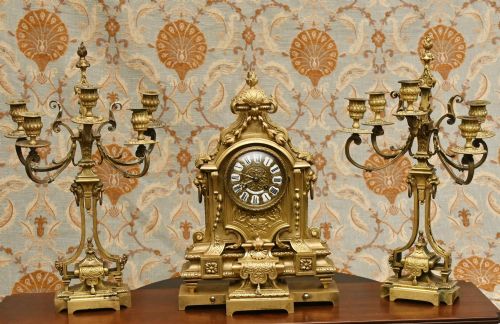
When you search for antique table clock candelabra sets, you encounter matched arrangements designed for mantelpieces and side tables. These decorative groupings typically include a central mantel clock accompanied by matching side ornaments or candelabra.
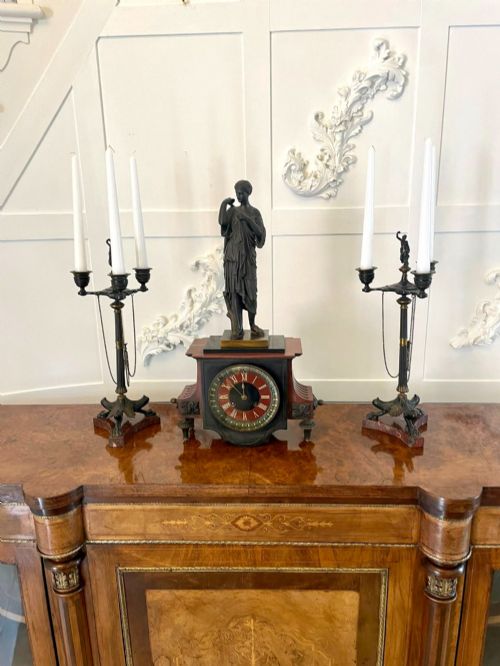
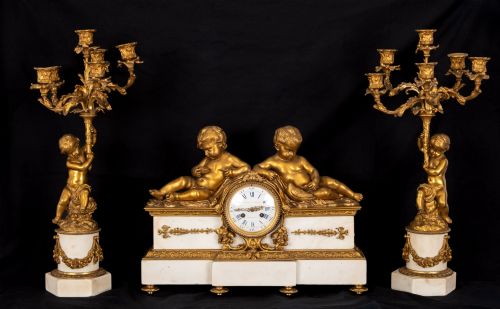
The pieces appearing here span the nineteenth century, drawing heavily on Victorian tastes and French revival aesthetics. You find ornate clock garnitures that pair white marble, black slate, or green onyx with gilt bronze and ormolu.
Makers and workshops of the period produced these coordinated sets to dominate a domestic interior. The most frequent configurations on this page involve a central timekeeper flanked by matching decorative elements from French and Victorian makers.
How they were made
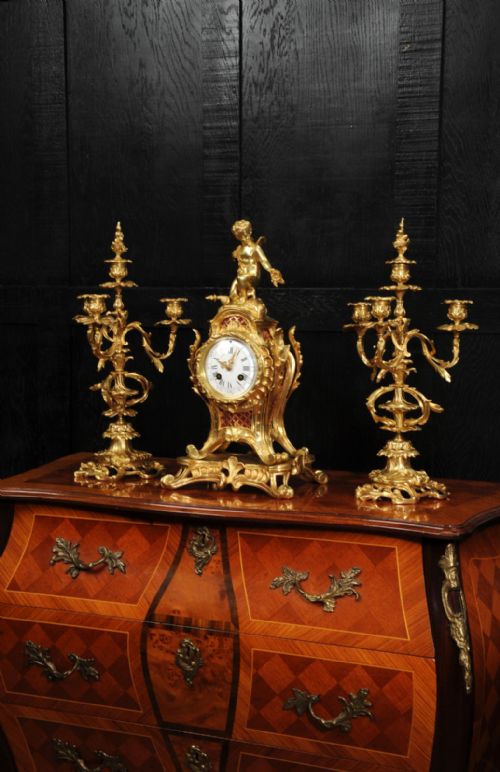
Foundry workers cast the metallic elements in bronze, ormolu, and spelter, often finishing them with rich gilding. These metal mounts were then chased and polished by hand to accentuate intricate rococo scrolls, cherubs, and classical motifs.
Stonemasons shaped dense materials like white marble, black slate, and green onyx to form the robust bodies of the clocks and side pieces. Enamel dials were carefully painted and fired, providing a crisp surface for the clock hands.
Antique Table Clock Candelabra Retail Price Guide 2026
Typical asking prices for table clock candelabra among the pieces listed under this phrase on Sellingantiques today, from the lower quarter to the upper quarter. They describe what is for sale here now, not the wider market.
The inventory includes mantel clock sets styled in the French Empire and Rococo revivals.
What varies in quality
The choice and preparation of the stone body also mark the tier of the piece. Fine sets utilise heavy, well-matched slabs of marble or slate with precise joinery, while simpler versions rely on standard materials with less attention to surface polish.
Deniere, Paris·Meissen
The Antique Table Clock Candelabra Glossary
- Clock garniture
- A set comprising a central clock and matching side ornaments or candelabra designed to display together. These coordinated groupings became extremely popular in Victorian drawing rooms.
- Ormolu
- Gilded bronze produced by applying a mixture of gold and mercury to a metal base and heating it. This historic technique creates a warm, durable golden finish.
- Spelter
- A zinc alloy frequently used as a cost-effective substitute for bronze in nineteenth-century decorative objects. It accepts bronze-coloured paints and electroplating remarkably well.
- Enamel
- A glassy substance fused to a metal surface through high-temperature firing. Clock dials made from this material resist fading and scratching over decades of use.
Antique Table Clock Candelabra: Frequently Asked Questions
What is an antique clock garniture?
A clock garniture is a matched set featuring a central timekeeper flanked by companion pieces such as candelabra or decorative urns. These ensembles were created to sit together on a mantelpiece as a unified decorative statement.
Craftsmen designed the side pieces to echo the materials and decorative motifs of the central clock. This coordination brought symmetry and visual weight to nineteenth-century interiors.
Where should I place a clock set?
These large sets require a stable, level surface such as a mantelpiece, sideboard, or deep console table. Because many incorporate heavy stone bodies and metal mounts, ensure the furniture supports significant weight.
Keep the set away from direct sunlight and damp areas to preserve the delicate enamel dials and gilt surfaces. Proper placement also protects the mechanical movement from excessive vibrations.
How do I identify French nineteenth-century styles?
Nineteenth-century French pieces often draw on historical design movements such as the Second Empire, Louis XVI Revival, and Rococo Revival. Look for characteristic details like classical urns, scrolling foliage, and cast figures of cherubs.
Materials also offer clues, with gilt bronze, ormolu, and contrasting black slate or white marble dominating the period. Maker signatures stamped on the movement backplates provide definitive confirmation of origin.