


Antique Porcelain Compote Dish
An antique porcelain compote dish brings elevated presentation to the table, combining sculptural form with painted and gilded decoration.
Antique Porcelain Compote Dish
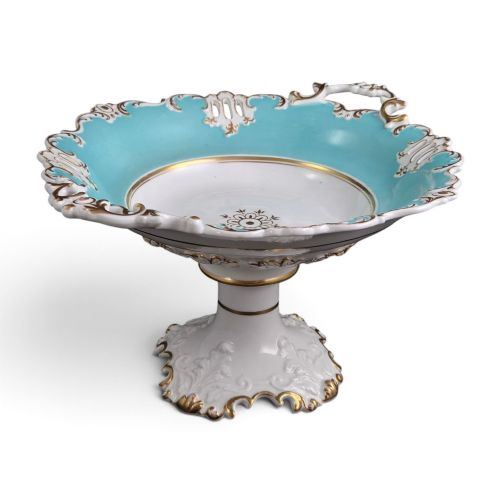
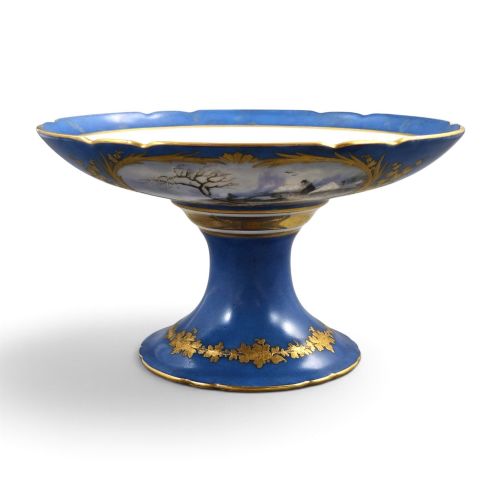
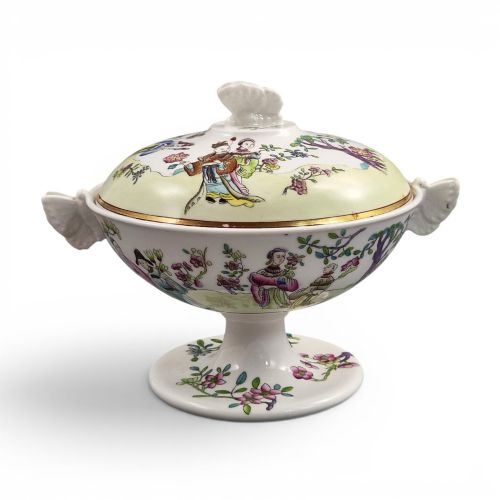
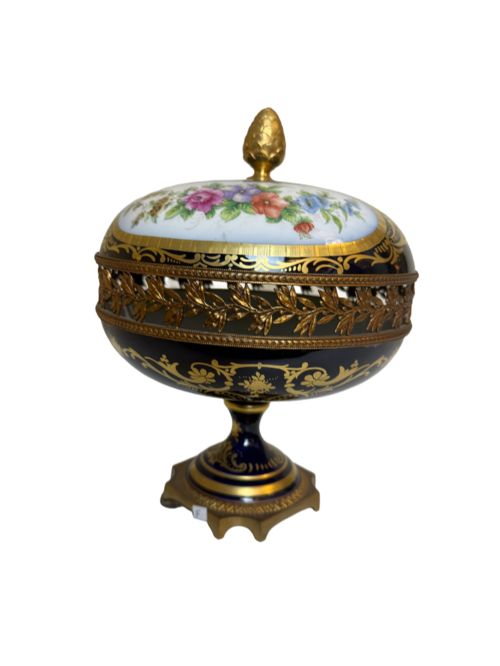
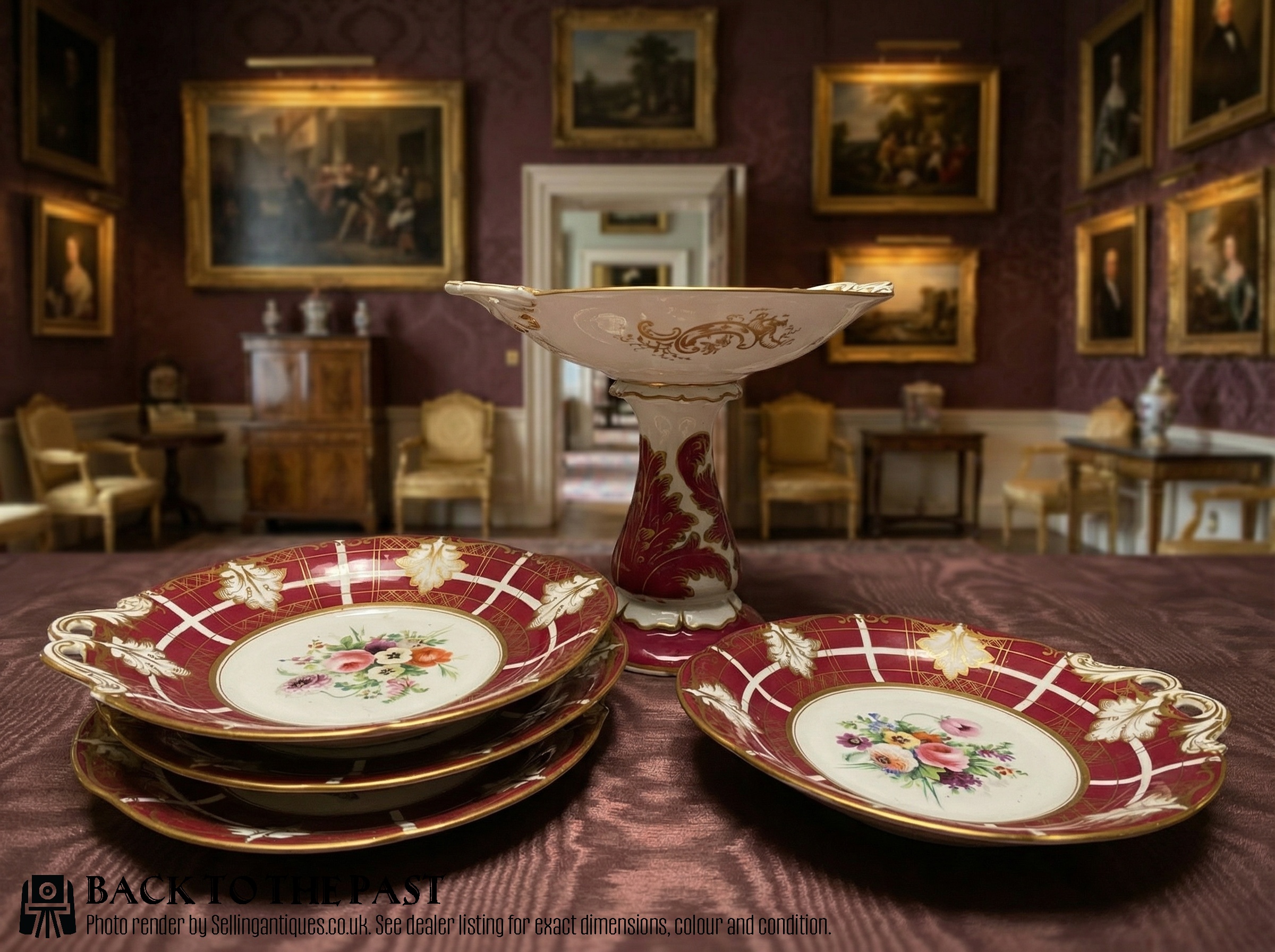
When searching for an antique porcelain compote dish, collectors look at pedestal bowls, tazzas, and footed centrepieces designed for serving fruit or sweets on the formal table. These pieces emerge across the Georgian, Regency, Victorian, and Edwardian periods, manifesting in forms such as low tazzas, lidded vessels, and grand multi-figure centrepieces supported on pedestals.
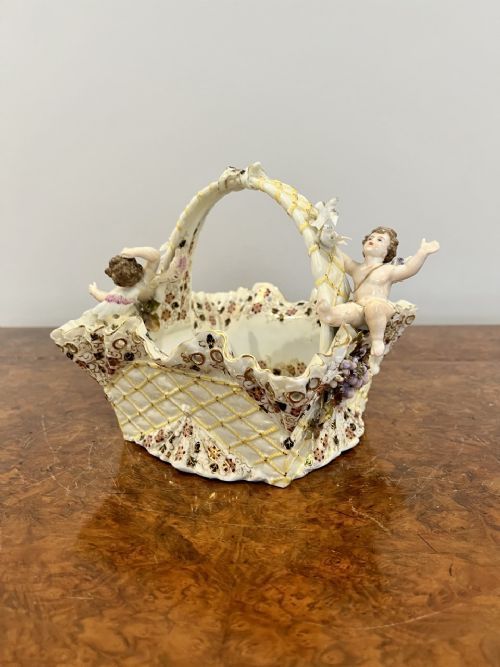
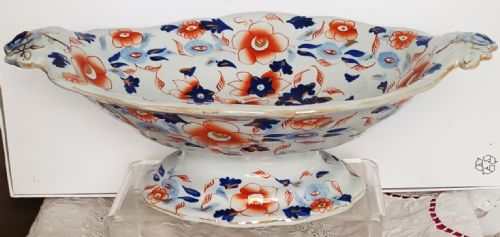
The versions most commonly met on this page span the nineteenth century, including English bone china and ironstone alongside continental European porcelain from German and French factories. Makers often integrated functional utility with sculptural ornamentation, incorporating handles, applied flowers, and cherubs into the raised design.
Materials and construction methods
These pieces utilise hard-paste and soft-paste porcelain, bone china, and ironstone as foundational ceramic bodies, shaped by casting or moulding. Artisans then applied intricate hand-painted motifs, transfer printing, and polychrome enamels, often finishing the rims and foot rims with gilding or gold leaf.
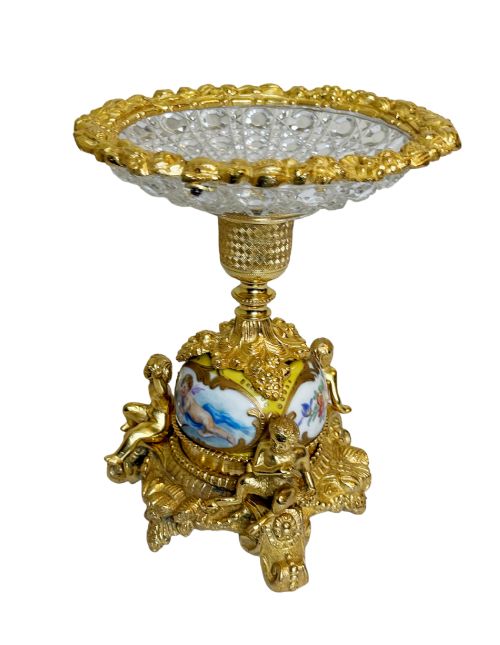
Several examples incorporate mixed media, combining porcelain bowls with ormlou, gilt bronze mounts, or cut crystal components. Moulded details such as putti, cherubs, and applied roses were sculpted separately and attached before firing to create high-relief ornamentation.
Antique Porcelain Compote Dish Retail Price Guide 2026
Typical asking prices for porcelain compote dish among the pieces listed under this phrase on Sellingantiques today, from the lower quarter to the upper quarter. They describe what is for sale here now, not the wider market.
Object forms range from traditional footed comports and tazzas to elaborate multi-figure centrepieces adorned with putti and applied roses.
Quality factors in raised serving vessels
Quality rests in the crispness of the porcelain moulding and the artistic execution of the hand-painted decoration, such as delicate botanical studies, Chinoiserie patterns, or finely rendered figures. Pieces featuring detailed, unblemished applied flowers and well-modelled cherubs demonstrate superior workshop output.
The integration of materials also defines the tier of the piece, where secure mounts, even glaze coverage, and rich, intact gilding elevate the standing of the work. Early nineteenth-century examples with documented factory patterns or named artists reflect higher levels of design ambition.
Coalport·Sèvres·Spode·Limoges·John Ridgway·Schierholz·Minton·Mason·Swansea·Thomas Moorcroft for E.J.D Bodley·Royal Worcester
The Antique Porcelain Compote Dish Glossary
- Compote
- A raised bowl on a pedestal, used traditionally for serving fruit or compote at dessert. It sits higher than a standard plate or shallow dish.
- Tazza
- A shallow bowl or saucer mounted on a stem and foot, functioning as a display dish or serving vessel. The form derives from Renaissance metalwork.
- Ironstone
- A heavy, durable type of earthenware patented in the nineteenth century that mimics porcelain. It provides a robust body for heavily patterned tablewares.
- Bone china
- A type of porcelain incorporating animal bone ash, producing a strong, slightly translucent ceramic body. It became a staple of English factories during the nineteenth century.
- Ormolu
- Gilded bronze mounts used to decorate or support ceramic vessels. The technique involves applying a gold amalgam to a bronze base.
Antique Porcelain Compote Dish: Frequently Asked Questions
What is an antique porcelain compote dish used for?
These elevated vessels were historically utilised at the conclusion of a formal meal during the dessert course. They held fruit, nuts, or sweetmeats, serving both a functional dining purpose and a decorative display function in the dining room.
Today, they function effectively as decorative table centrepieces or standalone display objects in a cabinet or on a sideboard. Their raised form draws the eye upward and breaks the flat plane of a surface.
How do I date an antique porcelain compote dish?
Dating relies on stylistic clues, paste composition, and any factory marks or pattern numbers present on the underside. Georgian and Regency pieces often display hand-painted floral or Chinoiserie designs on ironstone or early bone china, whereas Victorian examples lean towards heavier gilding and Rococo revival moulding.
Later nineteenth and early twentieth-century pieces from factories like Schierholz or Royal Worcester introduce specific sculptural elements and factory stamps. Comparing the potting technique and enamel palette to dated comparative examples helps narrow the production window.
Are these compotes meant for daily use?
While structurally sound, antique porcelain and ironstone with hand-painted enamels and delicate gilding are best reserved for display or careful, infrequent use. Hand washing in lukewarm water without harsh detergents is necessary to preserve the painted surfaces and gold leaf.
Placing them away from heavy foot traffic prevents accidental damage to fragile elements like applied roses or protruding handles. Their age and historic decorative techniques require gentle handling compared to modern ceramics.
How do I distinguish between ironstone and porcelain?
Porcelain typically exhibits a finer, harder, and sometimes translucent body, whereas ironstone is a dense, opaque earthenware designed for durability. Ironstone pieces often feel heavier and thicker in the hand than equivalent porcelain vessels.
Examining the foot rim where the glaze stops reveals the base ceramic body underneath. Ironstone displays a white, stoneware-like texture, while porcelain shows a vitrified, glass-like composition.