


Gilt Porcelain Basket
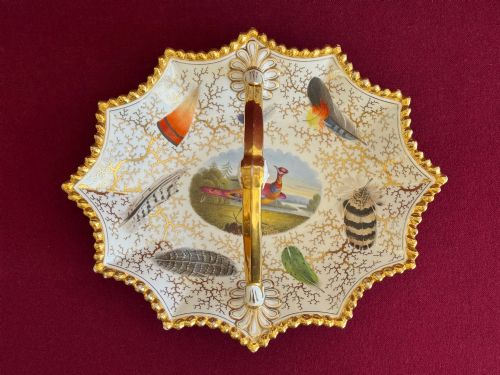
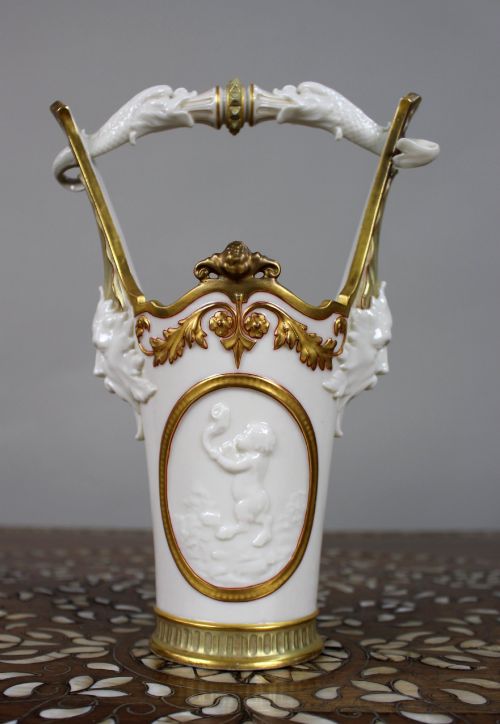
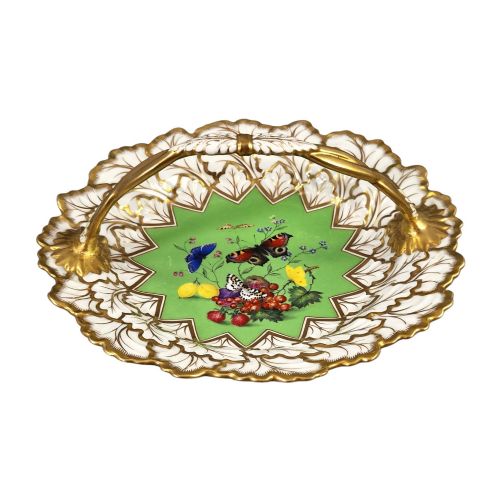
A gilt porcelain basket brings a brilliant metallic warmth and delicate floral modelling to a dining table or console.
Gilt Porcelain Basket
A gilt porcelain basket represents a sophisticated category of decorative ceramics produced across European and Chinese kilns. Buyers searching for a gilt porcelain basket encounter fine vessels shaped as handled dishes, dessert baskets, and centrepiece bowls designed for display.
The pieces on this page span the eighteenth, nineteenth, and early twentieth centuries. Makers utilise styles ranging from Rococo Revival and Regency to French Empire, Art Nouveau, and Chinese Export.
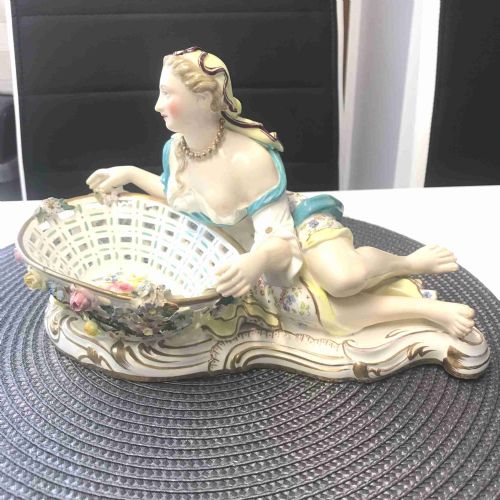
Forms include pierced chestnut baskets, sweetmeat dishes, and figural centrepieces embellished with applied flowers and cherubs. These items served ornamental and functional roles in grand dining rooms and drawing rooms.
Materials and manufacture
Craftsmen shape these objects using hard-paste porcelain, applying liquid glaze before firing the body at high temperatures. Artisans build elaborate floral motifs and figural elements by hand, attaching them securely to the basket bodies prior to glazing.
Application of gold leaf and gilding highlights the pierced rims, handles, and sculptural details. Enamel colours are painted over or under the glaze, bringing vibrant hues to scenes and botanical subjects.
Listings feature hard-paste porcelain objects decorated with gold leaf, enamel, and glaze across the eighteenth, nineteenth, and twentieth centuries.
Judging quality in porcelain baskets
The precision of the gilding and enamel work defines the upper tier of production. Hand-painted details show a steady brush, while the gold leaf retains a rich lustre without rubbing.
Royal Worcester·Flight, Barr And Barr·Meissen·Schierholz·Royal Dux
The Gilt Porcelain Basket Glossary
- Hard-paste porcelain
- A durable ceramic composition fired at high temperatures using kaolin and petuntse. This material produces a dense, vitrified body resistant to scratching.
- Gilding
- The application of gold leaf or gold powder to the surface of the porcelain. It accentuates rims, handles, and raised sculptural motifs.
- Sweetmeat dish
- A small vessel designed for holding confectioneries, nuts, or dried fruits during formal dining. These dishes often feature pierced or basket-weave rims.
- Centrepiece
- A large decorative object placed in the middle of a dining table. Examples in this category take the form of elaborate bowls, baskets, and figural groups.
- Famille rose
- A palette of opaque enamel colours dominated by pink or rose hues, introduced in Chinese porcelain production during the eighteenth century.
Gilt Porcelain Basket: Frequently Asked Questions
How were porcelain baskets used?
These vessels served primarily as decorative centerpieces on dining tables or sideboards. Wealthy households utilised them to present sweetmeats, fruits, or delicate confectionery during formal meals.
Over time, their function shifted toward pure ornamentation. Victorians placed them on console tables and mantelpieces to display dried flowers or simply to catch the light in a formal room.
How can I tell a Regency basket apart from a later piece?
Regency pieces often display neoclassical restraint alongside rich gilding, reflecting the aesthetic of the early nineteenth century. Maker marks associated with this era typically point to specific English manufactories like Worcester.
Later nineteenth-century items tend to embrace heavier revivalist styles, incorporating exuberant Rococo curves or complex figural groups. Examining the paste, weight, and style of the painting helps determine the production era.
What does Meissen style mean?
The term denotes porcelain objects that imitate the distinctive forms, modelling techniques, and painting styles established by the Meissen factory in Germany. This includes naturalistic applied flowers and lively cherub figures.
Items described in this manner capture the sculptural ambition of the original factory without bearing the crossed swords mark. They reflect the widespread influence of German ceramic design across Europe.