



Antique Porcelain Candelabrum
An antique porcelain candelabrum brings sculptural presence and layered illumination to a room, uniting glazed ceramic and gilded metal with considerable decorative flair.
Antique Porcelain Candelabrum
When you search for an antique porcelain candelabrum, you encounter branch-armed lighting pieces designed to hold multiple tapers above moulded ceramic bodies. These objects frequently emerge from nineteenth-century European kilns, encompassing both standalone table fixtures and elements paired with matching mantel clocks.
The selections span diverse European centres of production, featuring forms rooted in the eighteenth century alongside Victorian interpretations of French royal tastes. Many examples survive as matched pairs, incorporating figural groups, birds, or floral motifs integrated directly into the metal branchwork.
Makers from Meissen, Dresden, and Sevres-style workshops dominate the available forms, often combining hand-painted surfaces with elaborate armatures. Buyers regularly encounter pieces styled after Rococo Revival and Louis XVI aesthetics, wherein asymmetric scrolls and classical foliage dictate the silhouette.
Distinctions in quality and execution
The refinement of the hand-painted details and the crispness of the modelled porcelain figures separate standard commercial output from superior works. Finer examples display subtle tonal shading on faces and drapery, alongside carefully articulated floral elements modelled with high precision.
The weight and precision of the ormolu mounts dictate the overall calibre of the assembly, with thicker bronze castings showing sharper chased detail. Superior pieces maintain harmonious proportions between the ceramic body and the metal branchwork without awkward transitions in the mountings.
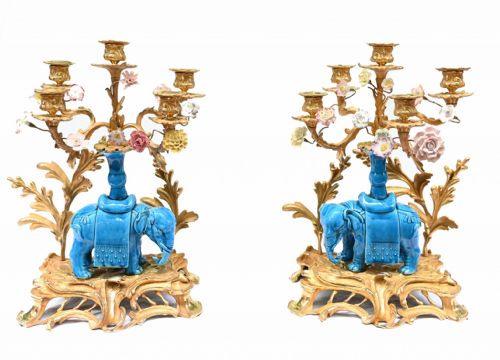
Elephants occasionally support entire candelabra branches upon their backs in surprising nineteenth-century Regency designs.
Meissen·Royal Worcester Hadley·Sitzendorf·Dresden·Samson
The Antique Porcelain Candelabrum Glossary
- Ormolu
- A method of applying finely ground high-carat gold to an amalgamated copper bronze object, creating a rich golden surface. This technique was widely utilised in French lighting and clock garnitures.
- Hard-paste porcelain
- A ceramic material composed of kaolin and petuntse fired at extreme temperatures to produce a vitrified, non-porous body. It resists scratching and takes enamels and gilding securely.
- Bleu de roi
- A deep, rich cobalt blue enamel ground colour developed at the Sevres factory during the eighteenth century. It appears frequently on nineteenth-century decorative pieces and clock sets.
- Clock garniture
- A decorative set comprising a central mantel clock flanked by matching objects such as candelabra or vases. These suites created a balanced ornamental arrangement across a fireplace mantel.
- Rococo Revival
- A nineteenth-century design movement resurrecting the asymmetric scrolls, C-scrolls, and naturalistic shell motifs of the French eighteenth century. It heavily influenced the curvature of porcelain candelabra arms.
Antique Porcelain Candelabrum: Frequently Asked Questions
What is an antique porcelain candelabrum?
An antique porcelain candelabrum is a branched lighting fixture featuring ceramic components combined with metal arms for holding candles.
These pieces typically date from the nineteenth century and incorporate hand-painted decoration, figural modelling, and gilt bronze mounts.
How do clock garnitures work with candelabra?
Clock garnitures incorporate a central mantel clock accompanied by matching candelabra or vases designed to sit together as a unified suite.
This arrangement provided a symmetrical decorative scheme for formal nineteenth-century drawing rooms and mantelpieces.
How do I identify French Sevres style pieces?
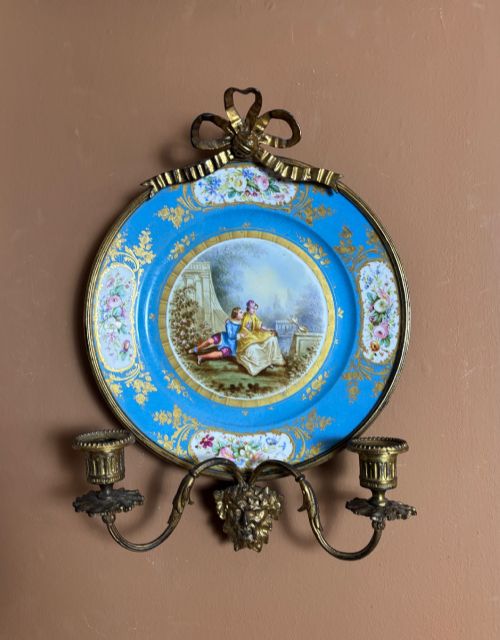
Sev style pieces generally display rich cobalt blue or turquoise ground colours accompanied by pastoral painted scenes enclosed within gilded cartouches.
These designs emulate the luxurious production standards associated with the royal French manufactory during the previous century.
How should I care for gilded ormolu mounts?
Gilded ormolu mounts require gentle dusting with a soft, dry brush to prevent the accumulation of grit within the chased recesses.
Avoid using liquid metal cleaners or abrasive cloths, as these substances can strip the delicate gold layer from the underlying bronze.