






Antique Pocket Firearm
An antique pocket firearm is a compact personal defence arm designed to fit inside a gentleman's coat or muff, offering portable security across the eighteenth and nineteenth centuries.
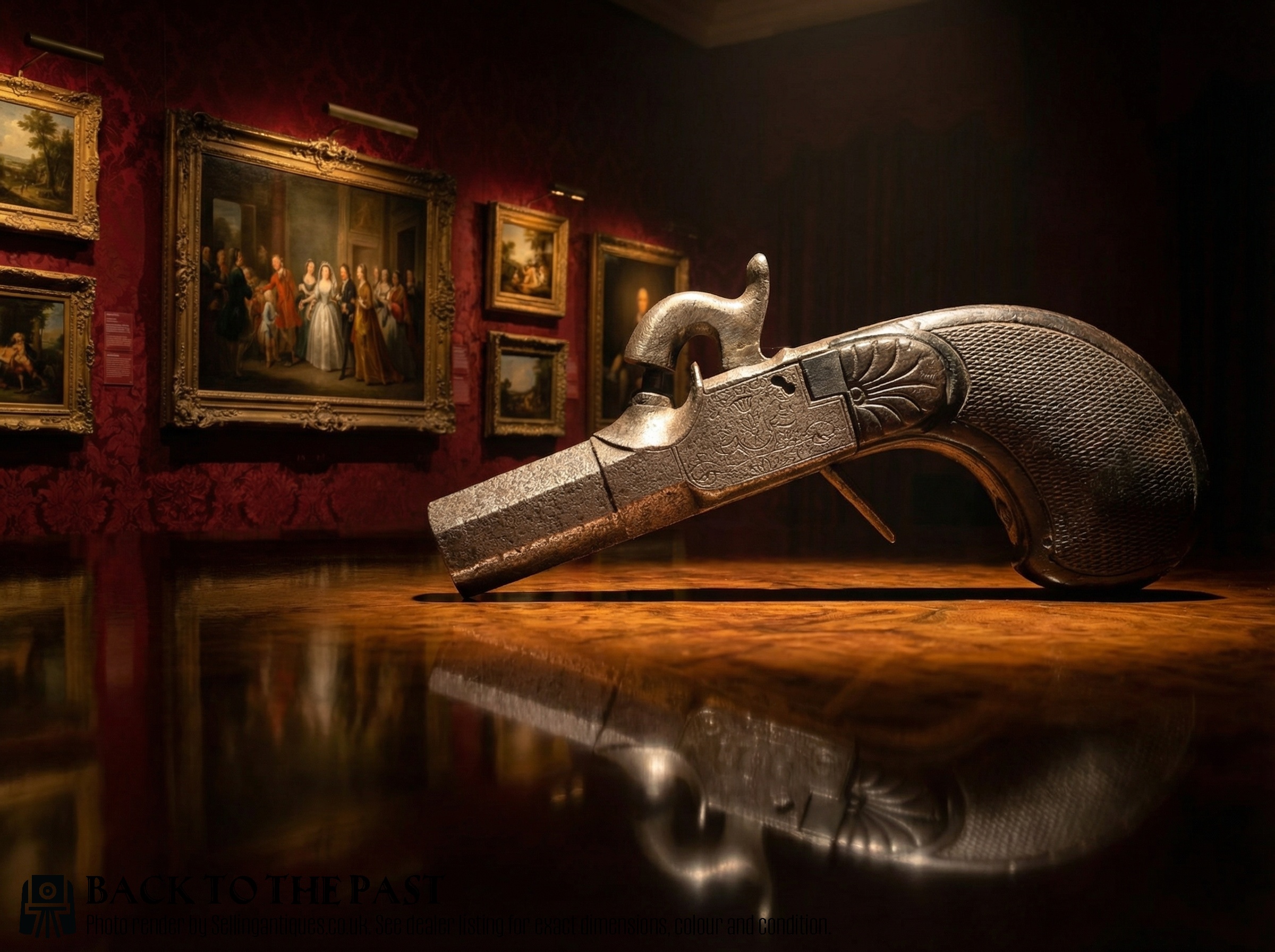
Antique Pocket Firearm
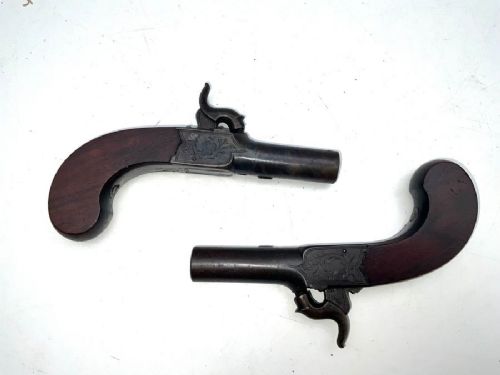
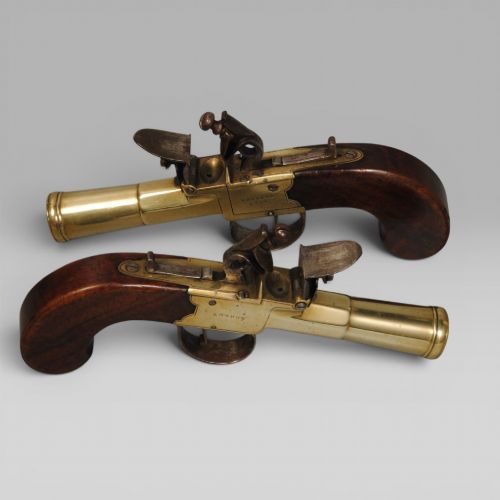
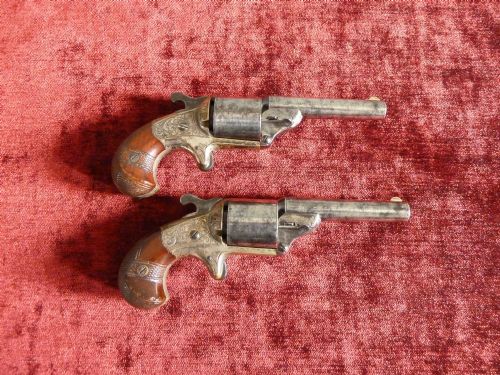
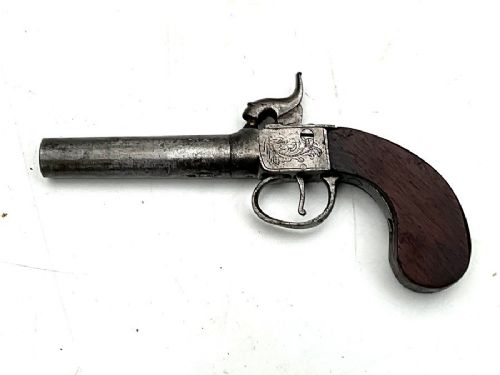
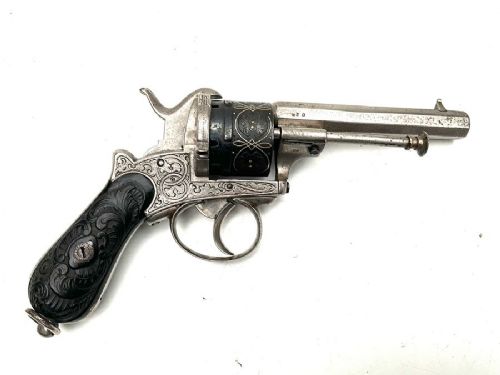
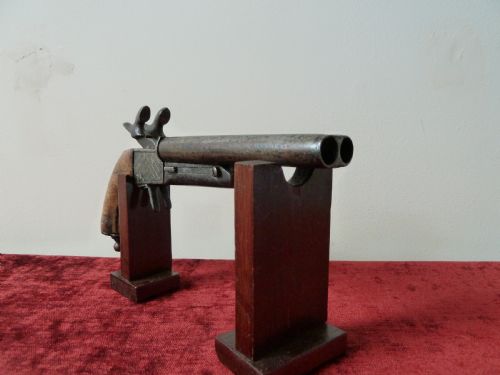
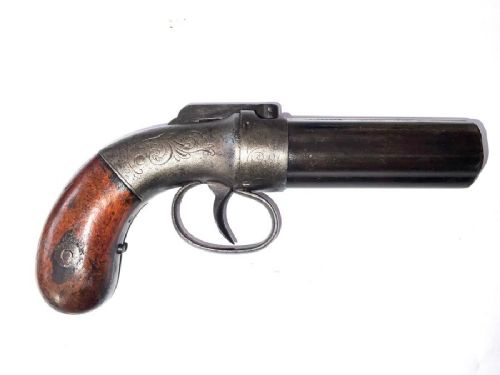
Every antique pocket firearm on this page represents a portable defensive arm, ranging from early eighteenth-century flintlock muff pistols to mid-nineteenth-century percussion revolvers and pinfire pocket weapons. These pieces span Georgian, Regency, and Victorian periods, manifesting as boxlock designs, cannon barrel pocket pistols, and multi-shot pepperboxes.
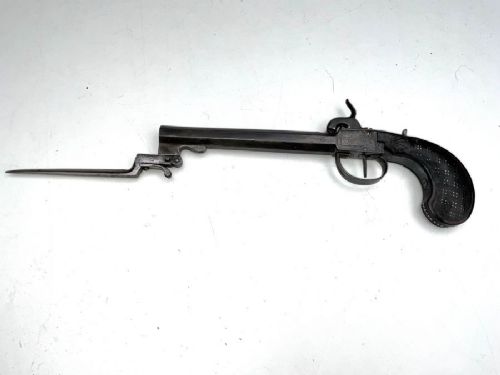
Makers housed these mechanisms in compact forms intended for concealment in pockets or overcoats, frequently incorporating folding bayonets or hidden triggers. Buyers will encounter single and double barrel configurations alongside American rimfire revolvers and European pinfire systems.
Materials and construction
Gunmakers built these arms using forged steel and iron for barrels and mechanisms, paired with stocks carved from walnut, ebony, and assorted hardwoods. Brass frequently formed the frame or barrel body on specific cannon barrel designs, while silver wire inlay adorned high-status grips.
Mechanically, these arms evolved from early flintlock ignition systems to percussion cap mechanisms and self-contained rimfire or pinfire cartridges. Workshops integrated proof marks, boxlock frames, and screw-off barrels to achieve both reliability and minimal overall dimensions.
Some pocket pistols hide folding bayonets beneath their barrels, ready to spring out if an encounter requires a sudden change of tactic.
Understanding quality variations
Quality in an antique pocket firearm rests upon the crispness of the lock mechanism, the legibility of maker signatures and Birmingham or London proof marks, and the integrity of the wood stock. Finer examples display delicate silver wire inlay, precise engraving on steel frames, and well-fitted mechanical components.
Twigg London·James Barber·Thomas Henshaw·La Motte·Auguste Francotte Liège·Allen And Thurber·Meyer And Mortimer
The Antique Pocket Firearm Glossary
- Flintlock
- An ignition mechanism utilising a flint struck against a steel frizzen to create sparks that ignite priming powder. This system dominated firearms production before the invention of percussion caps.
- Percussion
- A later ignition system where a hammer strikes a small fulminate-filled cap placed on a nipple, transmitting flame to the main charge. It offered superior reliability in wet weather.
- Boxlock
- A firearm design where the breech and lock frame are forged as a single unified piece, placing the main components internally. This configuration reduced size and eliminated external sideplates.
- Pepperbox
- A multi-barrel firearm featuring a cluster of rotating barrels that revolve around a central axis, firing consecutive rounds without a traditional separate cylinder.
- Turn-off
- A barrel design that unscrews entirely from the breech to allow muzzle loading with a pre-patched ball directly into the chamber, increasing velocity in early pocket arms.
Antique Pocket Firearm: Frequently Asked Questions
What is a pocket firearm?
A pocket firearm is a miniaturised pistol or revolver designed during the eighteenth and nineteenth centuries for discreet personal carriage and self-defence. They were small enough to fit inside deep coat pockets, muffs, or travelling bags.
These arms utilised various ignition systems over time, moving from flintlock mechanisms to percussion caps and later pinfire cartridges, ensuring travellers and gentlemen could maintain personal security while on the move.
How do flintlock and percussion pistols differ?
Flintlock pistols rely on a piece of flint held in the cock to strike a steel frizzen, producing sparks that ignite loose gunpowder in a pan. This technology was standard throughout the eighteenth century.
Percussion pistols, emerging in the nineteenth century, use a hammer that falls upon a small copper percussion cap placed on a hollow nipple. This innovation provided faster ignition and greater reliability against moisture.
Were these pistols used by civilians?
Civilians, travellers, mail coach inspectors, and officers routinely carried these compact arms for protection against highwaymen and thieves. Their diminutive size made them practical for daily wear in urban and rural environments alike.
Many examples feature folding bayonets or screw-off barrels specifically tailored for civilian self-defence scenarios where quick access and concealment were paramount.
How are periods told apart?
Periods are identified primarily through lock mechanisms, overall silhouette, and stylistic details such as engraving and wood selection. Eighteenth-century pieces typically feature flintlock ignition and rounded grips, often with cannon barrels.
Nineteenth-century examples transition to percussion locks, boxlock frames, and eventually multi-barrel pepperboxes or early revolvers, reflecting rapid industrial advancements in manufacturing.