




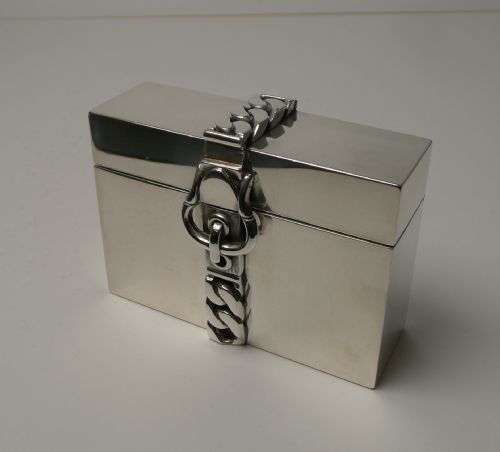

Antique Playing Card Box
An antique playing card box keeps paper decks and counters safe, appearing on this page in walnut, leather and silver across Victorian, Edwardian and Georgian eras.
Forms and periods
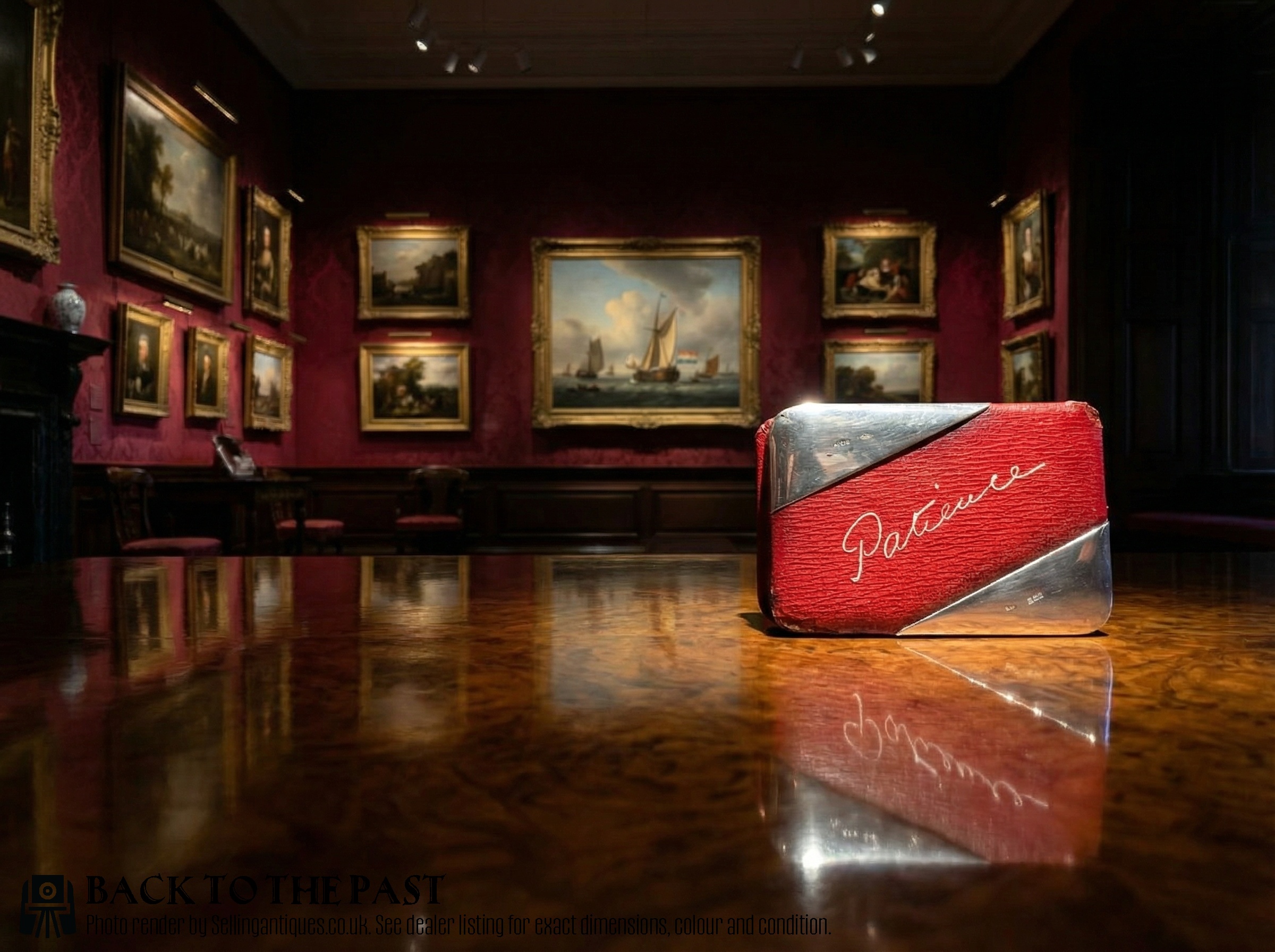
An antique playing card box houses the decks and counters used for parlour pastimes, taking the form of a dedicated games box, a cased cribbage set or a bridge box. The pieces found here span the Georgian, Victorian and Edwardian periods, stretching from the early nineteenth century to about nineteen hundred.
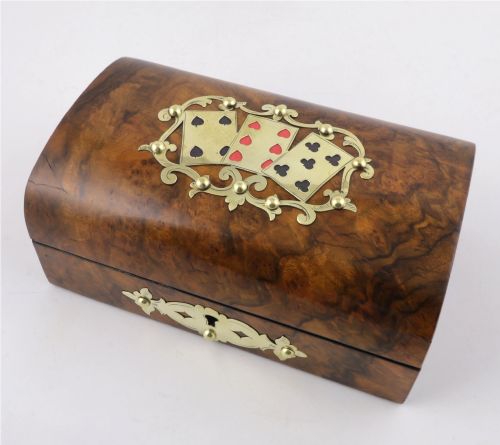
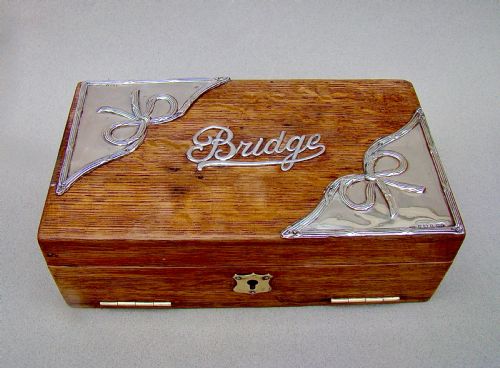
Makers shaped these containers as single or double compartments to hold cards for whist, patience, bezique and bridge. Walnut and rosewood examples often incorporate brass mounts or banding, whilst smaller items rely on sterling silver mountings and leather.
Regional variations appear in Scottish Mauchline Ware with tartan decoration, carved Black Forest boxes, and French rosewood or amboyna caskets inlaid with brass. These objects served domestic card games before television and radio altered evening entertainments.
Materials and construction
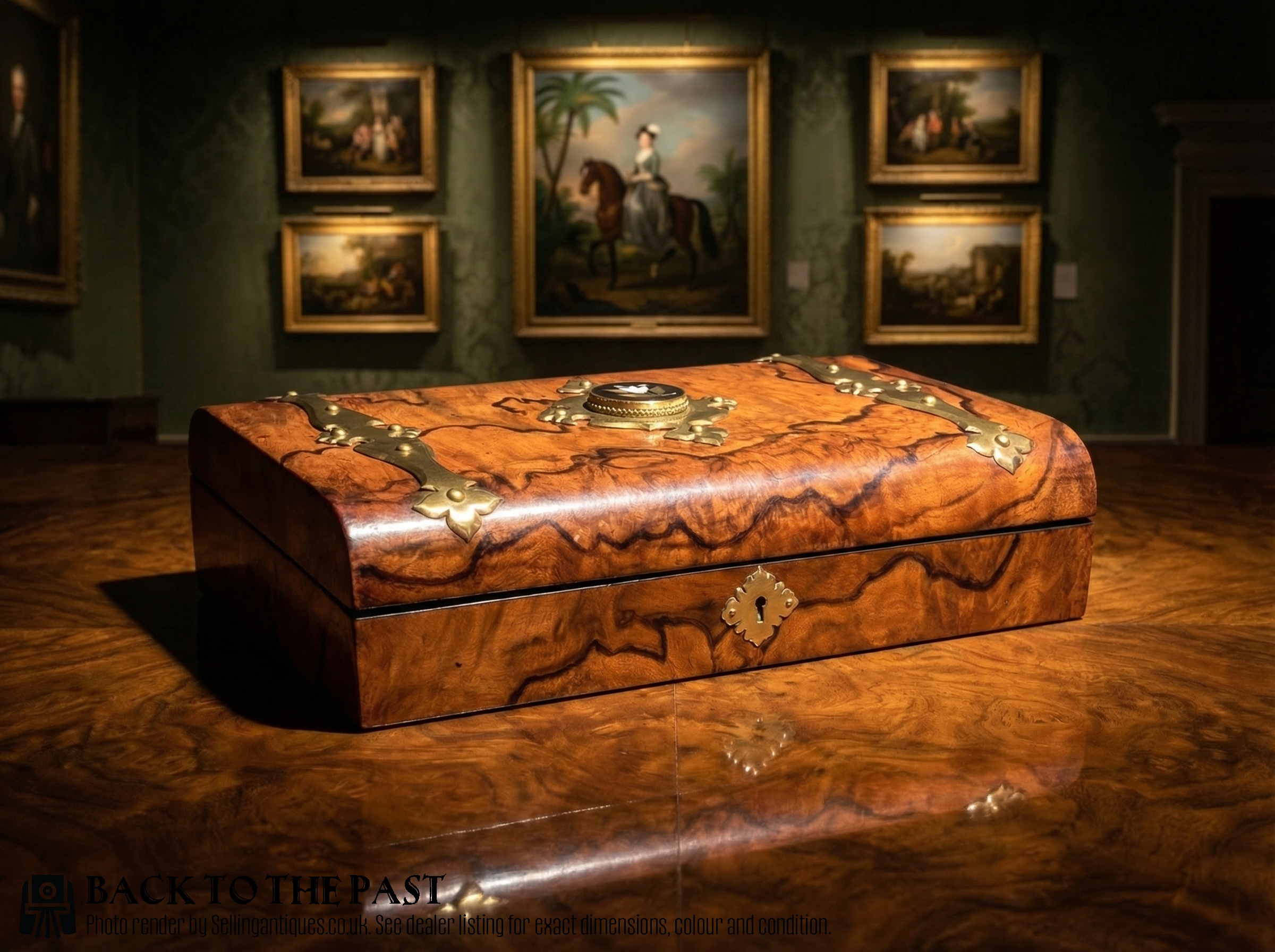
Carpenters constructed the wooden carcasses from walnut, rosewood, oak, fruitwood and coromandel, frequently applying burr walnut veneers or Tunbridge Ware inlay to the exterior surfaces. Metalworkers added cast brass mounts, hinges, escutcheons and corner brackets to secure the joints.
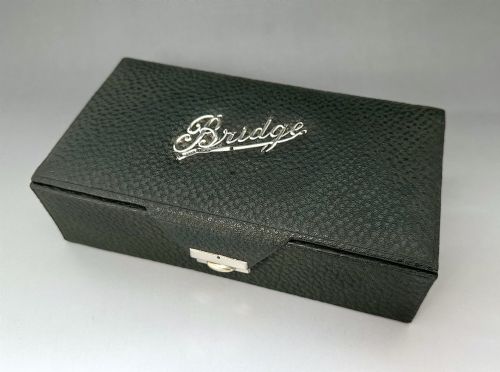
Silversmiths formed the metal housings from sterling silver and solid silver, incorporating hallmarking dates for towns such as Birmingham and Chester. Leather workers covered bridge boxes in fine hides, whilst other variants utilise silk linings, enamel work and hand painted details.
Retail Price Guide 2026
Typical UK retail prices for playing card box, calculated from the Sellingantiques database of over a million retail prices indexed since 2003. This retail price guide relies exclusively on Sellingantiques data; no external sources or auction records are used, so the figures do not describe the wider market.
Listings include Victorian walnut boxes with brass binding alongside Edwardian sterling silver bridge cases.
Gradations in manufacture
The standard of an antique playing card box rests on the selection of timber veneers, such as figured burr walnut and amboyna, matched against the precision of brass inlay and Tunbridge Ware banding. Superior items retain original working locks, fitted interior divisions and clear silversmith hallmarks.
Design complexity separates basic containers from elaborate caskets, with carved Black Forest animal motifs and hand painted lids representing higher craftsmanship. The integrity of the internal silk linings and the weight of the sterling silver mounts dictate the standing of silver examples.
Levi & Salaman·George Betjemann·Houghton & Gunn·Asprey
The Antique Playing Card Box Glossary
- Burr walnut
- A timber harvested from the wart-like growths on walnut trees, yielding irregular and highly figured grain patterns favoured by nineteenth-century cabinet makers.
- Tunbridge Ware
- A type of woodworking originating from Kent, featuring mosaic designs built from tiny wood blocks in various natural colours to form geometric patterns.
- Bezique
- A card game for two players popular in the Victorian era, requiring dedicated boxes often partitioned for multiple card decks and scoring markers.
- Mauchline Ware
- Scottish souvenir items made from sycamore wood, decorated with photographic transfers, tartan patterns or painted scenes.
- Patience
- A single-player card game also known as solitaire, housed in miniature boxes designed to hold one narrow pack of cards.
Frequently Asked Questions
What are antique playing card boxes?
These items are specialised wooden, leather or silver containers built to protect paper playing cards and gaming counters during the nineteenth and early twentieth centuries.
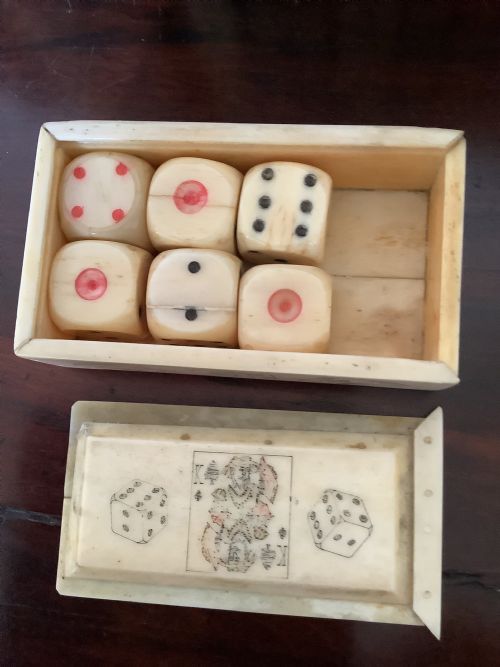
They range from simple folding cases to fitted caskets containing cribbage boards and dice for games like whist and bridge.
How do I date an antique playing card box?
Dating relies on the materials used, the structural style and any visible hallmarks stamped by silversmiths on the metal mounts.
Silver pieces often show assay office marks and date letters, whilst wooden examples reflect the prevailing tastes of the Georgian, Victorian or Edwardian eras.
What is a bridge box?
A bridge box is an Edwardian container specifically configured to hold the cards, scoring pads and pencils needed for the game of bridge.
These versions frequently feature leather coverings with silver mounts or fitted wooden interiors lined with silk.
How were these boxes used?
Families kept them in drawing rooms and parlours to store cards neatly between evening gaming sessions.
They kept the decks flat and dry, preventing the paper from warping in damp domestic environments.