

Antique Pine Seating
Antique pine seating brings straightforward utility and rich grain to a room, offering benches, settles and stools shaped by practical use.
Antique Pine Seating
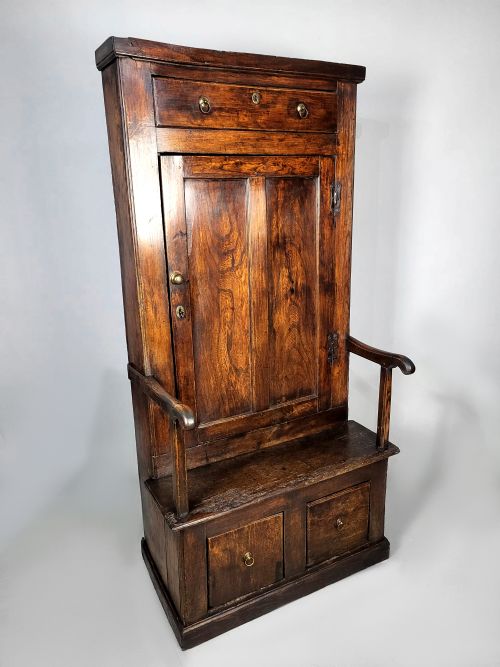
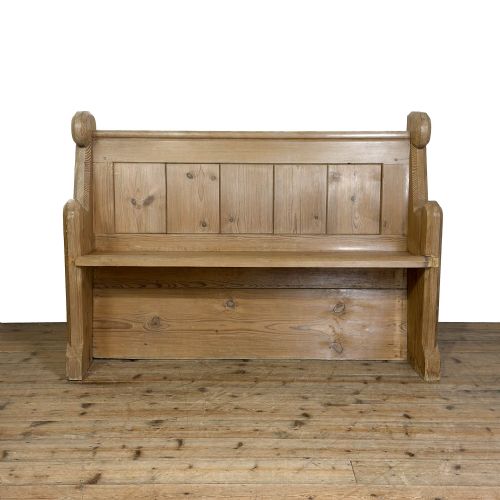
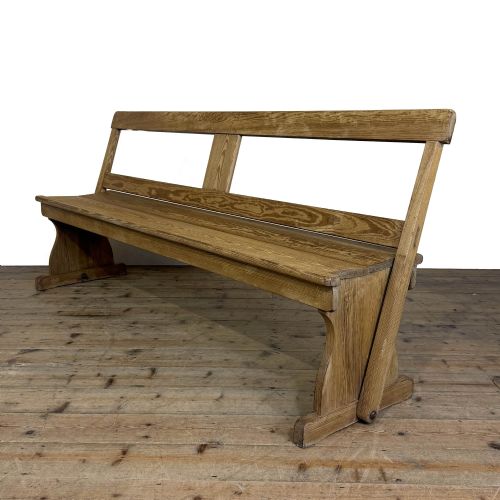
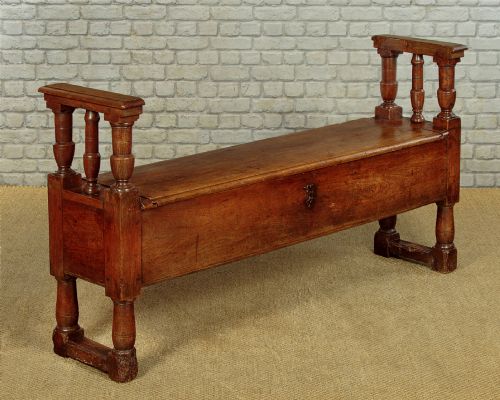
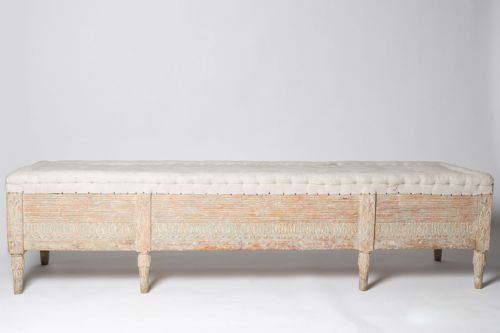
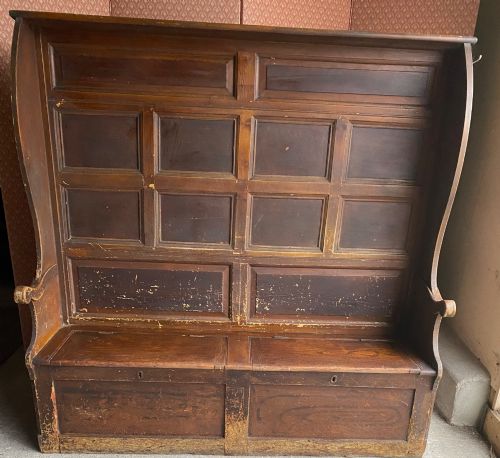
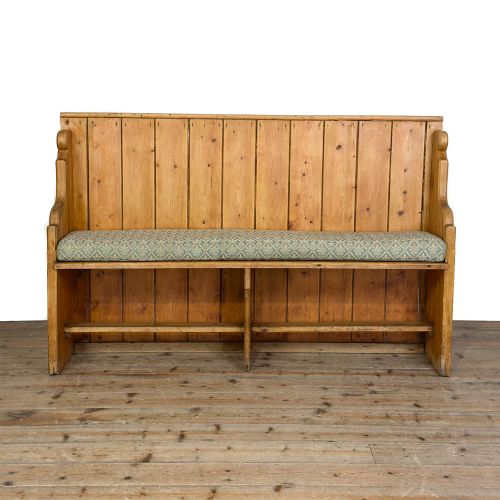
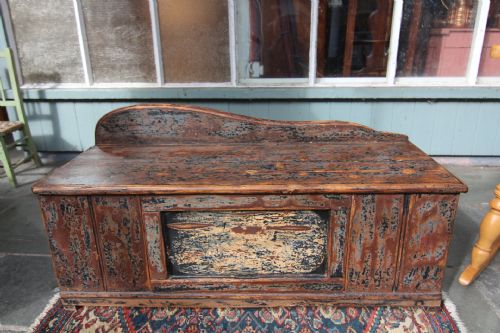
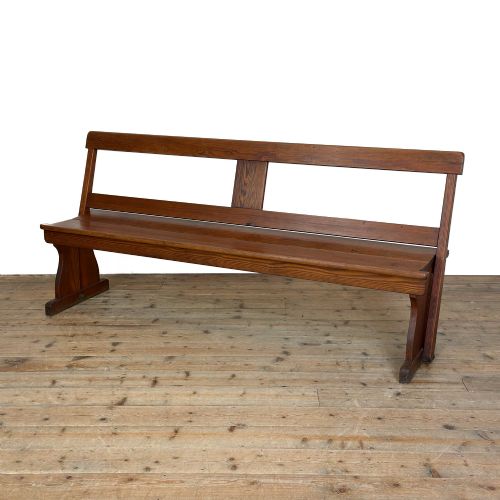
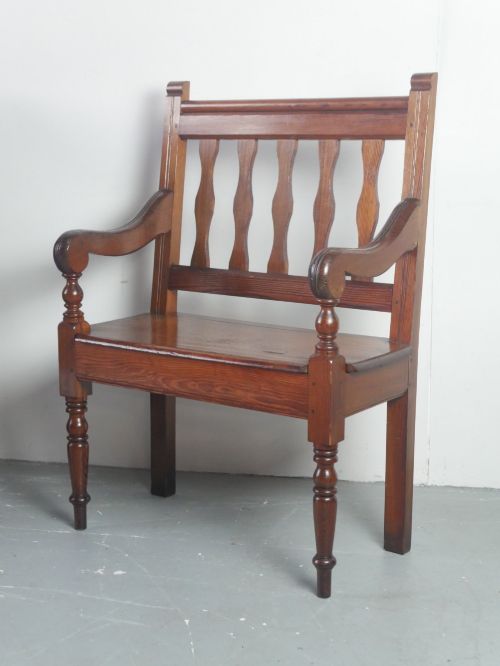
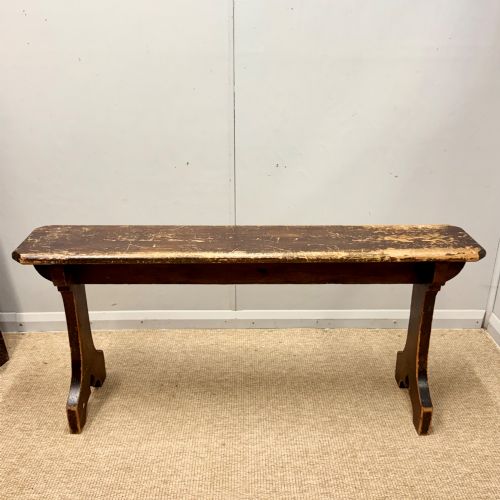
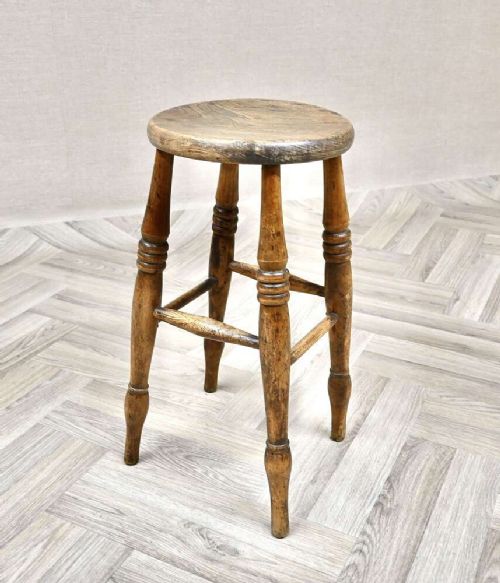
Antique pine seating encompasses a broad variety of domestic and institutional forms, ranging from modest milking stools to long chapel pews and high-back settles. Buyers searching for antique pine seating typically encounter 19th-century and Victorian pieces designed for utilitarian roles in churches, farms and hallways.
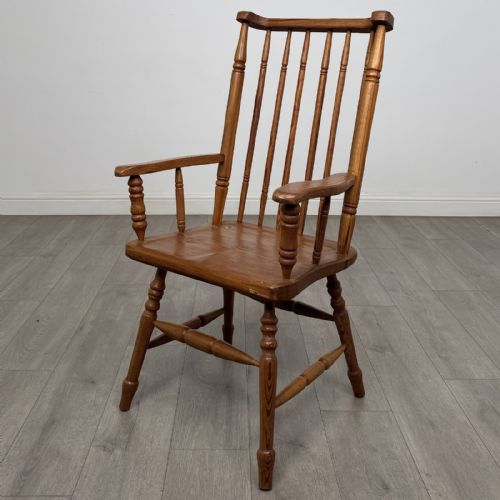
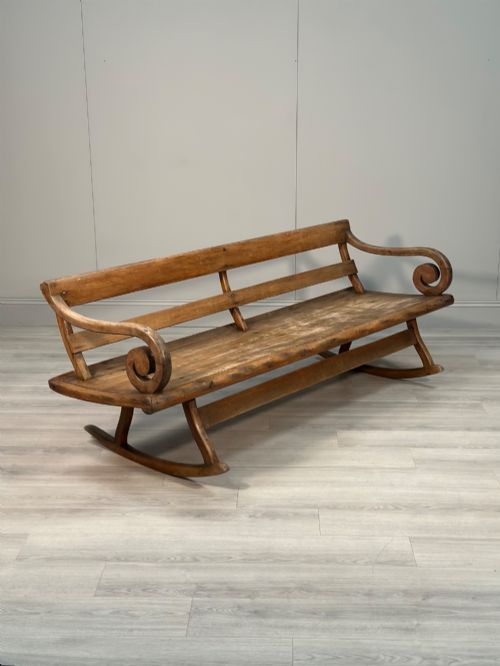
The selection frequently includes benches, settles, armchairs and stools originating from English, Swedish, Austrian and Hungarian workshops. Vernacular forms such as clerk's stools, chapel benches and rocking chairs demonstrate the straightforward construction typical of country furniture.
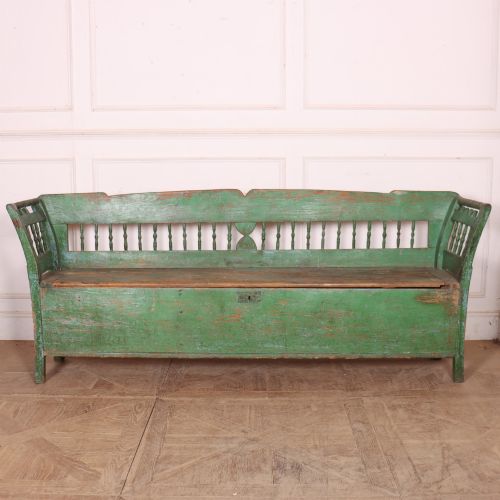
Many items display regional variations, from simple rustic benches to painted folk art pieces and industrial machinist stools combining pine with cast iron. These seating options suit modern interiors seeking functional history and honest woodwork.
Materials and construction
Makers relied primarily on solid pine and pitch pine, frequently supplemented by elm, beech and iron components for structural strength. Surfaces were finished with wax, honey brown patina, or retained original layers of paint in ochre, green and black.
Construction techniques prioritized durability over ornament, utilising pegged joints, dug-out seats and cast iron supports in industrial or institutional contexts. The timber often shows the effects of decades of use through surface wear and weathered grain.
Antique Pine Seating Retail Price Guide 2026
Typical asking prices for pine seating among the pieces listed under this phrase on Sellingantiques today, from the lower quarter to the upper quarter. They describe what is for sale here now, not the wider market.
Listings feature 19th-century, Victorian, Edwardian and Georgian periods, utilising pine, pitch pine, elm, beech, iron, paint and wax.
Assessing the pieces
Quality in these items depends on the integrity of the original timber and the retention of early surface finishes such as original paint or waxed patination. Pieces that retain their structural proportions without excessive timber replacement hold greater integrity.
The Antique Pine Seating Glossary
- Settle
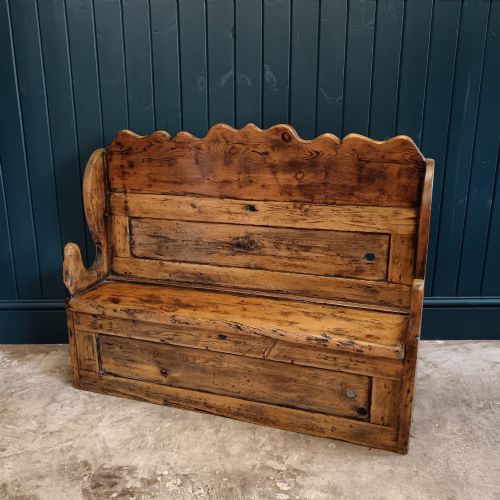
- A wooden bench with high back, solid arms and frequently a box base for storage. This form kept draughts away from the sitter in older domestic spaces.
- Pitch pine
- A dense, resinous variety of pine timber often utilised in 19th-century institutional and church seating for its durability. It displays a pronounced grain pattern.
- Vernacular furniture
- Domestic and utilitarian objects made by local craftsmen using traditional regional methods rather than mengikuti formal academic styles.
- Pew
- A long wooden bench traditionally found in churches and chapels, constructed from pine or pitch pine with simple or enclosed seating configurations.
Antique Pine Seating: Frequently Asked Questions
How do I clean an old pine bench?
Maintain waxed surfaces with a soft cloth and occasional application of appropriate beeswax to preserve the patina.
Avoid harsh chemical cleaners or excessive moisture which can strip the historic finish from the softwood.
Where were church pews originally used?
These long benches served congregations in parish churches, chapels and institutional halls during the 19th century.
Many have since been adapted for domestic hallways, dining tables or garden seating.
What is the difference between a settle and a bench?
A settle incorporates a high solid back and enclosed sides designed to block draughts in cooler rooms.
A standard bench offers open sides and a simpler back or none at all.
Are painted pine pieces original?
Many items retain early or original painted finishes, particularly pieces originating from Swedish, Austrian and Hungarian folk traditions.
Examination of the paint layers and underlying wear helps determine whether the colour dates to the period of manufacture.