





Carved Pine Chairs
These carved pine chairs bring robust rural character and Gothic revival detail into a room, offering sturdy seating with distinct regional styles.
Carved Pine Chairs
Carved pine chairs comprise an eclectic mix of seating forms, ranging from towering ecclesiastical throne armchairs and Glastonbury designs to simple rustic side chairs and dug out seats. When exploring carved pine chairs, buyers encounter pieces spanning the eighteenth, nineteenth, and early twentieth centuries.
Makers utilised resilient pitch pine and ordinary pine alongside applied paint and hardwood elements. Regional vernacular traditions heavily influence the carved details, producing everything from strict Gothic revival motifs to charming alpine rustic folk patterns.
How they were made
Craftsmen built these chairs primarily using pitch pine and standard pine timbers, selecting dense resinous woods that permitted deep carving and sturdy construction. Certain folk pieces incorporate dug out solid log seats or straightforward mortise and tenon joinery suited to regional workshops.
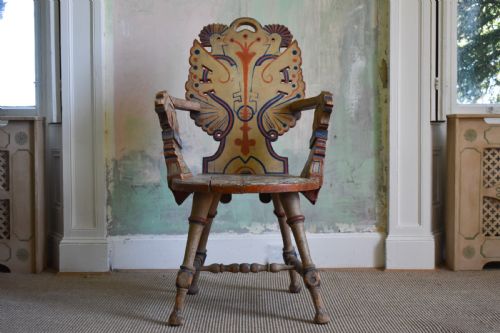
Surface treatments range from natural waxed or polished timber finishes to painted decoration characteristic of Scandinavian and Alpine folk art. Details such as brass fastenings and turned spindle backs appear alongside elaborate Gothic tracery and relief carving.
Carved Pine Chairs Retail Price Guide 2026
Typical asking prices for carved pine chairs among the pieces listed under this phrase on Sellingantiques today, from the lower quarter to the upper quarter. They describe what is for sale here now, not the wider market.
Object forms range from monumental Gothic throne armchairs down to small eighteenth century spindle back child's chairs.
What varies in quality
Quality in these chairs rests upon the crispness of the timber carving and the architectural ambition of the design, distinguishing simple utilitarian seating from elaborate Gothic throne chairs. The choice of dense pitch pine versus softer timber affects the durability and preservation of sharp carved edges over time.
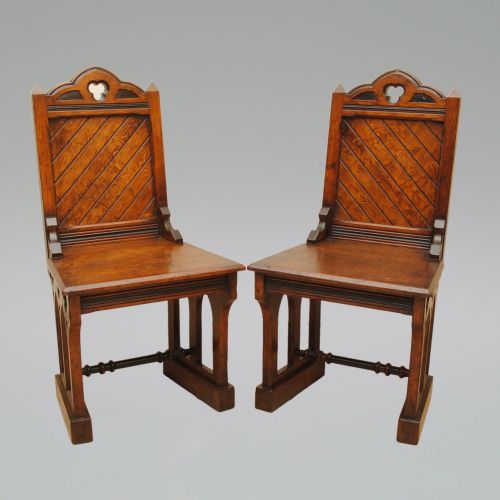
Proportion and regional authenticity separate standard vernacular items from pieces with strong stylistic integrity, such as documented Swiss escabelle chairs or matched pairs of hall chairs. Original surface patination and intact painted folk art finishes retain greater visual impact than stripped or heavily restored examples.
The Carved Pine Chairs Glossary
- Pitch pine
- A durable, resinous softwood widely utilised in nineteenth century furniture for its strength and prominent grain. It allows for crisp carving and deep mouldings.
- Gothic Revival
- An architectural and decorative style popular during the Victorian era, drawing inspiration from medieval forms. It manifests in pointed arches, tracery, and imposing throne chair proportions.
- Folk Art
- Objects created within a specific regional or cultural tradition by self taught or vernacular makers. These pieces often feature painted decoration or idiosyncratic carved motifs.
- Glastonbury chair
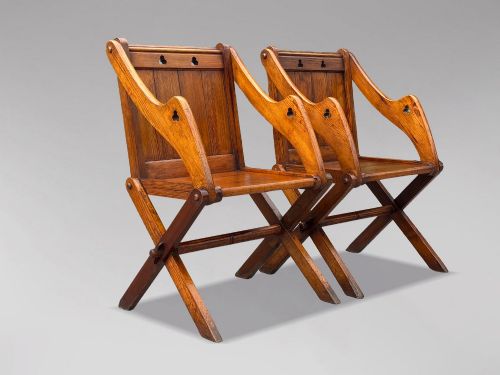
- A distinct type of X framed wooden armchair with a sloping back and panel seat. Victorian interpretations frequently adopted this ecclesiastical medieval form in pitch pine.
- Escabelle
- A traditional style of regional European chair featuring solid board construction and carved panels. They typically appear in sets originating from Alpine areas.
- Dug out chair
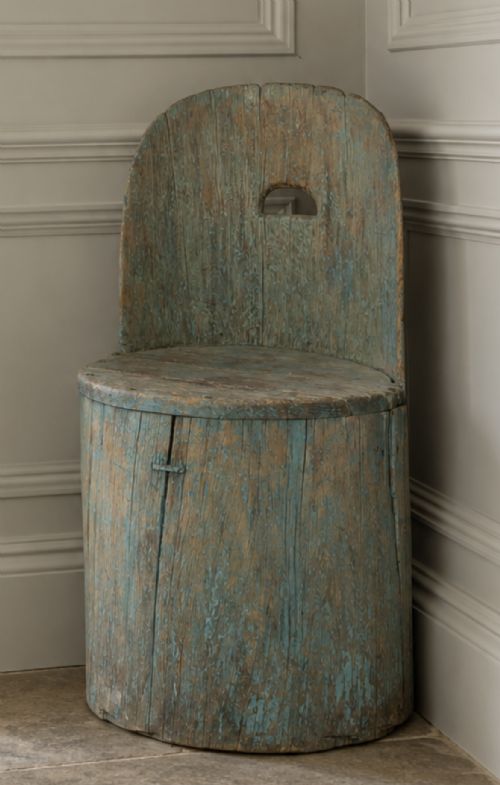
- A primitive seating form carved entirely from a single solid log or trunk. This ancient technique produces heavy, sculptural chairs with deep sculptural seats.
Carved Pine Chairs: Frequently Asked Questions
What periods do these chairs come from?
The selection spans principally from the nineteenth century, including specific dates around eighteen fifty, eighteen eighty, and nineteen hundred, alongside occasional eighteenth century examples.
Victorian Gothic revival pieces sit alongside continental European folk art from Sweden, Austria, and Switzerland, showing distinct regional eras.
Where were these chairs made?
Origins divide between British workshops producing Victorian Gothic pitch pine seating and continental European makers creating folk art furniture.
Scandinavian, Austrian, Hungarian, and Swiss mountain regions contributed heavily to the alpine rustic and folk styles found in this group.
How do I care for pine chairs?
Keep wooden chairs away from direct heat sources and sudden temperature fluctuations to prevent the pine timber from splitting or warping.
Apply a traditional beeswax polish occasionally to nourish the grain and protect the surface finish without building up heavy residues.
What is a Glastonbury chair?
A Glastonbury chair is a specific medieval church chair design featuring an X frame base and a sloping panel back.
Victorian makers revived this architectural form extensively using pitch pine, often incorporating heavy Gothic carving and ecclesiastical proportions.
Are painted finishes original?
Many continental folk art pieces retain their original painted surfaces, which form an integral part of their regional decorative tradition.
Swedish and Alpine chairs frequently display folk motifs applied directly onto the pine timber, contributing to their character and authenticity.