
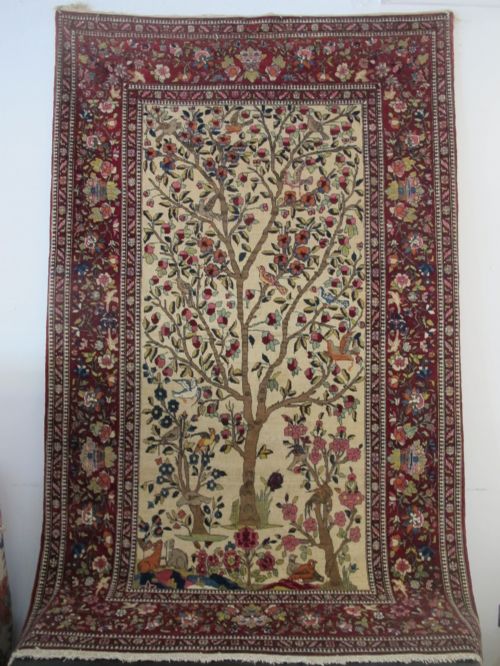


Antique Pictorial Area Rug
An antique pictorial area rug brings narrative woven artistry to a floor, offering figurative scenes from nineteenth and early twentieth century workshops.
Antique Pictorial Area Rug
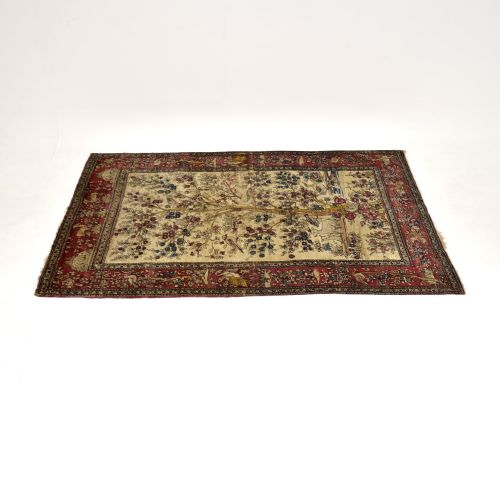
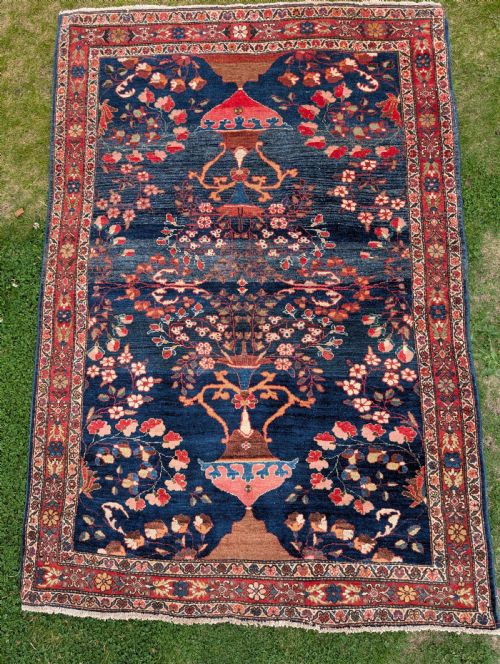
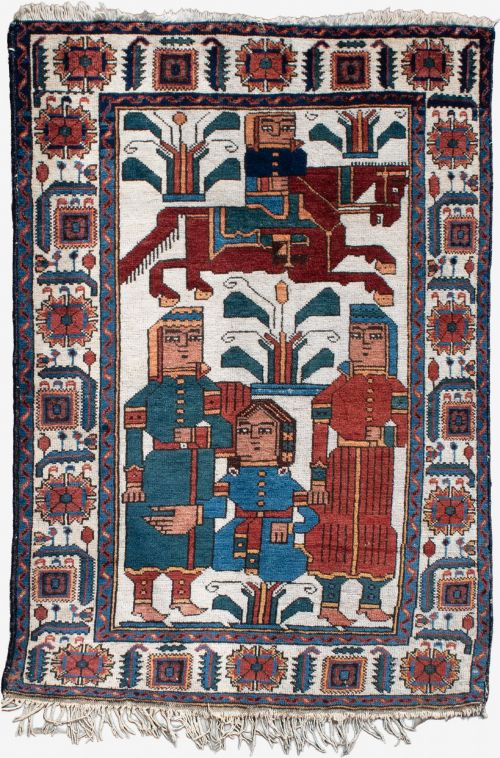
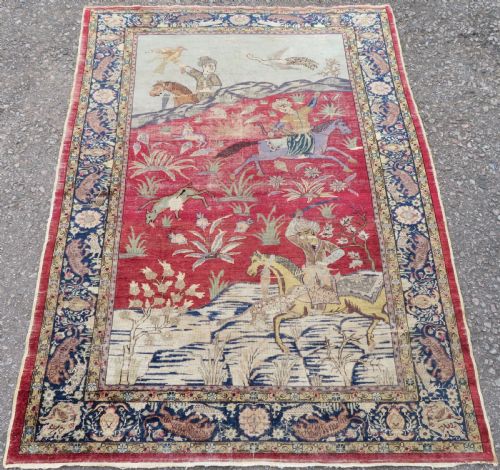
An antique pictorial area rug presents figurative designs, human figures, animals, and hunting scenes rather than purely geometric or floral motifs. Buyers exploring this category encounter knotted floor coverings originating from Persia, Turkey, the Caucasus, and Afghanistan, dating from the nineteenth century into the 1930s.
The most common examples on this page are Persian pieces, particularly from weaving centres such as Kashan, Isfahan, Kirman, and Tabriz, alongside Baluch tribal works and Turkish weaving from regions like Kayseri and West Anatolia. These textiles range from small area dimensions to larger carpets.
Makers and weavers utilised traditional formats to depict historical rulers, royal portraits, and complex narrative programmes. Such pieces function equally as decorative floor coverings and historical textiles displaying considerable cultural narrative.
Materials and construction
These floor coverings are constructed primarily through hand-knotting wool, cotton, and occasionally silk pile onto supportive cotton or wool foundations. Silk examples, such as those from West Anatolia, offer finer detail and a lower pile height.
Weavers employed natural dyes to achieve the deep reds, blues, and earth tones characteristic of late nineteenth and early twentieth century regional workshops. The density of the hand-knotted pile dictates both the clarity of the pictorial narrative and the rigidity of the handle.
Listings feature pieces spanning from the 1870s through the 1930s, utilising wool, cotton, and silk across Persian, Turkish, Caucasian, and Afghan origins.
Assessing quality in pictorial weaves
Quality in these textiles rests upon the precision of the pictorial rendering and the density of the knotting. Master weavers achieved intricate facial expressions and proportional animal forms through tighter knot counts and careful colour transitions.
The choice of materials also elevates a piece, with finely spun wool and occasional silk additions demonstrating superior workshop execution. Greater complexity in the narrative scene, such as multi-figure hunting episodes or distinct historical portraits, marks the upper tier of production.
Ahmadi Isfahan·Mohtasham Kashan
The Antique Pictorial Area Rug Glossary
- Pictorial rug
- A floor covering featuring woven representations of people, animals, buildings, or narrative scenes rather than standard geometric or abstract medallions. These designs require high knot density to render recognizable figures.
- Pile
- The vertical or slanted loops of yarn that form the usable surface of the carpet. This surface is created by knotting wool, cotton, or silk around the warp threads.
- Warp
- The stationary longitudinal threads stretched across the loom before weaving begins. The pile knots are tied around these parallel foundation threads.
- Weft
- The horizontal threads passed alternately over and under the warp threads to lock the rows of knots in place. Together with the warp, it forms the stable foundation grid of the textile.
- Hand-knotted
- A method of production where individual strands of coloured yarn are tied by hand to the foundation warp threads. This laborious process defines traditional carpet making across Persia, Turkey, and the Caucasus.
Antique Pictorial Area Rug: Frequently Asked Questions
What is an antique pictorial area rug?
An antique pictorial area rug is a hand-knotted floor covering that displays figurative imagery, such as human figures, animals, or historical narratives, rather than repeating geometric patterns. These textiles originate primarily from nineteenth and early twentieth century traditions in Persia, Turkey, and the Caucasus.
They combine practical floor protection with storytelling art, recording cultural scenes and portraits through dyed wool and silk piles.
How were these rugs used originally?
These textiles served as functional floor coverings in homes, administrative buildings, and royal residences, while certain prayer formats had specific devotional uses. Their detailed pictorial scenes also made them suitable for hanging on walls as decorative displays of wealth and narrative art.
Over time, heavy foot traffic flattened the pile, though pictorial examples often received more careful placement to preserve their figurative details.
How do I care for an antique rug?
Care involves gentle vacuuming without a rotating brush bar to protect the hand-knotted wool or silk pile from damage. Professional cleaning by specialists in antique textiles is recommended to address deep dirt without harming natural dyes.
Keeping the textile out of direct sunlight prevents the fading of natural indigo, madder, and other organic colourants used in these older workshops.
How can I tell the period of a rug?
Dating relies on examining the materials, dye types, structural foundation, and stylistic conventions characteristic of specific decades. Nineteenth-century pieces often display hand-spun wool and natural dye palettes, while twentieth-century examples from the 1920s and 1930s may show early synthetic dye influences or tighter, more uniform commercial spinning.
Signatures, dates woven into the border, and specific regional motifs also help establish the approximate decade of production.