




Antique Pewter Beer Mug
These antique pewter beer mug examples are robust drinking vessels spanning the Georgian, Victorian, and Edwardian periods for daily use or display.
Antique Pewter Beer Mug
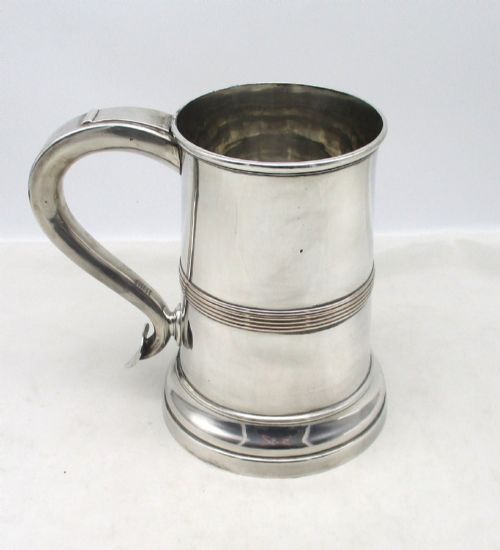
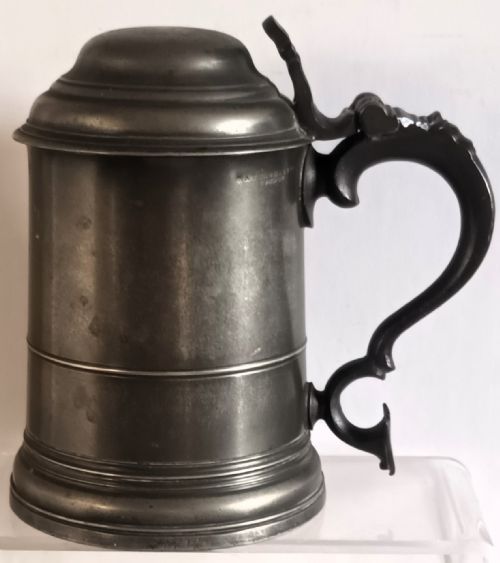
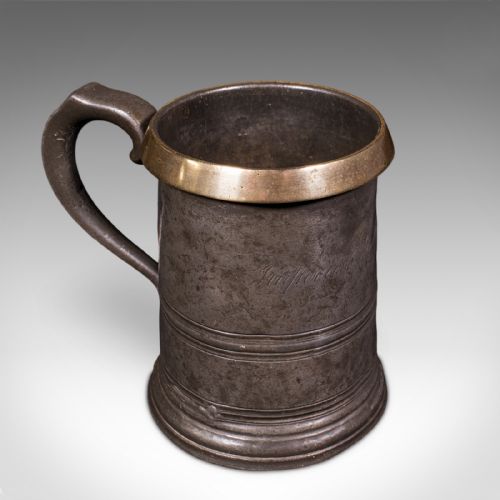
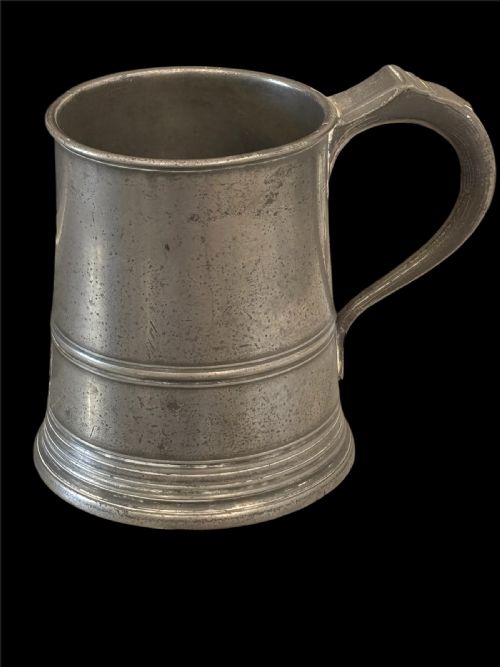
An antique pewter beer mug encompasses heavy metal tankards, quart jugs, and lidded vessels designed for serving ale in public houses and domestic settings. The pieces seen here cross the eighteenth, nineteenth, and early twentieth centuries, reflecting changing social drinking habits across British and continental workshops.
Most examples you encounter on this page are sturdy English pewter measures or tankards from the Victorian and Georgian eras, often marked with capacity sizes such as pint or quart. Alongside these, you find continental German pieces, Old Sheffield Plated vessels, and Arts & Crafts designs by notable makers.
The forms range from plain domestic quart jugs to heavily decorated German faience and stoneware steins with lidded mounts. Whether you seek a simple public house measure or a decorative Celtic design, these pieces remain direct links to historical drinking culture.
What Varies in Quality
Quality rests in the weight of the metal and the crispness of the maker marks stamped into the pewter surface. Heavier gauges of pewter maintain their structural integrity better over centuries of handling and use.
The refinement of the handle attachment and the precise fit of any lidded mechanism separate standard public house measures from finer showroom pieces. Artistic collaboration, such as Archibald Knox designs for Liberty & Co, introduces a higher level of decorative execution.
Tavern regulars could admire local tavern stamps and maker touchmarks while nursing their ale.
Watts & Harton·Richard Morton·Archibald Knox for Liberty & Co·Frederic Sanders·Burgum & Catcott of Bristol
The Antique Pewter Beer Mug Glossary
- Pewter
- A malleable metal alloy consisting principally of tin, historically mixed with copper or lead to create durable domestic vessels. It develops a dark grey patina through age and handling.
- Old Sheffield Plate
- A composite material made by fusing a thin sheet of silver to a thicker copper base, common in high-end Georgian and nineteenth-century tankards. The technique creates the appearance of solid silver without the extreme weight.
- Tankard
- A tall, cylindrical drinking vessel, typically featuring a single handle and sometimes fitted with a hinged lid. They were produced in pewter, silver, ceramic, and plated metals for consuming beer and ale.
- Quart
- An imperial measure of capacity equivalent to two pints, frequently stamped onto English tavern tankards to denote legal serving sizes. Quart vessels are notably larger and heavier than standard pint mugs.
- Westerwald
- A German ceramic region known for salt-glazed stoneware pottery featuring distinctive grey and blue incised decoration. Eighteenth-century examples appear as imported beer vessels in British collections.
Antique Pewter Beer Mug: Frequently Asked Questions
Are these mugs safe for drinking?
Many older pewter items contain lead within the alloy mix, which can leach into acidic or alcoholic beverages over time. It is generally advisable to treat them as decorative display items rather than daily drinking vessels.
Plated or twentieth-century Arts & Crafts pieces may pose fewer risks, but testing for lead content is recommended before actual use.
How do I identify a tavern measure?
English public house measures usually display official verification marks, touchmarks, and stamped capacity indicators like pint or quart on the rim or body. These stamps ensured customers received accurate quantities of beer.
Inns often stamped their own names or the landlord's details directly into the metal surface for local identification.
What is Old Sheffield Plate?
Old Sheffield Plate is an early form of plating created by fusing silver and copper together under heat before rolling them into sheets. This method preceded electroplating and results in a rich appearance where the base copper occasionally peeks through worn highlights.
Tankards made from this material combine the lustre of silver with the sturdy rigidity of copper.