

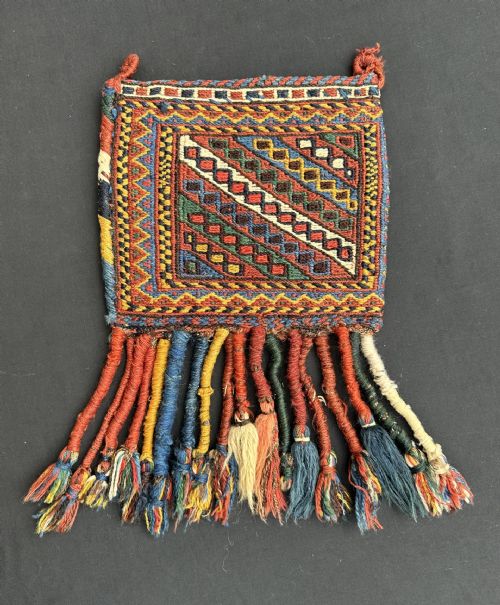


Antique Persian Saddlebag
An antique persian saddlebag brings the nomadic artistry of nineteenth-century weaving directly into your home as a tactile piece of history.
Antique Persian Saddlebag
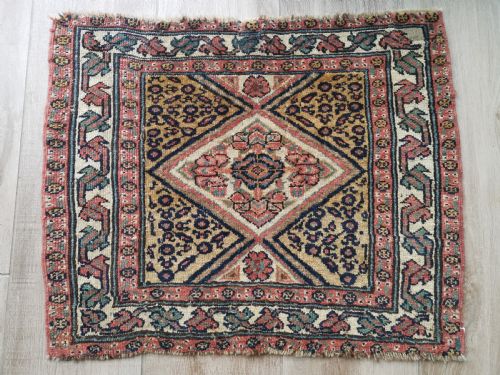
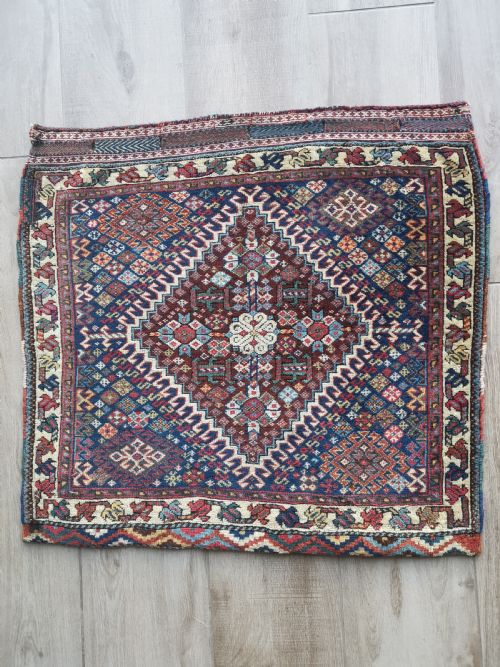
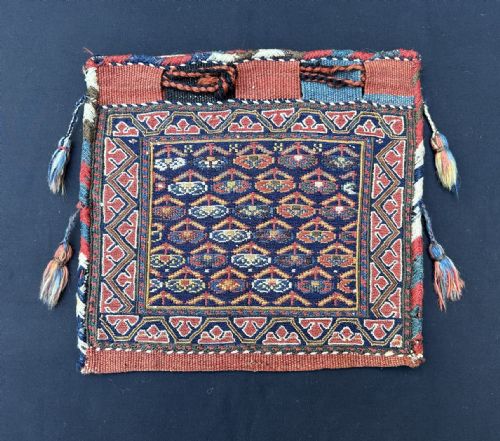
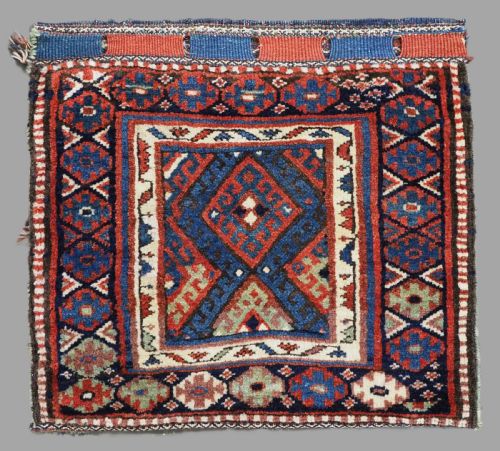
When you search for an antique persian saddlebag, you encounter woven containers and panels created by nomadic and tribal confederations across nineteenth-century Persia. These practical household items range from complete double-sided sets designed for animal transport to single bag faces and half-khorjins preserved as decorative textiles.
The selections on this page span diverse regional groups including the Qashqai, Shahsavan, Afshar, Luri, and Jaf Kurd tribes. You will frequently meet individual bag faces and surviving storage bags rather than complete pairs, reflecting how these textiles were separated over generations of use.
Materials and construction methods
Weavers utilised hand-spun wool for the pile and foundation, combining rich animal fibres with natural dyes derived from plants and minerals. Many pieces incorporate sturdy cotton foundations alongside supplementary metal or leather elements for structural reinforcement.
Techniques varied between pile knotting and flatweaving methods such as soumak and kilim construction. These dense structures ensured the bags could withstand the rigours of nomadic migration while displaying intricate geometric and figurative motifs.
Assessing quality and condition
The distinction between ordinary and exceptional examples rests upon the handling of wool and dye. Superior pieces display lustrous, luminous wool saturated with vibrant natural colour variations that catch the eye across a room.
Fineness of knotting and precision in flatweave structures also separate standard utility items from masterwork tribal commissions. Original complete backs, secure edges, and intact plain weave sections elevate the historical integrity of any surviving khorjin.
The Antique Persian Saddlebag Glossary
- Khorjin
- The traditional Persian term for a double-sided saddlebag used by nomadic tribes for transport and storage. These woven pouches were typically slung across pack animals during seasonal migrations.
- Soumak
- A flatweave technique utilising supplementary wrap threads to create a textured, durable surface without knots. This method produces crisp geometric patterns characteristic of Shahsavan weaving.
- Bag face
- The decorative front panel of a storage bag that survived after the plain weave back was removed or deteriorated. Collectors often frame or display these panels as independent textile artworks.
- Boteh
- A stylised floral motif resembling a pear or almond, frequently woven into Afshar and tribal compositions. This ancient symbol represents fertility, life, and eternity in Persian art.
- Half-khorjin
- One half of a complete double saddlebag configuration, often preserved independently. These fragments demonstrate the same regional weaving techniques and materials as full sets.
Antique Persian Saddlebag: Frequently Asked Questions
What is a khorjin?
A khorjin is the traditional Persian name for a pair of saddlebags woven by nomadic tribes for carrying possessions during migrations.
These functional containers were typically joined by a central web and slung across horses, camels, or donkeys.
Why are many pieces just bag faces?
Many surviving textiles are solitary bag faces because the plain weave backs wore out faster through constant friction against pack animals.
Owners often cut away the damaged rear sections, preserving the decorative front panels as rugs or wall hangings.
How do I identify tribal origins?
Tribal origins are identified through distinctive colour palettes, specific geometric or boteh motifs, and regional weaving structures.
For example, Shahsavan pieces often feature soumak technique, while Afshar bags frequently display distinct Kerman province designs.
How should I care for an antique textile?
Protect these textiles from direct sunlight to prevent natural dye fading and vacuum them gently using low suction without a beater bar.
Professional rug cleaners experienced in antique tribal pieces should handle any necessary washing or conservation work.