
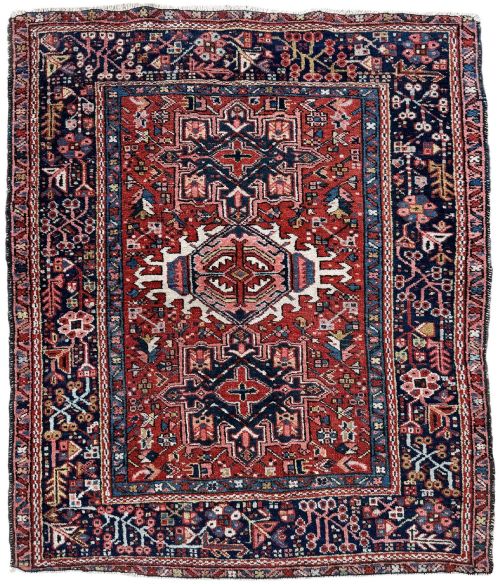
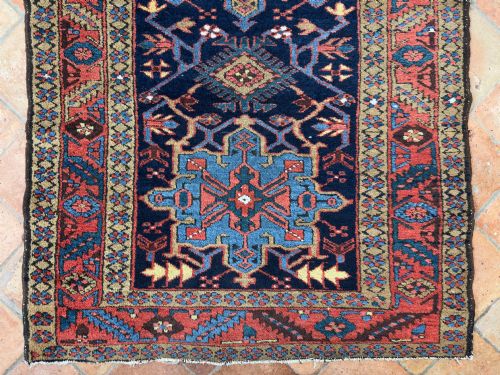
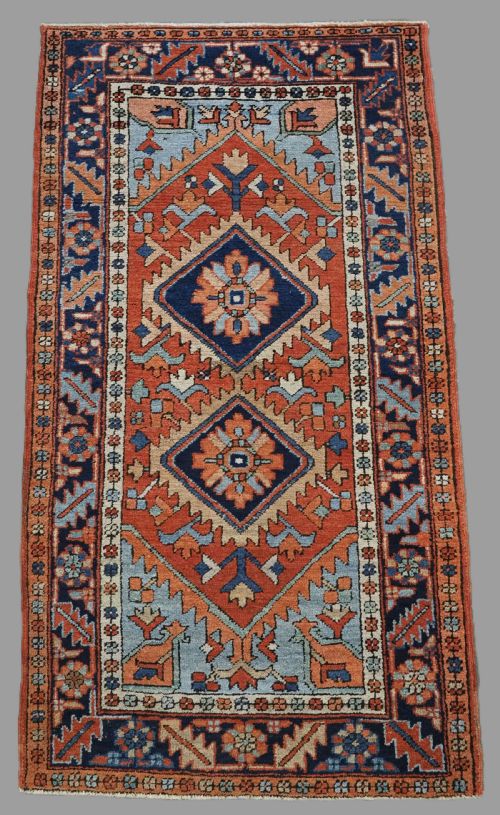


Antique Persian Karaja Runner
An antique persian karaja runner brings the geometric punch of Northwest Persia straight into a hallway, offering heavy wool durability and striking village design.
Antique Persian Karaja Runner
An antique persian karaja runner is a long, narrow floor covering originating from the Northwest Persian region, specifically associated with village production in the Karaja and Heriz areas. These pieces typically display traditional geometric medallion layouts, distinct tribal motifs, and elongated formats tailored for corridors and hallways.
Most examples encountered on this page date from the late nineteenth century through the early decades of the twentieth century, spanning periods from the 1870s to the 1920s. The forms range from narrow, elongated runners exceeding three metres in length to smaller runner rugs and long rugs utilised for domestic circulation spaces.
What separates the finest examples
Quality in these textiles rests upon the precision of the village drawing and the handling of the wool, where finer knot density allows for sharper geometric definitions within the medallions and borders. Superior pieces maintain balanced proportions in their narrow formats without awkward compression of the central motifs.
The depth and harmonious ageing of the dye palette further distinguish the upper tier of the range, as natural colour variations impart visual resonance that mechanical dyeing fails to replicate.
Materials across the inventory are strictly traditional, consisting entirely of wool and cotton.
The Antique Persian Karaja Runner Glossary
- Karaja
- A village and weaving district in Northwest Persia known for producing distinctive geometric rugs and runners with bold tribal character. Pieces from this origin often feature rectilinear medallions.
- Runner
- A long, narrow carpet format specifically proportioned for hallways, corridors, and narrow spaces. These items measure significantly longer than they are wide.
- Warp
- The vertical threads stretched tightly on the loom that form the structural skeleton of the rug. Cotton is the standard material for this component in these village pieces.
- Weft
- The horizontal threads passed through the warp threads after each row of knots to bind the structure firmly together. It contributes to the rigidity and drape of the textile.
- Heriz Region
- A broader geographical weaving area in Northwest Persia closely associated with Karaja production, sharing similar robust wool qualities and large-scale geometric design traditions.
Antique Persian Karaja Runner: Frequently Asked Questions
How do I clean an antique runner?
Regular gentle vacuuming without a rotating brush roll removes surface grit that damages the wool foundation over time. Professional specialist cleaning remains necessary for deep washing to protect natural dyes and cotton foundations.
Avoid soaking or using modern chemical detergents, as these can strip the lanolin from the wool and cause dye bleeding. Prompt blotting handles accidental spills safely.
Are these runners durable for hallways?
Village-woven pieces from Northwest Persia were built specifically for heavy domestic traffic using sturdy wool pile over cotton foundations. Their dense knotting and robust materials allow them to withstand decades of regular footfall.
Utilising a quality underlay beneath the runner prevents slipping and cushions the textile against hard stone or wooden flooring, extending its working lifespan.
How do I date a Karaja runner?
Dating relies on assessing the structural materials, dye characteristics, and design execution relative to documented periods from the late nineteenth and early twentieth centuries. Earlier examples often display more saturated natural palettes and slightly less rigid geometry.
Comparing the weave tightness and wool texture against dated comparative pieces helps narrow down the decade of production between the 1870s and 1920s.
What is the difference between Karaja and Heriz?
Karaja pieces typically appear in smaller formats, including runners and rugs, featuring distinct village geometry and repeated medallion systems. Heriz carpets traditionally scale larger with bolder, highly architectural central medallions.
Both originate from the same broader Northwest Persian sphere of production, resulting in overlapping design vocabulary and similarly durable wool construction.