
Antique Pencil Study
An antique pencil study captures the direct hand of an artist on paper, offering an intimate glimpse into historical observation and academic preparation.
Antique Pencil Study
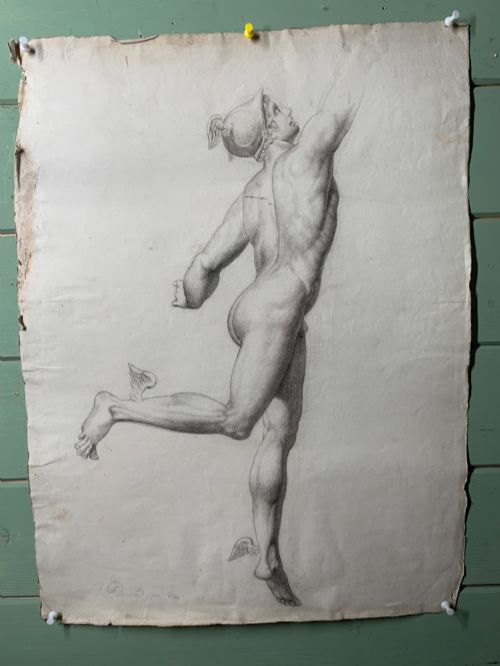
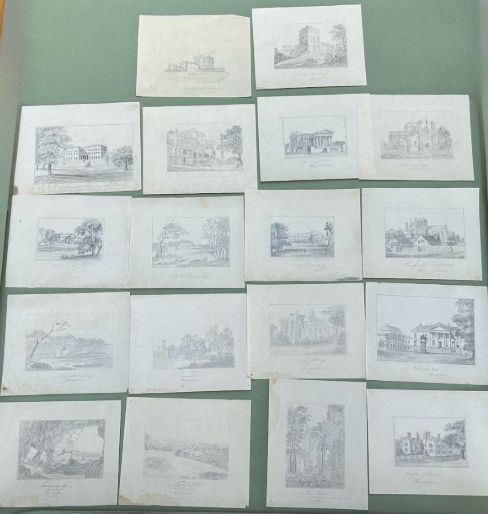
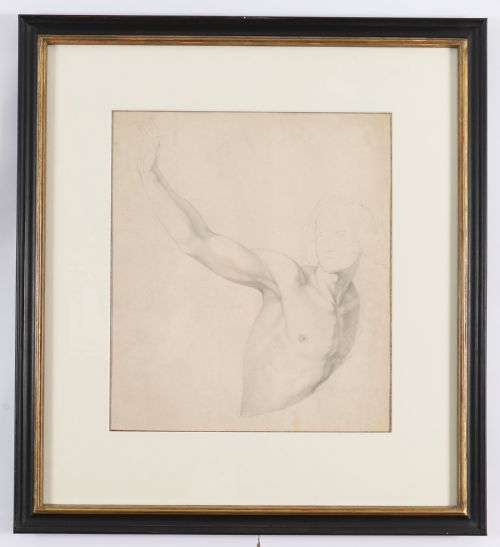
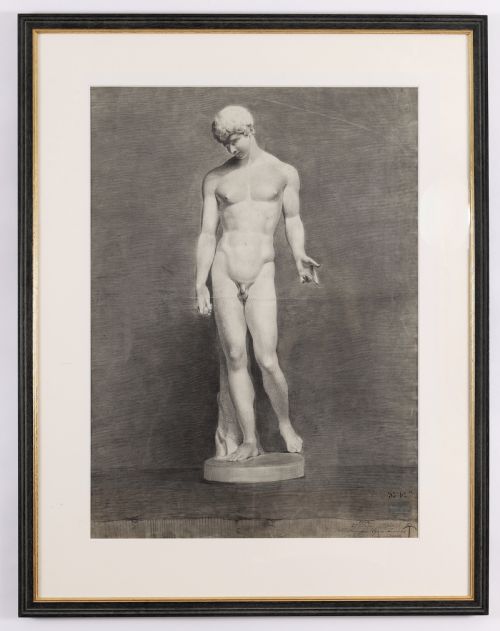
When buyers search for an antique pencil study, they look at original works on paper spanning from the eighteenth century through the early decades of the twentieth century. These pieces range from rapid architectural sketches and landscape views to highly finished academic portraits and figurative compositions.
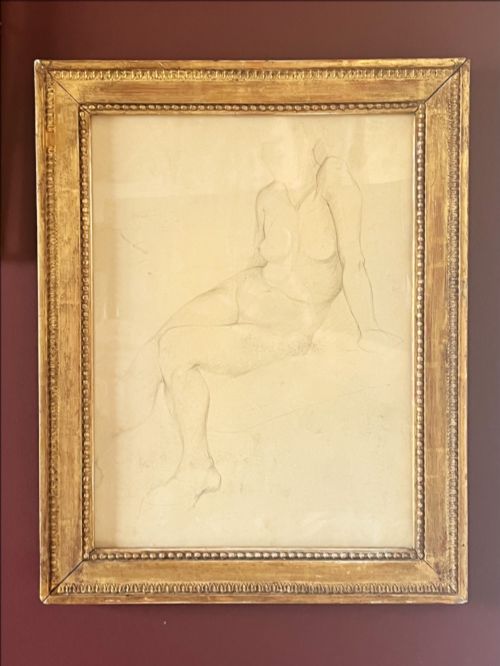
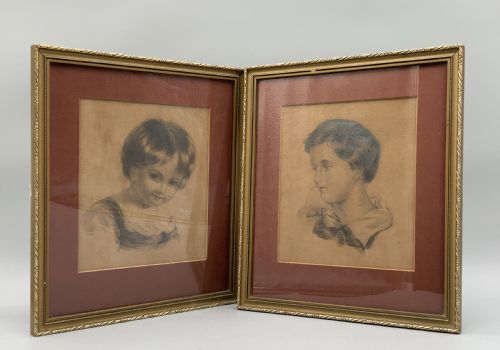
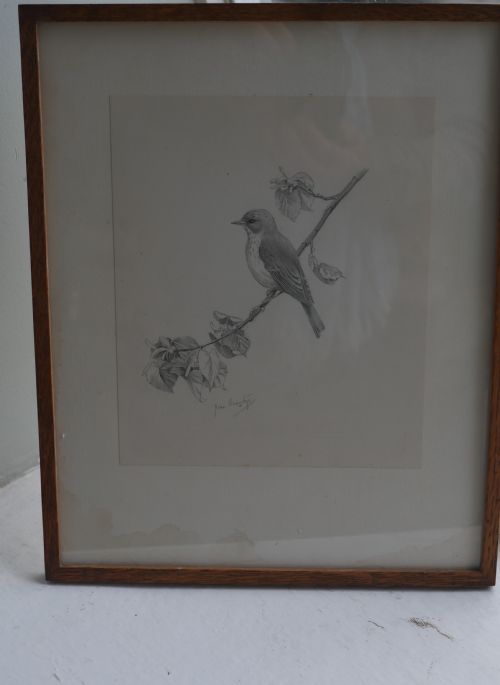
The most common examples on this page date from the nineteenth century, reflecting both professional studio practice and Victorian amateur skill. Works frequently appear mounted in period frames, preserving the delicate graphite, charcoal, or chalk surfaces against glass.
Materials and methods of execution
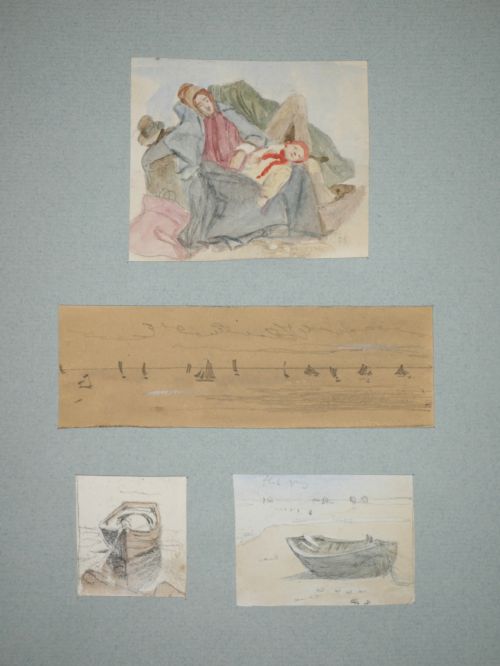
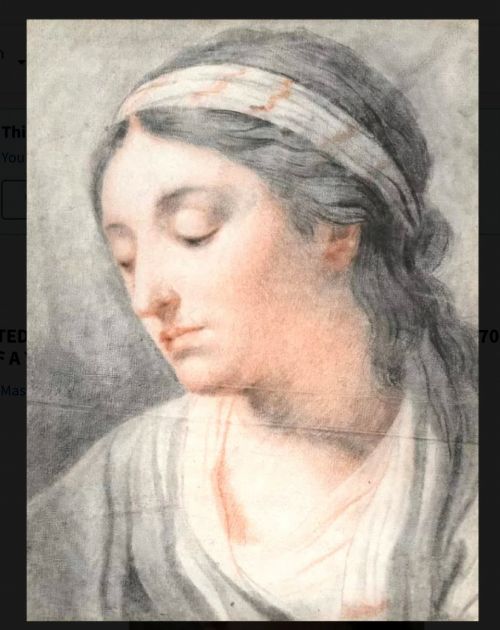
Artists drew these studies using graphite, charcoal, and chalk on various paper supports, occasionally incorporating watercolour, gouache, or ink washes to build tone and depth. Buff paper, tinted sheets, and embossed paper frequently provide coloured backgrounds that allow highlights in white chalk to stand out.
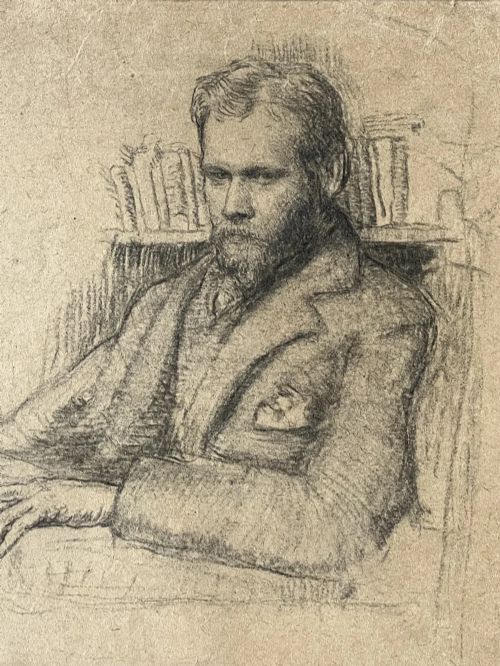
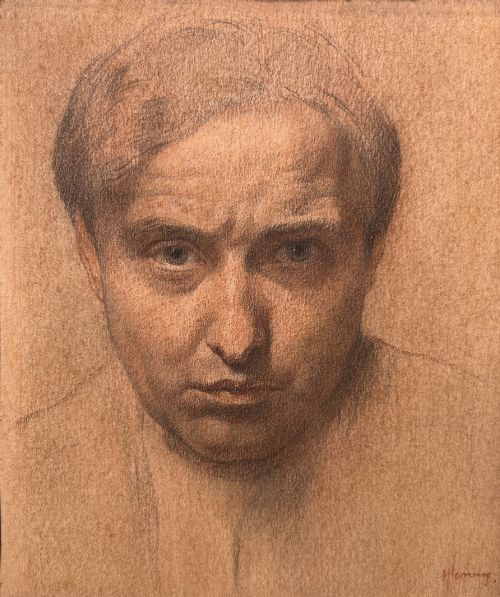
Many of these works originated as preparatory exercises, student examinations, or direct observations from nature and classical sculpture. The employment of media such as deux crayon permitted draughtsmen to achieve subtle gradations of shadow and form with minimal tools.
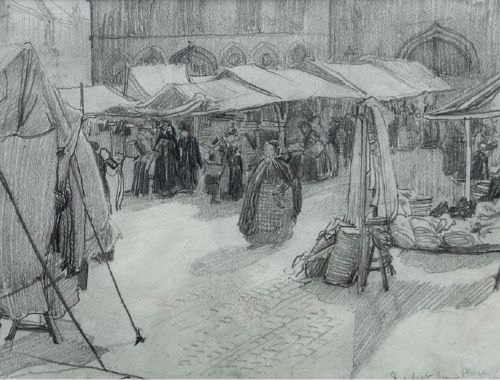
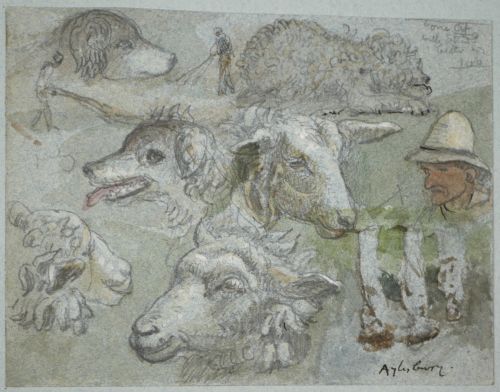
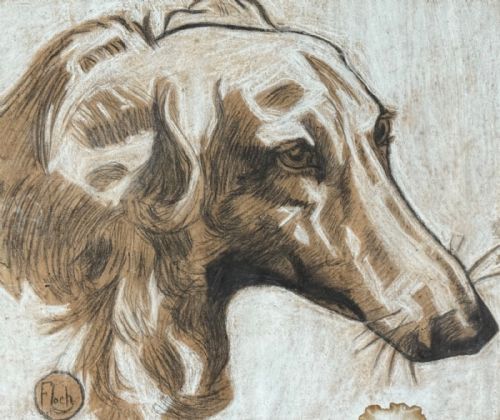
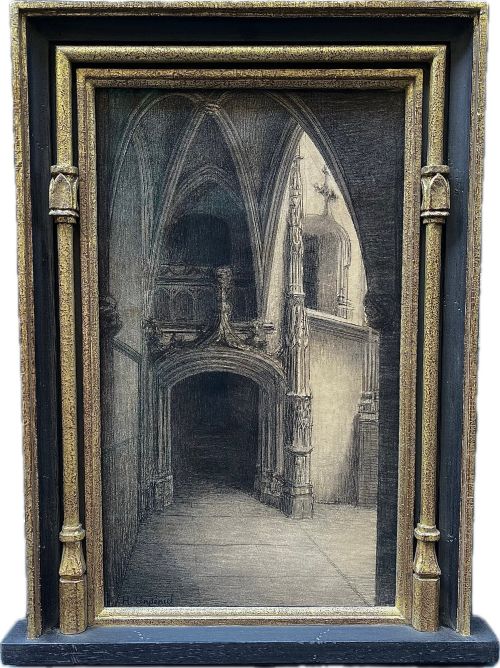
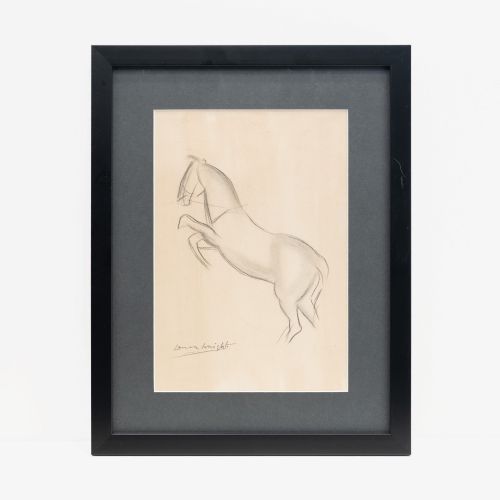
Several drawings preserve the hurried hand of students recording stray dogs, resting horses, and Gothic church architecture over two centuries ago.
Distinctions in draughtsmanship
Quality in these works rests primarily upon the confidence and economy of the line, separating timid copies from masterful direct observation. A superior study demonstrates a profound understanding of anatomy, perspective, or light through sure handling of the medium.
The preservation of the paper surface and the integrity of the original mount or frame also influence the standing of a piece. Works retaining full signatures, precise dates, or documented studio provenance carry greater historical weight.
James Smetham·Augustus John·Herbert Johnson Harvey·Henri Charles Angéniol·François-André Vincent·Sir Thomas Lawrence·Demetrios Galanis·Robert Richard Scanlan·Sir Francis Leggatt Chantrey·Reginald G. Eves·Dame Laura Knight·Theobald Chartran·Alexandre Decamps·Baden Powell·David Roberts·Robert Hills·Sir George Hayter·David Wilkie
The Antique Pencil Study Glossary
- Graphite
- A form of crystalline carbon used as a drawing medium in pencils. It leaves a silvery-grey metallic mark that varies in tone depending on the hardness of the lead.
- Deux crayon
- A drawing technique utilising two distinct colours of chalk or crayon, typically black and white, applied to tinted paper to create highlights and shadows.
- Grisaille
- A painting or drawing executed entirely in shades of grey, monochrome, or neutral grey-brown, often used to emulate sculpture or as a base for further colour.
- Academic realism
- A style of painting and drawing produced under the influence of European academies of art, emphasising precise anatomical accuracy, classical proportion, and polished technique.
- Provenance
- The chronological ownership and exhibition history of a work of art. A clear provenance helps establish authenticity and historical context.
Antique Pencil Study: Frequently Asked Questions
What is an antique pencil study?
An antique pencil study is an original drawing on paper created by an artist as a preliminary working sketch, a record of observation, or a finished portrait. These works utilise graphite, charcoal, or chalk to capture subjects ranging from landscapes to the human figure.
They reflect the historical training methods and immediate visual impressions of artists working across the eighteenth, nineteenth, and early twentieth centuries. Many were preserved in studio collections or sketchbooks before finding their way into modern framing.
How should I frame and display my drawing?
Drawings on paper require careful framing behind glass with acid-free mounts to prevent direct contact between the paper surface and the glazing. This barrier protects fragile graphite, chalk, and charcoal mediums from abrasion and atmospheric moisture.
Display these pieces away from direct sunlight and bright artificial illumination to prevent fading and discolouration of the paper support over time. Stable indoor humidity levels ensure the long-term preservation of both the artwork and its historical frame.
How can I tell the date of a drawing?
Dating relies on visible clues such as artist signatures, inscribed dates, stamps from educational institutions, and stylistic markers of costume, hair, and architecture. Watermarks within the paper stock can also provide reliable windows of manufacture.
Examining the framing materials, backing boards, and mounting techniques offers secondary evidence regarding the age of the piece. Comparison with dated works by the same school or artist helps narrow the chronological range further.
Were these drawings meant to be finished artworks?
Many pencil studies served as preparatory exercises for larger paintings, murals, or prints rather than standalone exhibition pieces. Artists produced them to test compositional arrangements, lighting effects, or anatomical details.
Despite their functional origins, collectors have long prized these studies for their spontaneous quality and direct insight into the creative process. They reveal the unpolished decision-making behind major historical works of art.