




Sepia Architectural Illustration
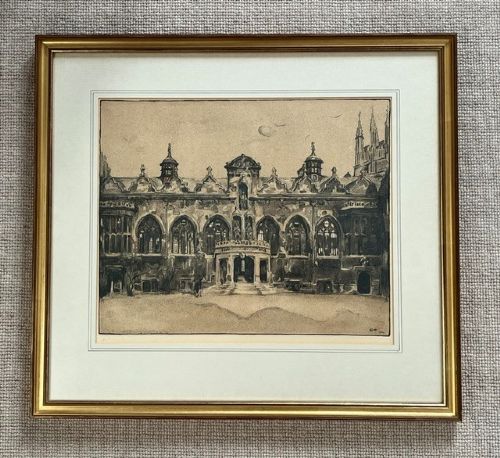
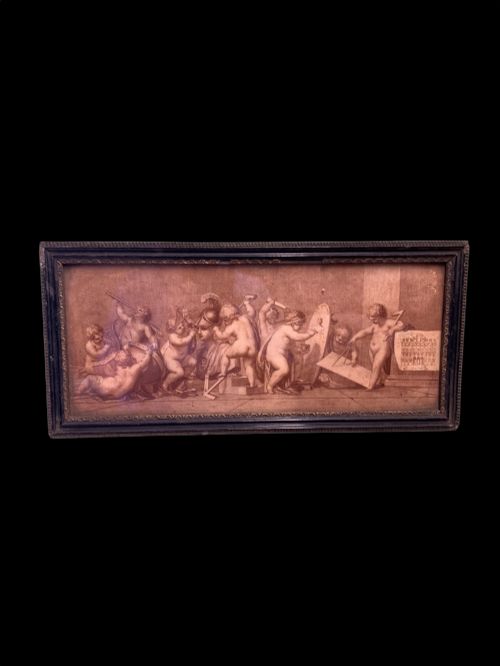
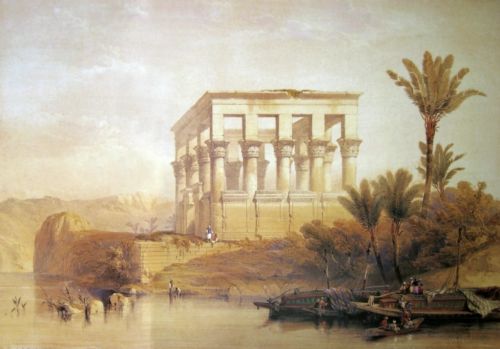
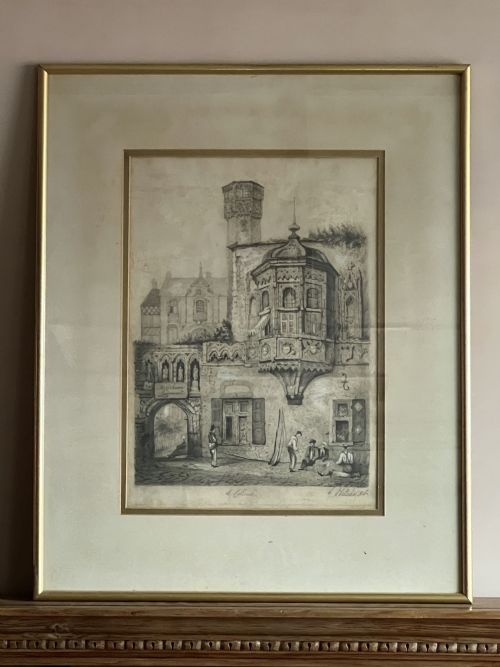
These sepia architectural illustration works capture historic buildings and grand facades with tonal ink and wash, offering period character for any study.
Sepia Architectural Illustration
A sepia architectural illustration brings together historic building studies and topographical views rendered primarily in monochrome brown, ink, and pencil. These pieces range from detailed student drawings to accomplished watercolours, capturing structures like cathedrals, colleges, and civic landmarks.
The selections available span several distinct eras, including the eighteenth century, the Victorian period, and early twentieth-century works. Buyers encounter formats such as framed lithographs, original pencil sketches, and watercolour drawings executed on paper.
Stylistic influences vary widely across the inventory, touching upon Gothic Revival, Neoclassical, and Edwardian aesthetics. Works may depict British subjects such as Kew Gardens and Oxford colleges alongside continental European buildings.
Materials and technique
Artists relied primarily on paper supports, applying ink, watercolour, pencil, and graphite to build up tonal depth and fine structural lines. Some works incorporate monochrome wash or gold leaf to accentuate specific architectural details.
Techniques range from precise architectural drafting by students and professionals to looser topographical watercolours and framed prints. Many of these works retain their original framing materials, including wood and glass.
Current listings feature works spanning the eighteenth, nineteenth, and twentieth centuries, incorporating media such as ink, watercolour, and pencil.
What distinguishes quality
Quality rests upon the precision of the draughtsmanship and the clarity of the architectural perspective. Pieces executed by named artists or accomplished students display a firmer command of scale and spatial depth.
Condition and medium stability also shape the piece, as works executed in pure pencil, ink, or stable watercolour on quality paper retain greater legibility over time. The presence of period framing adds contextual value to the drawing.
Sir William Nicholson·David Roberts·J W Hogley·H. H Wyatt·Sir Francis Leggatt Chantrey·Fred Lawson·George De Paris·Frank Greenwood·Joseph Hansom
The Sepia Architectural Illustration Glossary
- Sepia
- A brownish pigment derived from the ink sac of the cuttlefish, widely used for monochromatic drawing. It gives historic architectural works their characteristic warm, aged tone.
- Wash
- A thin, transparent layer of diluted watercolour or ink applied across paper. Artists use this technique to create smooth background skies or shadow gradients behind structural lines.
- Lithograph
- A printmaking process based on the antipathy of oil and water, drawn upon limestone or metal plates. Many early twentieth-century architectural prints utilise this method.
- Gothic Revival
- An architectural style that revived medieval forms, prominent in British design from the eighteenth century onwards. Works reflecting this style emphasise pointed arches and intricate stonework detail.
Sepia Architectural Illustration: Frequently Asked Questions
How do I date an architectural drawing?
Dating relies on stylistic clues, inscriptions, and artist signatures recorded within the medium. Eighteenth and nineteenth-century works often feature period handwriting or specific paper watermarks.
Studying the architectural fashion depicted, whether Gothic Revival or Neoclassical, also helps narrow down the decade of creation.
What is the difference between a sketch and a print?
A sketch is an original, unique hand-drawn work created directly with pencil, ink, or watercolour. A print is a mechanical reproduction of an image, such as a lithograph or etching.
Original drawings show hand pressure and ink pooling under close inspection, whereas prints display consistent ink dot patterns or plate lines.
How should I frame and display these works?
Historic paper works require conservation framing with acid-free mounts to prevent degradation over time. Keeping them away from direct sunlight protects the delicate ink and watercolour pigments.
Displaying them behind glass safeguards the fragile paper surface from atmospheric moisture and dust accumulation.
Are these drawings signed by the artists?
Many works bear artist signatures, stamps, or student inscriptions detailing the location and date. Some pieces identify the creator's age or institutional context directly on the paper sheet.
Unsigned works are frequently attributed to particular schools of art based on technique, subject matter, and period characteristics.