



Paper Architectural Study
Paper architectural study pieces capture historic buildings and grand facades with precise hand-drawn draftsmanship.
Paper Architectural Study
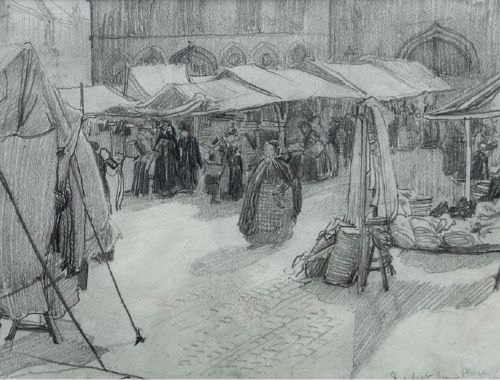
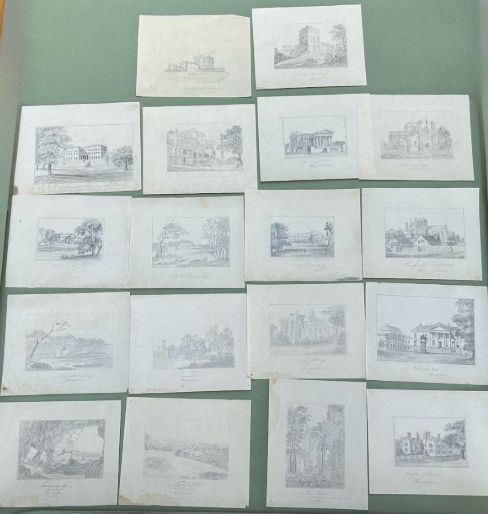
A paper architectural study represents the built environment through meticulous draughtsmanship, recording facades, interiors, and classical structures on paper sheets. When exploring a paper architectural study selection, buyers encounter original watercolours, graphite sketches, and period engravings depicting ancient ruins, Gothic abbeys, and stately rooms. These works bridge the gap between technical engineering and fine art, offering a window into historical design and topographica.
The examples gathered here span from the eighteenth century through to the mid twentieth century, encompassing Georgian precision, Victorian ambition, and Edwardian observation. Many originate from grand tours or academic sketching expeditions, capturing foreign markets, pavilions, and temple ruins with ink and watercolour paint. Collectors find these pieces housed in original wood and glass frames, preserving fragile media across centuries.
Materials and Technique
Draftsmen and artists relied primarily on paper supports, applying graphite, pen and ink, and watercolour paint to build precise line work and atmospheric washes. Some pieces incorporate gold leaf or pastel, adding depth and tonal variation to architectural elevations and interior perspective views.
Engraving plates produced detailed architectural prints on paper, allowing technical treatises and pattern books to circulate widely. Hand-tinted watercolours often overlaid these printed lines to suggest stone textures, roof tiles, and surrounding landscapes.
Historic draughtsmen frequently sketched crumbling temples with such enthusiasm that local goats wandered into the foreground.
Evaluating Execution and Context
Quality rests upon the sureness of the draughtsman's line and the accuracy of perspective rendering within each paper architectural study. Works that capture complex stonework, spatial depth, and lighting without hesitation stand apart from stiff or formulaic academic exercises.
Provenance and specific subject identification elevate certain examples above generic architectural prints. Signed sheets or those recording named structures such as Roman temples or domestic halls offer greater historical insight.
The Paper Architectural Study Glossary
- Watercolour paint
- A water-soluble medium using finely ground pigments bound in gum arabic, applied in translucent washes to paper supports.
- Engraving
- A printmaking technique where an image is incised directly onto a metal plate with a burin, holding ink in the grooves for transfer.
- Grand Tour
- A traditional extended journey through Europe undertaken by upper-class young men to study classical art and architecture.
- Graphite
- A form of carbon used to produce grey or black pencil marks, serving as the preparatory layout or primary medium for sketches.
Paper Architectural Study: Frequently Asked Questions
What is a paper architectural study?
A paper architectural study is a hand-drawn sketch, watercolour, or period engraving that depicts buildings, interiors, or classical structures. These works range from quick compositional field notes to finished presentation drawings.
Such pieces reflect the training of architects, artists, and travellers who wished to record historical monuments and design details accurately.
How were these studies used historically?
Makers produced these studies during travels, academic training, or design preparations for actual construction and decorative schemes. Architects utilised them to understand classical proportions and historical precedents.
Patrons and travellers collected them as souvenirs of foreign tours or as evidence of an educated taste in fine arts and antiquity.
How should I frame and display them?
Paper works require conservation-grade mounting behind glass to protect fragile media such as watercolour and graphite from humidity and airborne dust. Acid-free backings prevent chemical degradation over time.
Display them away from direct sunlight to prevent the fading of ink, watercolour pigments, and paper supports.
How can I tell the period of a study?
Stylistic clues within the depicted architecture, costume, and lettering often indicate the era in which the work was created. Eighteenth-century sheets favour neoclassical symmetry, while nineteenth-century examples frequently explore Gothic revival.
Paper characteristics, watermark evidence, and framing materials also help establish the date of creation alongside any inscribed signatures or dates.