
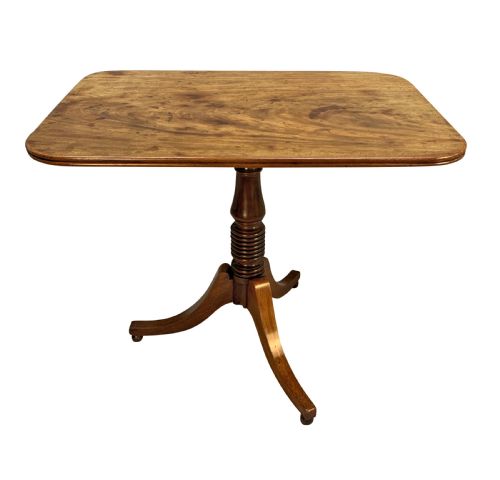
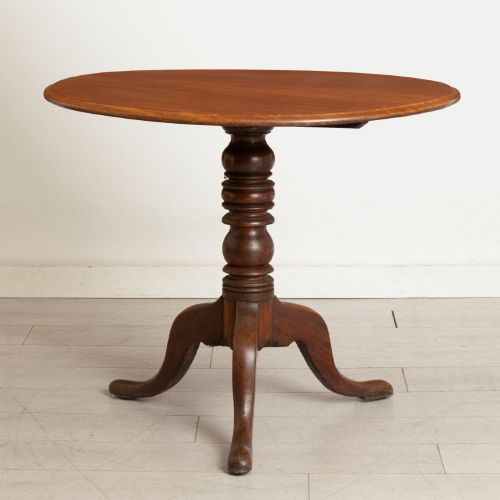
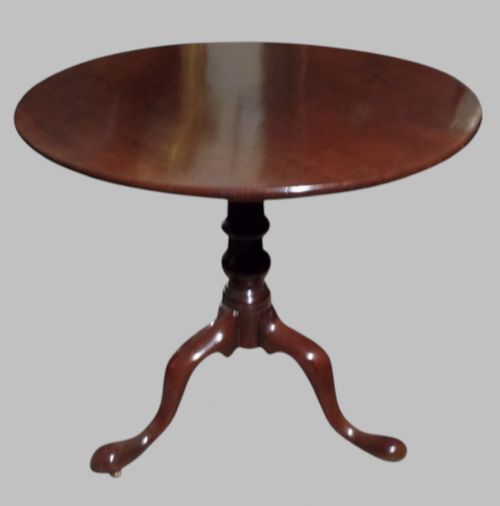
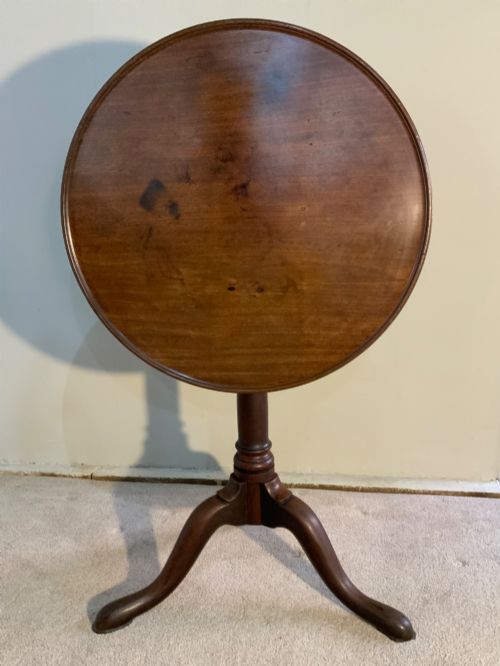



Antique Pedestal Supper Table
An antique pedestal supper table serves as a sturdy, adaptable dining and social surface designed to tip upright when space is needed.
Antique Pedestal Supper Table
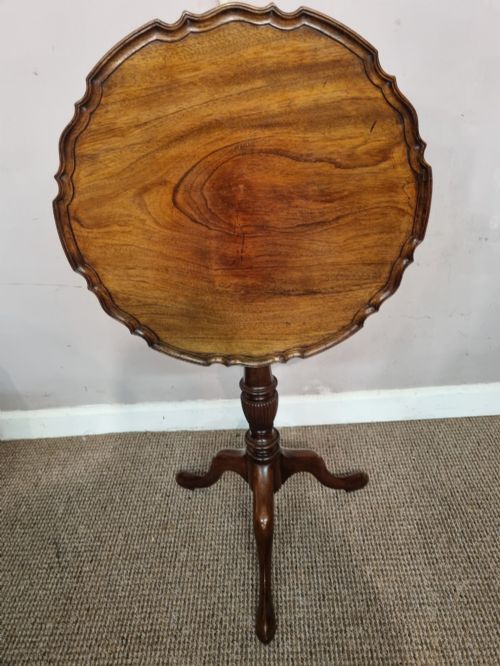
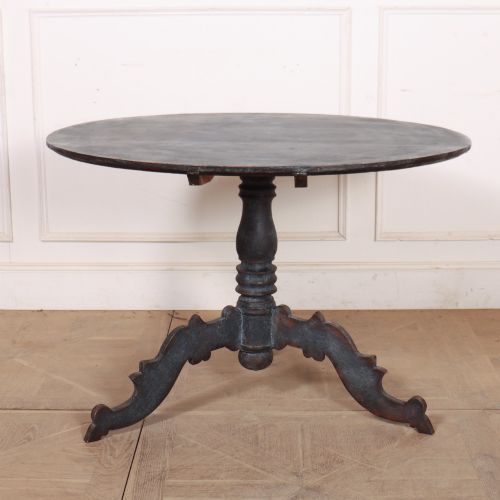
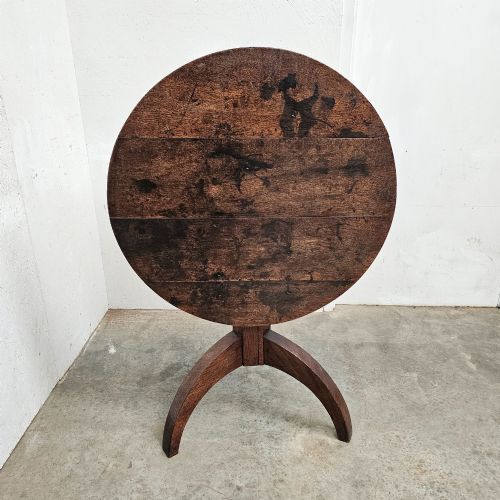
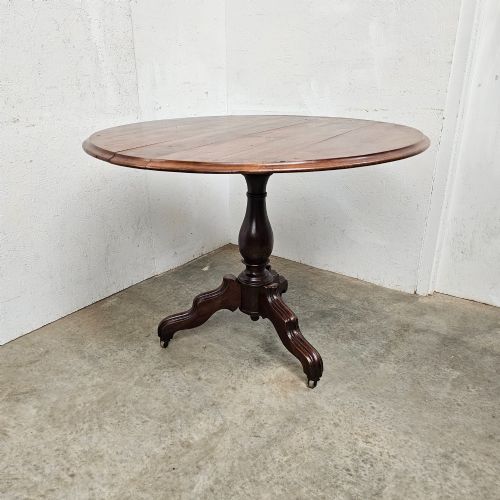
The search for an antique pedestal supper table leads to a diverse selection of occasional, dining, and tilt-top tables spanning the Georgian, Regency, and Victorian periods. Most pieces encountered on this page originate from the eighteenth and nineteenth centuries, taking the form of tripod tables with central pillars supporting round or oval surfaces.
Makers and workshops constructed these tables primarily in mahogany, walnut, oak, and rosewood, often utilising a birdcage mechanism or a tilting mechanism to fold the top flat against the pedestal. Alongside formal English examples in Cuban mahogany and satinwood, the inventory includes country variants in painted pine and Scottish oak.
These tables functioned historically for evening meals, parlour drinking, and card games before being tipped aside to clear the chamber. Buyers today select them for compact dining spaces, hallways, and drawing rooms where flexibility and historical character matter equally.
How They Were Made
Cabinetmakers built these tables using dense timbers such as mahogany, walnut, and oak, frequently selecting figured Cuban mahogany or contrasting satinwood veneers for prominent display surfaces. Turning lathes shaped the central pedestals and slender tripod legs, while hand-saws formed the circular and pie crust edges of the tops.
Joinery relied heavily on pegged tenons, dovetails, and iron or brass box fittings to secure the pivoting mechanisms that allowed the tops to tilt. Surfaces received hand-rubbed finishes with oil, wax, or shellac to bring out the natural grain and rich patina of the wood.
Some nineteenth-century supper tables were designed to double as makeshift shields if an overly enthusiastic guest argued too fiercely about politics.
What Varies in Quality
The standard of a pedestal supper table rests upon the choice of timber and the crispness of the carving on the pedestal and tripod feet. Superior examples display highly figured mahogany grain, well-proportioned birdcage mechanisms, and original brass catches that hold the top firmly in place.
Construction rigidity dictates everyday utility, as finer tables maintain a stable stance on three legs without wobble in the central pillar block. The survival of an original, rich patina accumulated over centuries separates ordinary workshop output from exceptional cabinetwork.
James Mein·John Bivins
The Antique Pedestal Supper Table Glossary
- Tilt-top table
- A table with a hinged top that rotates to a vertical position when not in use. This clever mechanism allows the piece to be stored flat against a wall.
- Tripod table
- A small freestanding table supported by a central pillar resting on three spreading legs. These legs frequently terminate in pad, spade, or claw feet.
- Birdcage
- A revolving wooden framework fitted beneath the tabletop that allows the surface to both pivot and rotate. It represents a mark of superior eighteenth-century cabinetmaking.
- Pie crust edge
- A raised, decorative edge carved and moulded into undulating curves resembling pastry work. Artisans shaped this intricate border directly from the solid wood of the tabletop.
- Patina
- The deep sheen and surface character acquired by wood over decades of handling, polishing, and ageing. Collectors prize an undisturbed original patina for its warmth and historical honesty.
Antique Pedestal Supper Table: Frequently Asked Questions
What is an antique pedestal supper table?
An antique pedestal supper table is a freestanding dining or occasional piece featuring a central column supported by three legs. The wooden top is typically hinged to tilt upright when not in use.
These tables date primarily from the Georgian, Regency, and Victorian eras, serving originally for evening meals and social gatherings in private homes.
How do you use a tilt top table?
To use a tilt top table, release the brass or wooden catch beneath the surface and pivot the tabletop from horizontal to vertical. This allows the table to stand flat against a wall and save floor space.
When returning the top to the horizontal position, secure the locking latch firmly before placing any items on the surface.
What is a birdcage mechanism?
A birdcage is a rotating wooden frame fitted between the tabletop and the central pedestal. It allows the top to spin horizontally as well as tilt vertically.
Cabinetmakers incorporated this complex feature into finer eighteenth-century tripod tables to improve versatility and ease of movement.
How do I care for antique mahogany?
Care for antique mahogany by keeping it away from direct sunlight, heat sources, and damp conditions that can warp timber or fade polish. Dust regularly with a soft, dry cloth.
Apply a traditional bees-wax periodically to nourish the wood and maintain the natural lustre without building up heavy chemical layers.