

Antique Pedestal Nightstand
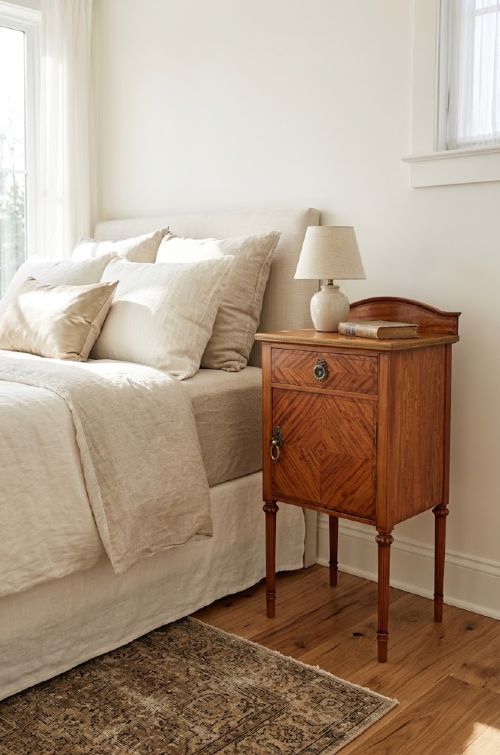
An antique pedestal nightstand provides bedside storage and surface space, bringing period character and practical function to a bedroom.
Antique Pedestal Nightstand
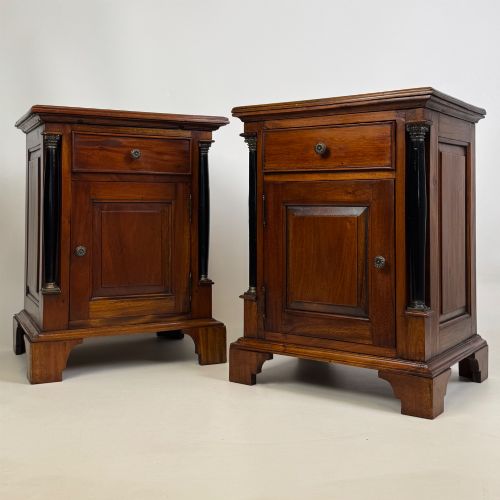
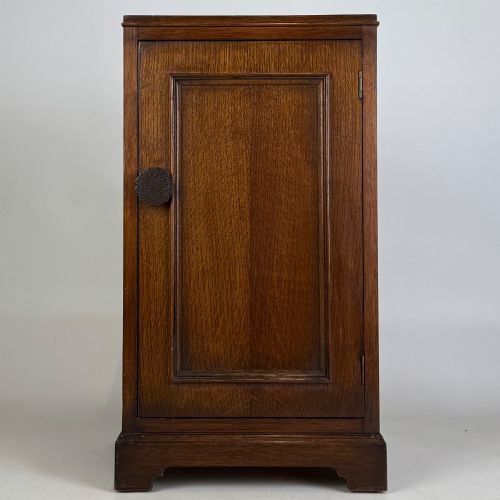
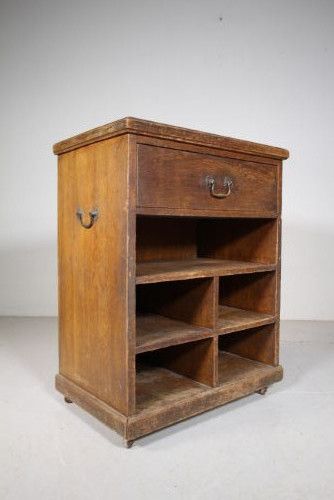
When you search for an antique pedestal nightstand, you are looking at closed storage units and small cupboards designed to sit beside a bed. The pieces appearing here span the nineteenth and early twentieth centuries, alongside earlier Georgian forms and later Art Deco designs.
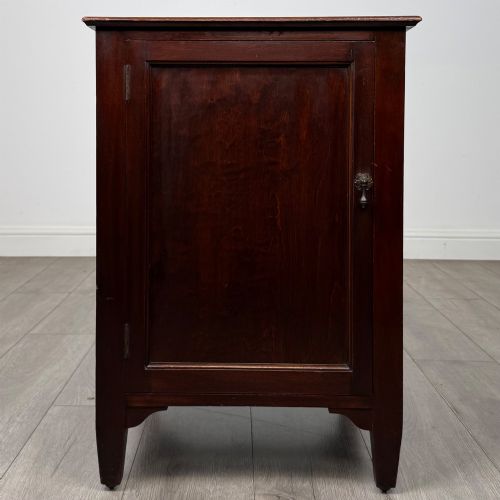
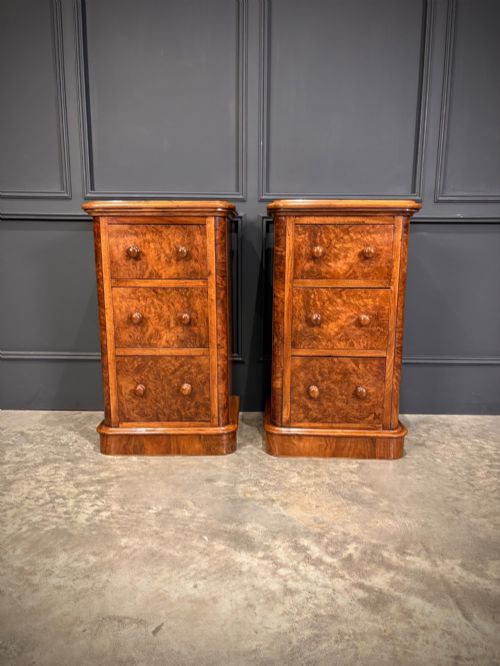
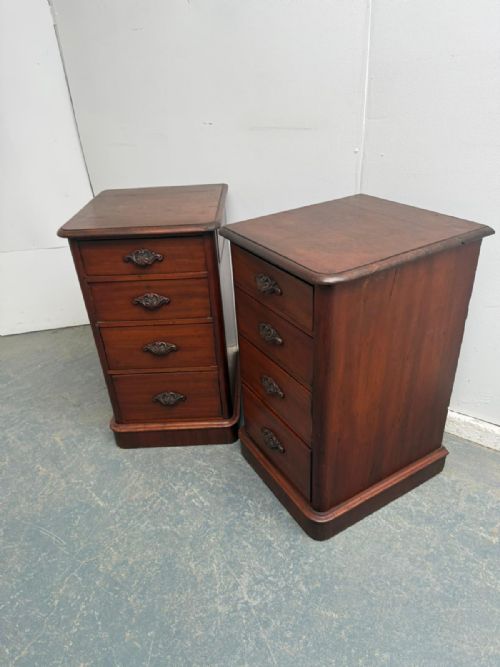
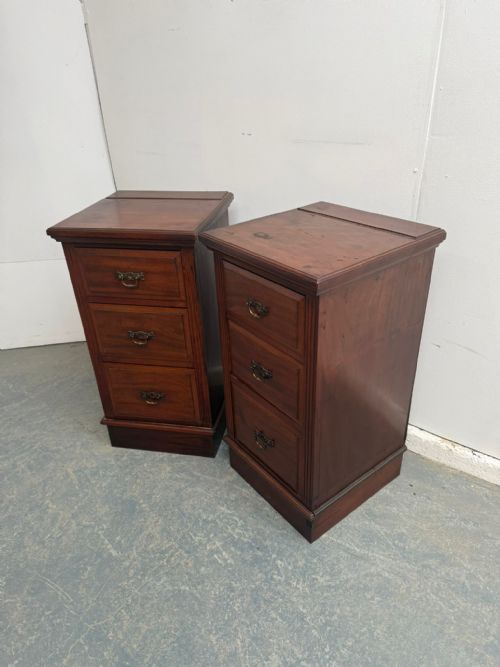
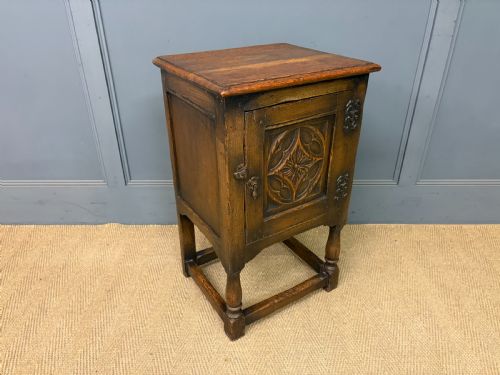
The most common versions on this page are mahogany or walnut bedside cabinets and cupboards originating from the Victorian and Edwardian eras. These forms often feature a single door enclosing a shelf or a stack of small drawers.
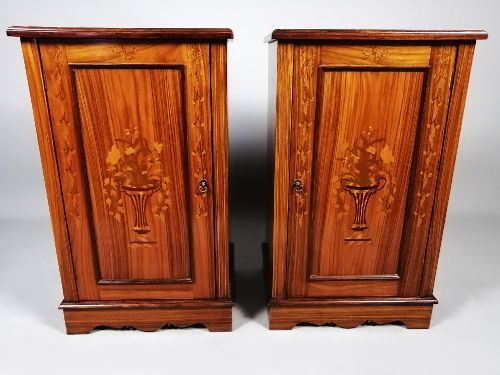
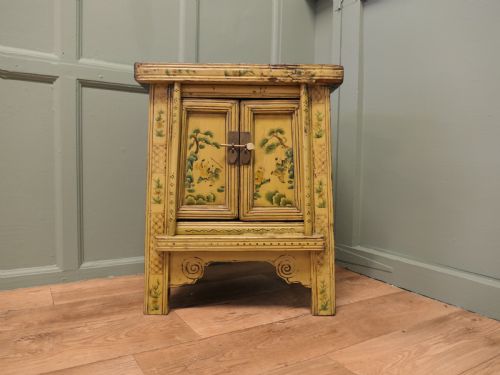
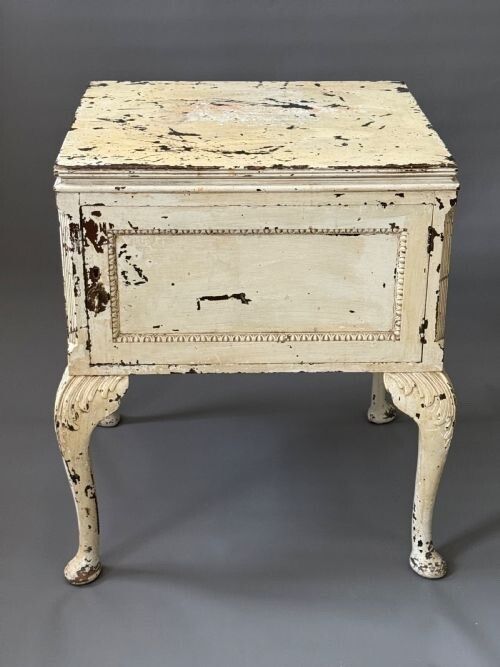
Beyond standard British styles, the selection includes pieces with specific regional or decorative traits, such as French inlaid cabinets, Italian neoclassical walnut commodinos, and cream chinoiserie decorated items. Occasional tables and side tables also appear where their proportions suit a bedside setting.
Materials and construction
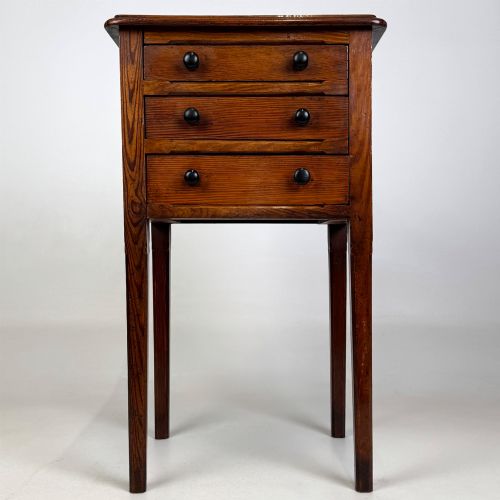
Cabinetmakers utilised dense timbers such as mahogany, walnut, and burr walnut for their durability and rich grain patterns, frequently pairing them with lighter decorative woods like satinwood. Oak and pitch pine also form the structure of many nineteenth and early twentieth century examples.
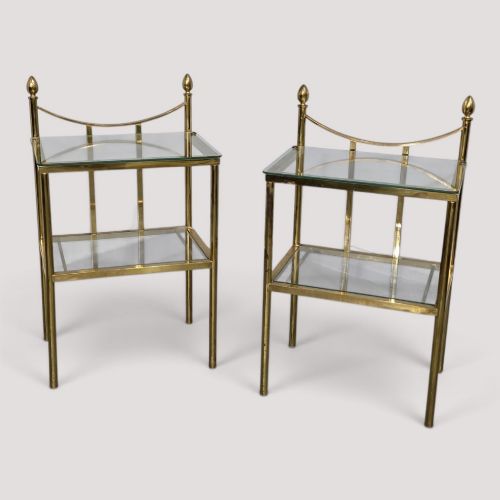
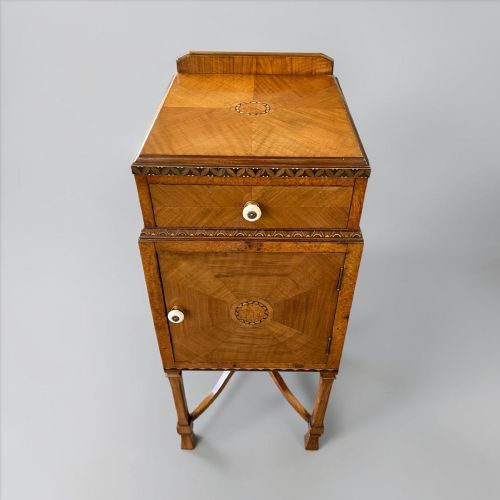
Surface decoration relies on traditional woodworking techniques including inlaid marquetry, mother of pearl inlay, and painted finishes. Selected pieces incorporate marble tops or brass hardware to add contrast and utility to the wooden structure.
Some nineteenth-century cabinets held chamber pots before plumbing arrived, meaning your bedside table might have once kept entirely different company.
Distinctions in quality
Quality rests on the selection of timber and the precision of the cabinetwork, where finely figured flame mahogany or burr walnut veneers elevate a piece above standard domestic joinery. The crispness of carved details and the accuracy of inlaid marquetry indicate the skill invested in the construction.
Proportion and structural integrity define the better examples, ensuring that doors hang true, drawers operate smoothly, and the piece maintains its stability over decades of daily use. Maker attribution or stamps from notable firms further distinguish exceptional pieces within the range.
Walter Carter Harrods·Morant And Co·Holland And Sons
The Antique Pedestal Nightstand Glossary
- Bedside cabinet
- A small enclosed piece of furniture designed to hold night-time essentials behind a door. These units keep surfaces tidy by concealing storage out of sight.
- Marquetry
- The art of applying decorative veneer pieces to a structure to form intricate patterns or pictures. This technique often employs contrasting woods to create detailed motifs.
- Burr walnut
- Timber taken from a growth deformation on a walnut tree, yielding swirling and intricate grain patterns. It is typically sliced into veneers for high-status cabinet work.
- Chinoiserie
- European decorative style reflecting Chinese artistic influences, frequently featuring painted motifs on a lacquered background. This finish appears on selected decorative cabinets.
- Pedestal cupboard
- A tall, narrow freestanding cabinet supported by a base or pedestal structure. These pieces maximise vertical storage within a minimal floor footprint.
Antique Pedestal Nightstand: Frequently Asked Questions
How were pedestal nightstands used originally?
These cabinets served to hold chamber pots, washbowls, or personal items before modern plumbing reached the bedroom. Later examples adapted to hold lamps, books, and night-time necessities.
Their compact footprints allowed them to fit snugly beside various bed heights while concealing private items behind closed doors.
How do I match an antique nightstand to my bed?
Focus on matching the wood tone or the historical period rather than seeking an exact replica piece. Mahogany and walnut finishes bridge different eras effectively.
Consider the height of your mattress relative to the tabletop to ensure comfortable access to lamps and books during the night.
Are these cabinets sturdy enough for daily use?
Period cabinets constructed from solid hardwoods like mahogany and oak remain robust for everyday placement. Their original purpose required them to withstand heavy daily handling.
Drawer movement and door alignment reflect the enduring stability built into traditional joinery techniques.
How do I distinguish Victorian from Edwardian pieces?
Victorian pieces tend to use darker, heavier timbers with rich polishing and occasional heavy carving. They lean towards formal presence and solid proportions.
Edwardian items often present lighter woods like satinwood and inlay work, reflecting a shift towards brighter bedroom interiors.