
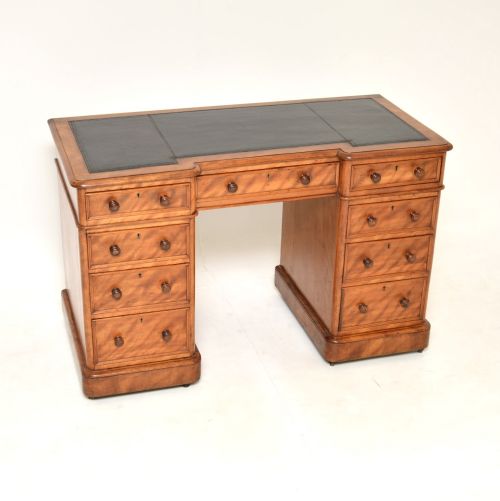
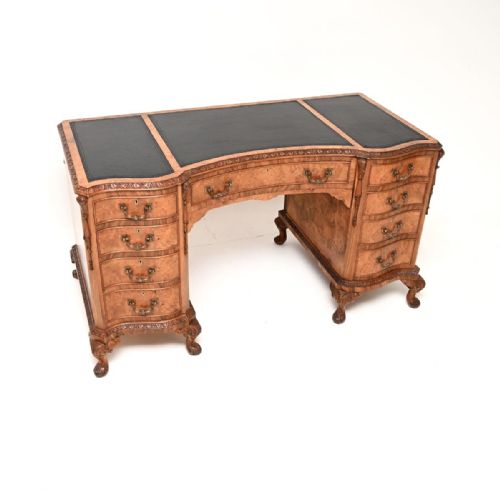
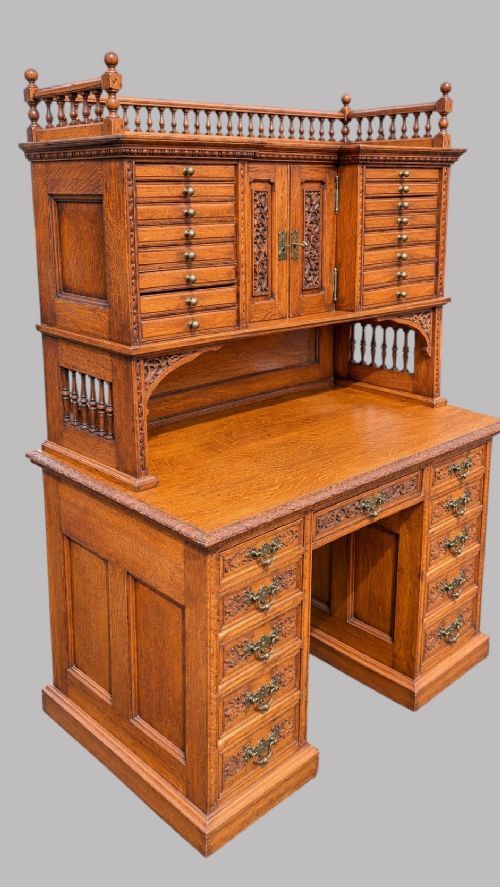
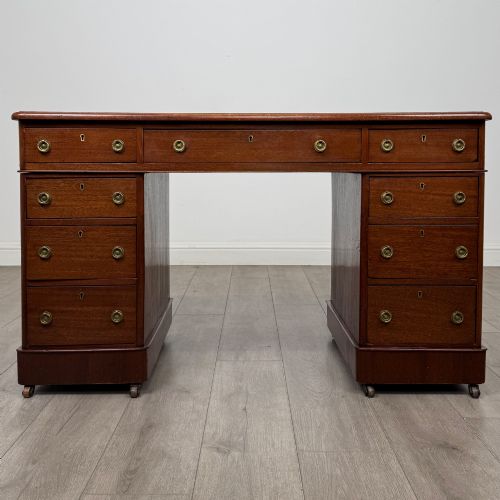
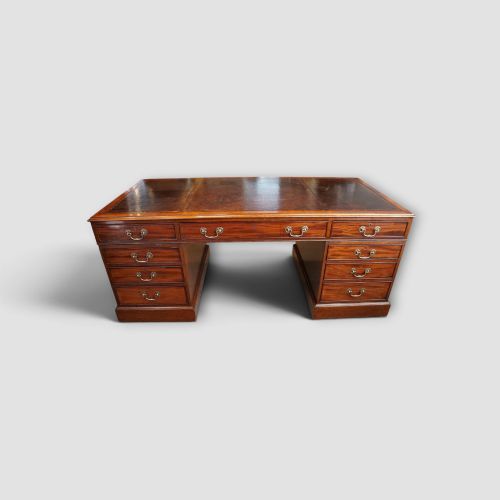
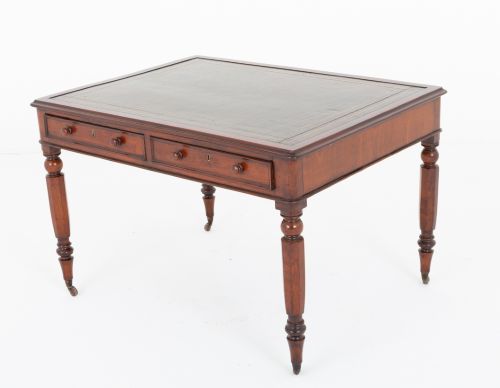
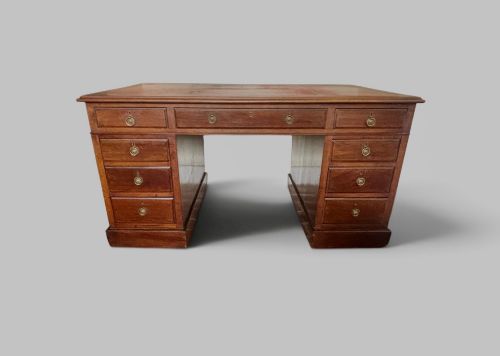


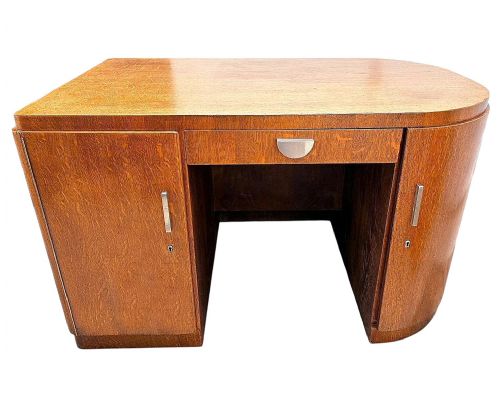
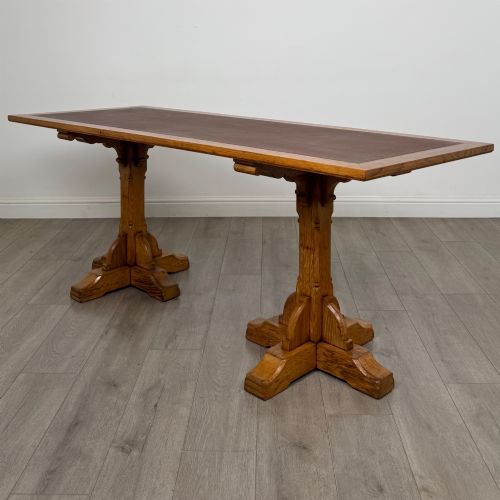
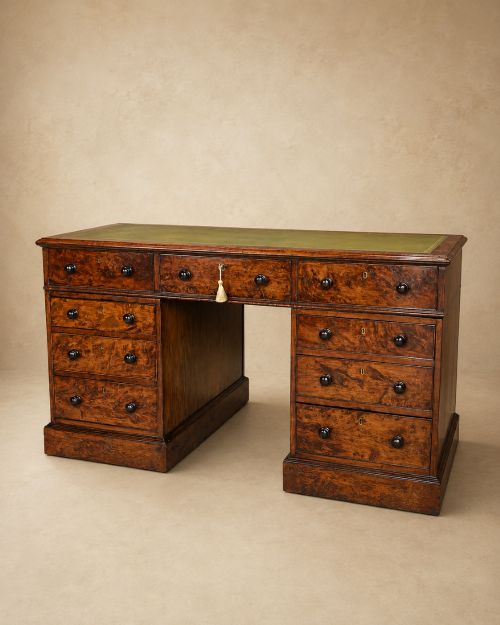
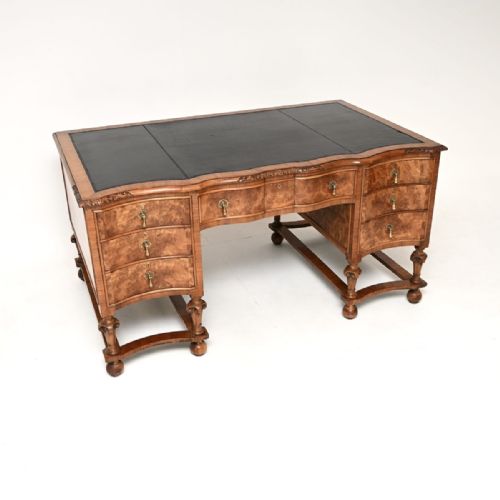
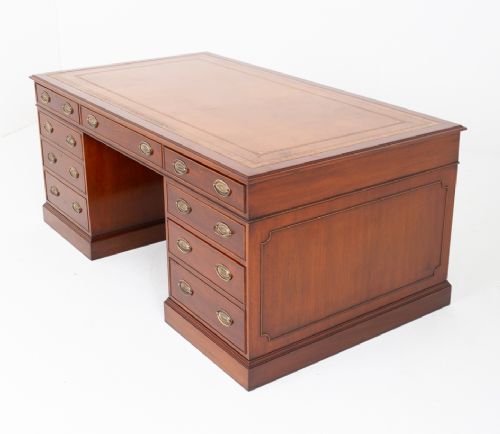
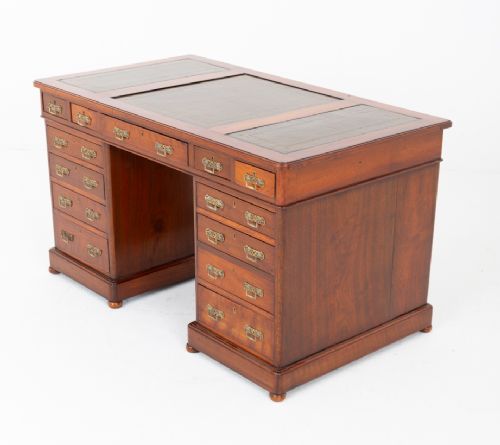
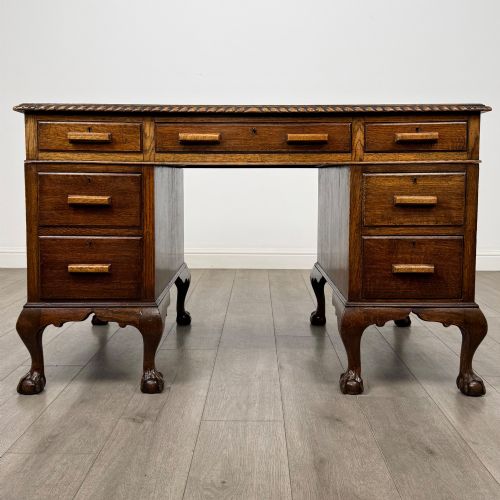
Antique Partners Table
An antique partners table is a large, double-sided desk designed for two people to work opposite each other, offering generous proportions and storage.
Antique Partners Table
An antique partners table provides symmetrical workspaces on both sides, typically fitted with banks of drawers or cupboards beneath opposing writing surfaces. These substantial pieces originate primarily from the nineteenth and early twentieth centuries, spanning the Victorian and Edwardian periods.
Materials and construction
Cabinet makers utilised dense hardwoods like mahogany, oak, and walnut for structural stability and durability, frequently applying figured veneers such as burr walnut or satinwood to primary surfaces. These timbers were joined using traditional methods to withstand daily use in libraries, studies, and offices.
Writing surfaces were typically inset with tooled leather, bordered by blind or gilt tooling, while drawers incorporated hand-cut dovetails and solid secondary woods. Brass hardware, including drop handles and locks, completed the construction.
Listings feature woods including mahogany, oak, walnut, burr walnut, ebonised wood, and satinwood across the Victorian and Edwardian periods.
Gradations of quality
Quality rests upon the selection of timber and the precision of the cabinet work, particularly the matching of veneers across large expanses and drawer fronts. Superior pieces exhibit finely figured grains, thick solid drawer linings, and intact original leather inserts.
Design sophistication also distinguishes workshop standards, seen in proportion, decorative carving, and the inclusion of functioning locks with working keys. Maker attribution further elevates a piece, reflecting elite London and provincial cabinet making.
Maple and Co·Edwards and Roberts·Trollope and Sons·Jackson and Graham·Wilkinson Bond Street
The Antique Partners Table Glossary
- Partners table
- A large double-sided desk designed for two people to work face to face, featuring drawers or cupboards accessible from both sides.
- Pedestal desk
- A form of desk comprising two freestanding pedestals of drawers supporting a single top writing surface.
- Library table
- A large freestanding table used for reading and writing, generally possessing a rectangular top over a frieze with drawers.
- Dovetail
- A traditional wood joint formed by interlocking wedge-shaped fingers, prized for its tensile strength in drawer construction.
- Ebonised wood
- Timber treated with a dark finish to imitate expensive ebony, popular during the Victorian period.
- Frieze
- The horizontal band situated directly beneath the top surface of a table or desk, often containing integrated drawers.
Antique Partners Table: Frequently Asked Questions
How do I use a partners table today?
These tables function well as large central desks in studies or home offices, allowing two people to work comfortably opposite each other with ample knee clearance.
Alternatively, their finished backs and substantial proportions make them effective as freestanding console tables or conference desks in open living spaces.
Were partners tables only made for offices?
While commercial and banking spaces utilised them, the primary patrons were wealthy households, country estates, and institutional libraries.
They served senior family members, bankers, and professionals who required a prestigious, dual-aspect workspace for administrative duties.
How do I distinguish Victorian from Edwardian examples?
Victorian pieces often display heavier mahogany or oak construction with deeper mouldings, richer timber patination, and ornate brass or gilt hardware.
Edwardian versions can present lighter satinwood or oak timbers, sometimes reflecting revivalist movements like Chippendale or Queen Anne with cleaner, restrained lines.
Can I replace the leather writing surface?
Many surviving examples retain their original leather, but replacement is common when the material has suffered heavy wear or tearing over generations of use.
Traditional replacements utilise dyed leather finished with gold-tooled borders to match the period style of the desk.