
Antique Parquetry Desk
An antique parquetry desk brings geometric wood veneers and gilt mounts together into a striking workspace rooted in nineteenth-century French and English design.
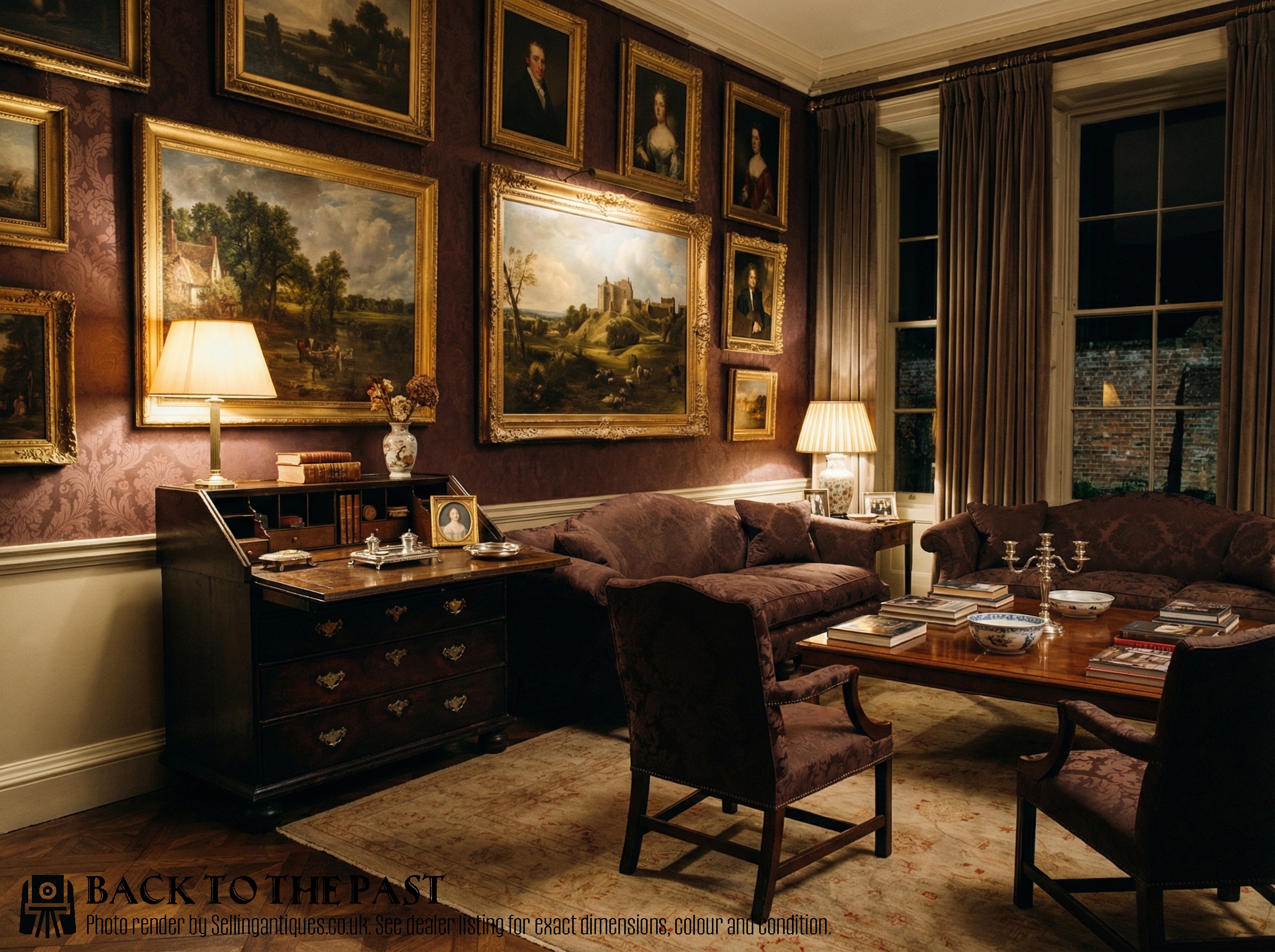
Antique Parquetry Desk
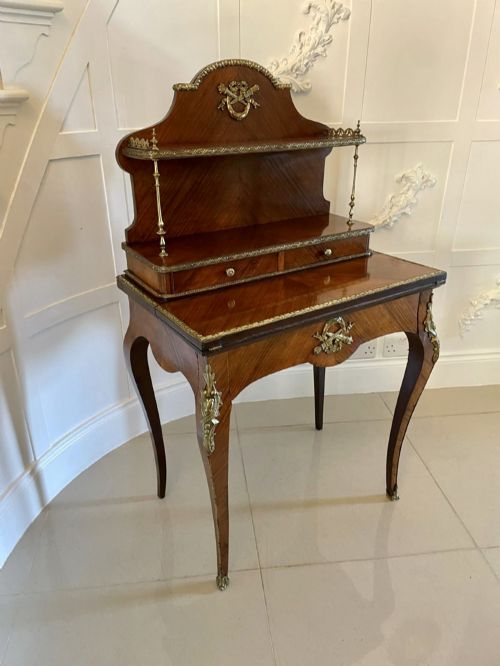
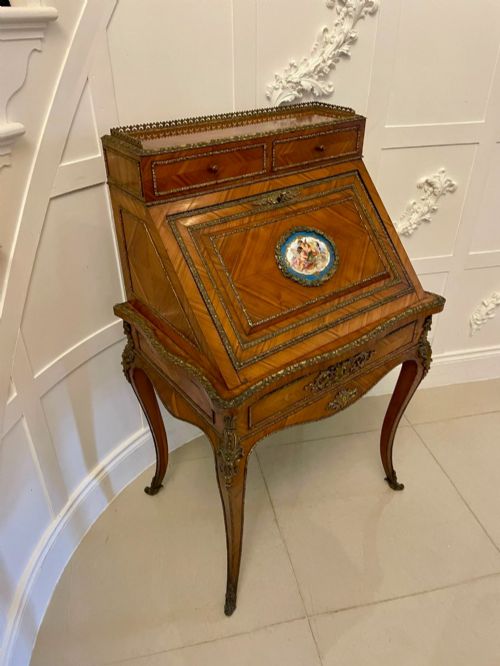
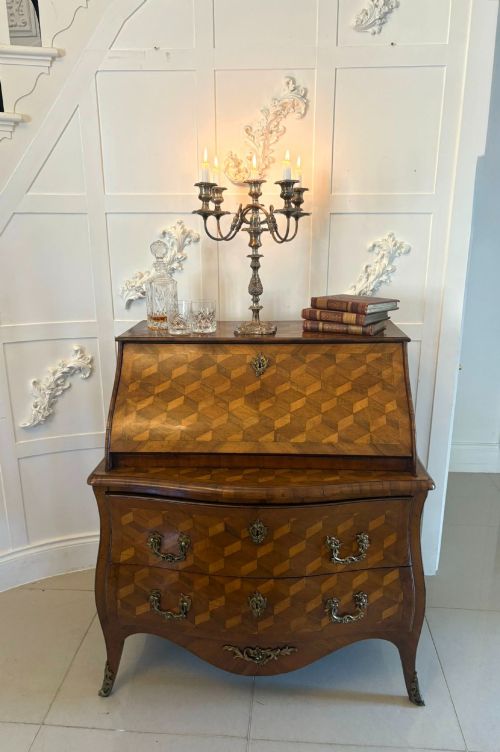
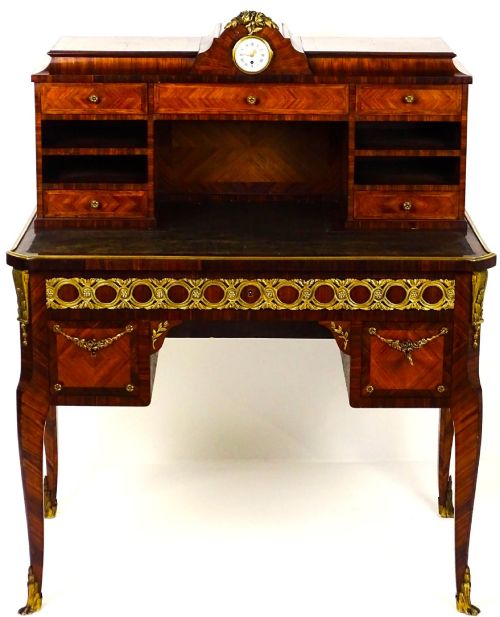
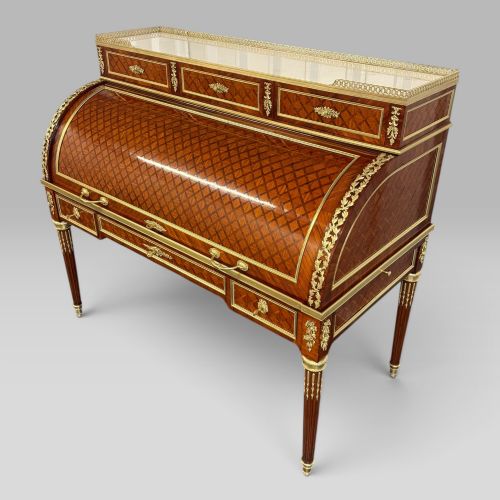
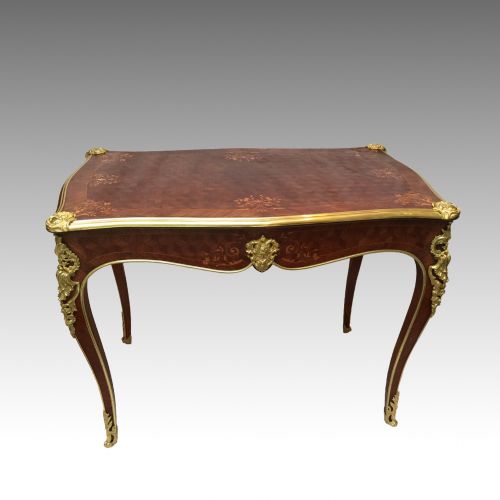
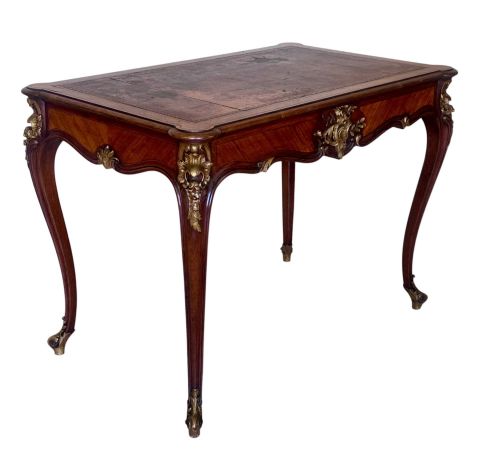
An antique parquetry desk spans formats from the bureau plat and cylinder desk to the compact bonheur du jour, mostly originating in the nineteenth century with notable eighteenth-century antecedents. These pieces reflect revivalist tastes, particularly Louis XV and Louis XVI styles, where patterned wood veneers define the writing surface.
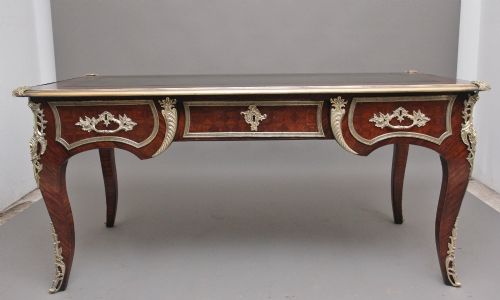
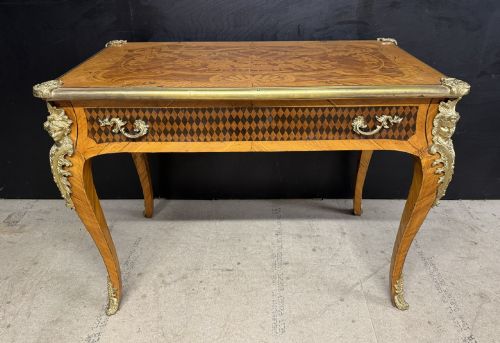
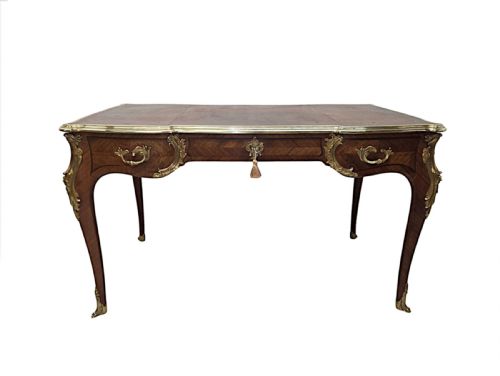
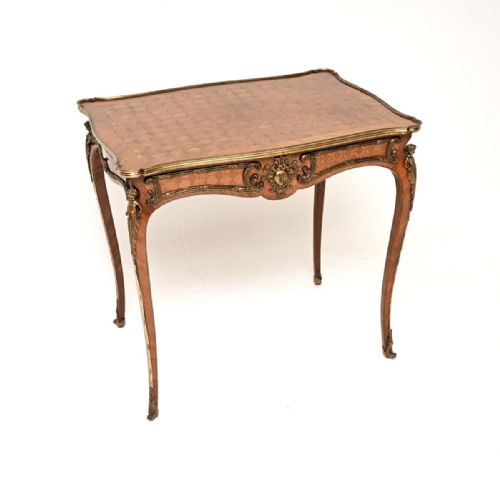
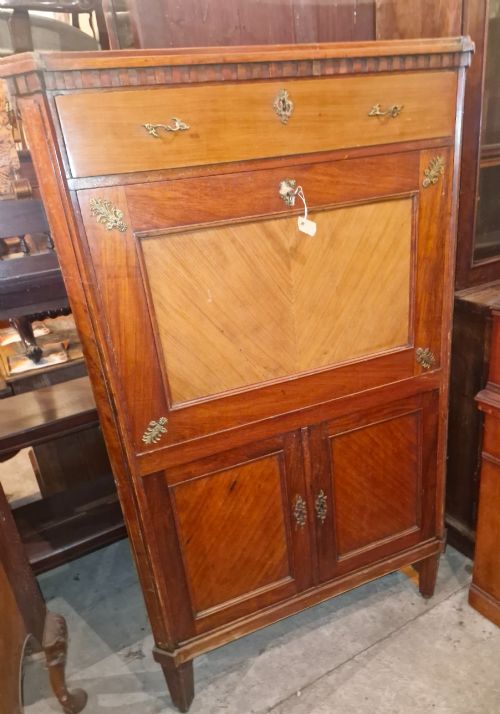
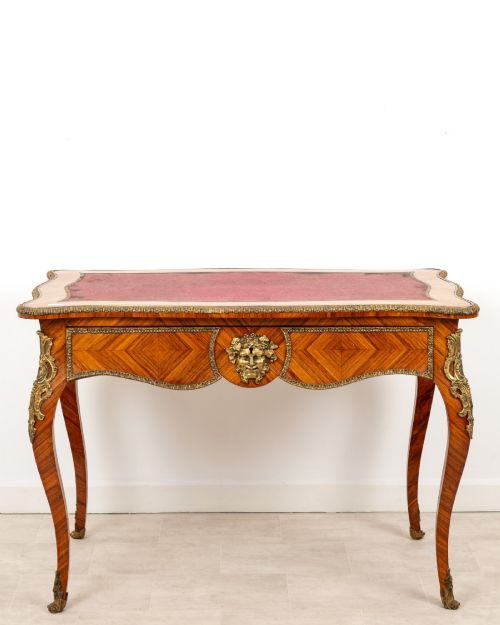
The version most commonly met on this page is the French bureau plat, often mounted in ormolu and veneered in kingwood or walnut. Alongside these writing tables appear drop-front secretaires and kidney-shaped ladies writing desks, showing the varied domestic roles these surfaces fulfilled.
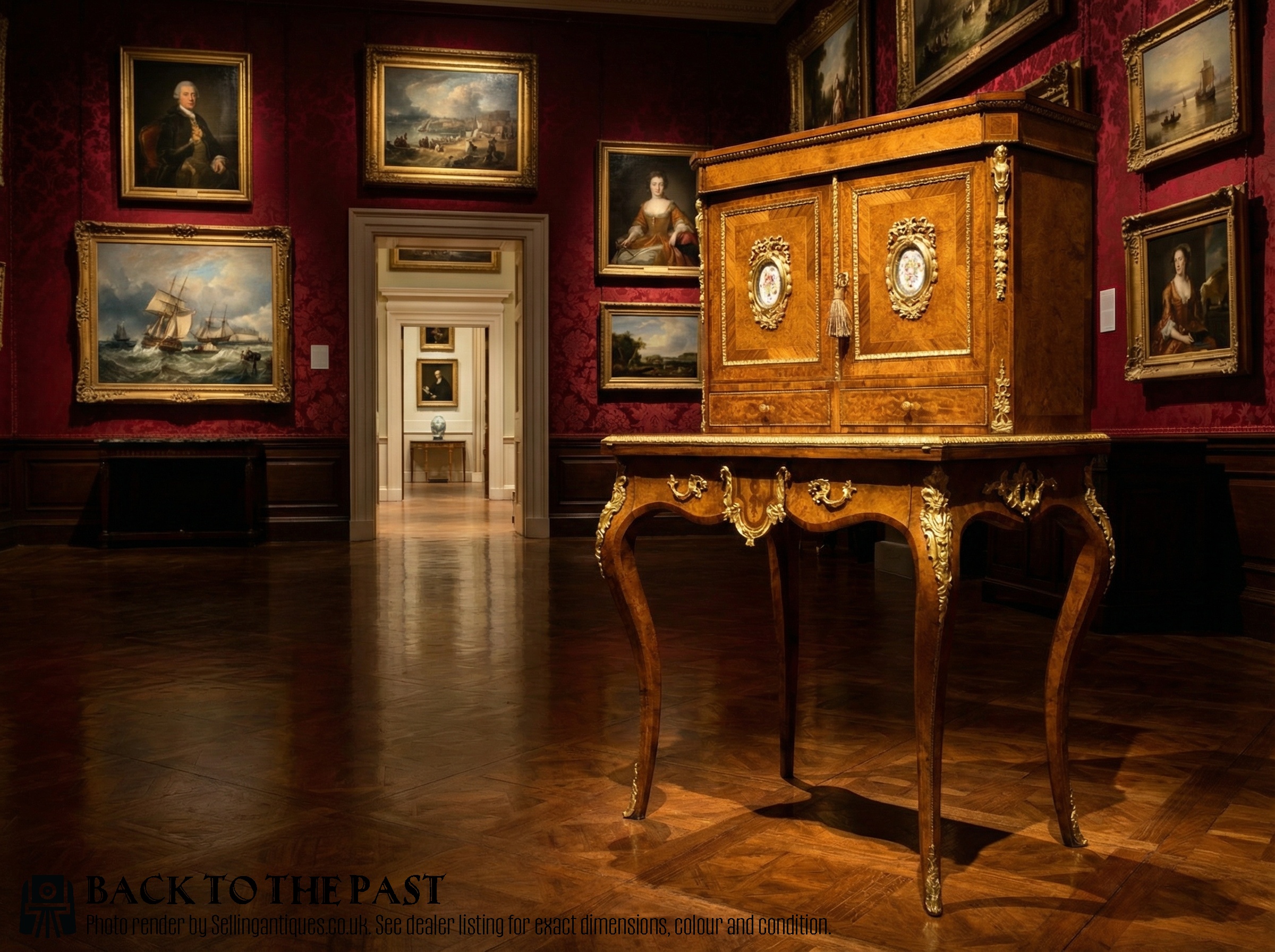
Materials and technique
Cabinetmakers constructed these desks using fine hardwoods such as kingwood, tulipwood, rosewood, and walnut as veneers, laid onto firmer structural timbers in precise geometric parquetry patterns. This geometric arrangement contrasts with floral marquetry, relying strictly on angled wood grain to build visual depth across the writing plane.
Mounts of cast ormolu, gilt bronze, and brass edge drawers, corners, and aprons, while fitted interiors often incorporate tooled leather writing inserts. The combination of contrasting timber tones and chased metal mounts demands precise joinery to ensure flush surfaces where wood meets metal.
Antique Parquetry Desk Retail Price Guide 2026
Typical asking prices for parquetry desk among the pieces listed under this phrase on Sellingantiques today, from the lower quarter to the upper quarter. They describe what is for sale here now, not the wider market.
Some nineteenth-century writing desks conceal secret compartments behind dummy drawer fronts to hide personal correspondence.
Craftsmanship and execution
The division between standard output and master craftsmanship lies in the crispness of the geometric veneer work and the weight of the cast bronze mounts. Finer examples display tight, seamless joins in the parquetry grid alongside heavily chased ormolu mounts with distinct hand-finished detail.
Structural integrity also separates the tier of pieces: superior desks maintain smooth drawer action and stable carcases without veneer lifting, whereas lesser pieces show uneven shrinkage or routine cast mounts lacking definition.
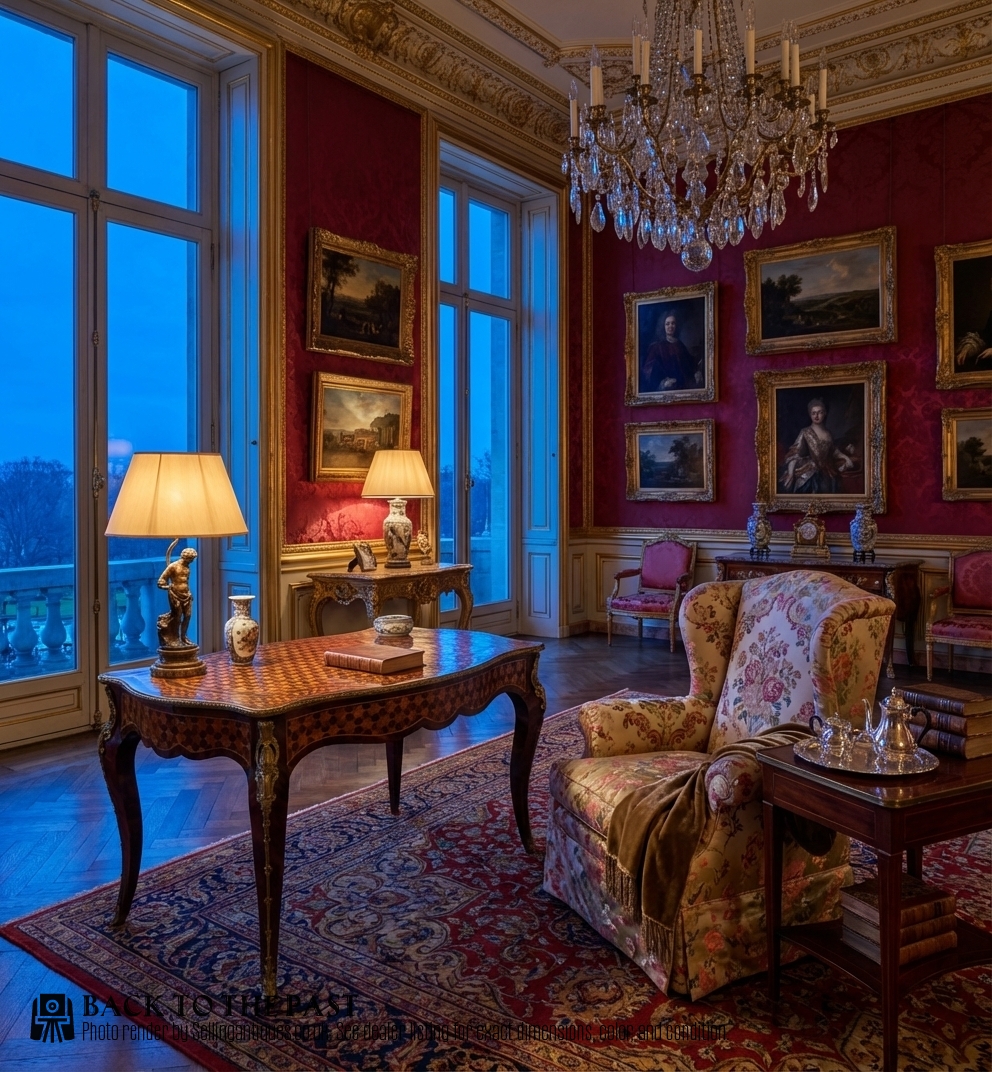
JAS Shoolbred·Paul Sormani·CH. Jeanselme & Co·François Linke·Blake
The Antique Parquetry Desk Glossary
- Parquetry
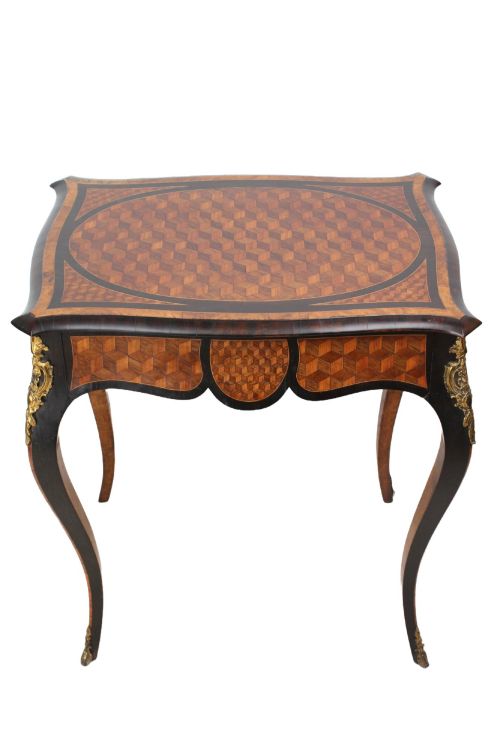
- Geometric mosaic woodwork formed by small pieces of veneer arranged in patterns such as cubes or chequers. This technique differs from marquetry by using straight-lined geometry rather than pictorial curves.
- Bureau Plat
- A freestanding double-sided writing table fitted with drawers across the frieze. It usually stands on cabriole or tapered legs and forms the predominant desk type in nineteenth-century French revival pieces.
- Ormolu
- Gilt bronze applied to furniture mounts, feet, and keyhole escutcheons. The process involves coating cast bronze in a gold amalgam and firing it to achieve a durable golden finish.
- Kingwood
- A dense, heavily figured South American timber featuring dark violet and brown tones. It serves as a primary veneer wood for high-status European desks.
- Bonheur du Jour
- A light lady's writing desk featuring a small cabinet or shelving superstructure above the main writing surface. It typically stands on slender legs and dates widely to the mid-nineteenth century.
Antique Parquetry Desk: Frequently Asked Questions
How do you use a bureau plat?
A bureau plat functions as a freestanding centre desk, traditionally placed in the middle of a room rather than against a wall. Its finished back and double-sided drawer configuration allow access from multiple positions.
In modern interiors, it serves as a functional writing desk or display table where the patterned wood top remains visible.
How do I identify Louis XV style desks?
Louis XV style desks are identified by their flowing serpentine outlines, cabriole legs, and prominent ormolu mounts framing the corners and aprons. The parquetry layout on these pieces often follows the contour of the curved carcase.
By contrast, Louis XVI revival desks exhibit straight tapered fluted legs and symmetrical rectangular proportions with neoclassical bronze mounts.
What is the difference between parquetry and marquetry?
Parquetry consists strictly of geometric wood veneers arranged in repeating patterns like cubes, triangles, or lozenges. It relies on the natural grain direction of contrasting timbers to create visual rhythm.
Marquetry, however, employs curved pictorial veneers to picture flowers, landscapes, or urns, forming a distinct artistic composition rather than an abstract grid.