


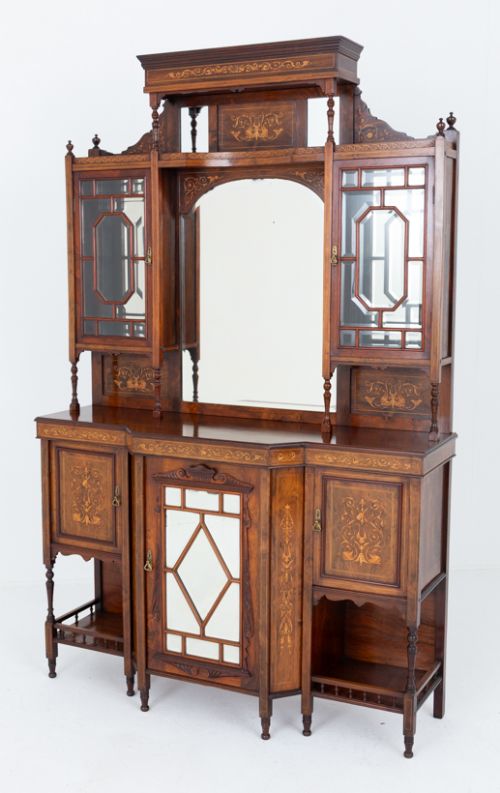

Antique Parlour Credenza
An antique parlour credenza is a statement low-profile display cabinet that anchors a formal reception room with timber richness and glass presentation.
Antique Parlour Credenza
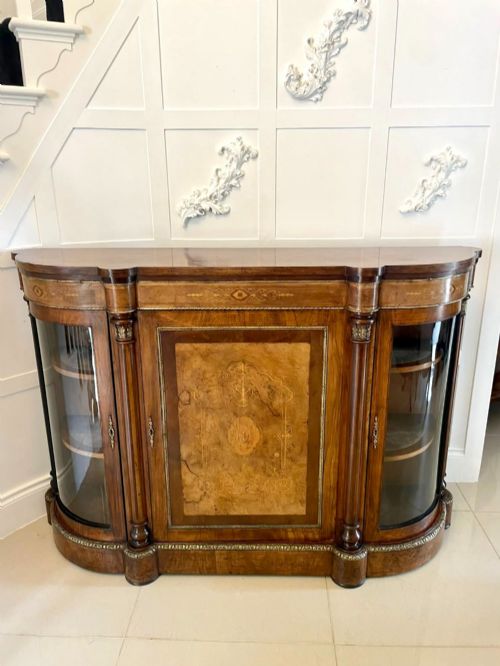
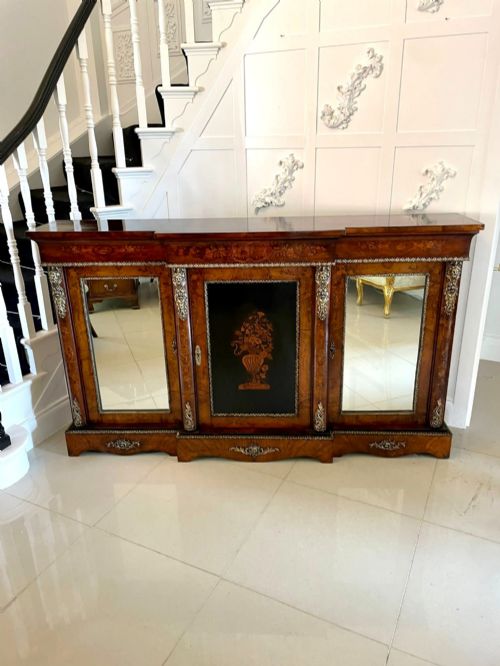
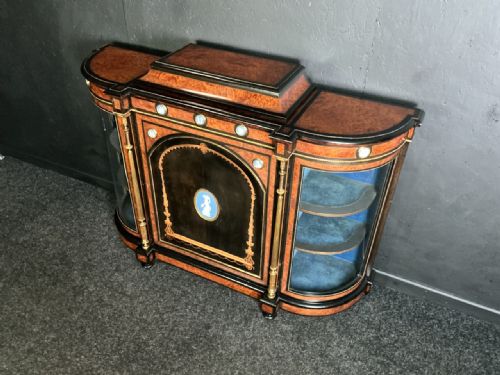
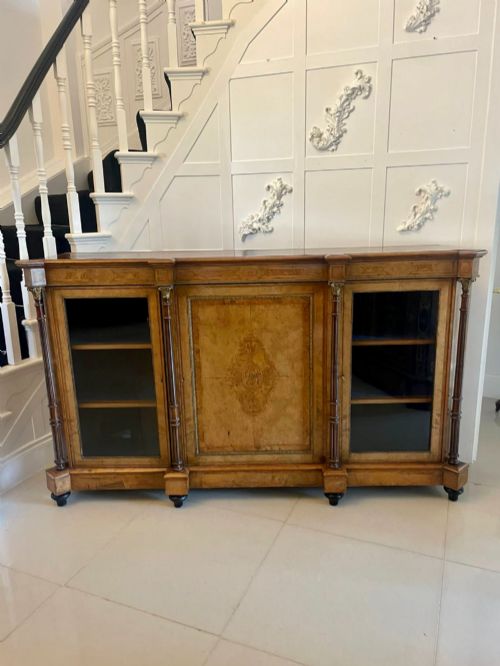
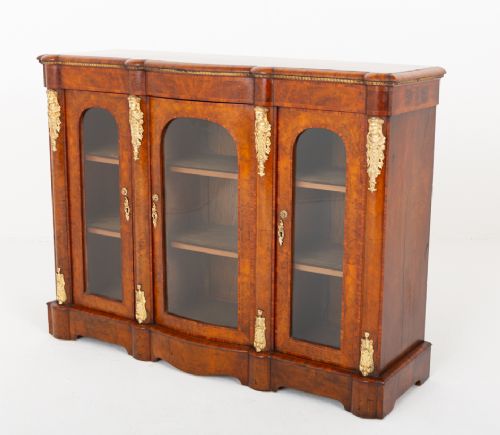
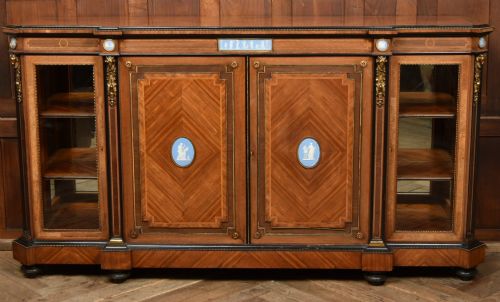
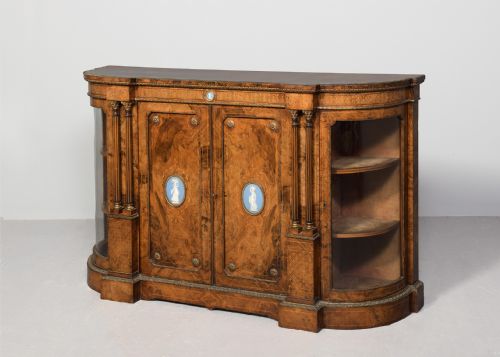
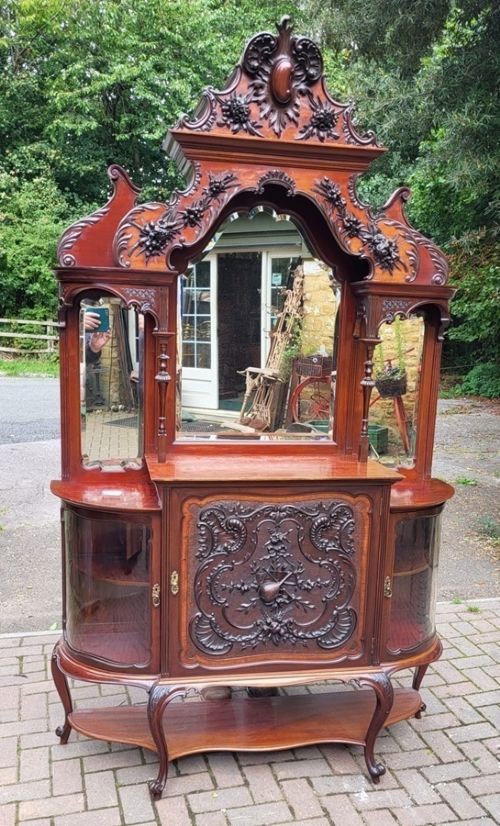
An antique parlour credenza takes the form of a low cabinet designed for the principal reception rooms of the nineteenth century, most commonly meeting the eye in Victorian burr walnut, rosewood or mahogany. These pieces span from mid-century iterations through to late Victorian and Edwardian revivals, often incorporating curved glass end cupboards flanking a central door.
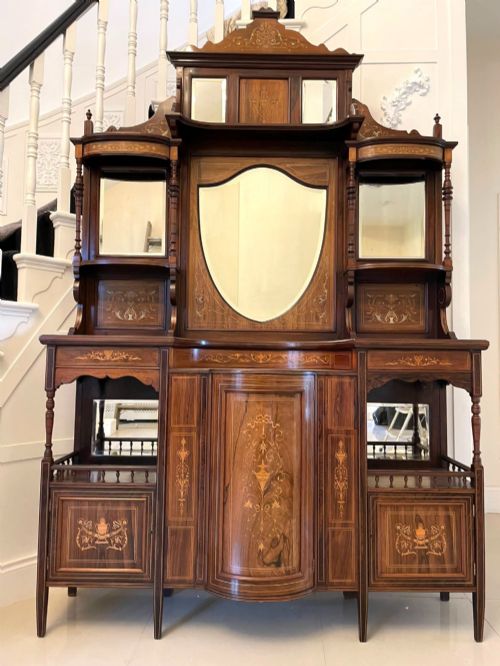
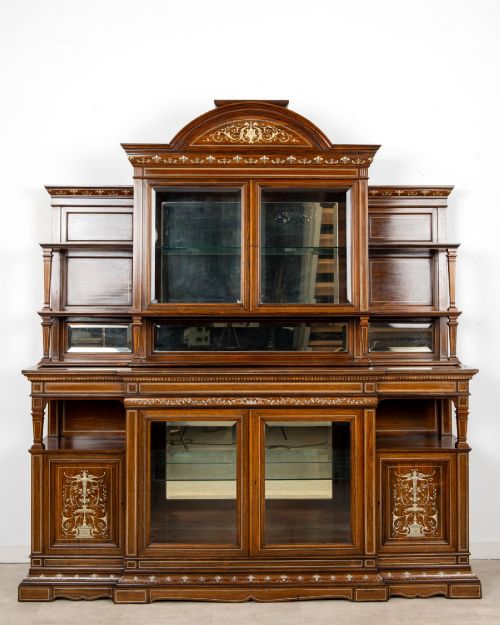
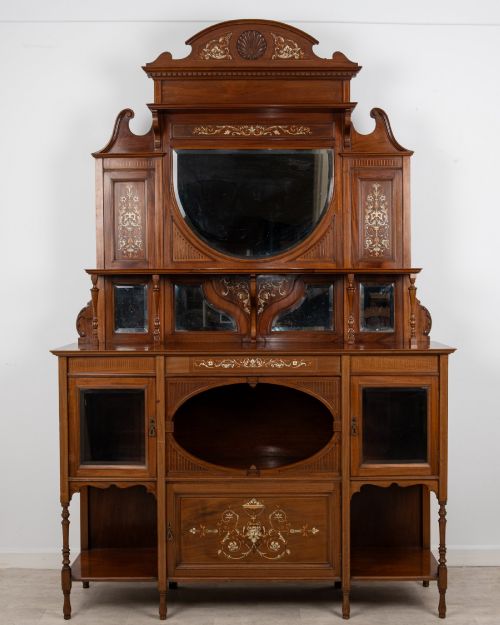
The material vocabulary relies heavily on figured burr walnut and dark rosewood, frequently accented with marquetry inlay and gilt bronze mounts. Makers adapted French Louis styles alongside Sheraton revivals and the linear geometry of the Aesthetic Movement to suit domestic parlours.
Materials and Technique
Cabinetmakers constructed these frames using solid mahogany or pine carcases overlaid with highly figured burr walnut or rosewood veneers, selected for striking grain patterns. Complex curves, particularly in bow-front and serpentine examples, required advanced timber-bending techniques and precise hand-fitting of curved door frames.
Surface ornamentation combined delicate floral marquetry with cast ormolu mounts, brass stringing and occasionally hand-painted Vernis Martin panels. Interior spaces frequently integrated mirrored backs, velvet-lined shelving and specialised components such as fitted secretaire drawers.
Listings feature credenzas utilising burr walnut, rosewood, mahogany and ebonised timber across Victorian, Edwardian and Aesthetic Movement styles.
Quality and Construction
Distinction across the range rests upon the depth of timber figure, the precision of the marquetry and the architectural ambition of the overall silhouette. Pieces marked as exhibition quality demonstrate superior joinery, heavier ormolu mounts and crisper hand-carved details.
The integrity of the curved glass panels and the weight of the underlying carcase timber separate standard production items from workshop pieces bearing attribution to notable makers.
Collinson & Lock·Garnett & Sons
The Antique Parlour Credenza Glossary
- Credenza
- A low dining or parlour cabinet designed for display and storage, typically featuring a central cupboard flanked by glass-fronted side cabinets.
- Marquetry
- The art of applying decorative veneer pieces of different woods, metals or shells to a structural panel to form geometric or floral designs.
- Ormolu
- Gilded bronze mounts and decorative furniture details cast and chased by hand, common on mid-nineteenth century revival pieces.
- Burr Walnut
- Timber taken from the gnarled growth of a walnut tree, prized for its swirling, highly figured grain patterns on cabinet doors.
- Aesthetic Movement
- A late nineteenth-century design style emphasising artistic expression, ebonised finishes and Japanese-inspired decorative motifs.
Antique Parlour Credenza: Frequently Asked Questions
Where were parlour credenzas placed?
These low cabinets sat against the primary walls of formal Victorian reception rooms and drawing rooms, positioned to catch the light and display porcelain or glassware.
Their low profile ensured they did not obscure wall art or tall mirrors mounted above mantelpieces.
How do I distinguish walnut from rosewood?
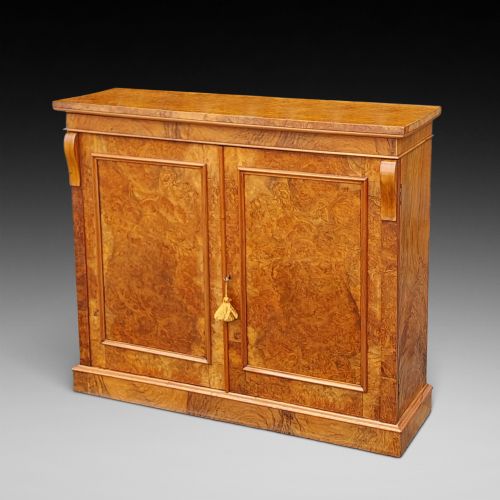
Burr walnut displays warm golden-brown tones with characteristic swirling knots and circular grain patterns across the primary surfaces.
Rosewood presents a much darker, heavier appearance with reddish-brown depth and distinct dark linear graining.
What is an Aesthetic Movement credenza?
This variation reflects late nineteenth-century reform design, utilising ebonised timber finishes and understated linear details rather than heavy gilt mounts.
Such pieces often incorporate stylized botanical inlays and brass hardware inspired by Anglo-Japanese design principles.
Did these cabinets always have glass doors?
Many examples feature curved or flat glass side compartments designed to showcase decorative objects, while the central section retains a solid timber door.
Fully solid wood side cabinets and chiffoniers served similar domestic functions without the display capability.