


Antique Paper Storage Unit
These antique paper storage units range from Edwardian oak tambour cabinets to French cartonnier filing systems, offering practical organisation with distinct period character.
Antique Paper Storage Unit
An antique paper storage unit serves to organise documents, music sheets, and correspondence through purpose-built compartments. When searching for an antique paper storage unit, buyers encounter forms designed for home and office use, spanning the late Victorian, Edwardian, and Art Deco periods.
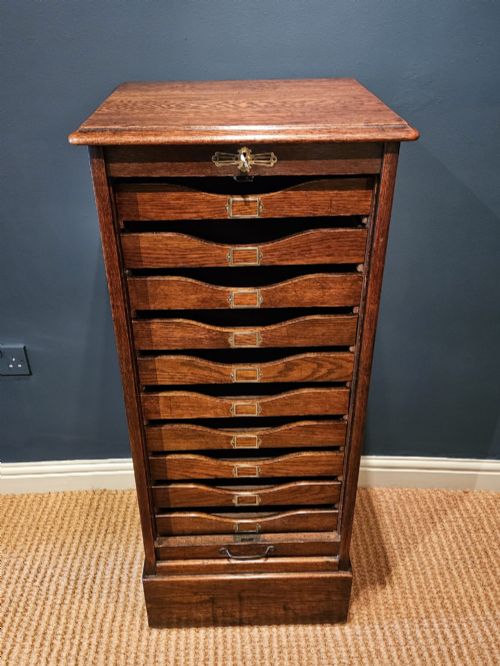
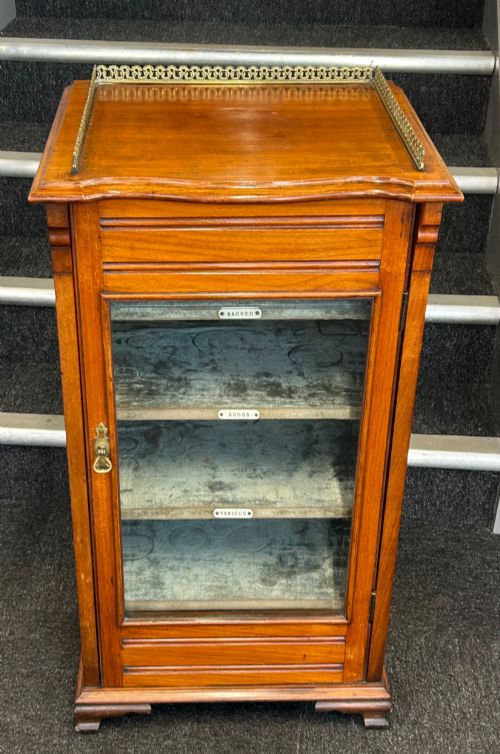
The most common examples on this page are oak tambour front filing cabinets and sheet music cabinets. These pieces utilise vertical space effectively, employing internal drawers, pigeonholes, or slatted sliding doors to keep papers sorted and accessible.
How they were made
Cabinetmakers constructed these units primarily from solid timber and veneers, favouring oak, walnut, mahogany, and rosewood. Brass hardware, such as label holders and drawer pulls, provides functional detail alongside glass and leather accents.
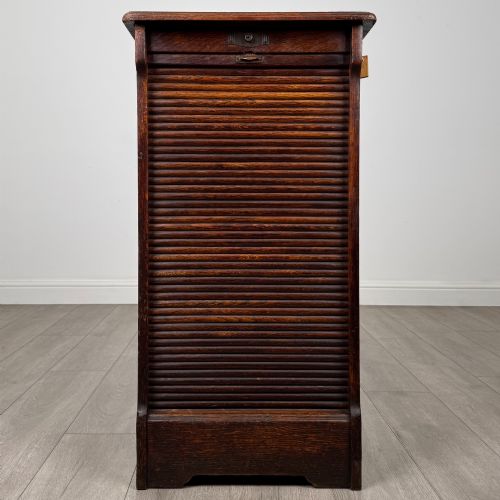
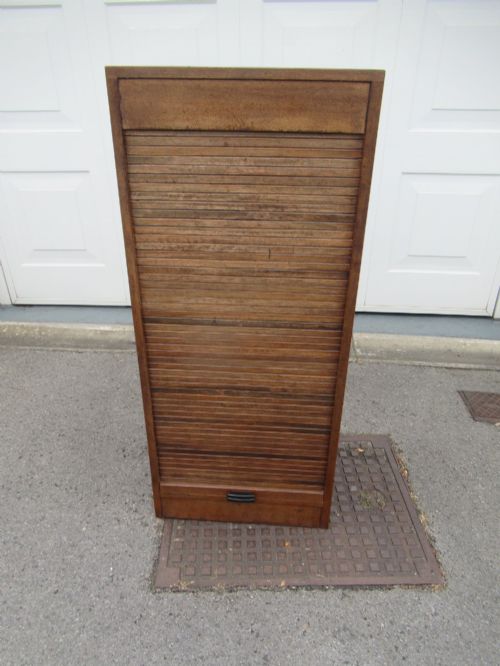
Tambour construction appears frequently, utilising narrow strips of wood glued to canvas or fabric backing to allow doors to slide smoothly around curved tracks. This technique required precise woodworking to ensure the slatted doors operate without binding.
Beech index drawers hide away tiny slips of paper intended to outlast generations of misplaced thoughts.
What varies in quality
The distinction between standard commercial office furniture and finer pieces lies in the selection of timber and the execution of mechanical details. Superior units display carefully matched wood grains on tambour fronts and drawer panels.
Mechanism fluidity separates well-made storage from lesser examples, particularly in the smooth action of slatted wooden doors and the precise fit of internal filing drawers. The integration of secondary materials like leather inserts and cast brass fittings further indicates higher manufacturing standards.
The Antique Paper Storage Unit Glossary
- Tambour
- A flexible sliding door formed of narrow wooden slats affixed to a canvas or fabric backing. This mechanism allows the door to curve around the sides of a cabinet.
- Cartonnier
- A French cabinet fitted with multiple tiers of open compartments or drop-front boxes designed for sorting papers and documents. These often feature leather-bound storage boxes.
- Music cabinet
- A specialised piece of furniture featuring shallow drawers or vertical partitions designed to hold sheet music. They date predominantly from the Victorian and Edwardian eras.
- Index filing drawers
- Modular or multi-drawer units intended for the systematic organisation of index cards or small documents. They frequently incorporate brass card holders on the drawer fronts.
Antique Paper Storage Unit: Frequently Asked Questions
How were music cabinets used?
Music cabinets were designed to store sheet music and scores neatly within domestic parlours during the Victorian and Edwardian periods.
Their shallow drawers and internal divisions prevented delicate paper items from bending or creasing over time.
What materials are common in these units?
These storage pieces are predominantly constructed from hardwoods like oak, mahogany, and walnut, complemented by brass handles and label holders.
Some examples incorporate specialist materials such as leather writing surfaces or canvas-backed wooden slats for sliding doors.
How do I identify an Edwardian filing cabinet?
Edwardian filing cabinets typically showcase quarter-sawn oak with prominent medullary rays, combined with functional brass hardware and tambour doors.
They reflect the growing administrative needs of early twentieth-century offices while maintaining domestic furniture aesthetics.