

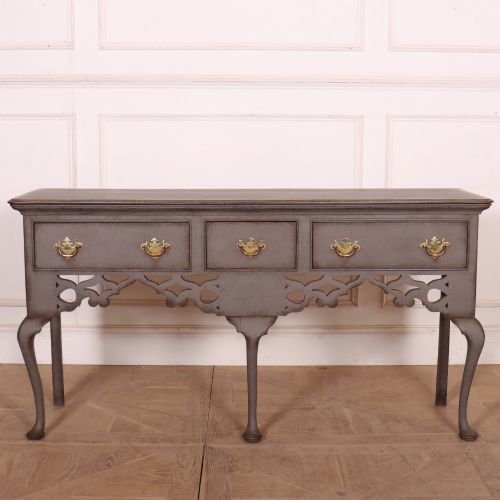
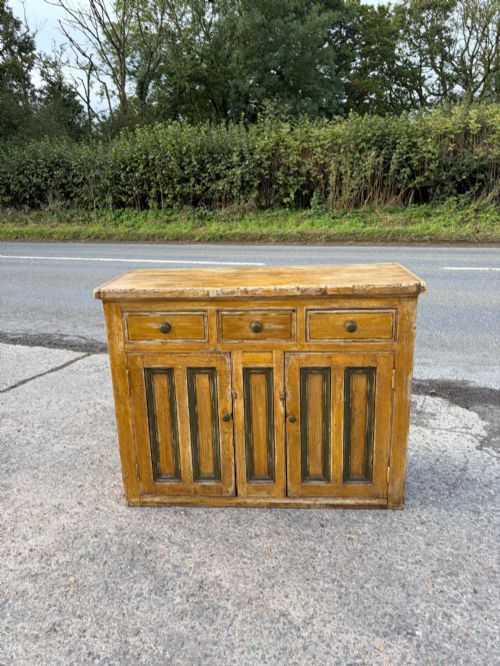
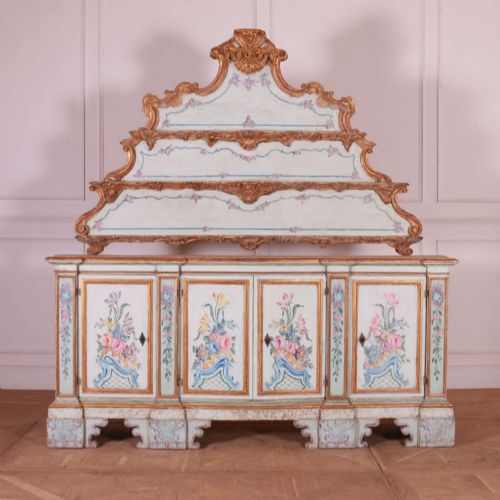


Antique Painted Server
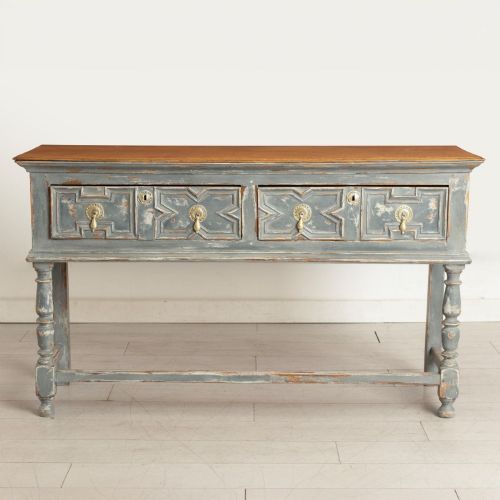
An antique painted server brings domestic utility and rustic colour to a room, offering surface space and storage through centuries of craftsmanship.
Antique Painted Server
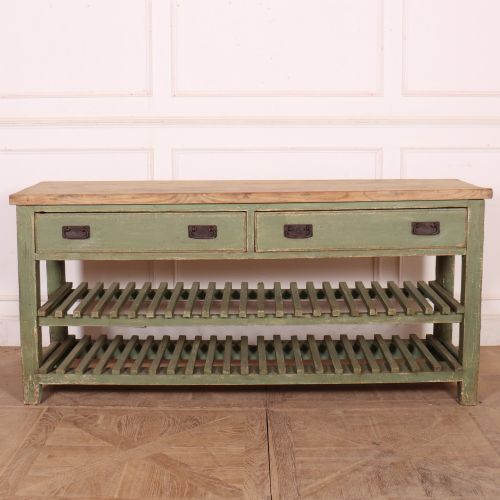
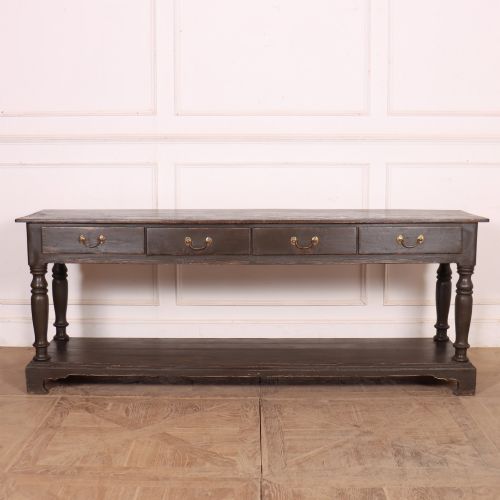
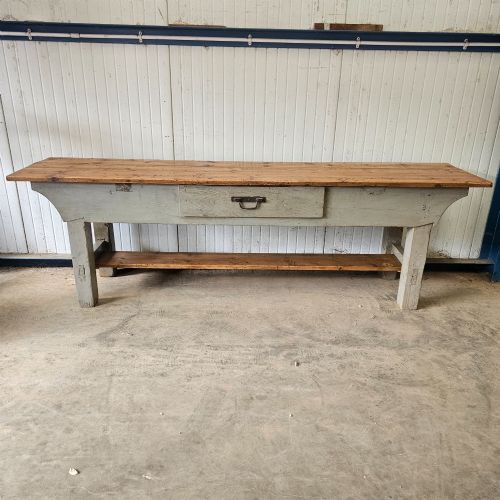
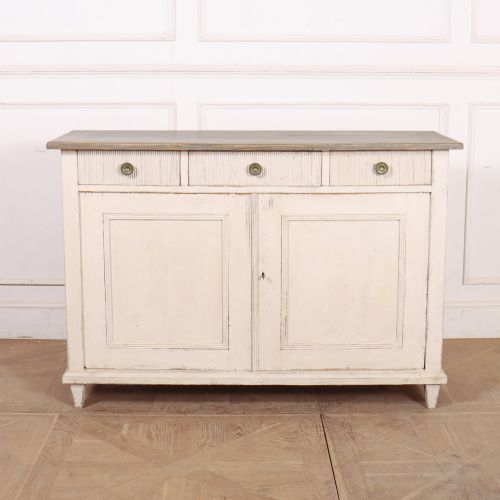
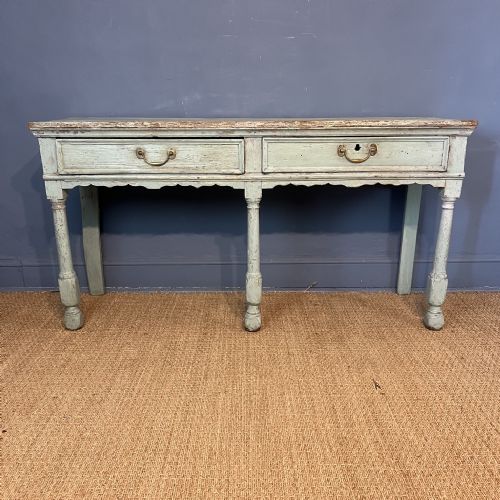
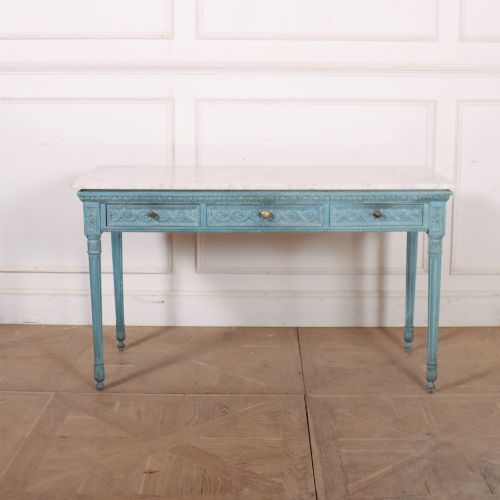
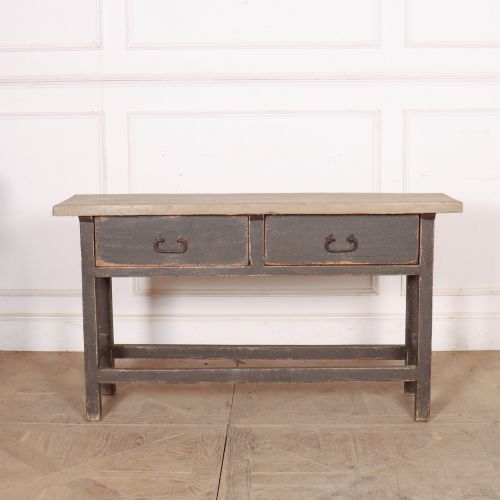
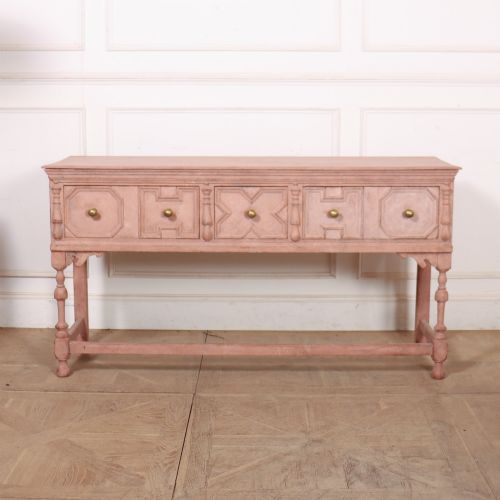
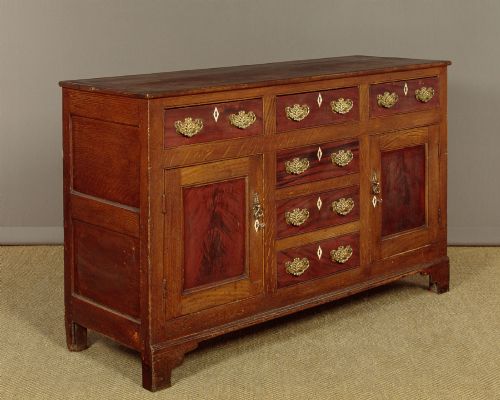
When searching for an antique painted server, a buyer encounters utilitarian forms built for storage and display, primarily dresser bases, sideboards, buffets, and serving tables. These pieces emerge from domestic and commercial settings, functioning historically in kitchens, dairies, and shops.
The versions met most frequently on this page span the eighteenth and nineteenth centuries, taking shape in English country, Victorian, Georgian, and continental provincial styles. Such tables often combine timber carcases with original or later painted surfaces that reflect regional domestic traditions.
Materials and construction methods
Carpenters constructed these servers primarily using sturdy domestic timbers such as pine and oak, sometimes incorporating iron hardware and brass details. Boards were joined to form heavy carcases with drawers and potboards designed for daily household use.
Surfaces received layers of paint, often applied as a protective or decorative finish in workshop and domestic settings. Over decades, this paint layer weathered naturally through service, leaving patinated textures across the wood.
Antique Painted Server Retail Price Guide 2026
Typical asking prices for painted server among the pieces listed under this phrase on Sellingantiques today, from the lower quarter to the upper quarter. They describe what is for sale here now, not the wider market.
Several kitchen tables retain the flour dust and butter splatters of forgotten culinary disasters beneath three centuries of protective lacquer.
Assessing quality in painted servers
Quality rests in the integrity of the original timber frame and the survival of early or original painted surfaces rather than applied ornamentation. Pieces retaining untouched regional paint layers command greater interest among collectors of vernacular furniture.
Proportion and structural honesty separate robust utilitarian examples from heavily altered items. A well-preserved carcase with honest joinery demonstrates the practical origins of these provincial furnishings.
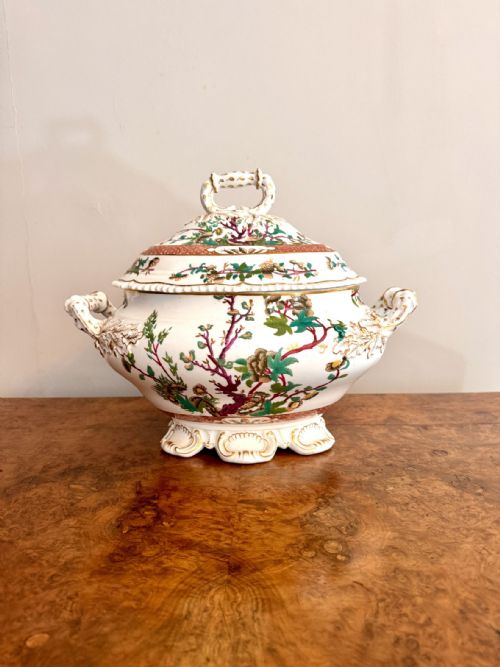
Royal Doulton·Walker and Hall·Doulton Burslem
The Antique Painted Server Glossary
- Dresser base
- A low wooden storage unit featuring drawers and sometimes cupboards or an open lower shelf known as a potboard. These items provided essential workspace and storage in historic kitchens.
- Potboard
- An open lower shelf fitted between the legs of a dresser base or serving table. This horizontal platform allowed for the storage of pots and heavy kitchen utensils.
- Console table
- A wall-mounted or freestanding table designed to sit flat against a room boundary. These tables often served hallways and reception spaces for decorative display.
- Provincial
- Describing furniture made in regional areas outside major metropolitan centres. These items typically display local stylistic quirks and practical construction methods.
- Patina
- The surface sheen and wear acquired by wood and paint over centuries of use. This texture indicates the age and handling history of the piece.
Antique Painted Server: Frequently Asked Questions
What is an antique painted server used for?
These servers function primarily as sideboards, console tables, or buffet units within dining rooms, kitchens, and hallways. They provide surface display area combined with drawer and cupboard storage.
Historically, similar tables supported meal preparation or the serving of food in large country houses and modest domestic settings alike.
How do I date an antique painted server?
Dating relies upon examining construction methods, timber types, and hardware fixtures. Eighteenth-century examples often display hand-cut joinery and earlier regional proportions compared to Victorian pieces.
The presence of original paint layers and specific regional styles also assists in establishing the approximate period of manufacture.
Are painted finishes on these servers original?
Some pieces retain their original factory or domestic paint schemes, while others received decorative layers applied during later periods. Examining the wear patterns and underlying timber helps determine the age of the surface coating.
Original paint typically shows natural craquelure, fading, and micro-chipping consistent with decades of household service.
Where were these servers originally made?
The pieces originate from various workshops across England, Scotland, Sweden, France, Italy, and Hungary. Regional carpenters adapted local timbers like pine and oak to suit domestic needs.
English country and continental provincial traditions account for the majority of forms seen in this category.